
Home → Dog Breeds → Sporting Group → Field Spaniel
Field Spaniel: Breed Profile, Temperament, Health, and Care Guide
A Field Spaniel is a medium-sized Sporting Group breed.
English breeders developed it in the 1800s as a flushing spaniel for hunting. The breed shares ancestry with the Cocker Spaniel and Springer Spaniel. Field Spaniels are genuinely uncommon today. Owners describe them as gentle, sensitive, and devoted. This guide covers where the breed originated, its temperament, how big Field Spaniels get, how long they live, the health problems they are prone to, grooming, how much exercise they need, how easy they are to train, what to feed them, the pros and cons of owning one, and what else people ask.
What Is a Field Spaniel and Where Did the Breed Originate?
A Field Spaniel belongs to the AKC’s Sporting Group. English breeders developed it in the 19th century alongside the Cocker and Springer Spaniel from shared ancestry. Early breeding favored an exaggerated long, low body, which nearly ruined the breed’s working ability. Later breeders corrected course, restoring a more balanced, functional build. The Field Spaniel remains far less common than its Cocker and Springer cousins.
The American Kennel Club defines the breed in its “Official Standard of the Field Spaniel”, approved April 6, 2020, which sets out the size, coat, and temperament a Field Spaniel should have. As of September 2026, the AKC ranks the Field Spaniel 160th of 210 breeds in popularity.
What Is a Field Spaniel’s Temperament Like?
A Field Spaniel’s temperament is gentle, affectionate, and genuinely sensitive. The breed is deeply devoted to its family. Field Spaniels tend to be reserved, even timid, with strangers. They do best with thoughtful older children rather than young, boisterous ones. The breed is food-motivated and intelligent, though it thinks independently.
How Big Do Field Spaniels Get?
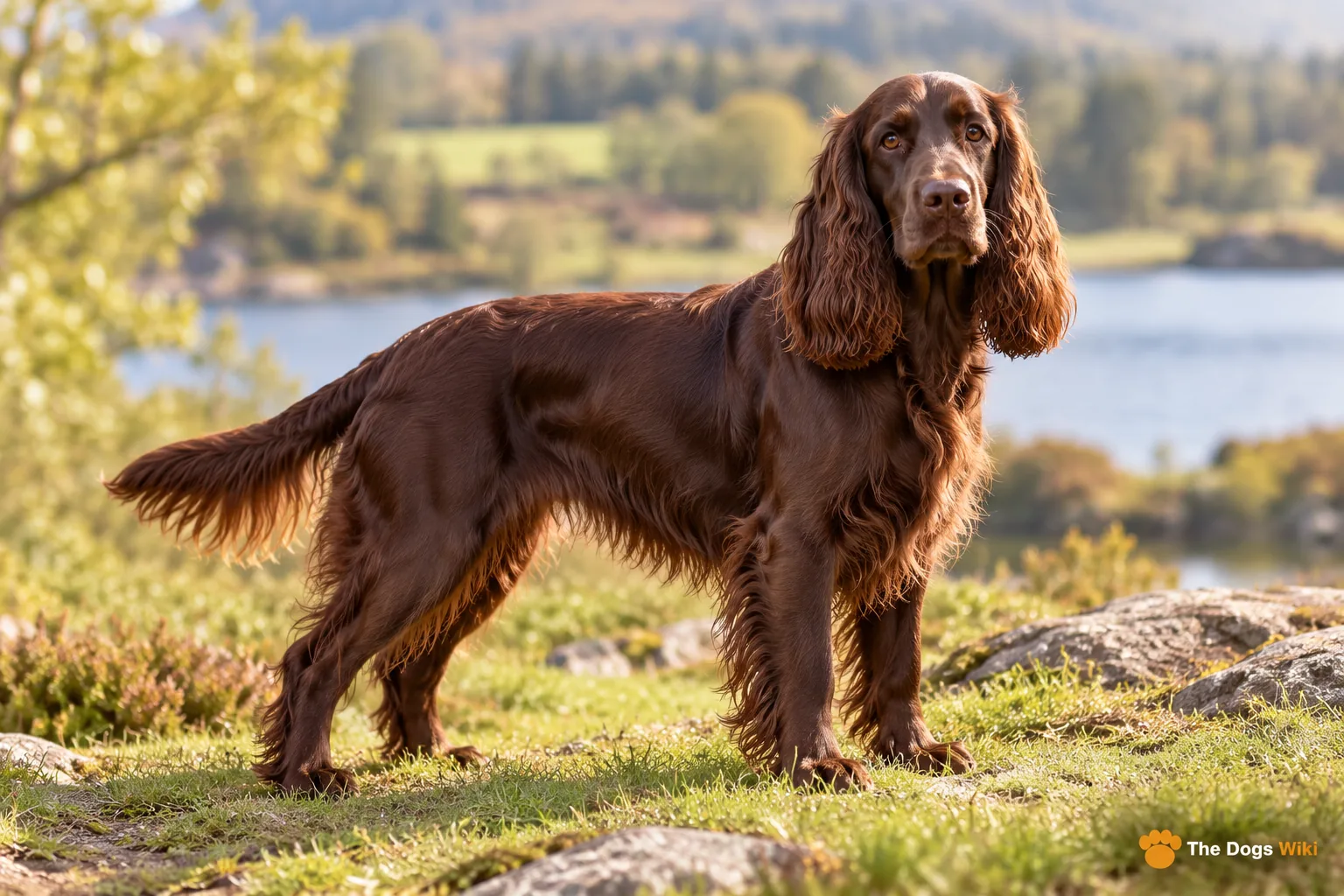
Field Spaniels are a medium-sized breed with a moderately long body and long, feathered ears. The coat is flat or slightly wavy, typically black, liver, or roan.
What Is the Average Field Spaniel Height and Weight?
| Measure | American Kennel Club figure |
|---|---|
| Height | 18 inches (male), 17 inches (female) |
| Weight | 35-50 pounds |
| Life expectancy | 12-13 years |
Figures are from the American Kennel Club Field Spaniel breed profile, retrieved September 2026.
How Long Do Field Spaniels Live?
Field Spaniels live 12 to 13 years. Regular veterinary care supports a full lifespan, in particular given the breed’s documented eye and thyroid risks.
What Health Problems Are Field Spaniels Prone To?
Field Spaniels are documented as being at higher risk for the following conditions.
- Progressive retinal atrophy. An inherited eye disease that gradually breaks down the retina. It can lead to blindness.
- Entropion and ectropion. Eyelid conditions, one rolling inward and one outward. Both can cause irritation.
- Hypothyroidism. Reduced thyroid hormone production. It’s managed with daily medication once diagnosed.
- Hip dysplasia. A joint condition screened for with x-rays in responsible breeding programs.
- Ear infections. Common given the breed’s long, feathered ears, managed with regular cleaning.
How Do You Groom a Field Spaniel?
Field Spaniels have a flat to wavy coat with real feathering on the ears, legs, and belly. It needs regular brushing several times a week to prevent mats. The long ears need routine, dedicated cleaning to prevent infection.
How Much Exercise Does a Field Spaniel Need?
A Field Spaniel needs substantial daily exercise. The breed is genuinely active outside the home, despite a calmer indoor demeanor. Regular walks, play, and structured activity suit this breed’s real working heritage.
Are Field Spaniels Easy to Train?
Field Spaniels are intelligent and food-motivated, making them fairly trainable. The breed thinks independently, though, so mild, consistent methods work better than repetition or harsh correction. Early socialization matters given the breed’s natural reserve with strangers.
What Should You Feed a Field Spaniel?
A Field Spaniel does well on a formula suited to its age and activity level. A veterinarian can help set appropriate portions given the breed’s moderate size and genuine activity needs.
What Are the Pros and Cons of Owning a Field Spaniel?
Here are the main advantages of owning a Field Spaniel.
- Gentle, affectionate, genuinely devoted temperament
- Food-motivated and fairly trainable
- Long average lifespan
- Loyal, close bond with its family
Here are the main drawbacks of owning a Field Spaniel.
- Genuinely reserved, even timid, with strangers
- Documented risk of progressive retinal atrophy and thyroid issues
- Needs substantial daily exercise despite a calm indoor demeanor
- Best suited to homes with older, thoughtful children
Field Spaniel rescue organizations occasionally place adult dogs, worth a look for anyone drawn to this breed’s gentle temperament but a breeder search isn’t realistic given its rarity.
What Else Do People Ask About the Field Spaniel?
The questions below cover how much a Field Spaniel costs, whether Field Spaniels are good family dogs, the difference between the Field Spaniel and the Cocker Spaniel, and why the Field Spaniel is so rare.
How much does a Field Spaniel cost?
Field Spaniel prices vary given the breed’s genuine rarity. A puppy from a health-tested breeder typically costs more than average given limited breeding stock. Adopting an adult dog is usually cheaper but harder to find.
Are Field Spaniels good family dogs?
Field Spaniels can be good family dogs, in particular with older, thoughtful children. Their sensitive, reserved nature means they do best in calm, predictable households.
What Is the Difference Between the Field Spaniel and the Cocker Spaniel?
Both breeds share close ancestry and a similar gentle temperament. Field Spaniels run somewhat larger and are noticeably more reserved with strangers, while Cocker Spaniels are generally more universally outgoing.
Why is the Field Spaniel so rare?
Early breeders favored an exaggerated long, low body that hurt the breed’s working ability and popularity. Later corrections restored a functional build, but the breed’s numbers never recovered to match its spaniel cousins.
Related Guides
More guides on The Dogs Wiki cover behavior, health, grooming, training, nutrition, and adoption.
| Guide |
|---|
| Behavior |
| Health |
| Grooming |
| Training |
| Nutrition |
| Adoption |
Leave a Reply