
Home → Dog Breeds → Hound Group → Bloodhound
Bloodhound: Breed Profile, Temperament, Health, and Care Guide
A Bloodhound is a large Hound Group breed with ancestry tracing back to hounds bred at the St.
Hubert Monastery in present-day Belgium as far back as the 8th and 9th centuries, developed specifically to track humans over long distances by scent alone. That extraordinary nose has made the Bloodhound the standard breed used in search and rescue and law enforcement tracking work worldwide. This guide covers where the breed originated, its temperament, how big Bloodhounds get, how long they live, the health problems they are prone to, grooming, how much exercise they need, how easy they are to train, what to feed them, the pros and cons of owning one, and what else people ask.
What Is a Bloodhound and Where Did the Breed Originate?
A Bloodhound belongs to the American Kennel Club’s Hound Group. The breed’s ancestry traces back over a thousand years to scent hounds bred by monks in what’s now Belgium, developed to track humans and game over long distances and difficult terrain in all types of weather. That deep, purpose-built tracking ability is why Bloodhounds have worked alongside hunters, medieval nobility, and later law enforcement and search and rescue teams for centuries. The breed’s nose remains unrivaled for reliability in tracking work today.
The American Kennel Club defines the breed in its “Official Standard for the Bloodhound”, approved January 9, 1996, which sets out the size, coat, and temperament a Bloodhound should have. As of September 2026, the AKC ranks the Bloodhound 58th of 210 breeds in popularity.
What Is a Bloodhound’s Temperament Like?
A Bloodhound’s temperament is gentle, affectionate, and docile, and the breed is known for being sweet-tempered and patient at home despite its imposing size. That said, once a Bloodhound catches a scent, its tracking instinct takes over almost completely, and the same dog that’s calm on the couch can become single-minded and difficult to redirect mid-trail. Bloodhounds are also notorious droolers, capable of flinging saliva several feet with a single head shake, which is worth knowing before bringing one into a tidy home.
How Big Do Bloodhounds Get?
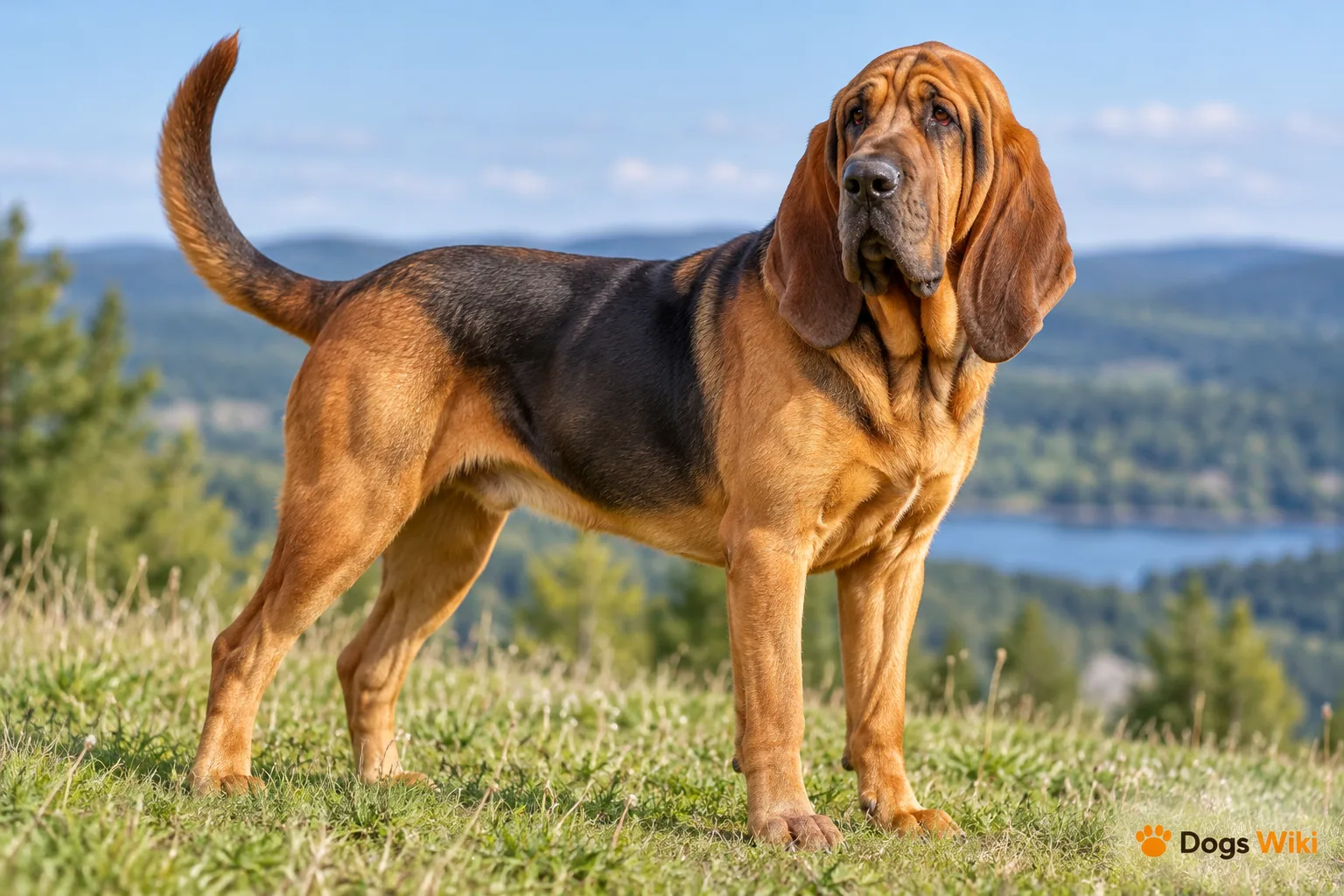
Bloodhounds are a large, powerfully built breed with loose, wrinkled skin, long drooping ears, and a deep chest built for stamina over distance rather than speed.
What Is the Average Bloodhound Height and Weight?
| Measure | American Kennel Club figure |
|---|---|
| Height | 25-27 inches (male), 23-25 inches (female) |
| Weight | 90-110 pounds (male), 80-100 pounds (female) |
| Life expectancy | 10-12 years |
Figures are from the American Kennel Club Bloodhound breed profile, retrieved September 2026.
How Long Do Bloodhounds Live?
Bloodhounds live 10 to 12 years, a relatively short lifespan for the breed’s overall constitution. Regular veterinary care and attentiveness to bloat, the breed’s most serious health risk, both matter considerably for supporting a full lifespan.
What Health Problems Are Bloodhounds Prone To?
Bloodhounds are documented as being at higher risk for the following conditions.
- Bloat, or gastric dilatation-volvulus (GDV). The breed’s most serious health risk and a well-documented leading cause of death in Bloodhounds. It’s a life-threatening emergency requiring immediate veterinary care.
- Hip and elbow dysplasia. Joint conditions where the bones don’t line up properly, causing pain and reduced mobility over time. Screened for with x-rays.
- Ectropion and entropion. Eyelid abnormalities, one causing the lid to roll outward and the other inward, both linked to the breed’s loose facial skin.
- Ear infections. The breed’s long, heavy ears reduce airflow and trap moisture, raising infection risk.
- Skin fold infections. The Bloodhound’s characteristically loose, wrinkled skin needs regular attention to prevent bacterial buildup.
How Do You Groom a Bloodhound?
Bloodhounds have a short, dense coat that needs only weekly brushing to manage shedding, but the breed’s loose skin and facial folds need regular, dedicated cleaning to prevent skin infections. Regular bathing with attention to the folds, along with routine ear checks given the breed’s long ears, are the priority grooming tasks for this breed.
How Much Exercise Does a Bloodhound Need?
A Bloodhound needs daily exercise, and tracking-based activities suit the breed well given its powerful, purpose-built nose. Fresh water should always be available during and after exercise, since proper hydration also helps regulate the breed’s body temperature. A Bloodhound that’s under-exercised can become bored and difficult to manage, in particular given the breed’s independent tracking instinct.
Are Bloodhounds Easy to Train?
Bloodhounds are intelligent and can be eager to please, but their intense tracking instinct often overshadows focus during training, in particular once an interesting scent is present. Starting training early and working in a distraction-free environment helps, and consistency matters more with this breed than with less scent-driven ones.
What Should You Feed a Bloodhound?
Adult Bloodhounds do best on a complete and balanced formula that provides steady energy without excess calories, and puppies need a large-breed formula that supports healthy joint development during their growth period. Because the breed carries a serious bloat risk, feeding two measured meals rather than one large meal is a commonly recommended precaution.
What Are the Pros and Cons of Owning a Bloodhound?
Here are the main advantages of owning a Bloodhound.
- Gentle, affectionate, patient temperament at home
- Unrivaled scent-tracking ability, ideal for owners interested in tracking sports
- Generally good with a patient, engaged family
- Low grooming needs for the coat itself
Here are the main drawbacks of owning a Bloodhound.
- Documented risk of bloat, the breed’s leading cause of death
- Significant drooling
- Intense tracking instinct can override recall and focus
- Large size and strength require a physically capable handler
Bloodhound rescue organizations place adult dogs regularly, worth a look for anyone drawn to the breed’s temperament and tracking ability but not set on a breeder search.
What Else Do People Ask About the Bloodhound?
The questions below cover how much a Bloodhound costs, whether Bloodhounds are good family dogs, the difference between the Bloodhound and the Bluetick Coonhound, why Bloodhounds drool so much, and what bloat in Bloodhounds is.
How much does a Bloodhound cost?
Bloodhound prices vary by region, bloodline, and breeder reputation, and given the breed’s size and ongoing costs, it’s worth budgeting for higher lifetime food and veterinary expenses regardless of purchase price. Adopting an adult Bloodhound through a rescue is usually a lower-cost alternative.
Are Bloodhounds good family dogs?
Bloodhounds can make excellent family pets for a household with the patience and time to keep the dog mentally and physically stimulated. Their gentle, affectionate nature suits families well, though their size and strength mean supervision with young children is still recommended.
What Is the Difference Between the Bloodhound and the Bluetick Coonhound?
Bloodhounds and Bluetick Coonhounds are both AKC scent hounds with a strong tracking drive, but they differ considerably in size and coat. Bloodhounds are considerably larger, with loose wrinkled skin and long drooping ears, while Bluetick Coonhounds are leaner with a distinctive blue-ticked coat pattern and a more vocal, “baying” style of communication.
Why do Bloodhounds drool so much?
Bloodhounds drool heavily because of their loose lips and jowls, which don’t seal tightly and allow saliva to pool and eventually fling loose, in particular after drinking or shaking their head. This is a normal, expected trait of the breed’s facial structure rather than a sign of a health problem.
What is bloat in Bloodhounds?
Bloat, or gastric dilatation-volvulus, is a life-threatening emergency in which the stomach fills with gas and twists on itself, cutting off blood flow, and it’s documented as the breed’s leading cause of death. Warning signs include a distended abdomen, restlessness, and unproductive retching, and any suspected case needs immediate emergency veterinary care.
Related Guides
More guides on The Dogs Wiki cover grooming, behavior, training, and nutrition.
| Guide |
|---|
| Grooming |
| Behavior |
| Training |
| Nutrition |
Leave a Reply