Home → Dog Breeds → Hound Group → Bluetick Coonhound
A Bluetick Coonhound is a large Hound Group breed developed in the southern United States, descended from English Foxhounds, American Foxhounds, and the French Grand Bleu de Gascogne, and bred specifically to track and tree raccoons.
That American scent-hound heritage is why the breed still shows up as a beloved regional mascot and a fixture of Southern hunting culture today. This guide covers where the breed originated, its temperament, how big Bluetick Coonhounds get, how long they live, the health problems they are prone to, grooming, how much exercise they need, how easy they are to train, what to feed them, the pros and cons of owning one, and what else people ask.
What Is a Bluetick Coonhound and Where Did the Breed Originate?
A Bluetick Coonhound belongs to the American Kennel Club’s Hound Group. The breed developed in the southern United States, likely originating in Louisiana, from a mix of English Foxhounds, American Foxhounds, and the French Grand Bleu de Gascogne, and was bred to hunt and tree raccoons using its powerful nose. The United Kennel Club recognized the breed in 1946, though the AKC didn’t formally recognize it until 2009, making it one of the more recently AKC-recognized Hound Group breeds. The breed has also become a well-known cultural fixture, serving as the University of Tennessee’s live mascot since 1953.
The American Kennel Club defines the breed in its “Official Standard for the Bluetick Coonhound”, approved 2007, which sets out the size, coat, and temperament a Bluetick Coonhound should have. As of September 2026, the AKC ranks the Bluetick Coonhound 137th of 210 breeds in popularity.
What Is a Bluetick Coonhound’s Temperament Like?
A Bluetick Coonhound’s temperament is friendly, affectionate, and sweet-natured, paired with genuinely high energy and a strong prey drive rooted in its hunting background. Blueticks are loyal and devoted to their families and generally do well with children, though they tend to do better with older kids than young ones given their rambunctious energy. The breed is also vocal, using a distinctive “baying” bark to communicate, a trait that’s part of its hunting design and won’t fully train out.
How Big Do Bluetick Coonhounds Get?
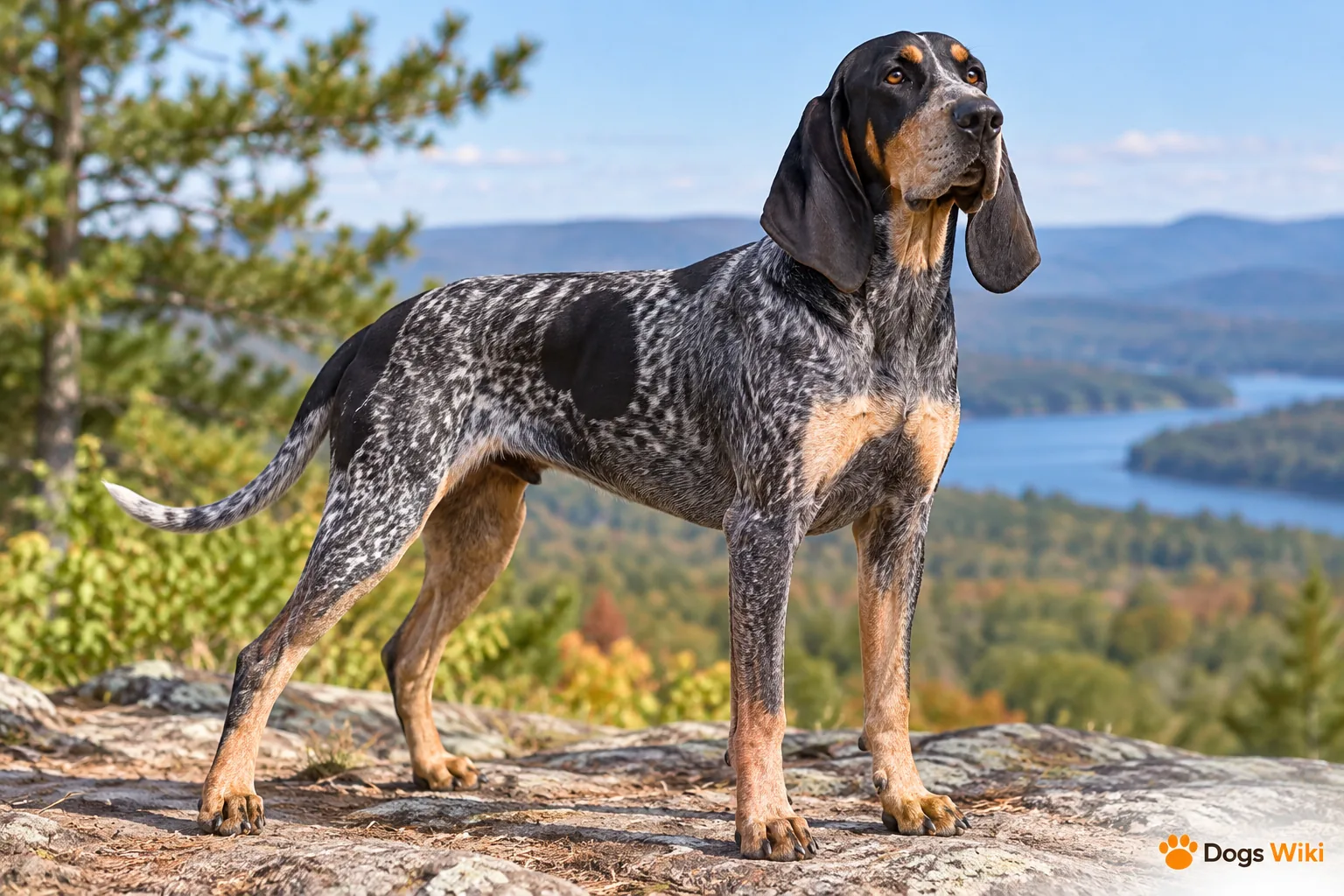
Bluetick Coonhounds are a large, muscular breed named for their distinctive dark blue-gray, black-speckled coat pattern, often with tan markings as well.
What Is the Average Bluetick Coonhound Height and Weight?
| Measure | American Kennel Club figure |
|---|---|
| Height | 22-27 inches (male), 21-25 inches (female) |
| Weight | 55-80 pounds (male), 45-65 pounds (female) |
| Life expectancy | 11-12 years |
Figures are from the American Kennel Club Bluetick Coonhound breed profile, retrieved September 2026.
How Long Do Bluetick Coonhounds Live?
Bluetick Coonhounds live 11 to 12 years, a fairly typical lifespan for a dog of this size. Regular veterinary care and consistent daily exercise support a full, healthy lifespan for this genuinely active breed.
What Health Problems Are Bluetick Coonhounds Prone To?
Bluetick Coonhounds are documented as being at higher risk for the following conditions.
- Hip and elbow dysplasia. Joint conditions in which the bones don’t line up properly, causing pain and reduced mobility. No genetic screening test currently exists, so dogs with either condition shouldn’t be bred.
- Hypothyroidism. Reduced thyroid hormone production, which can cause dry skin, hair loss, weight gain, and behavioral changes; managed with daily medication.
- Bloat, or gastric dilatation-volvulus (GDV). A life-threatening emergency in deep-chested breeds requiring immediate veterinary care.
- Ear infections. The breed’s long, floppy ears trap moisture, raising infection risk without regular cleaning.
- Eye conditions, including cataracts and progressive retinal atrophy. Recognized issues that a veterinarian can screen for.
How Do You Groom a Bluetick Coonhound?
Bluetick Coonhounds have a short, dense, glossy coat that’s relatively low-maintenance, needing regular brushing to manage average shedding and occasional baths to keep the coat clean. The breed’s long ears benefit from regular checks and cleaning given their tendency to trap moisture, and routine nail trims round out the grooming routine.
How Much Exercise Does a Bluetick Coonhound Need?
A Bluetick Coonhound needs substantial daily exercise, generally one to two hours of vigorous activity, reflecting the breed’s stamina for tracking game across long distances. A securely fenced yard matters as much as exercise duration, since the breed’s strong prey drive and scent-following instinct can lead to escape attempts if given the chance. Activities that engage the breed’s nose, like tracking games, tend to satisfy both the physical and mental sides of a Bluetick’s needs.
Are Bluetick Coonhounds Easy to Train?
Bluetick Coonhounds are intelligent and generally eager to please, though the breed can be stubborn at times, in particular once an interesting scent is present. Positive reinforcement training works well, and given how vocal the breed naturally is, dedicated voice-training, teaching the dog when barking and baying are and aren’t appropriate, is a genuinely useful part of the training process for this breed specifically.
What Should You Feed a Bluetick Coonhound?
Bluetick Coonhounds do well on a quality, balanced formula suited to their activity level, and because the breed has a working dog’s hearty appetite, monitoring portions to prevent obesity is worth staying on top of. A veterinarian can help set an appropriate feeding plan based on the dog’s actual exercise level.
What Are the Pros and Cons of Owning a Bluetick Coonhound?
Here are the main advantages of owning a Bluetick Coonhound.
- Friendly, affectionate, loyal temperament
- Intelligent and generally eager to please with the right training approach
- Relatively low-maintenance coat
- Well suited to active families who enjoy hiking or outdoor activities
Here are the main drawbacks of owning a Bluetick Coonhound.
- Needs one to two hours of vigorous daily exercise
- Vocal, with a distinctive baying bark that carries over long distances
- Strong prey drive requires secure fencing and caution around small animals
- No current genetic screening test for hip and elbow dysplasia
Bluetick Coonhound rescue organizations place adult dogs regularly, worth a look for anyone drawn to the breed’s energy and loyalty but not set on a breeder search.
What Else Do People Ask About the Bluetick Coonhound?
The questions below cover how much a Bluetick Coonhound costs, whether Bluetick Coonhounds are good family dogs, the difference between the Bloodhound and the Bluetick Coonhound, and whether Bluetick Coonhounds bark a lot.
How much does a Bluetick Coonhound cost?
Bluetick Coonhound prices vary by region, bloodline, and breeder reputation, and a puppy from a breeder who screens for hip and thyroid health typically costs more than one that doesn’t. Adopting an adult Bluetick through a rescue is usually a lower-cost alternative.
Are Bluetick Coonhounds good family dogs?
Yes, Bluetick Coonhounds are generally excellent family companions for active households, thanks to a friendly, affectionate temperament. They tend to do better with older children than young ones given their rambunctious energy, and an active family that can keep up with their exercise needs is the best match.
What Is the Difference Between the Bloodhound and the Bluetick Coonhound?
Bluetick Coonhounds and Bloodhounds are both AKC scent hounds with a strong tracking drive, but they differ considerably in size and coat. Bloodhounds are considerably larger with loose, wrinkled skin, while Bluetick Coonhounds are leaner and more athletic, with a distinctive blue-ticked coat pattern.
Do Bluetick Coonhounds bark a lot?
Yes, Bluetick Coonhounds are genuinely vocal dogs, known for a distinctive “baying” bark, sometimes called a “bawl,” that carries over long distances and is part of the breed’s hunting design. Consistent training and enough exercise can reduce excessive barking, but the breed’s tendency to vocalize won’t be fully trained away.
Related Guides
More guides on The Dogs Wiki cover health, grooming, behavior, training, nutrition, and adoption.
| Guide |
|---|
| Health |
| Grooming |
| Behavior |
| Training |
| Nutrition |
| Adoption |