
Home → Dog Breeds → Herding Group → Belgian Malinois
Belgian Malinois: Breed Profile, Temperament, Health, and Care Guide
A Belgian Malinois is a medium to large Herding Group breed from Mechelen, Belgium, prized for its intense work drive and now the standard choice for demanding police, military, and protection work.
A Belgian Malinois is a medium to large Herding Group breed developed in Mechelen, Belgium, prized above all for its intense work drive, and it’s now the standard choice for the world’s most demanding police, military, and protection roles, including elite units like U.S. Navy SEAL teams. Often confused with the German Shepherd given a similar coloring, the Malinois is leaner, faster, and genuinely more intense, a working athlete first and a pet second. This guide covers where the breed originated, its temperament, how big Belgian Malinois get, how long they live, the health problems they are prone to, grooming, how much exercise they need, how easy they are to train, what to feed them, the pros and cons of owning one, and what else people ask.
What Is a Belgian Malinois and Where Did the Breed Originate?
A Belgian Malinois belongs to the American Kennel Club’s Herding Group, developed in and around Mechelen, in the Flanders region of Belgium, as one of four Belgian shepherd varieties. Unlike breeds developed primarily for appearance, the Malinois has always been valued more for its temperament and work ethic, which is why the breed became the standard choice for police, military, and protection work worldwide; a Malinois named Cairo took part in the 2011 raid that located Osama bin Laden. The AKC recognizes the Belgian Malinois as its own separate breed, apart from the Belgian Tervuren, Belgian Sheepdog, and Belgian Laekenois.
The American Kennel Club defines the breed in its “Official Standard of the Belgian Malinois”, approved July 13, 2021, which sets out the size, coat, and temperament a Belgian Malinois should have. As of September 2026, the AKC ranks the Belgian Malinois 33rd of 210 breeds in popularity.
What Are the Four Belgian Shepherd Varieties?
Belgium’s shepherd dogs were sorted in the 1890s into four types that differ mainly in coat. The Malinois has a short fawn-to-mahogany coat with a black mask. Long-coated, solid black dogs are the Groenendael, called the Belgian Sheepdog in the United States. The Tervuren is long-coated and fawn to mahogany, and the Laekenois has a rough, wiry fawn coat. Several countries, including Belgium itself under the international standard, still treat all four as varieties of one breed, and some even allow crosses between them. The AKC registers each as a separate breed with its own standard.
What Is a Belgian Malinois’s Temperament Like?
A Belgian Malinois’s temperament is highly intelligent, intensely energetic, and deeply loyal to its handler, a top worker rather than a casual pet. The standard describes a dog that is “alert, intelligent, inquisitive and confident, showing neither fear nor aggression.” Malinois relish challenges and do well with a genuine job, and without sufficient exercise, training, and mental stimulation, the breed can become destructive and headstrong. This is not a breed suited to first-time owners, apartment living, or households with young children or seniors who can’t provide the consistent structure the breed needs.
Why Are Belgian Malinois Called Maligators?
Handlers gave the breed that nickname for its habit of grabbing, mouthing, and biting at anything that moves when it is excited or under-exercised. Malinois puppies are notorious for nipping hands, clothing, and furniture. The behavior comes from the same drive that makes the breed so strong at bite work. Channeling it into tug games with clear rules, and teaching a reliable “out” early, is essential in a pet home.
How Big Do Belgian Malinois Get?
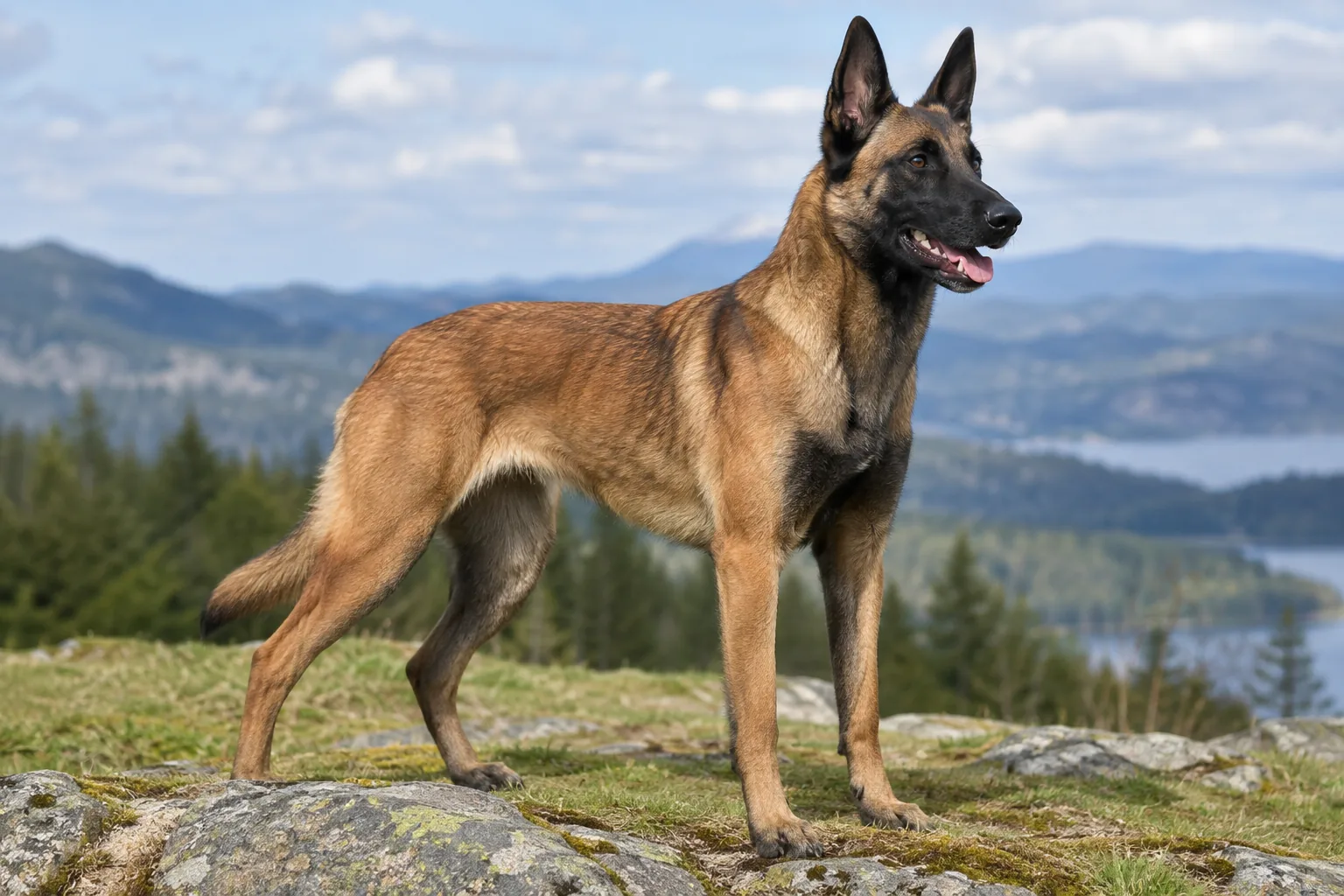
Belgian Malinois are a lean, athletic, square-profiled breed built for speed and endurance, with a short, straight, weather-resistant coat ranging from fawn to mahogany and a distinctive black mask. The standard disqualifies males under 23 or over 27 inches and females under 21 or over 25 inches.
What Is the Average Belgian Malinois Height and Weight?
| Measure | American Kennel Club figure |
|---|---|
| Height | 24-26 inches (male), 22-24 inches (female) |
| Weight | 60-80 pounds (male), 40-60 pounds (female) |
| Life expectancy | 14-16 years |
Figures are from the American Kennel Club Belgian Malinois breed profile, retrieved September 2026.
How Long Do Belgian Malinois Live?
Belgian Malinois live 14 to 16 years, a solid lifespan reflecting a breeding tradition that has emphasized working ability over fixed conformation, which has helped the breed avoid many structural health problems common in more appearance-focused purebreds. Regular veterinary care supports a full, active lifespan.
What Health Problems Are Belgian Malinois Prone To?
Belgian Malinois are documented as being at higher risk for the following conditions.
What Is Hip and Elbow Dysplasia in Belgian Malinois?
Hip dysplasia is a hereditary condition where the hip joint doesn’t develop correctly, and elbow dysplasia affects the front legs in the same way. Both can cause pain, lameness, and arthritis. Working dogs put heavy loads on their joints, so OFA or PennHIP results on both parents matter even in this healthy breed. Keeping a dog lean and conditioning it gradually for sport protect its joints.
What Eye Problems Affect Belgian Malinois?
Progressive retinal atrophy is an inherited eye disease with no available treatment, and responsible breeders screen parent dogs to avoid passing it on. Cataracts and pannus, a chronic inflammation of the cornea made worse by sunlight, also occur in Belgian shepherds. Pannus is managed with eye drops for life and, for working dogs outdoors, protective goggles.
What Is Epilepsy in Belgian Malinois?
Epilepsy, recurring seizures without another cause, occurs in all the Belgian shepherd varieties. Most first seizures appear between one and five years of age. Daily anti-seizure medication controls it in many dogs. Breeders should be open about seizures in their lines.
What Is Spongy Degeneration With Cerebellar Ataxia in Belgian Malinois?
Spongy degeneration with cerebellar ataxia, or SDCA, is an inherited brain disease found in the breed. Affected puppies show wobbling, poor coordination, and sometimes seizures within their first weeks of life, and the disease is fatal. DNA tests for the known forms let breeders avoid producing affected litters.
Which Health Tests Should a Belgian Malinois Breeder Provide?
Ask for hip and elbow results, an eye exam by a veterinary ophthalmologist, and DNA results for SDCA on both parents. Beyond paperwork, ask how the parents behave at home and in work, since temperament is the most important trait in this breed. Working-line breeders should be able to describe titles or jobs the parents hold.
How Do You Groom a Belgian Malinois?
Every Malinois has a short, dense, weather-resistant double coat that’s low-maintenance to groom, needing brushing two to three times a week under normal conditions and daily brushing during seasonal shedding. This is a low-maintenance coat on a genuinely high-maintenance dog, so the ease of grooming shouldn’t be mistaken for an easy breed overall.
| Grooming task | How often |
|---|---|
| Brush with a rubber curry brush or undercoat rake | Two to three times a week, daily during a shed |
| Check paws and pads after work or hikes | After every outing |
| Trim or grind nails | Every 2 to 3 weeks |
| Brush teeth | Daily, or at least three times a week |
| Bath | Every 2 to 3 months |
How Much Exercise Does a Belgian Malinois Need?
A Belgian Malinois needs several hours of vigorous daily exercise and mental stimulation, through activities like agility, herding, or structured protection-sport training such as Schutzhund. Secure containment is essential, since a Malinois can clear a six-foot fence and chew through standard fencing, and without enough outlet for its drive, the breed becomes genuinely difficult to manage.
Are Belgian Malinois Easy to Train?
Yes, Belgian Malinois are exceptionally trainable, which is exactly why the breed dominates police, military, and protection-sport work worldwide. That said, training requires real expertise, consistency, and early, thorough socialization, since the breed’s intensity and intelligence can overwhelm an inexperienced handler without the structure and confidence to match it.
What Should Belgian Malinois Training Focus On?
Impulse control and an off switch come first. A Malinois that learns to settle on a mat, wait at doors, and release a toy on cue is far easier to live with than one that only knows how to go. Short, intense sessions several times a day suit the breed better than one long one. Many owners work with a trainer experienced in working breeds, since mistakes in the first year are hard to undo.
What Should You Feed a Belgian Malinois?
Working Malinois need a high-quality, high-protein formula suited to their demanding activity level, and a working or sport-trained Malinois can need considerably more food than a companion dog of the same size. A veterinarian can help set appropriate portions based on the individual dog’s actual workload.
How Many Meals a Day Does a Belgian Malinois Need?
Puppies eat three meals a day until about six months, then two. Adults stay on two meals, and working dogs are best fed after work rather than before, with an hour of rest before and after eating. A fit Malinois is lean, with ribs easy to feel and a defined waist; working dogs carry more muscle than show dogs, not more fat.
What Are the Pros and Cons of Owning a Belgian Malinois?
Here are the main advantages and drawbacks of owning a Belgian Malinois, side by side.
| Pros | Cons |
|---|---|
| Exceptionally intelligent and trainable | Needs several hours of vigorous daily exercise and mental stimulation |
| Deeply loyal and capable of elite-level working roles | Not suited to first-time owners, apartments, or households without serious time commitment |
| Low-maintenance short coat | Can become destructive and headstrong without enough structure |
| Healthier than many purebreds given working-focused breeding | Requires genuinely secure containment given the breed’s athleticism |
Experienced handlers who want the breed’s intensity and capability without a breeder search can contact Belgian Malinois rescue organizations, which place adult dogs, matched carefully given how demanding the breed is for an unprepared owner.
What Else Do People Ask About the Belgian Malinois?
The questions below cover what it costs to buy a Belgian Malinois, whether a family home is a good fit, the difference between the Belgian Malinois and the German Shepherd, and how good a guard dog the Belgian Malinois is.
What does it cost to buy a Belgian Malinois?
Belgian Malinois prices vary by region, bloodline, and whether the parents come from working or show lines, and a puppy from a breeder who health-tests the parents costs more than one that doesn’t. Adopting an adult Malinois through a rescue is a lower-cost alternative, though many Malinois end up in rescue specifically because owners underestimated the breed’s demands.
Is a family home a good fit for a Belgian Malinois?
Belgian Malinois are not recommended as a first family dog, given the breed’s intense exercise, training, and structure needs, which can overwhelm households with young children or less experienced owners. In the right experienced, active home, a well-trained Malinois can be a loyal, capable companion, but this is genuinely a working breed first.
What Is the Difference Between the Belgian Malinois and the German Shepherd?
Belgian Malinois and German Shepherds are both intelligent, highly trainable herding breeds used extensively in police and military work, and they share similar coloring, but Malinois are leaner, lighter, and even higher-energy than German Shepherds. This intensity is part of why Malinois are increasingly favored for elite military and police units over German Shepherds.
How good a guard dog is the Belgian Malinois?
A well-trained Belgian Malinois can be an outstanding, capable watchdog and protector, which is exactly why the breed is the standard choice for police, military, and protection work worldwide. That capability depends entirely on proper training and socialization; an untrained Malinois’s intensity can become a genuine liability rather than an asset.
Related Guides
More guides on The Dogs Wiki cover behavior, health, grooming, training, nutrition, and adoption.
| Guide |
|---|
| Behavior |
| Health |
| Grooming |
| Training |
| Nutrition |
| Adoption |
Leave a Reply