
Home → Dog Breeds → Working Group → Siberian Husky
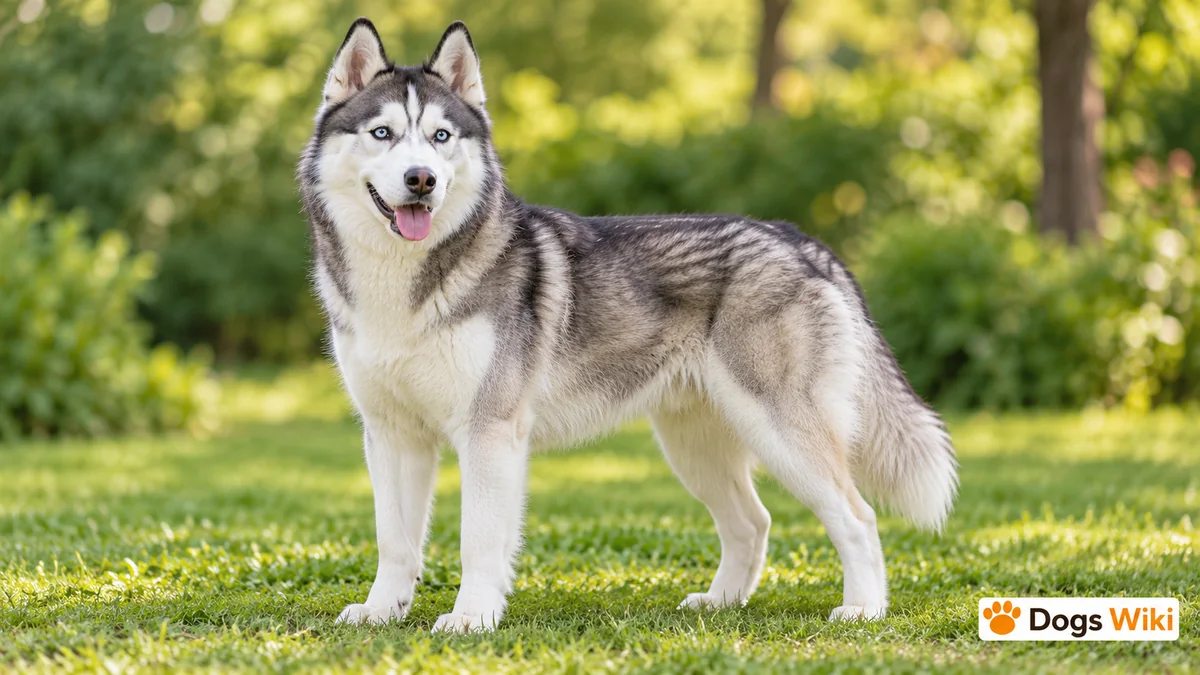
A Siberian Husky is a medium-sized Working Group breed developed by the Chukchi people of northeastern Asia as an endurance sled dog, bred to pull light loads over long distances efficiently rather than to haul heavy freight.
That endurance-racing heritage is why the breed is built lean and fast rather than massive, and why it still has an almost bottomless appetite for running. This guide covers where the breed originated, its temperament, how big Siberian Huskies get, how long they live, the health problems they are prone to, grooming, how much exercise they need, how easy they are to train, what to feed them, the pros and cons of owning one, and what else people ask.
What Is a Siberian Husky and Where Did the Breed Originate?
A Siberian Husky belongs to the American Kennel Club’s Working Group. The breed was developed by the semi-nomadic Chukchi people in Siberia, who bred a hardy sled dog capable of covering long distances efficiently as their hunting grounds expanded. Imports to Alaska began around 1909, and the dogs won attention for their endurance in early sled dog races. AKC recognition followed in 1930. Genetically and functionally, the breed is separate from the Alaskan Malamute, a heavier freight-pulling breed, despite the superficial resemblance.
The American Kennel Club defines the breed in its “Official Standard of the Siberian Husky”, approved February 9, 2021, which sets out the size, coat, and temperament a Siberian Husky should have. As of September 2026, the AKC ranks the Siberian Husky 26th of 210 breeds in popularity.
What Was the 1925 Serum Run to Nome?
In January 1925 a diphtheria outbreak threatened the town of Nome, Alaska, and the only way to bring antitoxin through the winter was by dog sled. Twenty mushers and about 150 dogs relayed the serum roughly 674 miles in under six days. Leonhard Seppala’s lead dog Togo ran the longest and most dangerous stretch, while Gunnar Kaasen’s lead dog Balto finished the final leg into Nome and became famous, with a statue in New York’s Central Park. That relay made the Siberian Husky a household name in the United States.
What Is a Siberian Husky’s Temperament Like?
A Siberian Husky’s temperament is friendly and outgoing, even with strangers, which makes the breed a poor choice for guard duty despite its wolfish appearance. The standard says the breed “does not display the possessive qualities of the guard dog, nor is he overly suspicious of strangers or aggressive with other dogs.” Huskies are smart but genuinely stubborn and independent, a combination rooted in a working history that rewarded initiative on the trail rather than constant deference to a handler. Huskies also carry a strong prey drive and may chase cats, rodents, or other small animals, and Huskies are known diggers, in particular in warm weather when digging creates a cool spot to lie in.
Why Are Siberian Huskies Such Escape Artists?
Huskies were bred to run for miles, and a fence is simply a puzzle to many of them. They dig under, climb over, slip collars, and open latches. A fence at least six feet high, with wire buried or an apron along the base, keeps most in. Never trust a Husky off leash in an open area; even a well-trained dog can take off after a scent or a rabbit and keep running.
How Big Do Siberian Huskies Get?
Siberian Huskies are a medium-sized, lean breed with a thick double coat, erect ears, and striking eyes that can be blue, brown, or one of each. Accepted colors run from black to pure white, including gray, agouti, sable, and red, with many kinds of markings.
What Is the Average Siberian Husky Height and Weight?
| Measure | American Kennel Club figure |
|---|---|
| Height | 21-23.5 inches (male), 20-22 inches (female) |
| Weight | 45-60 pounds (male), 35-50 pounds (female) |
| Life expectancy | 12-14 years |
Figures are from the American Kennel Club Siberian Husky breed profile, retrieved September 2026.
How Long Do Siberian Huskies Live?
Siberian Huskies live 12 to 14 years, a long lifespan for a Working Group breed of this size. Regular veterinary care, including eye screening given the breed’s documented risks, supports a full, healthy lifespan.
What Health Problems Are Siberian Huskies Prone To?
Siberian Huskies are documented as being at higher risk for the following conditions.
What Are Cataracts in Siberian Huskies?
Cataracts are a clouding of the lens inside the eye. The juvenile form in Huskies is thought to be inherited and can begin developing in dogs under a year old, gradually blurring vision. A veterinary ophthalmologist diagnoses it, and surgery to remove the lens can restore sight in suitable dogs. Breeding dogs should have an eye exam every year.
What Is Progressive Retinal Atrophy in Siberian Huskies?
Progressive retinal atrophy is an inherited breakdown of the retina. In this breed the disease is linked to the X chromosome, which is why it shows up more in male Huskies. Night blindness comes first, and day vision fails later. There is no treatment, but blind dogs adapt well at home when furniture stays in place.
What Other Eye Problems Affect Siberian Huskies?
Corneal dystrophy leaves small, hazy crystal deposits on the surface of the eye that rarely affect vision. Glaucoma, a painful buildup of pressure in the eye, can cause blindness when not treated promptly; a red, cloudy, or bulging eye is an emergency. Uveodermatologic syndrome, an immune disease that inflames the eyes and whitens the nose and lips, also occurs in the breed.
What Is Zinc-Responsive Dermatosis in Siberian Huskies?
Zinc-responsive dermatosis is a skin condition tied to the breed’s inherited difficulty absorbing zinc. Crusting, scaling, and hair loss appear around the eyes, mouth, ears, and feet. Zinc supplements prescribed by a vet clear it in most dogs, though many need them for life.
What Other Health Problems Affect Siberian Huskies?
Hip dysplasia is less common in this breed than in many large breeds, with a documented prevalence around 2 percent in OFA records, but still worth screening for. Hypothyroidism and laryngeal paralysis in older dogs also occur. Before breeding, both parents should have an OFA hip evaluation and a current eye exam.
How Do You Groom a Siberian Husky?
Siberian Huskies have a thick double coat that sheds moderately year-round with two heavier seasonal “blowouts,” and daily brushing during those periods keeps the volume of loose undercoat manageable. Outside of shedding season, regular brushing a few times a week is enough. Huskies are known for self-cleaning, cat-like habits and lack the typical “doggy” odor, which keeps bathing needs to occasional rather than frequent.
| Grooming task | How often |
|---|---|
| Brush with an undercoat rake and slicker brush | Two to three times a week, daily during a blowout |
| Trim fur between the paw pads | Monthly |
| Trim nails | Every 3 to 4 weeks |
| Brush teeth | Daily, or at least three times a week |
| Bath | Two to four times a year |
Never shave a Husky. The double coat protects against both sun and heat, and a shaved coat can grow back patchy or not at all.
How Much Exercise Does a Siberian Husky Need?
A Siberian Husky needs substantial daily exercise, reflecting the breed’s history as an endurance sled dog built to run. Huskies should not be over-exercised in warm weather given their thick coat, and this breed does poorly as an outdoor-only dog in hot or humid climates. A Husky that isn’t getting enough physical and mental engagement is prone to escape attempts and digging, and secure fencing is a practical necessity given the breed’s athleticism and prey drive.
Which Activities Suit a Siberian Husky?
Running, hiking, and dog-powered sports top the list. Canicross pairs a runner with a harnessed dog on a bungee line, bikejoring swaps the runner for a cyclist, and in snow country, recreational mushing and skijoring let a Husky do what it was bred for. Most adults need at least an hour of hard exercise a day, and a tired Husky is a far better housemate than a bored one. In warm weather, run only in the cool of early morning or late evening, and watch for heavy panting.
Are Siberian Huskies Easy to Train?
Siberian Huskies are intelligent but genuinely stubborn, making them moderately difficult to train compared to more naturally compliant breeds. The breed needs patience and consistency, and Huskies respond best when they understand the actual point of a command rather than complying purely out of obedience for its own sake. This breed isn’t always recommended for first-time owners given its independent streak.
What Should You Feed a Siberian Husky?
Siberian Huskies were historically bred to survive on relatively little food for their size, which means portions for a pet Husky should reflect actual activity level rather than a generic performance-dog formula, since most pet Huskies do far less work than their sled-pulling ancestors. A formula suited to the dog’s age and activity level, with portions adjusted based on body condition, is the right approach.
How Much Should a Siberian Husky Eat?
Less than most owners expect for a dog its size. Two measured meals a day suit adults, and a lean Husky shows a clear waist with ribs easy to feel under the coat, which can hide weight gain; run your hands along the sides every week. Dogs in heavy winter training need more food, and portions should drop again in the off-season.
What Are the Pros and Cons of Owning a Siberian Husky?
Here are the main advantages and drawbacks of owning a Siberian Husky, side by side.
| Pros | Cons |
|---|---|
| Friendly, outgoing temperament, even with strangers | Needs substantial daily exercise given endurance-running heritage |
| Long average lifespan for the breed’s size | Stubborn, independent temperament makes training more challenging |
| Self-cleaning coat with minimal odor | Heavy seasonal shedding requires daily brushing during blowouts |
| Striking appearance and genuinely fun-loving personality | Strong prey drive and escape tendency require secure fencing |
Anyone drawn to the breed’s energy and personality who would rather not search for a breeder can contact Siberian Husky rescue organizations, which place adult dogs regularly. Many Huskies land in rescue because owners underestimated their exercise needs, so rescues screen adopters carefully.
What Else Do People Ask About the Siberian Husky?
The questions below cover what it costs to buy a Siberian Husky, whether a family home is a good fit, the difference between the Siberian Husky and the Alaskan Malamute, and how much barking comes from the breed.
What does it cost to buy a Siberian Husky?
A Siberian Husky puppy from a reputable breeder who screens for eye and hip health costs more than one from a breeder who skips testing, and prices vary by bloodline and region. Adopting an adult Husky through a rescue is a lower-cost alternative.
Is a family home a good fit for a Siberian Husky?
Yes, Siberian Huskies are good family dogs, known for being friendly with children and with other dogs they’re raised with. Their high prey drive means introductions to smaller pets like cats should be handled carefully and gradually.
What Is the Difference Between the Siberian Husky and the Alaskan Malamute?
Siberian Huskies and Alaskan Malamutes are both Arctic sled breeds that are frequently confused for one another, but they differ meaningfully in size and purpose. Malamutes are larger and more heavily built, bred to haul heavy freight, while Huskies are leaner and built for speed and endurance over long distances rather than raw pulling power.
How much barking comes from a Siberian Husky?
Not much: Siberian Huskies aren’t known for excessive barking, but they are vocal in other ways, howling and “talking” rather than barking to communicate. This vocal habit is part of the breed’s sled-dog heritage and won’t fully train away, though it’s less disturbing to most neighbors than persistent barking.
Related Guides
More guides on The Dogs Wiki cover health, grooming, behavior, training, nutrition, and adoption.
| Guide |
|---|
| Health |
| Grooming |
| Behavior |
| Training |
| Nutrition |
| Adoption |
Comments
One response to “Siberian Husky: Breed Profile, Temperament, Health, and Care Guide”
[…] serious amount of space, though neither breed suits a first-time or casual owner well. See the full Siberian Husky guide and Alaskan Malamute guide for complete […]