
Home → Dog Breeds → Herding Group → Miniature American Shepherd
Miniature American Shepherd: Breed Profile, Temperament, Health, and Care Guide
A Miniature American Shepherd is a small Herding Group breed from the United States.
Developed in the late 1960s by breeding smaller Australian Shepherds, it looks like a miniature version of that larger breed, and the AKC fully recognized it in 2015. This guide covers where the breed originated, its temperament, how big Miniature American Shepherds get, how long they live, the health problems they are prone to, grooming, how much exercise they need, how easy they are to train, what to feed them, the pros and cons of owning one, and what else people ask.
What Is a Miniature American Shepherd and Where Did the Breed Originate?
A Miniature American Shepherd belongs to the AKC’s Herding Group. Breeders first developed the breed in the late 1960s in the United States, working with smaller Australian Shepherds to create a compact herding and working dog. Known at first as the Miniature Australian Shepherd, the breed entered the AKC’s Foundation Stock Service in 2011 and gained full recognition in 2015.
The American Kennel Club defines the breed in its “Official Standard of the Miniature American Shepherd”, which sets out the size, coat, and temperament a Miniature American Shepherd should have. As of September 2026, the AKC ranks the Miniature American Shepherd 24th of 210 breeds in popularity.
Why Did the Name Change From Miniature Australian Shepherd?
For decades the small dogs were registered as Miniature Australian Shepherds. When their breed club sought AKC recognition, the Australian Shepherd’s parent club objected to a separate breed sharing its name, since the AKC does not recognize size varieties of the Aussie. The club adopted the name Miniature American Shepherd, which also reflects the breed’s development in the United States. Some registries outside the AKC still use the older name, and the dogs are the same type.
What Is a Miniature American Shepherd’s Temperament Like?
A Miniature American Shepherd’s temperament is affectionate, intelligent, and genuinely good with children and other pets. Its standard describes the breed as “primarily a working dog of strong herding and guardian instincts” and “an exceptional companion.” The breed is athletic and carries real energy, so it needs a job to stay content and avoid boredom. This is a breed deeply attached to its people, closely mirroring the temperament of its larger Australian Shepherd ancestor.
Are Miniature American Shepherds Wary of Strangers?
Many are reserved at first. The guardian side of the breed shows in a watchful greeting and an alert bark when someone comes to the door. Most warm up quickly once the owner welcomes the visitor. Early, frequent meetings with new people during puppyhood keep that reserve from turning into shyness or suspicion.
Is a Miniature American Shepherd Good for Apartment Living?
It can work, but only with a committed owner. Size is not the problem; energy is. A Mini that gets a long run or a training class every day, plus puzzle toys and short games indoors, settles well in an apartment. One that sits alone all day with a single short walk will find its own jobs, which usually means barking at hallway noises and chewing furniture. Neighbors should expect an alert bark whenever someone passes the door.
How Big Do Miniature American Shepherds Get?
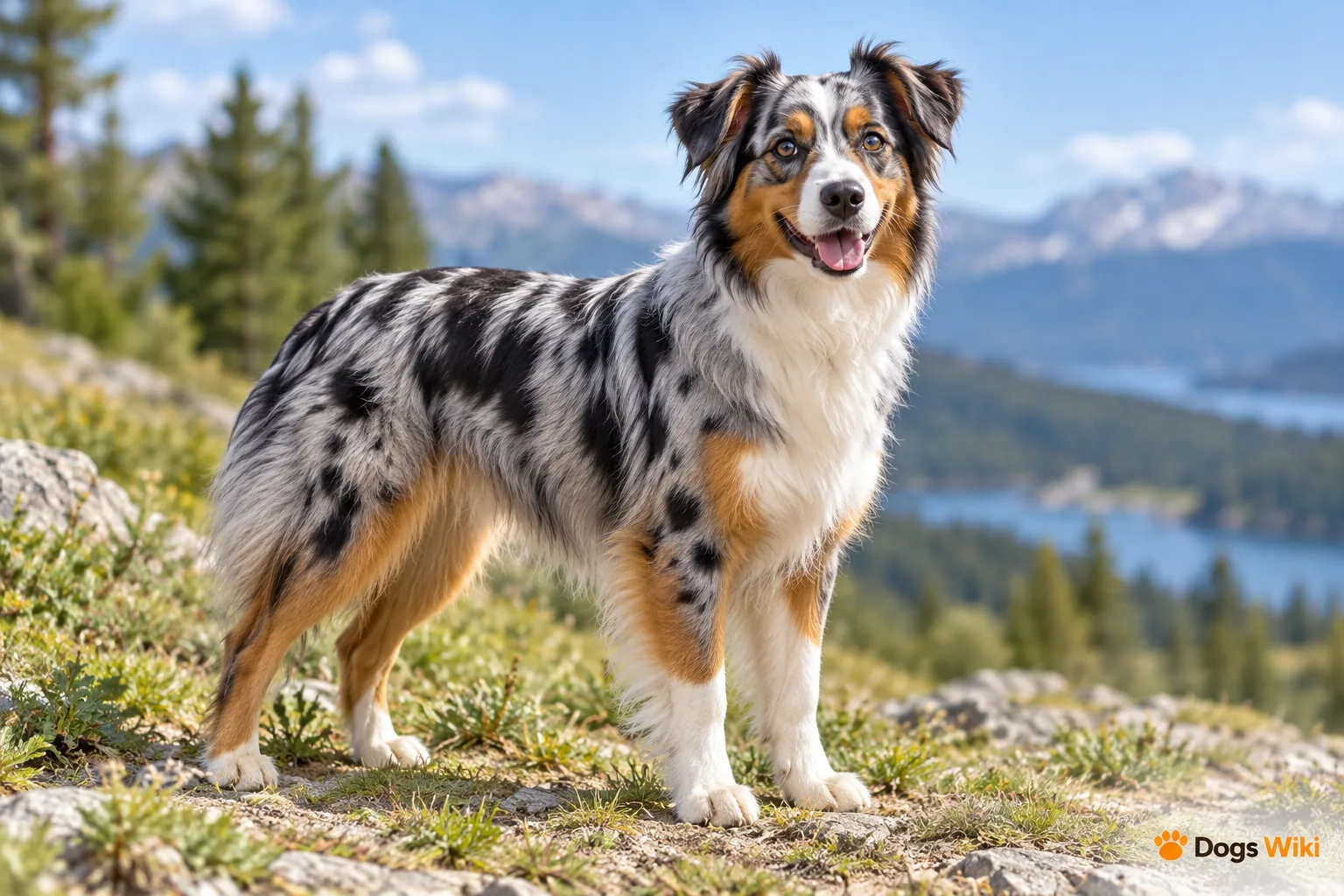
Miniature American Shepherds are a small, compact breed with a medium-length double coat. Four colors are recognized with no order of preference: black, blue merle, red, and red merle, with or without white markings and tan points. The breed shares the same build and general look as the Australian Shepherd, just smaller. Show rules disqualify males under 14 inches or over 18 inches, and females under 13 or over 17 inches.
What Is the Average Miniature American Shepherd Height and Weight?
| Measure | American Kennel Club figure |
|---|---|
| Height | 14-18 inches (male), 13-17 inches (female) |
| Weight | 20-40 pounds |
| Life expectancy | 12-13 years |
Figures are from the American Kennel Club Miniature American Shepherd breed profile, retrieved September 2026.
How Long Do Miniature American Shepherds Live?
Miniature American Shepherds live 12 to 13 years, with some sources citing a range up to 15. The breed is considered healthy overall. Regular veterinary care supports a full life.
What Health Problems Are Miniature American Shepherds Prone To?
Miniature American Shepherds are documented as being at higher risk for the following conditions.
What Is the MDR1 Mutation in Miniature American Shepherds?
The multidrug resistance mutation, MDR1 or ABCB1, is a drug sensitivity inherited from the breed’s Australian Shepherd lineage. Affected dogs cannot pump certain drugs out of the brain, so medications such as ivermectin at high doses, loperamide, and acepromazine can cause severe or fatal reactions. A cheek-swab DNA test shows whether a dog is normal, a carrier, or affected, and the result should be in every vet file.
What Eye Problems Affect Miniature American Shepherds?
Hereditary cataracts, collie eye anomaly, and progressive retinal atrophy all occur in the breed, and each has a DNA test. Progressive retinal atrophy causes night blindness first and then gradual loss of vision. An eye exam by a veterinary ophthalmologist, repeated for breeding dogs, catches problems that DNA tests do not cover.
What Is Hip Dysplasia in Miniature American Shepherds?
Hip dysplasia is a malformation of the hip joint that is common across many herding breeds and leads to arthritis. Stiffness after rest or reluctance to jump are early signs. OFA or PennHIP x-rays of both parents lower the risk, and a lean body weight protects the joints of an active dog.
Why Is Merle-to-Merle Breeding Risky in Miniature American Shepherds?
Two merle parents can produce “double merle” puppies with two copies of the merle gene. These mostly white dogs are at high risk of deafness, blindness, and malformed eyes. Responsible breeders always pair a merle with a solid-colored dog, which still produces merle puppies without that risk.
Which Health Tests Should a Miniature American Shepherd Breeder Provide?
Ask for hip results, a current eye exam, and DNA results for MDR1, hereditary cataracts, progressive retinal atrophy, and collie eye anomaly on both parents. A breeder should also confirm that no merle-to-merle pairings were made. Epilepsy occurs in the breed, so ask about seizures in the family line.
How Do You Groom a Miniature American Shepherd?
Miniature American Shepherds have a waterproof double coat that needs brushing at least once a week, with daily brushing during spring and fall shedding. Their coat sheds a lot and can become matted without a consistent routine.
| Grooming task | How often |
|---|---|
| Brush with a slicker brush and undercoat rake | Weekly, daily in spring and fall |
| Comb the feathering behind the ears and on the legs | Weekly |
| Trim nails | Every 3 to 4 weeks |
| Brush teeth | Daily, or at least three times a week |
| Bath | Every 1 to 3 months |
Shaving is not recommended. The double coat insulates against both heat and cold, and a shaved coat can grow back patchy. Burrs and grass seeds catch in the leg feathering after hikes, so a quick comb-through on the way home saves a mat later.
How Much Exercise Does a Miniature American Shepherd Need?
A Miniature American Shepherd needs substantial daily exercise, since the breed is genuinely athletic and carries a lot of energy. Runs, hikes, long walks, and structured dog sports all suit this breed well, and it needs real jobs to stay out of trouble.
Which Activities Suit a Miniature American Shepherd?
Plan on an hour or more a day. Agility, herding, flyball, obedience, and disc sports all suit the breed’s speed and focus. Mental work counts as much as running: fifteen minutes of trick training or nosework tires a young dog noticeably. Puppies should avoid repeated jumping and long runs until their growth plates close at around a year. Hot weather matters too; a dense double coat holds heat, so summer exercise belongs in the cooler parts of the day, with water on hand.
Are Miniature American Shepherds Easy to Train?
Yes. Miniature American Shepherds are highly trainable, picking up cues quickly given their intelligence and eagerness to please. Positive reinforcement training works well with this breed. Because a Mini learns so fast, it also learns the wrong lessons fast: a dog rewarded once for barking at the door, or for jumping up to get attention, repeats the habit the next day. Consistent rules from every family member matter. Many owners find that a weekly class, whether obedience, agility, or herding, gives both dog and handler structure and burns off mental energy that a walk alone cannot.
How Do You Manage Herding Behavior in a Miniature American Shepherd?
Circling, nipping at heels, and chasing running children are instinct rather than aggression, but they still need redirecting. Swap in a tug toy the moment the dog starts to herd people, and reward calm lying down while children play. Teaching kids to stand still rather than run helps. Herding lessons give the drive a proper outlet.
What Should You Feed a Miniature American Shepherd?
A Miniature American Shepherd does well on a high-quality formula appropriate for an active breed, portioned with a measuring cup and treats limited to under 10% of daily calories.
How Many Meals a Day Does a Miniature American Shepherd Need?
Puppies eat three meals a day until about six months, then two. Adults stay on two measured meals. Working and sport dogs burn more than house pets of the same size, so portions should follow body condition: ribs easy to feel and a clear waist from above.
What Are the Pros and Cons of Owning a Miniature American Shepherd?
Here are the main advantages and drawbacks of owning a Miniature American Shepherd, side by side.
| Pros | Cons |
|---|---|
| Affectionate, intelligent, genuinely good with kids and other pets | Needs substantial daily exercise and a genuine job to stay content |
| Highly trainable and eager to please | Heavy seasonal shedding requiring frequent brushing |
| Compact size relative to a full-sized Australian Shepherd | Can carry the MDR1 drug sensitivity mutation |
| Athletic and capable across dog sports | Not well suited to a sedentary or inactive household |
Anyone drawn to this breed’s compact energy who would rather not search for a breeder can contact Miniature American Shepherd rescue organizations, which place adult dogs regularly.
What Else Do People Ask About the Miniature American Shepherd?
The questions below cover what it costs to buy a Miniature American Shepherd, whether a family home is a good fit, how the Australian Shepherd differs from the breed, and how hypoallergenic the Miniature American Shepherd is.
What does it cost to buy a Miniature American Shepherd?
Prices vary by region, bloodline, and breeder reputation, and a puppy from a breeder who runs the full set of hip, eye, and DNA tests on both parents costs more than one from a breeder who skips them. Adopting an adult dog through a rescue is cheaper, and many rescued Minis come already house-trained.
Is a family home a good fit for a Miniature American Shepherd?
Yes. The breed is genuinely affectionate and good with children and other pets, making it a strong family fit for active households prepared to meet its exercise needs. Older children who enjoy training games and ball play are ideal companions for this breed.
How does the Australian Shepherd differ from the Miniature American Shepherd?
The Miniature American Shepherd is a smaller version of the Australian Shepherd, sharing the same build, coat, and temperament but bred down to a more compact size starting in the late 1960s. Registration keeps them apart: the AKC lists them as two separate breeds, each with its own standard, and a Miniature American Shepherd cannot be registered as an Australian Shepherd.
How hypoallergenic is the Miniature American Shepherd?
It is not hypoallergenic. Its double coat sheds heavily, in particular during seasonal blowouts, so allergy-sensitive households should consider other breeds.
Related Guides
More guides on The Dogs Wiki cover behavior, health, grooming, training, nutrition, and adoption.
| Guide |
|---|
| Behavior |
| Health |
| Grooming |
| Training |
| Nutrition |
| Adoption |
Leave a Reply