
Home → Dog Breeds → Terrier Group → Miniature Schnauzer
A Miniature Schnauzer is a small Terrier Group breed from Germany.
It’s the smallest of the three Schnauzer breeds, bred down from Standard Schnauzers using Affenpinschers and Poodles, and it ranks 18th among AKC breeds in popularity. This guide covers where the breed originated, its temperament, how big Miniature Schnauzers get, how long they live, the health problems they are prone to, grooming, how much exercise they need, how easy they are to train, what to feed them, the pros and cons of owning one, and what else people ask.
What Is a Miniature Schnauzer and Where Did the Breed Originate?
A Miniature Schnauzer belongs to the AKC’s Terrier Group. German breeders developed it in the late 1800s by mixing Affenpinschers and Poodles with small Standard Schnauzers, and it was first exhibited as a separate breed in 1899. Unlike most terriers, it comes from Continental European stock rather than British ratting lines, though it worked as a farm ratter in its early days. The AKC recognized the breed in 1926.
The American Kennel Club defines the breed in its “Official Standard of the Miniature Schnauzer”, approved July 10, 2012, which sets out the size, coat, and temperament a Miniature Schnauzer should have. As of September 2026, the AKC ranks the Miniature Schnauzer 18th of 210 breeds in popularity.
What Does the Name Schnauzer Mean?
“Schnauze” is German for snout or muzzle, and the breed takes its name from the whiskered face that defines it. The beard and eyebrows were once practical, protecting the face of a ratting dog from bites. Of the three Schnauzer breeds, only the Miniature is placed in the Terrier Group in the United States; the Standard and Giant Schnauzers sit in the Working Group.
What Is a Miniature Schnauzer’s Temperament Like?
A Miniature Schnauzer’s temperament is friendly, smart, and genuinely obedient, standing apart from the fiery independence of many other terriers. The standard describes a dog that is “alert and spirited, yet obedient to command,” and says it “should never be overaggressive or timid.” The breed is spirited but willing to please. Miniature Schnauzers are alert and want to keep their owner informed of everything happening around the home, which can mean real barking.
Is a Miniature Schnauzer a Good Watchdog?
Yes. Few visitors reach the door without an announcement, and the breed’s deep bark sounds larger than the dog. It is a watchdog rather than a guard dog: once a guest is welcomed, most Miniatures switch to friendly greetings. Early training to settle after a few barks keeps the alarm system from running all day, which matters in apartments and shared buildings.
Do Miniature Schnauzers Get Along With Other Pets?
Most live happily with other dogs and with cats they are raised alongside. The ratting instinct is still there, though, and hamsters, gerbils, and pet rats are best kept well out of reach. Some Miniatures are bossy with bigger dogs, so early play with calm, friendly adults teaches good manners.
How Big Do Miniature Schnauzers Get?
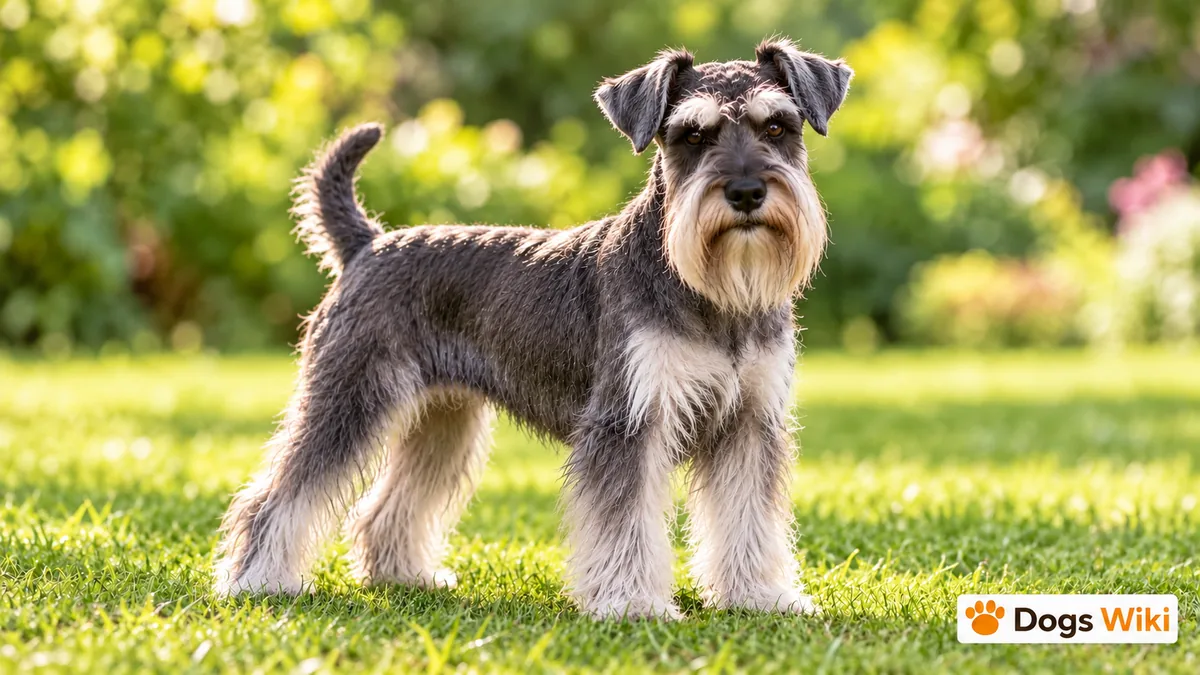
Miniature Schnauzers are a small, stocky, nearly square breed with bushy eyebrows and a long beard framing dark eyes. Colors are salt and pepper, black and silver, or solid black, and the standard requires a solid black nose and no white or pink skin patches. Dogs under 12 inches or over 14 inches at the shoulder are disqualified, as are white Miniature Schnauzers, which are popular with some pet buyers but fall outside the AKC standard.
What Is the Average Miniature Schnauzer Height and Weight?
| Measure | American Kennel Club figure |
|---|---|
| Height | 12-14 inches |
| Weight | 11-20 pounds |
| Life expectancy | 12-15 years |
Figures are from the American Kennel Club Miniature Schnauzer breed profile, retrieved September 2026.
How Long Do Miniature Schnauzers Live?
Miniature Schnauzers live 12 to 15 years. The breed is healthy and long-lived overall. Regular veterinary care, including routine blood work in middle age to check fat levels and blood sugar, supports a full life.
What Health Problems Are Miniature Schnauzers Prone To?
Miniature Schnauzers are documented as being at higher risk for the following conditions.
What Is Hyperlipidemia in Miniature Schnauzers?
Hyperlipidemia means high levels of fat, mainly triglycerides, in the blood. Miniature Schnauzers inherit a tendency toward it more than almost any other breed, and it is often found by chance on routine blood work in dogs over five. It matters because it raises the risk of pancreatitis, gallbladder disease, and seizures. A low-fat diet, sometimes with fish oil or medication, keeps levels in check.
What Is Pancreatitis in Miniature Schnauzers?
Pancreatitis is inflammation of the pancreas, and it is a genuine concern in the breed. A fatty meal, such as table scraps or a stolen plate of bacon, is a common trigger. Vomiting, a painful belly, a hunched “praying” posture, and refusing food are the signs. Mild cases recover with fluids, pain relief, and a bland low-fat diet, while severe cases need hospital care. Dogs that have had one bout stay on low-fat food for life.
What Are Bladder Stones in Miniature Schnauzers?
Bladder stones are mineral clusters that form in the urine. Miniature Schnauzers form both calcium oxalate and struvite stones more than most breeds. Straining, frequent small urinations, and blood in the urine are the warning signs, and a blocked male is an emergency. Struvite stones can dissolve on a prescription diet, while calcium oxalate stones need to be removed. Plenty of water and regular urine checks lower the risk of stones coming back.
What Is Diabetes in Miniature Schnauzers?
Diabetes mellitus is a failure to make or use insulin, which leaves sugar building up in the blood. Drinking and urinating much more than usual, weight loss despite a good appetite, and cataracts that appear suddenly are the classic signs. Twice-daily insulin injections and a consistent diet manage it, and many diabetic dogs live for years with good care.
What Other Health Problems Affect Miniature Schnauzers?
Progressive retinal atrophy, an inherited eye disease that gradually destroys vision, and hereditary cataracts both occur in the breed and are checked on an eye exam by a veterinary ophthalmologist. Myotonia congenita, a muscle disorder that causes stiffness, has a DNA test. Schnauzer comedone syndrome, a line of small blackhead-like bumps along the back, is common and usually harmless, though it can become infected.
Which Health Tests Should a Miniature Schnauzer Breeder Provide?
Ask for a current eye exam by a veterinary ophthalmologist on both parents, and DNA results for myotonia congenita and the form of progressive retinal atrophy found in the breed. Some breeders also check the parents’ blood fat levels. A breeder who feeds the adults a low-fat diet and can explain why understands the breed’s main risks.
How Do You Groom a Miniature Schnauzer?
Miniature Schnauzers have a wiry double coat that’s low-shedding but needs regular hand-stripping or clipping every four to eight weeks. The beard needs cleaning after meals to prevent staining and odor.
| Grooming task | How often |
|---|---|
| Brush and comb, with attention to beard and leg furnishings | Two to three times a week |
| Wipe and dry the beard | After meals |
| Clip or hand-strip | Every 4 to 8 weeks |
| Trim nails | Every 3 to 4 weeks |
| Brush teeth | Daily |
Should a Miniature Schnauzer Be Clipped or Hand-Stripped?
Hand-stripping pulls out dead outer hairs and keeps the coat harsh and the colors rich, which is why show dogs are stripped. It takes time and skill, and fewer groomers offer it. Clipping is quicker and cheaper, but over time it makes the coat softer and the salt and pepper color fade. Either approach is fine for a pet; the choice comes down to budget and the look you prefer. Puppies should visit the groomer early, just for a short brush and a treat, so the first full clip is not frightening.
How Much Exercise Does a Miniature Schnauzer Need?
A Miniature Schnauzer needs regular daily exercise, and the breed is small enough to fit apartment life but tireless enough to patrol acres of farmland. Without enough activity, this breed can develop excessive barking and restlessness.
Which Activities Suit a Miniature Schnauzer?
Two walks of 20 to 30 minutes a day, plus play, suit most adults. Miniature Schnauzers do well in agility, obedience, rally, and earthdog tests, and barn hunt, in which dogs find rats hidden safely in tubes among straw bales, taps straight into their ratting past. A leash or a fenced yard matters, since a squirrel can override training.
Are Miniature Schnauzers Easy to Train?
Yes, genuinely. Miniature Schnauzers are spirited but obedient and willing to please, unlike more independent terrier breeds. Positive reinforcement training works well, and a certified trainer can help curb excessive barking specifically.
How Do You Reduce Barking in a Miniature Schnauzer?
Start by finding the trigger: the doorbell, the window, or boredom. Blocking the view of the street with frosted film cuts down on window barking. Teach a “quiet” cue by waiting for a pause in the barking and rewarding it at once. Enough exercise and a puzzle toy while the family is out prevent most boredom barking.
What Should You Feed a Miniature Schnauzer?
A Miniature Schnauzer does well on a small-breed formula suited to its age and activity level. Given the breed’s real pancreatitis risk, avoiding fatty table scraps matters considerably.
What Kind of Diet Suits a Miniature Schnauzer?
Choose a food with moderate fat, and ask a vet about a low-fat diet for dogs with high blood fats or a history of pancreatitis. Two measured meals a day suit adults, while puppies eat three or four smaller meals until about six months. Treats should be low in fat, and every family member needs to know that bacon, sausages, and gravy are off the menu.
What Are the Pros and Cons of Owning a Miniature Schnauzer?
Here are the main advantages and drawbacks of owning a Miniature Schnauzer, side by side.
| Pros | Cons |
|---|---|
| Friendly, smart, genuinely obedient temperament | Can bark a lot given its alert nature |
| Low-shedding coat, good for allergy-sensitive households | Prone to pancreatitis given a fondness for rich food |
| Well suited to apartment living | High grooming commitment for the wiry coat |
| Long average lifespan | Teacup varieties aren’t a healthy breeding goal, despite marketing claims |
Anyone who likes this breed’s friendly personality but would rather not search for a breeder can contact Miniature Schnauzer rescue organizations, which place adult dogs regularly.
What Else Do People Ask About the Miniature Schnauzer?
The questions below cover what it costs to buy a Miniature Schnauzer, whether a family home is a good fit, whether you should buy a teacup Miniature Schnauzer, and how the Standard Schnauzer differs from the Miniature.
What does it cost to buy a Miniature Schnauzer?
Miniature Schnauzer prices vary by region, bloodline, and breeder reputation, and a puppy from a breeder who screens the parents’ eyes and health costs more than one that doesn’t. Adopting an adult dog through a rescue is cheaper, and many are waiting for homes.
Is a family home a good fit for a Miniature Schnauzer?
Yes. The breed is friendly toward kids and other animals and likes to play hard, making it a genuinely good-natured family companion. Its sturdy build handles play better than many toy breeds of similar weight, and its size makes it easy to take along on family outings, car trips, and visits to relatives. Supervision with toddlers is still wise, as it is with any dog.
Should I buy a teacup Miniature Schnauzer?
No, teacup Miniature Schnauzers aren’t a recognized or recommended variety. Breeding for extreme miniaturization can introduce real health problems, and reputable breeders don’t pursue this goal.
How does the Standard Schnauzer differ from the Miniature Schnauzer?
Miniature Schnauzers weigh 20 pounds or less and belong to the Terrier Group, while Standard Schnauzers weigh 30 to 50 pounds and belong to the Working Group. Both share a similar wiry coat and bearded look.
Related Guides
More guides on The Dogs Wiki cover behavior, health, grooming, training, nutrition, and adoption.
| Guide |
|---|
| Behavior |
| Health |
| Grooming |
| Training |
| Nutrition |
| Adoption |
Comments
One response to “Miniature Schnauzer: Breed Profile, Temperament, Health, and Care Guide”
[…] Miniature Schnauzer […]