Home → Dog Breeds → Designer & Mixed Breeds → Labradoodle
A Labradoodle is a designer cross between a Labrador Retriever and a Poodle, first bred in 1989 by Australian breeder Wally Conron as a low-shedding guide dog.
A Labradoodle is a designer cross between a Labrador Retriever and a Poodle, first deliberately bred in 1989 by Australian breeder Wally Conron, who was trying to create a low-shedding guide dog for a visually impaired woman whose husband had allergies. That original goal, combining a working retriever’s trainability with a hypoallergenic-leaning coat, is still the core appeal of the cross today. This guide covers where the cross originated, its temperament, how big Labradoodles get, how long they live, the health problems they are prone to, grooming, how much exercise they need, how easy they are to train, what to feed them, the pros and cons of owning one, and what else people ask.
What Is a Labradoodle and Where Did the Cross Originate?
A Labradoodle is a cross between a Labrador Retriever and a Poodle, credited to Wally Conron of the Royal Guide Dog Association of Australia in 1989, who was searching for a guide dog that wouldn’t trigger allergies. The cross combined the Labrador’s renowned trainability and gentle temperament with the Poodle’s low-shedding coat, and the resulting dogs proved popular enough to spark the broader “doodle” trend that followed. The Labradoodle remains unregistered with the AKC, and breeders are still working to establish a consistent multigenerational standard for the cross.
The American Kennel Club does not register the Labradoodle as a breed, so there is no official Labradoodle standard; its parent breeds are described in the AKC’s “Official Standard for the Labrador Retriever”, approved February 12, 1994, and the AKC’s “Official Standard of the Poodle”, approved August 14, 1984.
What Is a Labradoodle’s Temperament Like?
A Labradoodle’s temperament is friendly, sociable, and affectionate, generally described as gentle and patient, which makes the cross a popular choice for families and, in some lines, as a service or therapy dog. Labradoodles tend to get along well with children and other pets when properly socialized from an early age, and early-generation Labradoodles in particular can run more lively and hyperactive than later-generation, more temperament-consistent lines.
How Big Do Labradoodles Get?
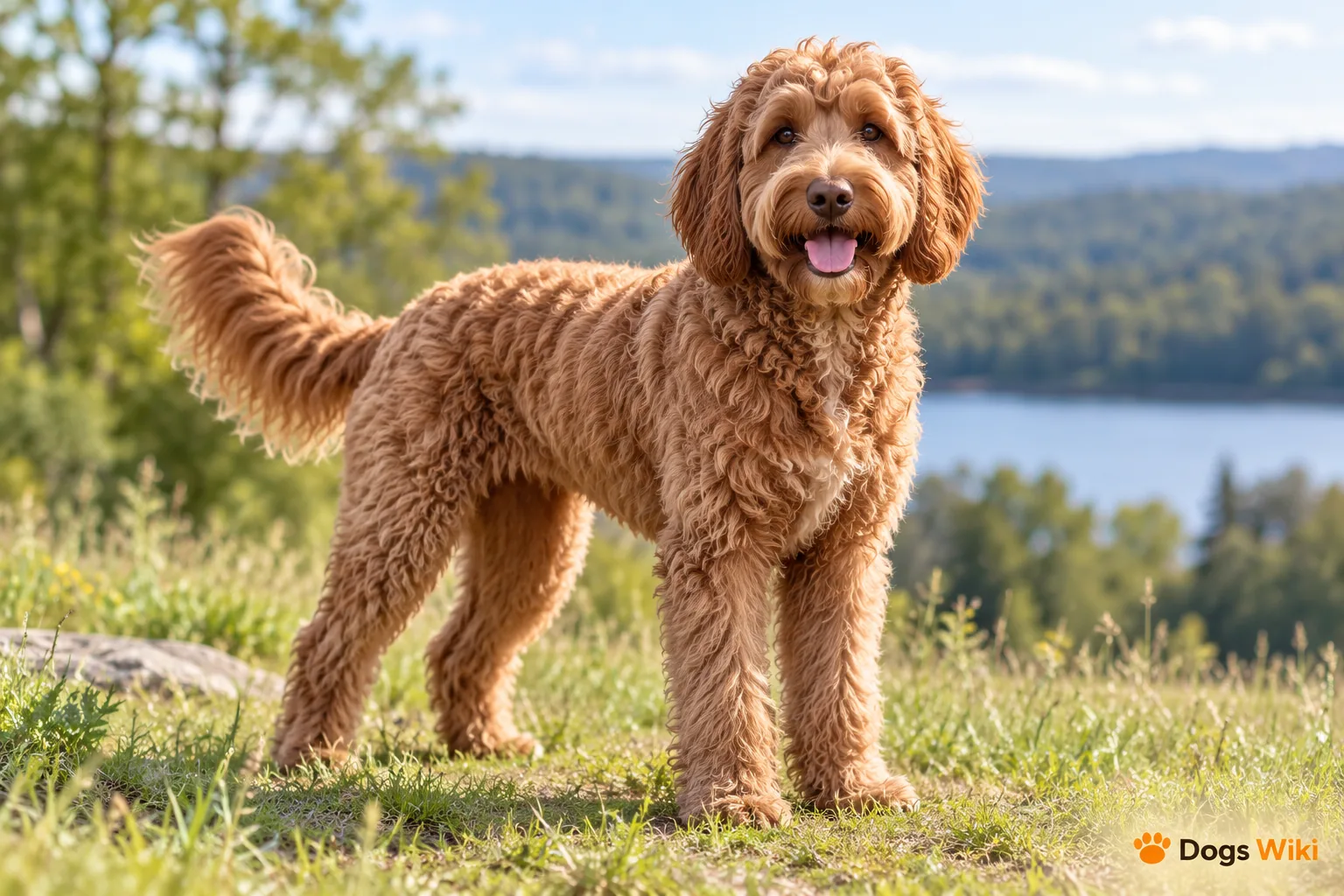
A Labradoodle’s size depends on which size of Poodle was used in the cross, ranging from standard to medium to miniature, with heights roughly 14 to 25 inches and weights from about 15 to 65 pounds depending on the line. Coat type also varies, from straight to wavy to tightly curled, depending on the individual dog’s specific genetics.
How Long Do Labradoodles Live?
Labradoodles live 12 to 15 years, and smaller Miniature Labradoodles tend to outlive their Standard-sized counterparts, since smaller body size places less strain on the organs and joints over time. Regular veterinary care supports a full lifespan for this hardy cross.
What Health Problems Are Labradoodles Prone To?
Because a Labradoodle inherits traits from both parent breeds, it can be prone to health conditions documented in either the Labrador Retriever or the Poodle.
- Hip dysplasia. A joint condition common in larger dogs, screened for with OFA or PennHIP hip evaluations in reputable breeding programs.
- Progressive retinal atrophy. An inherited eye disease documented in both parent breeds that can affect vision over time.
- Ear infections. The breed’s floppy ears, inherited from the Labrador side, trap moisture and raise the risk of infection without regular cleaning.
- Elbow dysplasia and Addison’s disease. A joint condition and a hormonal disorder, both documented concerns in some Labradoodle lines, Australian Labradoodle bloodlines.
- Epilepsy and eye abnormalities. Recognized concerns worth discussing with a breeder or veterinarian, and part of why annual health checkups matter for this cross.
How Do You Groom a Labradoodle?
A Labradoodle’s coat type, straight, wavy, or curly, determines how much grooming it genuinely needs: curly and wavy coats require more frequent brushing and professional grooming, while straighter coats need comparatively less maintenance. Regardless of coat type, brushing teeth a few times a week and trimming nails roughly twice a month rounds out the routine, and Labradoodle nails carry blood vessels that extend further than in some other breeds, so nail trims call for extra care.
How Much Exercise Does a Labradoodle Need?
A Labradoodle needs roughly one to two hours of exercise a day once fully grown, with as much secure off-leash time as possible, reflecting the working heritage of both parent breeds. First-generation Labradoodles tend to run higher-energy than later-generation or Australian Labradoodle lines, which are bred for a calmer, more balanced temperament suited to therapy work.
Are Labradoodles Easy to Train?
Yes, Labradoodles are highly trainable, drawing on the Labrador Retriever’s legendary eagerness to please and the Poodle’s genuine intelligence. Positive reinforcement training works well, and the cross’s trainability is part of why Labradoodles are frequently used in service and therapy dog roles.
What Should You Feed a Labradoodle?
Labradoodle puppies should eat a specially formulated puppy food three to four times a day until around six months old, then transition to twice-daily adult feeding. Because both parent breeds are prone to weight gain, monitoring portions and body condition closely helps prevent obesity-related health issues.
What Are the Pros and Cons of Owning a Labradoodle?
Here are the main advantages of owning a Labradoodle.
- Friendly, gentle, highly trainable temperament
- Lower-shedding coat than a purebred Labrador Retriever
- Good with children and other pets when socialized
- Well suited to service and therapy work in the right lines
Here are the main drawbacks of owning a Labradoodle.
- Needs substantial daily exercise, one to two hours once grown
- Early-generation crosses can be high-energy
- Can inherit health risks from either parent breed
- Not officially recognized by the AKC, so no fixed breed standard exists
Labradoodle-specific rescue organizations and general shelters both place adult dogs regularly, worth a look for anyone drawn to this cross but not set on a breeder search.
What Else Do People Ask About the Labradoodle?
The questions below cover how much a Labradoodle costs, whether Labradoodles are hypoallergenic, who created the Labradoodle, and the difference between the Labradoodle and the Goldendoodle.
How much does a Labradoodle cost?
Labradoodle prices vary widely by breeder, region, and lineage, and Australian Labradoodle lines with more established multigenerational breeding programs tend to command higher prices given the demand for consistent temperament. Adopting an adult Labradoodle through a rescue is usually a lower-cost alternative.
Are Labradoodles hypoallergenic?
Labradoodles are often marketed as hypoallergenic because they were originally bred to reduce shedding, but no dog is allergen-free. Some Labradoodles do shed less and may be better tolerated by allergy sufferers, those with more Poodle-like curly coats, but reactions can vary from person to person and dog to dog.
Who created the Labradoodle?
The Labradoodle was created in 1989 by Wally Conron, a breeding manager at the Royal Guide Dog Association of Australia, who was trying to produce a low-shedding guide dog for a visually impaired woman whose husband was allergic to dogs. The resulting cross of a Labrador Retriever and a Poodle became popular enough to launch the broader trend of intentional “doodle” crossbreeds that followed.
What Is the Difference Between the Labradoodle and the Goldendoodle?
Labradoodles and Goldendoodles are both Poodle crosses with a similarly friendly, trainable temperament, but Labradoodles generally run somewhat higher-energy on average, reflecting the Labrador Retriever’s work-driven heritage, while Goldendoodles tend to have a calmer disposition and a slightly longer average lifespan.
Related Guides
More guides on The Dogs Wiki cover behavior, health, training, nutrition, and adoption.
| Guide |
|---|
| Behavior |
| Health |
| Training |
| Nutrition |
| Adoption |