Category: Cardiac & Respiratory Health

  • Mitral Valve Disease in Dogs: Symptoms, Causes, Treatment, and Prevention

    Home → Dog Health → Cardiac & Respiratory Health → Mitral Valve Disease in Dogs

    Mitral Valve Disease in Dogs: Symptoms, Causes, Treatment, and Prevention

    Mitral valve disease is the most commonly diagnosed heart disease in dogs, caused by gradual degeneration of the valve between two heart chambers, which allows blood to leak backward and puts added strain on the heart over time.

    The disease is especially common in small breeds, and because it progresses slowly over years in most dogs, a heart murmur detected during a routine exam is often the very first sign, long before any outward symptoms appear. This guide covers what causes mitral valve disease, its symptoms, how it’s diagnosed, how it’s treated, whether it can be prevented, and when to see a veterinarian.

    This guide covers what mitral valve disease is, what causes it in dogs, its symptoms, how it’s diagnosed, how it’s treated, whether it can be prevented, when to see a vet, and what else people ask.

    What Is Mitral Valve Disease in Dogs?

    Mitral valve disease, medically called myxomatous mitral valve degeneration, is a progressive thickening and deformation of the mitral valve, the structure that normally prevents blood from flowing backward between two of the heart’s chambers. As the valve degenerates, it no longer closes properly, allowing blood to leak backward with each heartbeat, a process called regurgitation that forces the heart to work harder and can eventually lead to heart enlargement and congestive heart failure. The disease typically progresses gradually over years, and veterinary cardiologists classify its severity using a staged system that guides when treatment should begin.

    What Causes Mitral Valve Disease in Dogs?

    The exact cellular process behind mitral valve degeneration isn’t fully understood, but genetics plays a dominant role, with small breeds showing a dramatically higher rate of the disease than larger breeds. The Cavalier King Charles Spaniel is particularly and extensively documented as predisposed to mitral valve disease, often developing it earlier in life and more severely than other breeds, alongside the Chihuahua, Dachshund, Poodle, and Miniature Schnauzer. Age is also a significant factor, since the valve degeneration process typically worsens gradually over a dog’s lifetime.

    What Are the Symptoms of Mitral Valve Disease in Dogs?

    A heart murmur, an abnormal sound caused by the turbulent backward flow of blood, is typically the first detectable sign of mitral valve disease and is often found incidentally during a routine veterinary exam long before any other symptoms appear. As the disease progresses, dogs may develop a cough, particularly at night or after lying down, along with reduced exercise tolerance and labored breathing. In more advanced stages, fainting episodes can occur, and the disease can progress to congestive heart failure, marked by more pronounced breathing difficulty and fluid buildup.

    How Is Mitral Valve Disease in Dogs Diagnosed?

    A veterinarian typically first detects mitral valve disease by hearing a heart murmur through a stethoscope during a routine physical exam. An echocardiogram, an ultrasound of the heart, is the definitive tool for confirming the diagnosis, assessing the severity of the valve leakage, and measuring how much the heart has enlarged in response. Chest X-rays and blood tests measuring cardiac biomarkers often accompany this workup to assess overall heart size and function and help stage the disease’s severity.

    How Is Mitral Valve Disease in Dogs Treated?

    Treatment approach depends heavily on the disease’s stage: dogs with a murmur but no heart enlargement are typically monitored without medication, while dogs with documented heart enlargement are usually started on medication, most commonly pimobendan, to support heart function and delay progression to heart failure. Once congestive heart failure develops, additional medications, including diuretics and other heart medications, are added to manage fluid buildup and support the heart’s remaining function. Surgical mitral valve repair is available at a small number of specialized veterinary centers and can be a meaningful option for select cases, though it’s less widely accessible than medical management.

    Can Mitral Valve Disease in Dogs Be Prevented?

    Mitral valve disease generally can’t be prevented, since it stems primarily from a genetic predisposition toward valve degeneration that isn’t within an owner’s control. Regular veterinary exams that include careful listening for a heart murmur allow early detection in predisposed breeds, particularly the Cavalier King Charles Spaniel, which benefits from closer cardiac monitoring given how strongly and early the breed tends to be affected. Early detection doesn’t prevent the disease but does allow treatment to start at the stage where it provides the most benefit.

    When Should You See a Vet for Mitral Valve Disease in Dogs?

    See a veterinarian for regular wellness exams that include a thorough heart listen, particularly for small-breed dogs and especially Cavalier King Charles Spaniels, since early detection of a murmur matters considerably for long-term management. A new cough, reduced exercise tolerance, or labored breathing in a dog with a known murmur warrants a prompt veterinary evaluation, since these can signal disease progression. A dog already diagnosed with mitral valve disease should see a veterinary cardiologist regularly to monitor the disease’s stage and adjust treatment accordingly.

    What Else Do People Ask About Mitral Valve Disease in Dogs?

    The questions below cover whether mitral valve disease is curable, how long dogs live with it, whether every heart murmur means mitral valve disease, and which dogs are most at risk.

    Is mitral valve disease in dogs curable?

    No, mitral valve disease is not curable through medication, since the valve degeneration itself doesn’t reverse, though treatment can meaningfully slow progression and manage symptoms for an extended period. Surgical valve repair, available at select specialized centers, offers a more definitive option for some dogs, though it isn’t widely accessible.

    How long do dogs live with mitral valve disease?

    Survival time varies enormously depending on the disease’s stage at diagnosis and how a dog responds to treatment, with many dogs living comfortably for years after an early-stage murmur is first detected. Dogs that progress to congestive heart failure generally have a more limited timeline, though appropriate medication can still meaningfully extend both survival and comfort.

    Does every heart murmur mean a dog has mitral valve disease?

    No, not every heart murmur indicates mitral valve disease; murmurs can also result from other heart conditions, congenital defects, or in puppies, sometimes resolve on their own as an innocent, physiologic finding. An echocardiogram is needed to determine the actual cause and significance of a specific murmur.

    Which dogs are most at risk for mitral valve disease?

    Small breeds face by far the highest risk, with the Cavalier King Charles Spaniel showing a particularly strong and well-documented predisposition, often developing the disease earlier and more severely than other breeds. The Chihuahua, Dachshund, Poodle, and Miniature Schnauzer also show elevated documented risk.

    Related Guides

    More guides on The Dogs Wiki cover general dog health and senior dog care.

    Guide
    Dog Health
  • Laryngeal Paralysis in Dogs: Symptoms, Causes, Treatment, and Prevention

    Home → Dog Health → Cardiac & Respiratory Health → Laryngeal Paralysis in Dogs

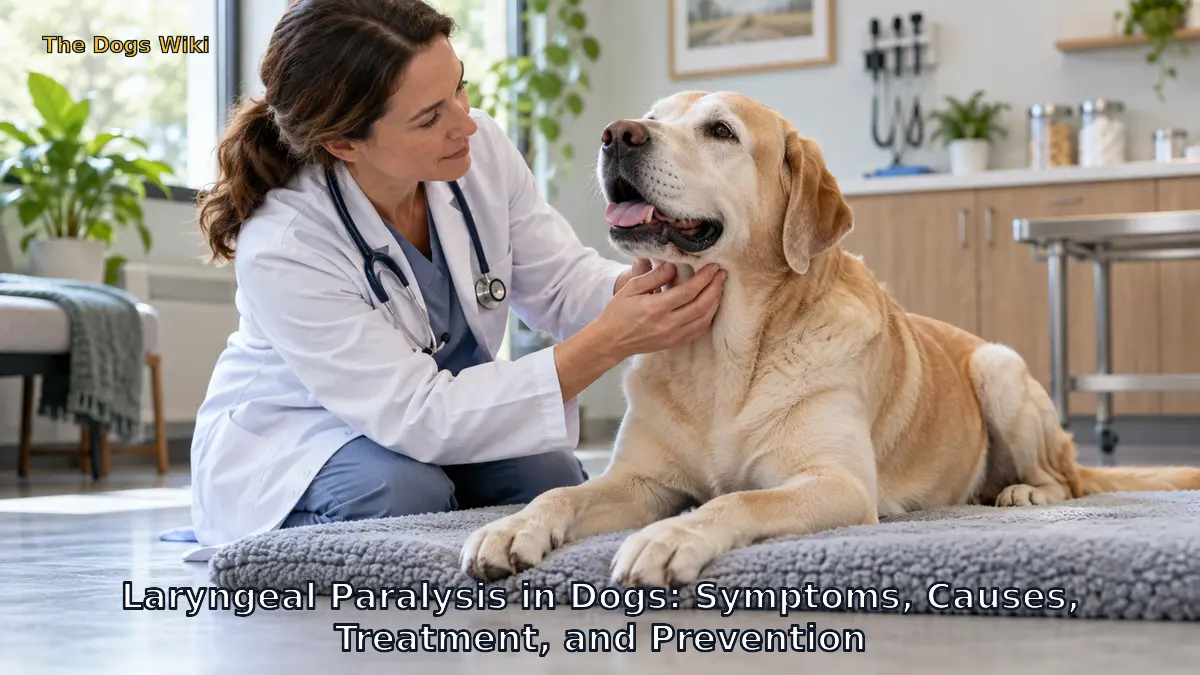
    Laryngeal Paralysis in Dogs: Symptoms, Causes, Treatment, and Prevention

    Laryngeal paralysis in dogs is a condition in which the muscles and cartilage that normally open the airway during breathing fail to function properly, most often affecting older, large-breed dogs and producing increasingly noisy, labored breathing.

    The condition develops gradually in most dogs, and because it’s a nerve-related problem rather than a structural blockage, it can sometimes be part of a broader, more widespread nerve condition affecting other parts of the body as well. This guide covers what causes laryngeal paralysis, its symptoms, how it’s diagnosed, how it’s treated, whether it can be prevented, and when to see a veterinarian.

    This guide covers what laryngeal paralysis is, what causes it in dogs, its symptoms, how it’s diagnosed, how it’s treated, whether it can be prevented, when to see a vet, and what else people ask.

    What Is Laryngeal Paralysis in Dogs?

    Laryngeal paralysis occurs when the nerves and muscles responsible for opening the laryngeal cartilages, the structures that form the entrance to the windpipe, stop functioning properly, leaving the airway unable to open fully during inhalation. This narrows the space air has to pass through, producing the noisy, labored breathing characteristic of the condition. In many older, large-breed dogs, laryngeal paralysis occurs as part of a broader, slowly progressive nerve condition sometimes called geriatric onset laryngeal paralysis polyneuropathy, which can also affect nerves controlling the hind limbs.

    What Causes Laryngeal Paralysis in Dogs?

    Most cases of laryngeal paralysis in dogs are classified as idiopathic, meaning the specific underlying cause of the nerve degeneration isn’t identified, though age-related nerve degeneration is believed to play a central role. The condition occurs considerably more often in older, large-breed dogs, with the Labrador Retriever particularly well documented as predisposed, alongside other large breeds. Less commonly, laryngeal paralysis can result from trauma, a tumor affecting the relevant nerves, or, rarely, a congenital form that appears in young dogs of specific breeds.

    What Are the Symptoms of Laryngeal Paralysis in Dogs?

    Noisy, raspy breathing, particularly on inhalation, is the hallmark symptom of laryngeal paralysis, often described as a harsh, strained sound that becomes more pronounced with excitement, heat, or exercise. Many affected dogs also show reduced exercise tolerance, and some owners notice a change in the sound of their dog’s bark as the condition progresses. In severe cases or during a crisis, breathing distress can become significant enough to represent a true emergency, sometimes triggered by heat, stress, or overexertion.

    How Is Laryngeal Paralysis in Dogs Diagnosed?

    The definitive diagnostic test for laryngeal paralysis is direct visualization of the larynx under light sedation, allowing a veterinarian to watch whether the laryngeal cartilages open and close normally during breathing. This procedure, called laryngoscopy, is considered the gold standard, since the diagnosis depends on observing the structure’s actual movement rather than relying on symptoms or imaging alone. A veterinarian may also recommend chest X-rays and bloodwork as part of a broader workup, particularly to rule out other causes of labored breathing or to screen for the broader nerve condition sometimes associated with laryngeal paralysis in older large-breed dogs.

    How Is Laryngeal Paralysis in Dogs Treated?

    Mild cases are sometimes managed conservatively through weight control, avoiding heat and overexertion, and using a harness instead of a collar to reduce pressure on the throat. For moderate to severe cases significantly affecting quality of life, a surgical procedure called a laryngeal tie-back is commonly performed, permanently securing one side of the larynx in an open position to improve airflow. This surgery meaningfully improves breathing for most dogs but also increases the risk of aspiration pneumonia afterward, since the airway structure that normally helps protect against inhaling food or water doesn’t function as effectively, which is why lifestyle adjustments like feeding from an elevated position and avoiding swimming are typically recommended following surgery.

    Can Laryngeal Paralysis in Dogs Be Prevented?

    Laryngeal paralysis generally can’t be prevented, since it stems from age-related nerve degeneration that isn’t within an owner’s control, particularly in the idiopathic form that affects most older large-breed dogs. For dogs with a known diagnosis or those at higher risk given their breed and age, avoiding excessive heat exposure and overexertion can help reduce the chance of triggering a severe breathing crisis. There’s no established intervention proven to prevent the underlying nerve degeneration itself.

    When Should You See a Vet for Laryngeal Paralysis in Dogs?

    See a veterinarian if an older, large-breed dog develops noisy or labored breathing, particularly if it worsens with excitement or exercise, since this pattern is characteristic of laryngeal paralysis and warrants evaluation. Seek emergency veterinary care immediately if a dog shows severe respiratory distress, blue-tinged gums, or collapse, since this can indicate a dangerous breathing crisis requiring urgent treatment. A dog already diagnosed with laryngeal paralysis should see a veterinarian promptly if breathing noticeably worsens, since this may indicate the need to consider surgical intervention.

    What Else Do People Ask About Laryngeal Paralysis in Dogs?

    The questions below cover whether laryngeal paralysis is curable, whether surgery is always necessary, which dogs are most at risk, and whether laryngeal paralysis is related to any other conditions.

    Is laryngeal paralysis in dogs curable?

    No, laryngeal paralysis is not curable, since the underlying nerve degeneration doesn’t reverse, but surgery can meaningfully improve breathing and quality of life for dogs with moderate to severe symptoms. Mild cases can often be managed successfully with conservative measures alone.

    Is surgery always necessary for laryngeal paralysis?

    No, surgery isn’t always necessary, and dogs with mild symptoms are often managed successfully through weight control, heat avoidance, and reduced strenuous exercise. A veterinarian typically recommends surgery when symptoms significantly affect a dog’s quality of life or when breathing distress becomes a recurring concern.

    Which dogs are most at risk for laryngeal paralysis?

    Older, large-breed dogs face the highest documented risk, with the Labrador Retriever particularly well represented among diagnosed cases. The condition is uncommon in small breeds and in dogs younger than middle-aged, outside of the rare congenital form seen in specific breeds.

    Is laryngeal paralysis related to any other conditions?

    Yes, in many older large-breed dogs, laryngeal paralysis occurs as part of a broader nerve condition sometimes called geriatric onset laryngeal paralysis polyneuropathy, which can also cause gradual hind-limb weakness. A veterinarian may screen for signs of this broader condition in a dog diagnosed with laryngeal paralysis.

    Related Guides

    More guides on The Dogs Wiki cover general dog health and senior dog care.

    Guide
    Dog Health
  • Heart Murmurs in Dogs: Symptoms, Causes, Treatment, and Prevention

    Home → Dog Health → Cardiac & Respiratory Health → Heart Murmurs in Dogs

    Heart Murmurs in Dogs: Symptoms, Causes, Treatment, and Prevention

    A heart murmur in dogs is an abnormal whooshing or swishing sound heard between normal heartbeats, caused by turbulent blood flow, and it’s a finding rather than a disease in itself, meaning its significance depends entirely on what’s causing it.

    A murmur detected in a puppy is often a harmless, temporary finding, while the same sound in a senior small-breed dog is more likely to signal underlying heart disease, which is why the same exam finding can mean very different things depending on the dog. This guide covers what causes heart murmurs, their symptoms, how they’re diagnosed, how they’re treated, whether they can be prevented, and when to see a veterinarian.

    This guide covers what a heart murmur is, what causes it in dogs, its symptoms, how it’s diagnosed, how it’s treated, whether it can be prevented, when to see a vet, and what else people ask.

    What Is a Heart Murmur in Dogs?

    A heart murmur is an abnormal sound, often described as a whooshing or swishing noise, heard through a stethoscope between the normal heart sounds, caused by turbulent rather than smooth blood flow through the heart. Veterinarians grade murmurs on a scale from one to six based on loudness, with a higher grade generally, though not always, correlating with more significant underlying turbulence. A murmur itself is a physical exam finding rather than a diagnosis, and its true significance depends on identifying what’s causing the turbulent blood flow in the first place.

    What Causes Heart Murmurs in Dogs?

    Many puppies have what’s called an innocent or physiologic murmur, a soft, typically low-grade sound that reflects normal developmental blood flow patterns and usually resolves on its own by around four to five months of age without any underlying heart disease. In adult and senior dogs, murmurs more often reflect actual structural heart disease, including mitral valve disease, dilated cardiomyopathy, or a congenital heart defect present since birth. Non-cardiac conditions, including significant anemia or certain systemic illnesses, can also produce a murmur by altering how blood flows through an otherwise structurally normal heart.

    What Are the Symptoms Associated With a Heart Murmur in Dogs?

    A heart murmur itself doesn’t directly cause symptoms, since it’s simply a sound reflecting how blood is flowing through the heart rather than a condition that produces discomfort on its own. Any symptoms a dog with a murmur shows, including coughing, exercise intolerance, or labored breathing, actually stem from the underlying condition causing the murmur rather than the murmur itself. This is exactly why a dog can have a murmur and show no symptoms at all, particularly in the earlier stages of an underlying heart condition.

    How Are Heart Murmurs in Dogs Diagnosed?

    A veterinarian detects a heart murmur during a routine physical exam using a stethoscope, noting its grade, location, and timing within the heartbeat cycle, all of which provide clues about the likely underlying cause. For a young puppy with a soft, low-grade murmur, a veterinarian may recommend simply rechecking it at the next visit to see if it resolves on its own. For an adult or senior dog, or any louder or more concerning murmur, an echocardiogram, an ultrasound of the heart, is typically recommended to directly visualize the heart’s structure and determine the murmur’s actual cause.

    How Are Heart Murmurs in Dogs Treated?

    An innocent puppy murmur typically requires no treatment at all and is simply monitored until it resolves on its own, usually within the first several months of life. A murmur caused by underlying heart disease is treated by addressing that specific condition, whether that’s medication for mitral valve disease or dilated cardiomyopathy, or addressing a non-cardiac cause like anemia directly. There’s no treatment that targets the murmur sound itself, since treatment always focuses on the actual underlying cause once it’s identified.

    Can Heart Murmurs in Dogs Be Prevented?

    Innocent puppy murmurs aren’t something that needs preventing, since they’re a normal developmental finding that resolves on its own. Murmurs caused by genetic heart disease, including mitral valve disease, generally can’t be prevented, since they stem from a predisposition outside an owner’s control. Regular veterinary wellness exams that include careful heart auscultation give a dog the best chance at having a murmur detected and investigated early, even though the underlying conditions that cause many murmurs aren’t preventable themselves.

    When Should You See a Vet for a Heart Murmur in Dogs?

    See a veterinarian if a murmur is newly detected in an adult or senior dog, since this is more likely to reflect underlying heart disease than a murmur found in a young puppy. Any dog with a known murmur that develops coughing, reduced exercise tolerance, or labored breathing needs a prompt veterinary evaluation, since these symptoms can indicate the underlying condition is progressing. A puppy with a murmur should be rechecked as recommended by a veterinarian to confirm it resolves as expected rather than assuming it will without follow-up.

    What Else Do People Ask About Heart Murmurs in Dogs?

    The questions below cover whether all heart murmurs are dangerous, whether murmur grade indicates severity, whether dogs with a murmur can still exercise, and whether murmurs are hereditary.

    Are all heart murmurs in dogs dangerous?

    No, not all heart murmurs are dangerous; an innocent puppy murmur is harmless and typically resolves on its own, while a murmur in an adult dog caused by significant heart disease carries more serious implications. The underlying cause, not the murmur sound itself, determines how concerning a specific case actually is.

    Does a murmur’s grade indicate how severe the underlying problem is?

    Generally yes, a higher-grade murmur often correlates with more significant turbulent blood flow, but grade alone doesn’t tell the whole story, since a lower-grade murmur can sometimes still reflect meaningful underlying disease. An echocardiogram provides a far more accurate picture of actual severity than murmur grade alone.

    Can dogs with a heart murmur still exercise?

    Many dogs with a murmur, particularly an innocent puppy murmur or early-stage heart disease without symptoms, can continue normal exercise, but a veterinarian’s guidance should shape activity level for any dog with a confirmed underlying heart condition. Exercise recommendations become more restrictive as heart disease progresses toward heart failure.

    Are heart murmurs hereditary in dogs?

    Murmurs caused by inherited heart conditions, including mitral valve disease and certain congenital defects, do have a genetic component and can run in certain breeds and bloodlines. An innocent puppy murmur, by contrast, isn’t a hereditary condition and simply reflects a normal, temporary developmental pattern.

    Related Guides

    More guides on The Dogs Wiki cover general dog health and puppy care.

    Guide
    Dog Health
    Puppies
  • Dilated Cardiomyopathy (DCM) in Dogs: Symptoms, Causes, Treatment, and Prevention

    Home → Dog Health → Cardiac & Respiratory Health → Dilated Cardiomyopathy (DCM) in Dogs

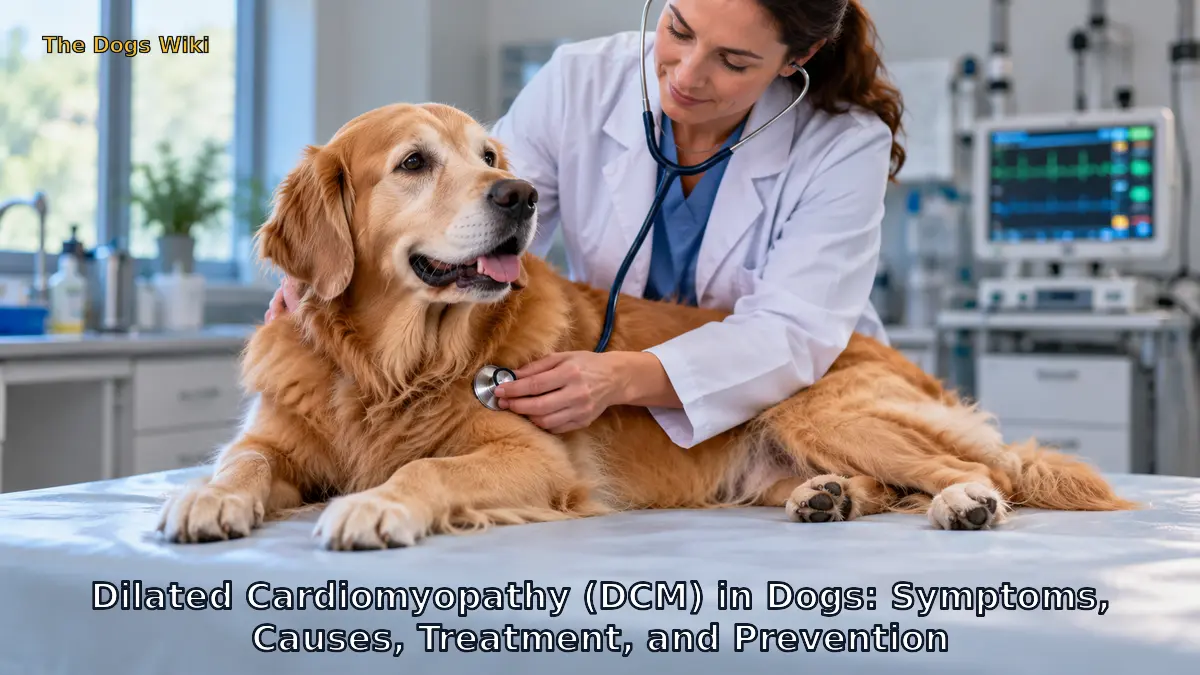
    Dilated Cardiomyopathy (DCM) in Dogs: Symptoms, Causes, Treatment, and Prevention

    Dilated cardiomyopathy is a disease of the heart muscle itself, causing the heart’s chambers to enlarge and the muscle to weaken, which reduces the heart’s ability to pump blood effectively.

    DCM often progresses silently for a period before producing noticeable symptoms, which is part of why genetic screening and regular veterinary monitoring matter considerably in breeds known to be predisposed. This guide covers what causes DCM, its symptoms, how it’s diagnosed, how it’s treated, whether it can be prevented, and when to see a veterinarian.

    This guide covers what DCM is, what causes it in dogs, its symptoms, how it’s diagnosed, how it’s treated, whether it can be prevented, when to see a vet, and what else people ask.

    What Is Dilated Cardiomyopathy in Dogs?

    Dilated cardiomyopathy, commonly abbreviated as DCM, is a disease in which the heart muscle weakens and the heart’s chambers stretch and enlarge, reducing the organ’s ability to contract and pump blood efficiently throughout the body. As the disease progresses, this reduced pumping ability can lead to fluid buildup in the lungs or abdomen, a stage known as congestive heart failure. DCM often has a significant genetic component in several large and giant breeds, though it can also develop secondary to nutritional factors in some cases.

    What Causes Dilated Cardiomyopathy in Dogs?

    Genetics plays a well-documented role in DCM, with breeds including the Doberman Pinscher, Great Dane, Boxer, Irish Wolfhound, and Cocker Spaniel showing a strong, inherited predisposition to the disease. Taurine deficiency is a separate, documented cause of DCM, historically most associated with Cocker Spaniels and more recently investigated in connection with certain grain-free and legume-heavy commercial diets, an area veterinary researchers and the FDA have continued to study. In breeds without a strong genetic predisposition, an unexplained case of DCM is one of the reasons a veterinarian may recommend reviewing a dog’s diet and checking taurine levels.

    What Are the Symptoms of Dilated Cardiomyopathy in Dogs?

    DCM frequently progresses silently in its early, “occult” stage, with no outwardly visible symptoms even though the heart muscle is already affected, which is why screening in predisposed breeds matters so much. As the disease advances, symptoms including lethargy, reduced exercise tolerance, labored breathing, and coughing typically develop. In more advanced cases, fainting episodes and abdominal swelling from fluid accumulation can occur as the heart’s pumping ability becomes significantly compromised.

    How Is Dilated Cardiomyopathy in Dogs Diagnosed?

    An echocardiogram, an ultrasound of the heart, is the primary diagnostic tool for DCM, directly visualizing the heart’s chamber size and how effectively it’s contracting. Chest X-rays help assess heart size and check for fluid in the lungs, while an electrocardiogram, or EKG, can detect the abnormal heart rhythms that commonly accompany DCM. Blood tests measuring specific cardiac biomarkers can help identify heart muscle strain, and a taurine level test is recommended when diet-related DCM is suspected, particularly in a breed without a typical genetic predisposition.

    How Is Dilated Cardiomyopathy in Dogs Treated?

    Medication to improve the heart’s pumping strength, most commonly pimobendan, is a cornerstone of DCM treatment and has documented benefit for both quality of life and survival time. Additional medications manage specific complications, including diuretics to address fluid buildup once congestive heart failure develops and medications to control abnormal heart rhythms when present. For dogs with diet-related or taurine-deficiency DCM, switching to an appropriate diet and taurine supplementation, guided by a veterinarian, can meaningfully improve or in some cases reverse heart function.

    Can Dilated Cardiomyopathy in Dogs Be Prevented?

    Genetically driven DCM in predisposed breeds generally can’t be prevented, though genetic testing and screening echocardiograms allow early detection before symptoms develop, giving a dog the benefit of earlier treatment. Diet-related DCM may be preventable by choosing a diet formulated and tested to meet established nutritional standards rather than a boutique or exotic-ingredient diet without a documented safety track record, a decision worth discussing with a veterinarian. Regular cardiac screening in predisposed breeds remains the most practical tool for catching DCM early even when the disease itself can’t be avoided outright.

    When Should You See a Vet for Dilated Cardiomyopathy in Dogs?

    See a veterinarian for regular cardiac screening if a dog belongs to a breed with a documented DCM predisposition, since the disease often shows no symptoms until it has already progressed. Lethargy, reduced exercise tolerance, coughing, or labored breathing in any dog warrant a prompt veterinary evaluation, particularly in a predisposed breed. A dog already diagnosed with DCM should see a veterinary cardiologist regularly to monitor disease progression and adjust treatment as needed.

    What Else Do People Ask About Dilated Cardiomyopathy in Dogs?

    The questions below cover whether DCM is curable, whether diet really affects DCM risk, how long dogs live with DCM, and which dogs are most at risk.

    Is DCM in dogs curable?

    Genetically driven DCM is not curable, though medication can meaningfully improve heart function and extend both lifespan and quality of life. Diet-related DCM caused by taurine deficiency can sometimes substantially improve or even reverse with dietary correction and supplementation, which is a notable exception within this disease.

    Does diet really affect DCM risk in dogs?

    Yes, diet is a documented factor in some cases of DCM, particularly those linked to taurine deficiency, and ongoing research continues to investigate a potential connection between certain grain-free and legume-heavy diets and DCM in breeds without a typical genetic predisposition. A veterinarian can help evaluate whether a specific dog’s diet is an appropriate, nutritionally complete choice.

    How long do dogs live with DCM?

    Survival time with DCM varies considerably based on the underlying cause, how advanced the disease is at diagnosis, and how well a dog responds to treatment, with medication like pimobendan documented to meaningfully extend both survival and quality time. A veterinary cardiologist can provide a more individualized outlook based on a dog’s specific diagnosis and response to treatment.

    Which dogs are most at risk for DCM?

    Breeds including the Doberman Pinscher, Great Dane, Boxer, Irish Wolfhound, and Cocker Spaniel show a well-documented genetic predisposition to DCM. Any dog, regardless of breed, can potentially develop diet-related DCM from taurine deficiency, which is why nutritional adequacy matters for every dog.

    Related Guides

    More guides on The Dogs Wiki cover general dog health and nutrition.

    Guide
    Dog Health
    Nutrition
  • Congestive Heart Failure in Dogs: Symptoms, Causes, Treatment, and Prevention

    Home → Dog Health → Cardiac & Respiratory Health → Congestive Heart Failure in Dogs

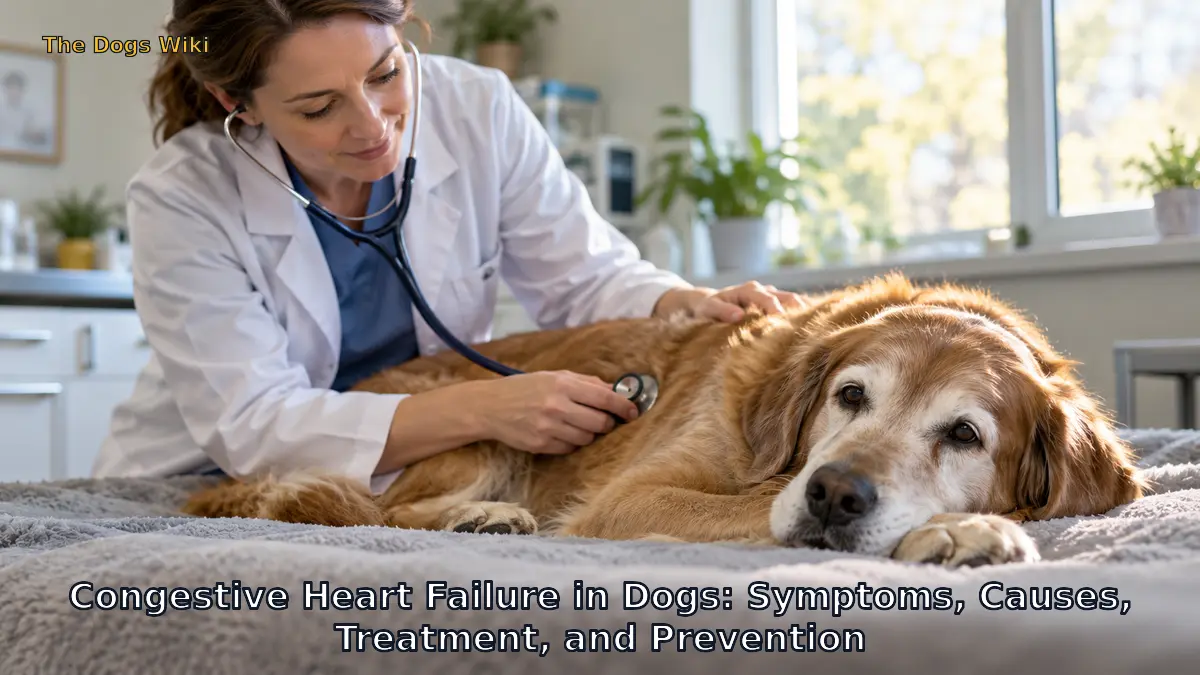
    Congestive Heart Failure in Dogs: Symptoms, Causes, Treatment, and Prevention

    Congestive heart failure in dogs is the advanced stage of underlying heart disease at which the heart can no longer pump effectively enough to meet the body’s needs, causing fluid to back up into the lungs or abdomen.

    Congestive heart failure isn’t itself a starting diagnosis but rather the progression point of an existing heart condition, most often mitral valve disease or dilated cardiomyopathy, which is why managing the underlying disease early matters so much for delaying this stage. This guide covers what causes congestive heart failure, its symptoms, how it’s diagnosed, how it’s treated, whether it can be prevented, and when to see a veterinarian.

    This guide covers what congestive heart failure is, what causes it in dogs, its symptoms, how it’s diagnosed, how it’s treated, whether it can be prevented, when to see a vet, and what else people ask.

    What Is Congestive Heart Failure in Dogs?

    Congestive heart failure describes the point at which an underlying heart condition has progressed enough that the heart can no longer pump blood efficiently, causing fluid to accumulate, or congest, in the lungs, abdomen, or limbs. Left-sided heart failure, which causes fluid to build up in and around the lungs, is the more common presentation in dogs, producing breathing difficulty, while right-sided heart failure causes fluid to accumulate in the abdomen or limbs instead. Because congestive heart failure is a progression rather than a standalone disease, it’s always the result of an underlying condition that has advanced over time.

    What Causes Congestive Heart Failure in Dogs?

    Mitral valve disease is the most common underlying cause of congestive heart failure in dogs, particularly in small breeds where the condition is widespread, as the progressively leaking valve eventually overwhelms the heart’s ability to compensate. Dilated cardiomyopathy is another major cause, particularly in larger, predisposed breeds, where the weakened heart muscle similarly loses the ability to pump effectively over time. Less commonly, congenital heart defects present since birth or other structural heart abnormalities can also progress to congestive heart failure if left unaddressed.

    What Are the Symptoms of Congestive Heart Failure in Dogs?

    A persistent cough, often worse at night or after lying down, is one of the most common early symptoms of left-sided congestive heart failure, reflecting fluid accumulating around the airways. Labored or rapid breathing, noticeably reduced exercise tolerance, and general weakness commonly develop as the condition progresses. Right-sided heart failure more often produces visible abdominal swelling from fluid accumulation, and in severe cases of either type, dogs can experience fainting episodes or collapse.

    How Is Congestive Heart Failure in Dogs Diagnosed?

    A veterinarian diagnosing congestive heart failure relies on a combination of physical exam findings, including abnormal lung sounds and a heart murmur, along with chest X-rays that can reveal fluid accumulation and heart enlargement. An echocardiogram provides a detailed assessment of heart structure and function, confirming both the underlying cause and the severity of the current heart failure. Blood tests measuring cardiac biomarkers help assess the degree of heart strain and can support monitoring a dog’s response to treatment over time.

    How Is Congestive Heart Failure in Dogs Treated?

    Diuretic medication, most commonly furosemide, is a cornerstone of congestive heart failure treatment, helping the body eliminate the excess fluid that’s accumulated in the lungs or abdomen. Pimobendan, which improves the heart’s pumping strength, and other heart medications are typically continued or added to support cardiac function alongside the diuretic. Dietary sodium restriction is often recommended as part of ongoing management, and a veterinary cardiologist typically adjusts this combination of medications over time as a dog’s condition and response to treatment evolve.

    Can Congestive Heart Failure in Dogs Be Prevented?

    Congestive heart failure itself can often be delayed, even if not entirely prevented, by identifying and treating the underlying heart condition, such as mitral valve disease or dilated cardiomyopathy, at an earlier stage before it progresses this far. This is exactly why regular cardiac screening and prompt treatment of diagnosed heart disease matter so much, since starting appropriate medication earlier in the disease process has documented benefit for delaying progression to heart failure. Once congestive heart failure has developed, it generally can’t be reversed, only managed, which underscores the value of earlier intervention.

    When Should You See a Vet for Congestive Heart Failure in Dogs?

    See a veterinarian promptly if a dog with known heart disease develops a new or worsening cough, labored breathing, or reduced energy, since these can signal progression to congestive heart failure. Seek emergency veterinary care immediately if a dog shows severe difficulty breathing, blue-tinged gums, or collapse, since these indicate a serious, potentially life-threatening crisis requiring urgent treatment. A dog already diagnosed with congestive heart failure needs regular veterinary cardiology follow-up to monitor and adjust treatment as the condition evolves.

    What Else Do People Ask About Congestive Heart Failure in Dogs?

    The questions below cover whether congestive heart failure is curable, how long dogs live with the condition, whether diet changes really help, and whether congestive heart failure is painful.

    Is congestive heart failure in dogs curable?

    No, congestive heart failure is not curable, since it represents an advanced stage of underlying heart disease that doesn’t reverse. Treatment focuses on managing fluid buildup and supporting remaining heart function to maintain the best possible quality of life for as long as possible.

    How long do dogs live with congestive heart failure?

    Survival time after a congestive heart failure diagnosis varies considerably based on the underlying cause and how well a dog responds to treatment, ranging from a few months to over a year with appropriate, well-managed medication. A veterinary cardiologist can provide a more individualized outlook based on a dog’s specific diagnosis and response to treatment.

    Do diet changes really help with congestive heart failure?

    Yes, sodium restriction is a well-documented component of congestive heart failure management, since excess sodium contributes to fluid retention that the already-struggling heart has to work harder to manage. A veterinarian or veterinary cardiologist can recommend a specific diet appropriate for a dog’s stage of heart disease.

    Is congestive heart failure painful for dogs?

    Congestive heart failure itself isn’t typically described as painful in the traditional sense, but the breathing difficulty and fatigue it causes represent real, significant distress for an affected dog. Appropriate treatment, including diuretics to relieve fluid buildup, meaningfully improves a dog’s comfort and quality of life.

    Related Guides

    More guides on The Dogs Wiki cover general dog health, senior dog care, and nutrition.

    Guide
    Dog Health
    Nutrition
  • Collapsing Trachea in Dogs: Symptoms, Causes, Treatment, and Prevention

    Home → Dog Health → Cardiac & Respiratory Health → Collapsing Trachea in Dogs

    Collapsing Trachea in Dogs: Symptoms, Causes, Treatment, and Prevention

    Collapsing trachea in dogs is a weakening of the cartilage rings that normally hold the windpipe open, allowing it to flatten during breathing and produce a distinctive, honking cough, most common in small and toy breeds.

    The condition’s hallmark sound, often described as a goose-like honk, is usually distinctive enough that experienced owners of predisposed breeds recognize it immediately. This guide covers what causes collapsing trachea, its symptoms, how it’s diagnosed, how it’s treated, whether it can be prevented, and when to see a veterinarian.

    This guide covers what collapsing trachea is, what causes it in dogs, its symptoms, how it’s diagnosed, how it’s treated, whether it can be prevented, when to see a vet, and what else people ask.

    What Is Collapsing Trachea in Dogs?

    Collapsing trachea is a condition in which the cartilage rings that normally hold the trachea, or windpipe, open in a rigid tube shape become weakened and flatten, narrowing the airway during breathing. This narrowing restricts airflow and irritates the trachea’s lining, producing the condition’s characteristic cough. Collapsing trachea occurs on a spectrum from mild, occasional symptoms to severe, frequent airway narrowing that can cause genuine respiratory distress, and small and toy breeds are disproportionately affected.

    What Causes Collapsing Trachea in Dogs?

    A genetic predisposition toward weaker-than-normal tracheal cartilage is the primary underlying cause of collapsing trachea, with breeds including the Yorkshire Terrier, Pomeranian, Chihuahua, and Toy Poodle showing a well-documented elevated risk. Obesity significantly worsens the condition, since excess weight adds pressure around the airway and increases the physical demands on breathing. Environmental irritants, including cigarette smoke, and pressure on the neck from a standard collar during walks can trigger or worsen episodes in a dog already predisposed to the condition.

    What Are the Symptoms of Collapsing Trachea in Dogs?

    A distinctive, dry, honking cough, often compared to a goose’s call, is the hallmark symptom of collapsing trachea, and it typically worsens with excitement, physical activity, pressure on the neck from a collar, or exposure to heat and humidity. Many affected dogs also show some degree of exercise intolerance, and in more severe cases, breathing can become noticeably labored or distressed, particularly during an active coughing episode. Symptoms often wax and wane, with some dogs experiencing long stretches with minimal coughing between more pronounced flare-ups.

    How Is Collapsing Trachea in Dogs Diagnosed?

    A veterinarian often suspects collapsing trachea based on a dog’s breed, age, and the distinctive character of the cough alone, though confirming the diagnosis typically involves imaging. Standard X-rays can sometimes show the tracheal narrowing, though because the collapse can be intermittent, it isn’t always visible on a still image taken at a random moment. Fluoroscopy, a type of real-time moving X-ray, or bronchoscopy, which directly visualizes the airway, are more sensitive tools for confirming the diagnosis and assessing its severity when standard X-rays aren’t conclusive.

    How Is Collapsing Trachea in Dogs Treated?

    Weight management is one of the most impactful interventions for a dog with collapsing trachea, since reducing excess weight directly reduces pressure on the airway and often meaningfully improves symptoms. Switching from a collar to a harness removes direct pressure on the trachea during walks, and cough suppressant or anti-inflammatory medication can help manage flare-ups in mild to moderate cases. For dogs with severe, frequent symptoms that don’t respond adequately to these measures, a surgical procedure to place a supportive stent inside the trachea can provide significant improvement.

    Can Collapsing Trachea in Dogs Be Prevented?

    Collapsing trachea generally can’t be prevented outright in a genetically predisposed dog, since the underlying cartilage weakness is present from birth. Maintaining a healthy weight throughout a dog’s life and using a harness instead of a collar from the start, particularly in predisposed small and toy breeds, can help minimize the severity and frequency of symptoms even if they don’t prevent the underlying condition. Avoiding smoke exposure and other airway irritants is a reasonable additional precaution for any predisposed dog.

    When Should You See a Vet for Collapsing Trachea in Dogs?

    See a veterinarian if a small or toy breed dog develops a persistent, honking cough, particularly one that worsens with excitement or collar pressure, since this symptom pattern is characteristic enough to warrant an evaluation. Seek prompt veterinary care if coughing episodes become more frequent, severe, or are accompanied by visible breathing distress, blue-tinged gums, or collapse, since these indicate a more serious flare-up needing urgent attention. A dog already diagnosed with collapsing trachea should see a veterinarian if symptoms worsen despite weight management and other conservative measures already in place.

    What Else Do People Ask About Collapsing Trachea in Dogs?

    The questions below cover whether collapsing trachea is curable, whether weight loss really makes a difference, which dogs are most at risk, and whether collapsing trachea shortens a dog’s lifespan.

    Is collapsing trachea in dogs curable?

    No, collapsing trachea is not curable, since the underlying cartilage weakness is a permanent structural issue, but the condition is very manageable in most dogs through weight control, harness use, and medication as needed. Severe cases that don’t respond to conservative management can see meaningful improvement with a tracheal stent procedure.

    Does weight loss really make a difference for collapsing trachea?

    Yes, weight loss is one of the most effective interventions for collapsing trachea, since reducing excess body weight directly reduces the pressure and demand placed on an already compromised airway. Many dogs show noticeable symptom improvement with weight loss alone, even without additional medication.

    Which dogs are most at risk for collapsing trachea?

    Small and toy breeds face by far the highest risk, with the Yorkshire Terrier, Pomeranian, Chihuahua, and Toy Poodle showing particularly well-documented predisposition. Middle-aged to older dogs within these breeds are more commonly diagnosed than very young dogs, though the underlying weakness is present from birth.

    Does collapsing trachea shorten a dog’s lifespan?

    Collapsing trachea itself doesn’t typically shorten a dog’s overall lifespan when well managed, though severe, poorly controlled cases can meaningfully affect quality of life and, in rare severe crises, pose a genuine health risk. Most dogs with appropriately managed collapsing trachea live a normal lifespan.

    Related Guides

    More guides on The Dogs Wiki cover general dog health and senior dog care.

    Guide
    Dog Health
  • Brachycephalic Obstructive Airway Syndrome (BOAS): Symptoms, Causes, Treatment, and Prevention

    Home → Dog Health → Cardiac & Respiratory Health → Brachycephalic Obstructive Airway Syndrome (BOAS)

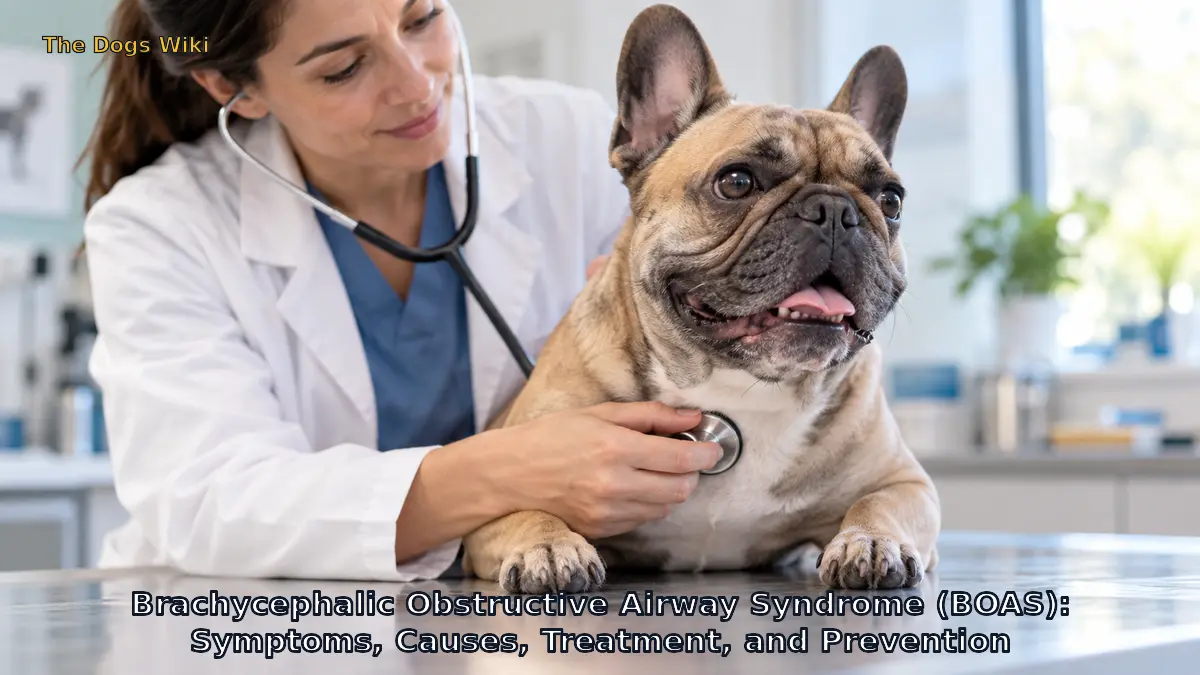
    Brachycephalic Obstructive Airway Syndrome (BOAS): Symptoms, Causes, Treatment, and Prevention

    Brachycephalic obstructive airway syndrome, or BOAS, is a collection of airway abnormalities built directly into the compressed skull structure of flat-faced breeds, causing chronic breathing difficulty that ranges from mild snoring to genuine respiratory distress.

    Because BOAS stems from the very skull and facial structure that defines these breeds’ appearance, it isn’t a condition that develops unexpectedly so much as one that’s present, to some degree, in nearly every dog born with that conformation. This guide covers what causes BOAS, its symptoms, how it’s diagnosed, how it’s treated, whether it can be prevented, and when to see a veterinarian.

    This guide covers what BOAS is, what causes it in dogs, its symptoms, how it’s diagnosed, how it’s treated, whether it can be prevented, when to see a vet, and what else people ask.

    What Is Brachycephalic Obstructive Airway Syndrome in Dogs?

    Brachycephalic obstructive airway syndrome is a combination of several structural airway abnormalities that commonly occur together in flat-faced, or brachycephalic, breeds, including narrowed nostrils, an elongated soft palate that partially blocks the throat, and, in many affected dogs, inflamed tissue folds inside the voice box that further obstruct airflow. These abnormalities develop as a direct consequence of the compressed skull shape that defines the brachycephalic look, meaning the same facial structure prized for its appearance also creates the functional breathing problems. The severity of BOAS varies considerably between individual dogs, even within the same breed, ranging from mild snoring to significant, daily breathing difficulty.

    What Causes BOAS in Dogs?

    BOAS is caused directly by the anatomical compression involved in breeding for a shortened skull and flattened face, a defining characteristic of breeds including the Bulldog, French Bulldog, Pug, Boston Terrier, and Shih Tzu, among others. Because the soft tissue structures inside the head and throat don’t shrink proportionally to match the shortened skull, they end up crowded into a smaller space, directly causing the physical airway obstructions that define the syndrome. Excess body weight significantly worsens BOAS symptoms in affected dogs, since additional fat tissue around the neck and throat adds further pressure to an already compromised airway.

    What Are the Symptoms of BOAS in Dogs?

    Loud snoring, snorting, and generally noisy breathing, even while a dog is simply resting, are hallmark symptoms of BOAS and are often, mistakenly, considered a normal or even endearing trait of these breeds rather than a sign of a genuine medical condition. Poor tolerance for heat and reduced exercise tolerance are extremely common, since affected dogs can’t move air as efficiently as a normal-skulled dog, making it harder to cool down through panting. In more severe cases, a dog can experience an actual breathing crisis, particularly during heat, excitement, or exertion, which represents a genuine emergency.

    How Is BOAS Diagnosed in Dogs?

    A veterinarian often recognizes the visible signs of BOAS, including narrowed nostrils, during a routine physical exam, and a dog’s breed alone raises reasonable suspicion given how common the syndrome is in brachycephalic breeds. Assessing the severity of airway obstruction occurring further back in the throat, including the soft palate and voice box, typically requires sedated examination or additional imaging, which also helps a veterinarian plan appropriate surgical correction if needed. Exercise tolerance testing and monitoring body temperature response to mild exertion are sometimes used to objectively assess how significantly BOAS is affecting an individual dog’s function.

    How Is BOAS Treated in Dogs?

    Weight management is one of the most impactful non-surgical interventions for BOAS, since even a modest reduction in excess weight can meaningfully ease breathing in an affected dog. Avoiding heat exposure and limiting strenuous exercise, particularly in warm weather, helps reduce the risk of a breathing crisis in dogs with significant airway obstruction. For moderate to severe cases, surgical correction, including widening narrowed nostrils and shortening an elongated soft palate, can significantly improve breathing and quality of life, though surgery addresses the structural obstruction rather than fully reversing the underlying skull conformation that causes it.

    Can BOAS Be Prevented in Dogs?

    BOAS generally can’t be prevented in an individual dog born with a brachycephalic skull structure, since the condition is a direct, inherent consequence of that conformation rather than something that develops from an external cause. At a breeding level, some breed clubs and veterinary organizations have increasingly focused on selecting for somewhat less extreme facial conformation to reduce BOAS severity in future generations, though this remains an evolving area within affected breeds. For an individual dog already born with BOAS, maintaining a healthy weight and avoiding heat and overexertion are the most practical ways to minimize symptom severity.

    When Should You See a Vet for BOAS in Dogs?

    See a veterinarian if a brachycephalic dog shows loud, labored breathing even at rest, poor exercise tolerance, or notable difficulty cooling down in warm weather, since these symptoms warrant a proper evaluation rather than being accepted as normal for the breed. Seek emergency veterinary care immediately if a dog experiences significant breathing distress, collapse, or blue-tinged gums, particularly during heat or excitement, since this represents a genuine crisis. Any brachycephalic dog should also have BOAS severity discussed at routine veterinary visits, including before any procedure requiring anesthesia, since these dogs carry an elevated anesthesia-related risk.

    What Else Do People Ask About BOAS in Dogs?

    The questions below cover whether BOAS is curable, whether all flat-faced dogs have it, whether surgery is always needed, and whether BOAS affects anesthesia risk.

    Is BOAS curable?

    No, BOAS is not curable, since it stems from the dog’s fundamental skull and facial structure, but surgical correction of specific obstructions, including narrowed nostrils and an elongated soft palate, can significantly improve breathing and quality of life for affected dogs. Management through weight control and heat avoidance also meaningfully helps even without surgery.

    Do all flat-faced dogs have BOAS?

    Nearly all brachycephalic dogs have at least some degree of the anatomical features that define BOAS, though severity varies considerably between individual dogs, even within the same litter. Some dogs show only mild snoring, while others experience significant, daily breathing difficulty requiring active management or surgical correction.

    Is surgery always needed for BOAS?

    No, surgery isn’t always necessary, and dogs with milder BOAS symptoms are often successfully managed through weight control and avoiding heat and overexertion. A veterinarian typically recommends surgery when airway obstruction is significant enough to meaningfully affect a dog’s breathing, exercise tolerance, or overall quality of life.

    Does BOAS affect anesthesia risk?

    Yes, dogs with BOAS carry an elevated anesthesia-related risk compared to dogs without the condition, given their already compromised airway function. Veterinary teams typically take additional precautions, including careful monitoring during recovery, when anesthetizing a brachycephalic dog for any procedure.

    Related Guides

    More guides on The Dogs Wiki cover general dog health and senior dog care.

    Guide
    Dog Health