Category: Cancer & Oncology

  • Osteosarcoma in Dogs: Symptoms, Causes, Treatment, and Prevention

    Home → Dog Health → Cancer & Oncology → Osteosarcoma in Dogs

    Osteosarcoma in Dogs: Symptoms, Causes, Treatment, and Prevention

    Osteosarcoma is the most common type of bone cancer in dogs, an aggressive tumor that typically develops in the long bones of the legs and disproportionately affects large and giant breeds.

    Osteosarcoma often announces itself as a limp that doesn’t resolve, and because the cancer tends to spread to other parts of the body early in its course, prompt diagnosis and treatment planning matter considerably for an affected dog’s outlook. This guide covers what causes osteosarcoma, its symptoms, how it’s diagnosed, how it’s treated, whether it can be prevented, and when to see a veterinarian.

    This guide covers what osteosarcoma is, what causes it in dogs, its symptoms, how it’s diagnosed, how it’s treated, whether it can be prevented, when to see a vet, and what else people ask.

    What Is Osteosarcoma in Dogs?

    Osteosarcoma is an aggressive cancer that originates in bone tissue, most commonly developing in the long bones of the legs near a joint, including the wrist, shoulder, and knee areas. The cancer destroys normal bone structure at the tumor site, which weakens the bone considerably and can lead to a fracture occurring with minimal or no trauma. Osteosarcoma disproportionately affects large and giant breeds, including the Great Dane, Rottweiler, Greyhound, and Irish Wolfhound, and it has a well-documented tendency to spread to other organs, most often the lungs, relatively early in its course.

    What Causes Osteosarcoma in Dogs?

    The exact cause of osteosarcoma isn’t fully understood, but body size is one of the strongest known risk factors, since the cancer occurs far more often in large and giant breeds than in smaller dogs. Genetics plays a role as well, given how consistently certain breeds are overrepresented among diagnosed cases, and some researchers believe the rapid bone growth large-breed puppies undergo may contribute to the cellular changes that eventually lead to the cancer. Prior trauma or chronic stress to a bone, including a previous fracture site, has also been documented as a potential contributing factor in some cases.

    What Are the Symptoms of Osteosarcoma in Dogs?

    A limp that doesn’t resolve, particularly in a large-breed dog, is the most common early symptom of osteosarcoma, often progressing from intermittent to constant as the disease advances. Swelling over the affected bone, along with pain when the area is touched or the limb is used, typically develops as the tumor grows. Because osteosarcoma significantly weakens the affected bone, some dogs are first diagnosed after what’s called a pathologic fracture, a bone break that occurs with minimal trauma because the bone was already compromised by the tumor.

    How Is Osteosarcoma in Dogs Diagnosed?

    A veterinarian investigating a persistent limp in a large-breed dog typically starts with X-rays of the affected limb, which often show a characteristic pattern of bone destruction and abnormal new bone formation that raises strong suspicion for osteosarcoma. A biopsy of the affected bone confirms the diagnosis, though in many cases a veterinarian proceeds based on the strong X-ray pattern combined with the dog’s breed and age given how time-sensitive treatment planning is. Because osteosarcoma spreads early, chest X-rays or a CT scan are typically performed to check for visible spread to the lungs, even though microscopic spread not yet visible on imaging is common at the time of diagnosis.

    How Is Osteosarcoma in Dogs Treated?

    Amputation of the affected limb is the standard treatment for osteosarcoma in most cases, both to remove the primary tumor and to eliminate the significant pain the cancer causes, and the vast majority of dogs adapt remarkably well to life on three legs. For select cases where amputation isn’t a good option, limb-sparing surgery, which removes the tumor while preserving the limb, is sometimes available at specialized veterinary centers. Because osteosarcoma spreads early and often microscopically, chemotherapy is typically recommended following surgery to address cells that may have already spread beyond the original tumor site, with the goal of extending survival time.

    Can Osteosarcoma in Dogs Be Prevented?

    Osteosarcoma generally can’t be prevented, since the genetic and size-related factors that drive its development aren’t within an owner’s control. Some veterinarians recommend avoiding excessive or inappropriate exercise during the rapid growth phase in large-breed puppies, based on a theory that growth-plate stress may contribute to risk, though this hasn’t been definitively proven to prevent the disease. Prompt attention to any persistent limp in a large or giant breed dog gives the best chance at catching osteosarcoma as early as possible, even though the disease itself can’t be prevented outright.

    When Should You See a Vet for Osteosarcoma in Dogs?

    See a veterinarian if a large or giant breed dog develops a limp that doesn’t improve within a few days, particularly if it’s accompanied by swelling or pain at a specific point along a limb. Any sudden, unexplained limb swelling or a fracture occurring with little or no trauma needs urgent veterinary evaluation, since both can be signs of underlying bone cancer. Given how time-sensitive osteosarcoma treatment planning is, prompt evaluation of a persistent limp matters more in predisposed breeds than it might for a smaller dog with a similar symptom.

    What Else Do People Ask About Osteosarcoma in Dogs?

    The questions below cover whether osteosarcoma is curable, how long dogs live after diagnosis, whether amputation is really necessary, and which dogs are most at risk.

    Is osteosarcoma in dogs curable?

    Osteosarcoma is rarely curable, since the cancer has usually spread microscopically by the time it’s diagnosed, even when that spread isn’t yet visible on imaging. Treatment focuses on controlling pain, removing the primary tumor, and extending survival time through chemotherapy rather than achieving a cure in most cases.

    How long do dogs live after an osteosarcoma diagnosis?

    Survival time varies depending on treatment chosen and individual disease progression, with dogs receiving amputation alone generally having a shorter survival time than those who also receive chemotherapy following surgery. A veterinary oncologist can provide a more specific outlook based on a dog’s individual diagnosis, staging results, and chosen treatment plan.

    Is amputation really necessary for osteosarcoma?

    Amputation is the standard recommendation for most dogs with osteosarcoma, both because it removes a tumor that’s typically already causing significant pain and because dogs adapt extremely well to three-legged mobility, often within weeks. For dogs that aren’t good surgical candidates, pain management alone is sometimes pursued as a different approach to maintaining quality of life.

    Which dogs are most at risk for osteosarcoma?

    Large and giant breeds face by far the highest documented risk for osteosarcoma, with the Great Dane, Rottweiler, Greyhound, and Irish Wolfhound showing particularly elevated rates. The disease is considerably less common in small breeds, which rarely develop osteosarcoma compared to their larger counterparts.

    Related Guides

    More guides on The Dogs Wiki cover general dog health and senior dog care.

    Guide
    Dog Health
  • Melanoma in Dogs: Symptoms, Causes, Treatment, and Prevention

    Home → Dog Health → Cancer & Oncology → Melanoma in Dogs

    Melanoma in Dogs: Symptoms, Causes, Treatment, and Prevention

    Melanoma in dogs is a cancer of pigment-producing cells, and its behavior depends heavily on location: melanoma on haired skin is often benign, while melanoma in the mouth or on nail beds is typically aggressive and prone to spreading.

    This location-dependent behavior is one of the most important things to understand about canine melanoma, since a dark spot on a dog’s trunk and a dark mass inside its mouth represent very different levels of concern despite sharing the same name. This guide covers what causes melanoma, its symptoms, how it’s diagnosed, how it’s treated, whether it can be prevented, and when to see a veterinarian.

    This guide covers what melanoma is, what causes it in dogs, its symptoms, how it’s diagnosed, how it’s treated, whether it can be prevented, when to see a vet, and what else people ask.

    What Is Melanoma in Dogs?

    Melanoma is a cancer that develops from melanocytes, the pigment-producing cells responsible for coloring skin, hair, and certain other tissues. Unlike in people, where most melanomas form on sun-exposed skin, the most clinically significant melanomas in dogs typically develop in the mouth, on the lips, or around the nail beds, areas where the cancer behaves considerably more aggressively than melanoma found on haired skin elsewhere on the body. Breeds including the Standard Poodle, Scottish Terrier, Doberman Pinscher, Golden Retriever, and Cocker Spaniel show a documented elevated risk for the oral form specifically.

    What Causes Melanoma in Dogs?

    The exact cause of melanoma in dogs isn’t fully understood, and unlike human melanoma, sun exposure doesn’t appear to be a major driving factor for the more dangerous oral and nail bed forms. Genetics plays a clear role, given how consistently certain breeds are overrepresented among diagnosed cases, particularly for oral melanoma. Dogs with heavily pigmented mouths are sometimes thought to face a somewhat different risk profile than lighter-pigmented dogs, though breed and individual genetic factors appear to matter more than pigmentation alone.

    What Are the Symptoms of Melanoma in Dogs?

    Oral melanoma typically appears as a dark, pigmented mass inside the mouth, on the gums, lips, or tongue, though some oral melanomas lack pigment entirely and appear pink or flesh-colored instead, which can make them easy to overlook. As an oral tumor grows, it can cause bad breath, drooling, bleeding from the mouth, or difficulty eating. Melanoma affecting a nail bed, called subungual melanoma, often looks like a swollen, sometimes ulcerated toe that can be mistaken for an infection or injury at first glance. Melanoma on haired skin elsewhere on the body usually appears as a small, dark, raised spot that’s often far less concerning than the oral or nail bed forms.

    How Is Melanoma in Dogs Diagnosed?

    A veterinarian diagnosing suspected melanoma relies on a biopsy to confirm the diagnosis and determine how the specific tumor is likely to behave, since appearance alone can’t reliably predict whether a given melanoma is aggressive or not. For oral melanoma specifically, given its tendency to spread, staging tests including chest imaging and lymph node evaluation are typically recommended to check whether the cancer has already spread beyond the original site. A dental X-ray or CT scan may also be used to assess how far an oral tumor has invaded into surrounding bone, which affects surgical planning.

    How Is Melanoma in Dogs Treated?

    Surgical removal with wide margins is the primary treatment for melanoma, and for oral tumors this sometimes requires removing a portion of the jaw to achieve margins clear of cancer cells, a procedure dogs generally tolerate and recover from well despite how it sounds. Radiation therapy is often used when surgery alone can’t achieve clear margins or when a tumor’s location makes extensive surgery impractical. A therapeutic vaccine specifically developed for canine oral melanoma is available and is sometimes used alongside surgery and other treatments to help the immune system target remaining cancer cells, though traditional chemotherapy tends to be less consistently effective against melanoma than it is against some other canine cancers.

    Can Melanoma in Dogs Be Prevented?

    Melanoma generally can’t be prevented, since the genetic factors driving the more dangerous oral and nail bed forms aren’t well understood or within an owner’s control. Regular at-home checks of a dog’s mouth, lips, and nail beds, particularly in predisposed breeds, help catch melanoma while it’s still small and more treatable. There’s no established lifestyle change proven to meaningfully reduce melanoma risk in dogs the way sun avoidance helps with human skin cancer prevention.

    When Should You See a Vet for Melanoma in Dogs?

    See a veterinarian promptly for any new dark mass or unusual growth found in a dog’s mouth, on the lips, or around a nail bed, since these locations carry a meaningfully higher risk of aggressive behavior than melanoma elsewhere on the body. Bad breath, drooling, bleeding from the mouth, or a swollen, non-healing toe are all worth a prompt veterinary evaluation rather than being dismissed as a minor issue. Routine veterinary dental exams, which include a look at the gums and oral tissue, can help catch oral melanoma incidentally even before an owner notices anything unusual at home.

    What Else Do People Ask About Melanoma in Dogs?

    The questions below cover whether all melanoma in dogs is dangerous, whether oral melanoma is curable, which dogs are most at risk, and whether melanoma in dogs is linked to sun exposure.

    Is all melanoma in dogs dangerous?

    No, melanoma on haired skin elsewhere on the body is often benign and far less concerning than melanoma in the mouth or on a nail bed, which tends to behave much more aggressively. A biopsy is the only reliable way to know how a specific tumor is likely to behave regardless of its location.

    Is oral melanoma in dogs curable?

    Oral melanoma is difficult to cure outright, since it tends to spread early, but aggressive surgical treatment combined with radiation or the therapeutic melanoma vaccine can meaningfully extend survival and control the disease for a period. The outlook depends considerably on how advanced the tumor is at diagnosis.

    Which dogs are most at risk for melanoma?

    Breeds including the Standard Poodle, Scottish Terrier, Doberman Pinscher, Golden Retriever, and Cocker Spaniel show a documented elevated risk for oral melanoma specifically. Dogs with heavily pigmented mouths are sometimes noted in this group as well, though breed appears to be a stronger predictor than pigmentation alone.

    Is melanoma in dogs linked to sun exposure?

    No, unlike human melanoma, sun exposure doesn’t appear to be a major driver of the oral and nail bed forms of melanoma that carry the most serious outlook in dogs. The factors driving canine melanoma appear to be primarily genetic rather than related to environmental UV exposure.

    Related Guides

    More guides on The Dogs Wiki cover general dog health and dental health.

    Guide
    Dog Health
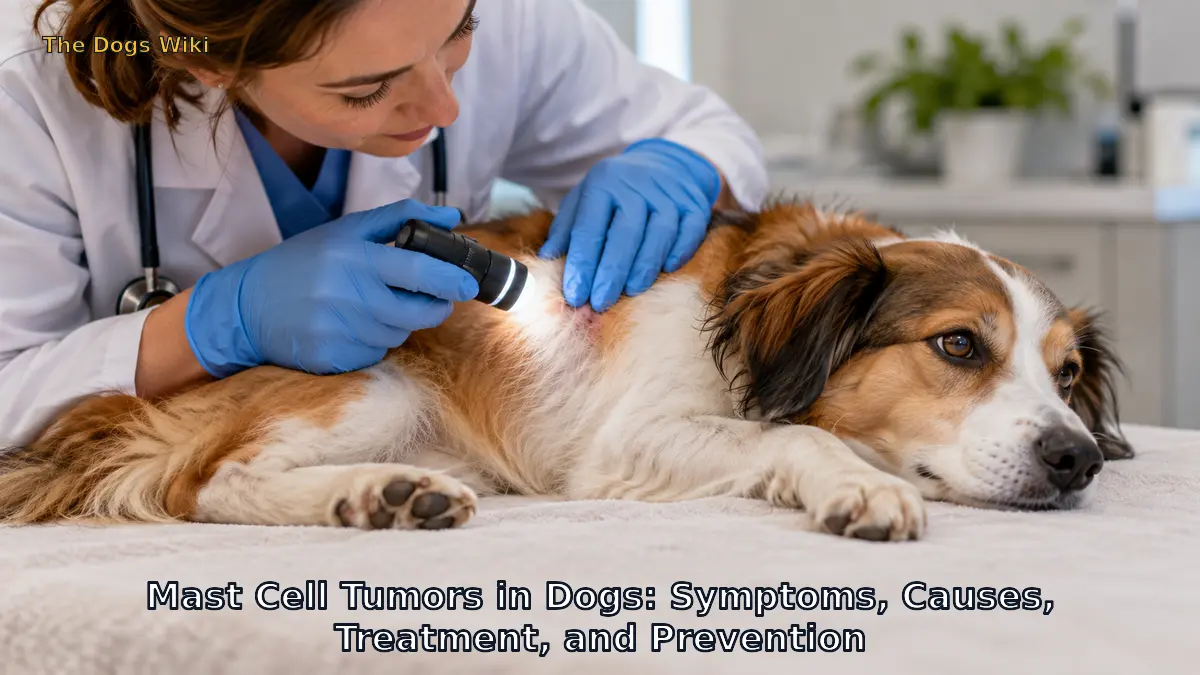
  • Mast Cell Tumors in Dogs: Symptoms, Causes, Treatment, and Prevention

    Home → Dog Health → Cancer & Oncology → Mast Cell Tumors in Dogs

    Mast Cell Tumors in Dogs: Symptoms, Causes, Treatment, and Prevention

    Mast cell tumors are the most commonly diagnosed skin tumor in dogs, arising from mast cells, a type of immune cell normally involved in allergic responses, and their behavior ranges from easily cured to genuinely aggressive.

    Because mast cell tumors can look like almost anything on the skin, from a small, innocuous bump to an angry, red, ulcerated mass, any new skin lump on a dog is worth having checked rather than assumed to be harmless. This guide covers what causes mast cell tumors, their symptoms, how they’re diagnosed, how they’re treated, whether they can be prevented, and when to see a veterinarian.

    This guide covers what mast cell tumors are, what causes them in dogs, their symptoms, how they’re diagnosed, how they’re treated, whether they can be prevented, when to see a vet, and what else people ask.

    What Are Mast Cell Tumors in Dogs?

    Mast cell tumors develop when mast cells, immune cells that normally release histamine and other chemicals during an allergic reaction, grow and divide abnormally to form a tumor, most often in the skin. These tumors are notoriously variable: a low-grade mast cell tumor behaves in a relatively contained, less aggressive way and is often curable with surgery alone, while a high-grade tumor can spread to lymph nodes and internal organs and requires more aggressive treatment. Breeds including the Boxer, Boston Terrier, Labrador Retriever, Golden Retriever, Pug, and Bulldog show a documented elevated risk for developing mast cell tumors.

    What Causes Mast Cell Tumors in Dogs?

    The exact trigger for mast cell tumor development isn’t fully understood, but genetics plays a clear role given how strongly certain breeds are overrepresented among diagnosed cases. Mutations in a gene called c-KIT have been identified in a meaningful portion of mast cell tumors, and this mutation is associated with more aggressive tumor behavior in the cases where it’s present. Age is also a factor, since mast cell tumors become more common as dogs get older, though they can occur at virtually any age.

    What Are the Symptoms of Mast Cell Tumors in Dogs?

    A mast cell tumor typically appears as a raised or flat skin mass that can vary enormously in appearance, from a small, soft, innocuous-looking bump to a larger, red, ulcerated, or rapidly changing mass. A distinctive and sometimes alarming feature of these tumors is that physically touching or manipulating them can cause the mast cells inside to release histamine suddenly, triggering visible swelling and redness around the tumor that can appear and fade over minutes to hours. In more advanced or high-grade cases, this histamine release can become significant enough to cause systemic symptoms, including vomiting or gastrointestinal bleeding.

    How Are Mast Cell Tumors in Dogs Diagnosed?

    A veterinarian typically diagnoses a mast cell tumor initially through a fine needle aspirate, a simple procedure that collects a small sample of cells from the mass for examination under a microscope, often providing a diagnosis the same day. Once a mast cell tumor is confirmed, a biopsy of the removed tumor provides a grade, which indicates how aggressively the specific tumor is likely to behave and guides further treatment decisions. For higher-grade tumors, additional staging tests, including bloodwork, lymph node evaluation, and imaging, help determine whether the cancer has spread beyond the original tumor site.

    How Are Mast Cell Tumors in Dogs Treated?

    Surgical removal with wide margins around the tumor is the primary treatment for most mast cell tumors, and a lower-grade tumor removed completely is often considered cured with no further treatment needed. When surgical margins aren’t fully clear, or for higher-grade tumors with a greater risk of recurrence or spread, radiation therapy targeting the tumor site helps reduce that risk. Higher-grade tumors that have spread, or carry a high risk of spreading, are typically treated with chemotherapy, and a veterinarian may also prescribe antihistamines or other medications to manage the histamine-related symptoms that can accompany these tumors.

    Can Mast Cell Tumors in Dogs Be Prevented?

    Mast cell tumors generally can’t be prevented, since the underlying genetic and cellular factors that drive their development aren’t within an owner’s control. Regular at-home skin checks and prompt veterinary evaluation of any new or changing lump give a dog the best chance at catching a mast cell tumor while it’s still small and more easily treated. Breeds with a documented elevated risk benefit from more frequent veterinary skin exams as part of routine wellness care.

    When Should You See a Vet for Mast Cell Tumors in Dogs?

    See a veterinarian for any new skin lump on a dog, regardless of how harmless it looks, since mast cell tumors can’t be reliably identified by appearance alone and early diagnosis significantly improves treatment options. A lump that suddenly swells, becomes red, or changes noticeably after being touched or bumped deserves a prompt evaluation, since this reaction pattern is characteristic of mast cell tumors specifically. A dog previously treated for a mast cell tumor should also have regular veterinary skin checks, since these tumors can recur or new ones can develop separately.

    What Else Do People Ask About Mast Cell Tumors in Dogs?

    The questions below cover whether mast cell tumors are always cancerous, whether they’re painful, how to tell them apart from a harmless lump, and whether they can come back after removal.

    Are mast cell tumors always cancerous?

    Yes, mast cell tumors are a form of cancer by definition, though their behavior ranges considerably from low-grade tumors that are easily cured with surgery to high-grade tumors that behave much more aggressively. The grade assigned after biopsy is what determines how serious a specific tumor actually is, which is why grading matters more than the word “cancer” alone.

    Are mast cell tumors painful for dogs?

    Mast cell tumors themselves aren’t always painful, though the histamine release they can trigger when touched or manipulated sometimes causes noticeable discomfort or irritation around the tumor site. Larger or ulcerated tumors are more likely to cause genuine discomfort than smaller, intact ones.

    How can you tell a mast cell tumor apart from a harmless lump?

    You generally can’t reliably tell a mast cell tumor apart from a harmless lump just by looking at or feeling it, since mast cell tumors can mimic almost any other type of skin growth in appearance. This is exactly why a fine needle aspirate, a quick and minimally invasive test, matters for any new skin lump rather than relying on visual assessment alone.

    Can mast cell tumors come back after removal?

    Yes, mast cell tumors can recur, particularly if the original tumor had a higher grade or if surgical margins weren’t completely clear of tumor cells. This is why follow-up monitoring and, in some cases, additional treatment like radiation are recommended for tumors with a higher risk of recurrence.

    Related Guides

    More guides on The Dogs Wiki cover general dog health and senior dog care.

    Guide
    Dog Health
  • Mammary Tumors in Dogs: Symptoms, Causes, Treatment, and Prevention

    Home → Dog Health → Cancer & Oncology → Mammary Tumors in Dogs

    Mammary Tumors in Dogs: Symptoms, Causes, Treatment, and Prevention

    Mammary tumors are among the most common tumors diagnosed in unspayed female dogs, and the single biggest factor determining a dog’s lifetime risk is whether, and when, she was spayed.

    Roughly half of mammary tumors in dogs turn out to be malignant, which is exactly why every new lump found along a female dog’s mammary chain deserves veterinary evaluation rather than a wait-and-see approach. This guide covers what causes mammary tumors, their symptoms, how they’re diagnosed, how they’re treated, whether they can be prevented, and when to see a veterinarian.

    This guide covers what mammary tumors are, what causes them in dogs, their symptoms, how they’re diagnosed, how they’re treated, whether they can be prevented, when to see a vet, and what else people ask.

    What Are Mammary Tumors in Dogs?

    Mammary tumors are growths that develop in the mammary gland tissue running along a female dog’s belly, and they can be either benign, meaning they don’t spread, or malignant, meaning they have the potential to invade surrounding tissue and spread to other parts of the body. Roughly half of diagnosed mammary tumors turn out to be malignant, which means neither assuming the worst nor assuming a lump is harmless is the right approach without an actual veterinary evaluation. These tumors can appear as a single lump or as multiple masses across the mammary chain.

    What Causes Mammary Tumors in Dogs?

    Hormonal exposure is the single most well-documented factor in mammary tumor development, with each heat cycle a female dog goes through increasing her lifetime risk. Spaying before a dog’s first heat cycle dramatically reduces the risk of ever developing a mammary tumor, and this protective effect diminishes considerably with each subsequent heat cycle a dog experiences before being spayed. Beyond hormonal history, age and genetics also play a role, with mammary tumors becoming more common in older, unspayed female dogs.

    What Are the Symptoms of Mammary Tumors in Dogs?

    A lump or lumps along the mammary gland chain, which runs in two rows along the underside of the belly from the chest to the groin, is the primary and often only symptom of a mammary tumor. These lumps vary considerably in size and can feel firm or soft, and some dogs develop just one while others develop multiple tumors across different glands at the same time or over time. Larger or more advanced malignant tumors can sometimes ulcerate or become associated with swelling in the nearby lymph nodes if the cancer has started to spread.

    How Are Mammary Tumors in Dogs Diagnosed?

    A veterinarian diagnosing a mammary tumor starts with a physical exam to assess the size, number, and characteristics of any masses present. A fine needle aspirate can provide some initial information, though a definitive diagnosis of whether a specific tumor is benign or malignant, and what type it is, typically requires a biopsy of the tumor itself, often obtained during surgical removal. For tumors suspected to be malignant, staging tests, including chest X-rays and lymph node evaluation, help determine whether the cancer has spread beyond the original site.

    How Are Mammary Tumors in Dogs Treated?

    Surgical removal is the primary treatment for mammary tumors, and the extent of surgery, ranging from removing a single small lump to removing an entire chain of mammary glands, depends on the tumor’s size, number, and suspected behavior. A veterinarian commonly recommends spaying a dog at the time of mammary tumor surgery if she hasn’t already been spayed, since this eliminates the ongoing hormonal influence that can contribute to new tumors forming. For malignant tumors with a higher risk of spreading, chemotherapy may be recommended following surgery, though mammary tumors generally don’t respond to chemotherapy as reliably as some other canine cancers.

    Can Mammary Tumors in Dogs Be Prevented?

    Yes, mammary tumors are one of the more preventable canine cancers, and spaying a female dog before her first heat cycle provides the strongest documented protection against ever developing one. The protective benefit of spaying decreases considerably with each heat cycle a dog goes through beforehand, which is why veterinarians generally recommend spaying as early as medically appropriate for dogs not intended for breeding. For dogs already past several heat cycles, spaying still offers some benefit in preventing future hormonal influence, even though it won’t eliminate tumors that have already developed.

    When Should You See a Vet for Mammary Tumors in Dogs?

    See a veterinarian if you find any new lump along a female dog’s mammary chain, regardless of size, since roughly half of these tumors turn out to be malignant and early detection and treatment meaningfully improve outcomes. Regular at-home checks of the mammary area, particularly in unspayed or late-spayed female dogs, help catch new lumps while they’re still small. A dog already diagnosed with a mammary tumor should see a veterinarian for regular follow-up, since new tumors can develop in other glands even after one is successfully treated.

    What Else Do People Ask About Mammary Tumors in Dogs?

    The questions below cover whether mammary tumors are always cancerous, whether spaying later in life still helps, how to check for mammary tumors at home, and whether male dogs can get mammary tumors.

    Are mammary tumors in dogs always cancerous?

    No, roughly half of mammary tumors in dogs are benign rather than cancerous, but since the two can’t be reliably told apart without a biopsy, every mammary lump needs veterinary evaluation rather than being assumed safe. Even benign tumors are often still removed, since they can continue growing or new tumors can develop alongside them.

    Does spaying later in life still help prevent mammary tumors?

    Spaying later in life still offers some protective benefit by eliminating future hormonal cycles that could contribute to new tumor development, though it provides considerably less protection than spaying before the first heat cycle would have. A veterinarian can discuss the specific benefits of spaying at any given point in an individual dog’s life.

    How do you check a dog for mammary tumors at home?

    Gently feel along both rows of mammary glands running from the chest to the groin on the underside of the belly, checking for any new lumps, bumps, or changes in texture, ideally as part of a regular routine. Any new finding should be brought to a veterinarian’s attention rather than monitored at home alone.

    Can male dogs get mammary tumors?

    Mammary tumors are extremely rare in male dogs, since the hormonal factors that drive most cases are specific to female reproductive cycles. When mammary tumors do occur in male dogs, they’re often associated with an underlying hormonal abnormality and warrant a thorough veterinary workup.

    Related Guides

    More guides on The Dogs Wiki cover general dog health and adoption.

    Guide
    Dog Health
    Adoption
  • Lymphoma in Dogs: Symptoms, Causes, Treatment, and Prevention

    Home → Dog Health → Cancer & Oncology → Lymphoma in Dogs

    Lymphoma in Dogs: Symptoms, Causes, Treatment, and Prevention

    Lymphoma in dogs is a cancer of the lymphocytes, a type of white blood cell, and it’s one of the most commonly diagnosed cancers in dogs, most often first noticed as swollen lymph nodes.

    While lymphoma generally isn’t curable, it responds better to chemotherapy than most other canine cancers, often achieving a period of remission that gives affected dogs meaningful additional time with a good quality of life. This guide covers what causes lymphoma, its symptoms, how it’s diagnosed, how it’s treated, whether it can be prevented, and when to see a veterinarian.

    This guide covers what lymphoma is, what causes it in dogs, its symptoms, how it’s diagnosed, how it’s treated, whether it can be prevented, when to see a vet, and what else people ask.

    What Is Lymphoma in Dogs?

    Lymphoma is a cancer that develops in lymphocytes, white blood cells that are a core part of the immune system and are found throughout the lymph nodes, spleen, bone marrow, and other tissues. The most common form, called multicentric lymphoma, causes generalized enlargement of multiple lymph nodes throughout the body, but the disease can also appear in other forms affecting primarily the digestive tract, skin, or chest, each with its own distinct symptom pattern. Lymphoma can affect dogs of any age but is more frequently diagnosed in middle-aged to older dogs.

    What Causes Lymphoma in Dogs?

    The exact cause of lymphoma in dogs isn’t fully understood, though researchers believe a combination of genetic predisposition and environmental factors contributes to its development. Certain breeds, including the Golden Retriever, Boxer, Bullmastiff, and Basset Hound, show a documented elevated risk, suggesting a meaningful genetic component. Ongoing research continues to investigate potential environmental contributors, including exposure to certain chemicals, though no single definitive environmental cause has been firmly established.

    What Are the Symptoms of Lymphoma in Dogs?

    The most common and often first-noticed symptom of multicentric lymphoma is swollen, firm lymph nodes, frequently discovered as lumps under the jaw, in front of the shoulders, or behind the knees, typically without pain when touched. Many dogs with multicentric lymphoma also show lethargy, reduced appetite, and weight loss as the disease progresses. Less common forms of lymphoma affecting the digestive tract can cause vomiting, diarrhea, and weight loss, while skin-affecting lymphoma typically appears as patches of red, scaly, or raised skin lesions rather than swollen lymph nodes.

    How Is Lymphoma in Dogs Diagnosed?

    A veterinarian diagnosing suspected lymphoma typically starts with a fine needle aspirate of an enlarged lymph node, which can often provide an initial diagnosis quickly through microscopic examination of the cells collected. A biopsy provides more detailed information, including the specific type of lymphoma present, which has real implications for treatment planning and expected response. Staging tests, including bloodwork, chest X-rays, and abdominal imaging, help determine how extensively the cancer has spread and establish a baseline before treatment begins.

    How Is Lymphoma in Dogs Treated?

    Chemotherapy is the primary treatment for lymphoma and is generally more effective for this particular cancer than for many other canine cancers, often achieving remission, a period where the cancer becomes undetectable, even though it isn’t considered a cure. Several chemotherapy protocols exist, ranging from more intensive multi-drug combinations to simpler, single-drug approaches, and a veterinary oncologist helps determine which protocol fits a specific dog’s situation and an owner’s goals for treatment. Dogs undergoing chemotherapy for lymphoma generally tolerate it better than people do, with most experiencing mild side effects rather than the severe reactions often associated with human chemotherapy.

    Can Lymphoma in Dogs Be Prevented?

    Lymphoma generally can’t be prevented, since the combination of genetic and environmental factors believed to contribute to its development isn’t something an owner can fully control or eliminate. There’s no proven screening test to catch lymphoma before symptoms develop, which makes awareness of the condition’s symptoms, particularly swollen lymph nodes, an important part of catching the disease as early as possible. Regular veterinary wellness exams that include a physical check of the lymph nodes can help identify early, asymptomatic swelling in some cases.

    When Should You See a Vet for Lymphoma in Dogs?

    See a veterinarian if you notice firm, swollen lumps under a dog’s jaw, in front of the shoulders, or behind the knees, since these are the classic early sign of multicentric lymphoma and warrant prompt evaluation. Lethargy, reduced appetite, or unexplained weight loss, particularly alongside swollen lymph nodes, are additional reasons to seek a veterinary evaluation without delay. A dog already diagnosed with lymphoma and undergoing treatment should see a veterinary oncologist regularly to monitor response to treatment and adjust the plan as needed.

    What Else Do People Ask About Lymphoma in Dogs?

    The questions below cover whether lymphoma is curable, how long dogs live after diagnosis, whether chemotherapy is worth it for dogs, and which dogs are most at risk.

    Is lymphoma in dogs curable?

    No, lymphoma is generally not considered curable in dogs, but it’s one of the more treatable canine cancers, with chemotherapy commonly achieving remission that can last for a meaningful period. Even without a cure, many dogs enjoy a good quality of life during remission.

    How long do dogs live after a lymphoma diagnosis?

    Survival time after a lymphoma diagnosis varies considerably based on the specific type of lymphoma, how advanced it is at diagnosis, and how well a dog responds to treatment, ranging from a few months without treatment to a year or more with chemotherapy achieving remission. A veterinary oncologist can provide a more individualized outlook based on a specific dog’s diagnosis and staging results.

    Is chemotherapy worth it for dogs with lymphoma?

    Many owners find chemotherapy worthwhile for dogs with lymphoma, since dogs generally tolerate it well with far fewer severe side effects than people typically experience, and it often meaningfully extends both lifespan and quality time. The decision is a personal one that depends on a specific dog’s overall health, the owner’s goals, and practical considerations like treatment cost and travel to a veterinary oncologist.

    Which dogs are most at risk for lymphoma?

    Breeds including the Golden Retriever, Boxer, Bullmastiff, and Basset Hound show a documented elevated risk for lymphoma, and middle-aged to older dogs are diagnosed more frequently than younger ones. Any dog, regardless of breed, can develop lymphoma, but these factors help identify dogs that may benefit from closer monitoring.

    Related Guides

    More guides on The Dogs Wiki cover general dog health and senior dog care.

    Guide
    Dog Health
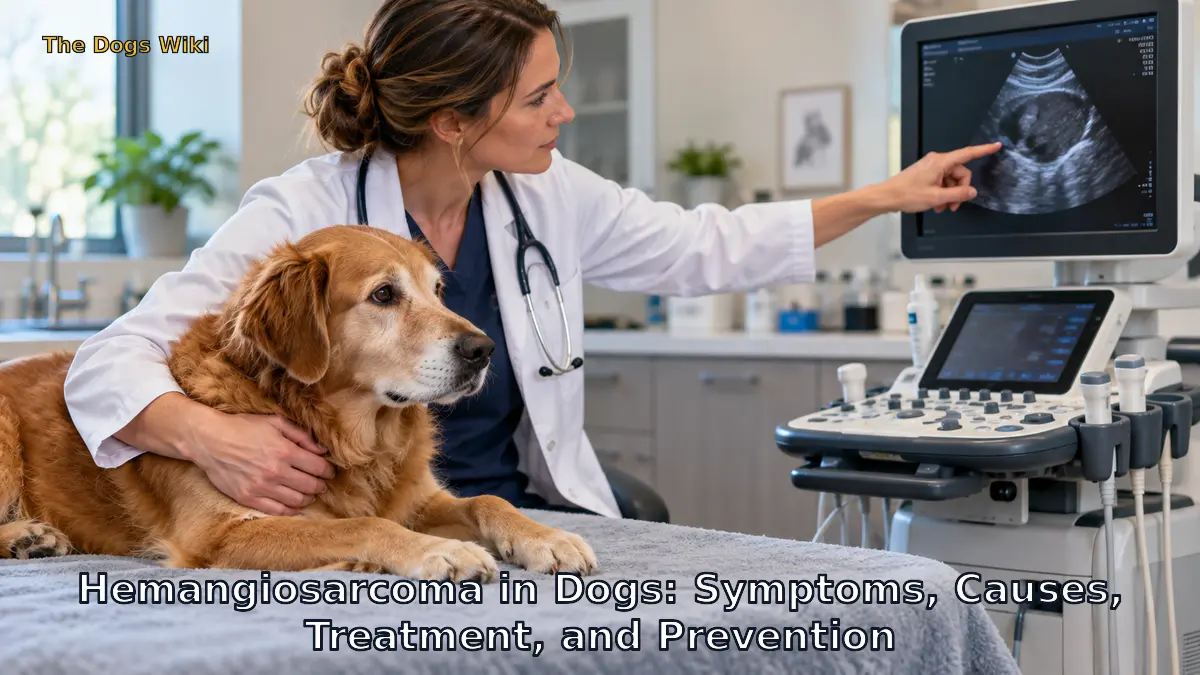
  • Hemangiosarcoma in Dogs: Symptoms, Causes, Treatment, and Prevention

    Home → Dog Health → Cancer & Oncology → Hemangiosarcoma in Dogs

    Hemangiosarcoma in Dogs: Symptoms, Causes, Treatment, and Prevention

    Hemangiosarcoma is an aggressive cancer that develops from the cells lining blood vessels, most often forming in the spleen, heart, or skin, and the internal forms frequently go unnoticed until a tumor ruptures and causes sudden, severe bleeding.

    This cancer’s reputation as a “silent” disease comes specifically from how it so often first presents as a sudden collapse rather than a gradual decline, which makes awareness of this pattern, particularly in predisposed breeds, genuinely important. This guide covers what causes hemangiosarcoma, its symptoms, how it’s diagnosed, how it’s treated, whether it can be prevented, and when to see a veterinarian.

    This guide covers what hemangiosarcoma is, what causes it in dogs, its symptoms, how it’s diagnosed, how it’s treated, whether it can be prevented, when to see a vet, and what else people ask.

    What Is Hemangiosarcoma in Dogs?

    Hemangiosarcoma is a cancer that arises from the cells that normally line blood vessels, which is why it most commonly develops in blood-rich organs, particularly the spleen and heart, though it can also appear as a tumor in the skin. The tumors this cancer forms are fragile and prone to rupturing, which can cause sudden, significant internal bleeding, and this is often what brings an affected dog to veterinary attention in the first place rather than any gradual symptom buildup. Hemangiosarcoma affecting internal organs carries a serious outlook even with treatment, while the skin form, when caught early, generally has a better prognosis.

    What Causes Hemangiosarcoma in Dogs?

    The exact cause of hemangiosarcoma isn’t fully understood, but genetics plays a clear role, with breeds including the Golden Retriever and German Shepherd showing a particularly well-documented elevated risk for the internal, visceral form of the disease. Age is also a factor, since hemangiosarcoma is diagnosed far more often in middle-aged to older dogs than in younger ones. Ultraviolet light exposure is believed to contribute to the skin form of the disease, particularly in thin-coated or light-skinned dogs with less natural protection from sun exposure.

    What Are the Symptoms of Hemangiosarcoma in Dogs?

    Visceral hemangiosarcoma, affecting the spleen or heart, often produces no noticeable symptoms until a tumor ruptures, at which point a dog can suddenly collapse, show pale gums, and appear profoundly weak due to internal bleeding and blood loss. Some dogs show more subtle warning signs beforehand, including intermittent lethargy or weakness that resolves and returns, reflecting smaller bleeding episodes before a larger rupture occurs. The skin form of hemangiosarcoma typically appears as a dark red, purple, or black nodule on or just under the skin, which is usually more visible and noticed earlier than the internal forms.

    How Is Hemangiosarcoma in Dogs Diagnosed?

    A veterinarian evaluating a dog with sudden collapse or weakness typically performs an ultrasound of the abdomen, which can reveal a mass on the spleen or evidence of internal bleeding, along with bloodwork that often shows anemia from blood loss. For the heart-affecting form, ultrasound of the heart specifically helps identify a mass in or around that organ. A definitive diagnosis comes from biopsy and microscopic examination of tissue, typically obtained during the surgery often needed to address active bleeding in an emergency situation.

    How Is Hemangiosarcoma in Dogs Treated?

    Emergency surgery to remove the affected organ, most often the spleen, and control active bleeding is frequently the immediate and necessary first step when a dog presents with a ruptured tumor and internal bleeding. Following surgery, chemotherapy is commonly recommended for visceral hemangiosarcoma in an effort to extend survival time, since the cancer has usually already spread microscopically by the time it’s diagnosed. The skin form of hemangiosarcoma, when caught early and confined to a small area, often has a better outcome with surgical removal alone, particularly if it hasn’t invaded deeper tissue.

    Can Hemangiosarcoma in Dogs Be Prevented?

    Hemangiosarcoma generally can’t be prevented, since the genetic factors driving the visceral form aren’t within an owner’s control. For the skin form, limiting prolonged sun exposure, particularly for thin-coated or light-skinned dogs, may help reduce risk, though this isn’t a guarantee against the disease. Because visceral hemangiosarcoma so often shows no warning signs until a crisis, there’s no reliable way to catch it early through routine observation alone, which is part of why some owners of high-risk breeds opt for periodic screening ultrasounds as dogs age.

    When Should You See a Vet for Hemangiosarcoma in Dogs?

    Seek emergency veterinary care immediately if a dog suddenly collapses, appears profoundly weak, or has pale gums, since these are signs of a potential internal bleeding emergency that needs urgent evaluation and treatment. Any new skin nodule, particularly a dark red, purple, or black one, is worth having checked by a veterinarian promptly rather than waiting to see if it changes. Predisposed breeds, including the Golden Retriever and German Shepherd, benefit from discussing hemangiosarcoma risk and screening options with a veterinarian as they enter their senior years.

    What Else Do People Ask About Hemangiosarcoma in Dogs?

    The questions below cover whether hemangiosarcoma is curable, how long dogs live after diagnosis, whether the skin form is less dangerous than the internal form, and which dogs are most at risk.

    Is hemangiosarcoma in dogs curable?

    No, hemangiosarcoma affecting internal organs is rarely curable, since it typically has already spread microscopically by the time it’s diagnosed, usually following a bleeding crisis. Treatment generally focuses on addressing the immediate emergency and extending survival time through chemotherapy rather than achieving a cure.

    How long do dogs live after a hemangiosarcoma diagnosis?

    Survival time for visceral hemangiosarcoma is typically measured in weeks to a few months even with surgery and chemotherapy, reflecting how aggressively this particular cancer behaves. The skin form, caught early and treated surgically, generally carries a considerably better outlook than the internal forms.

    Is the skin form of hemangiosarcoma less dangerous than the internal form?

    Generally yes, skin hemangiosarcoma caught early and confined to the surface tends to have a better prognosis than the visceral form, particularly if it hasn’t invaded into deeper tissue beneath the skin. A veterinarian determines the specific depth and behavior of a skin tumor through biopsy, which shapes the outlook for that individual case.

    Which dogs are most at risk for hemangiosarcoma?

    The Golden Retriever and German Shepherd show particularly well-documented elevated risk for visceral hemangiosarcoma, and middle-aged to older dogs of any breed face a higher risk than younger dogs. Thin-coated or light-skinned dogs face an elevated risk specifically for the skin form given its association with sun exposure.

    Related Guides

    More guides on The Dogs Wiki cover general dog health and senior dog care.

    Guide
    Dog Health