Category: Skin & Coat

  • Ringworm in Dogs: Symptoms, Causes, Treatment, and Prevention

    Home → Dog Health → Skin & Coat → Ringworm in Dogs

    Ringworm in Dogs: Symptoms, Causes, Treatment, and Prevention

    Ringworm in dogs, despite its name, isn’t caused by a worm at all but by a contagious fungus that infects the skin, hair, and sometimes nails, and it can spread readily between pets and people in the same household.

    The name comes from the classic circular lesion the infection can produce, though not every case shows this distinctive pattern. This guide covers what causes ringworm, its symptoms, how it’s diagnosed, how it’s treated, whether it can be prevented, and when to see a veterinarian.

    This guide covers what ringworm is, what causes it in dogs, its symptoms, how it’s diagnosed, how it’s treated, whether it can be prevented, when to see a vet, and what else people ask.

    What Is Ringworm in Dogs?

    Ringworm is a fungal infection of the skin, hair follicles, and occasionally nails, caused by a group of fungi collectively called dermatophytes. The infection feeds on keratin, the protein that makes up skin, hair, and nails, which is why hair loss and skin changes are the primary symptoms. Puppies, senior dogs, and dogs with weakened immune systems are more susceptible to developing a noticeable infection, though any dog exposed to the fungus can become infected.

    What Causes Ringworm in Dogs?

    Ringworm spreads through direct contact with an infected animal or through contact with fungal spores present in a contaminated environment, including bedding, grooming tools, and furniture. These spores are notably resistant and can persist in the environment for a long time, which makes environmental contamination a significant factor in both the initial infection and the risk of reinfection. Shelters, groomers, and other settings with multiple animals in close contact carry a higher risk of ringworm transmission.

    What Are the Symptoms of Ringworm in Dogs?

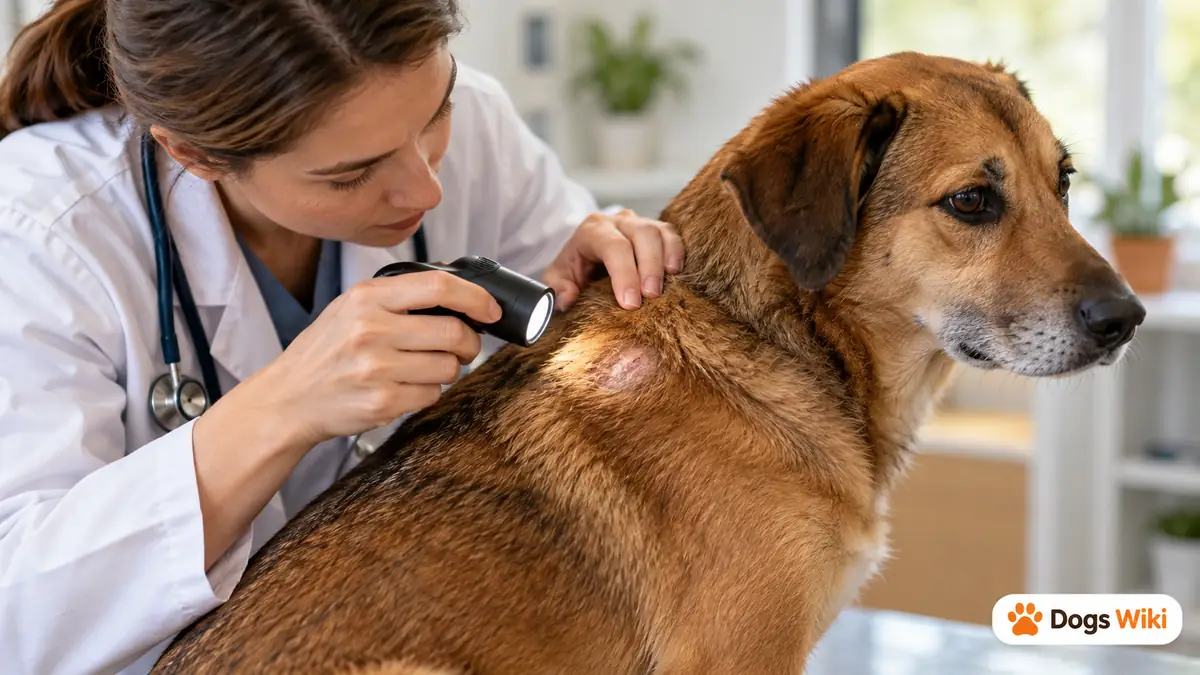
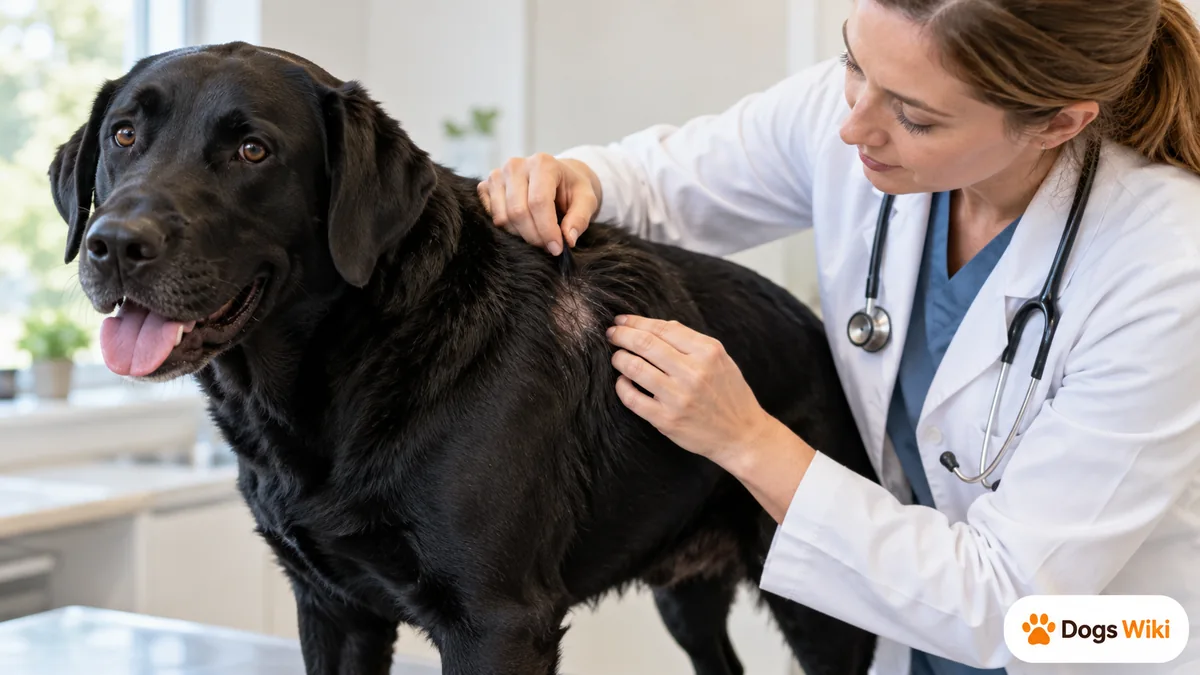
    Circular patches of hair loss, often with a scaly or crusty appearance at the edges, are the classic presentation of ringworm, though lesions can also appear irregular rather than perfectly round. Affected skin is sometimes red or inflamed, and the hair surrounding a lesion tends to break off easily rather than falling out at the root. Some infected dogs show minimal visible symptoms or carry the fungus without obvious signs, which complicates diagnosis and increases the risk of unknowingly spreading it to others.

    How Is Ringworm Diagnosed in Dogs?

    A veterinarian diagnosing ringworm often starts with a specialized ultraviolet light called a Wood’s lamp, which causes certain, though not all, ringworm species to fluoresce. A fungal culture, which involves collecting hair and skin samples and allowing any fungus present to grow over a period of days to weeks, provides the definitive diagnosis and identifies the specific organism involved. Microscopic examination of plucked hairs can sometimes provide a faster preliminary answer while waiting for culture results to confirm the diagnosis.

    How Is Ringworm Treated in Dogs?

    Treatment typically combines an oral antifungal medication with a topical antifungal shampoo or rinse, since using both approaches together clears the infection more reliably and reduces environmental contamination from loose infected hair. Thoroughly cleaning and disinfecting the home environment, including bedding, carpets, and any surfaces the dog has contacted, runs alongside medical treatment, since reinfection from a contaminated environment is a real risk otherwise. Treatment often continues for several weeks, and a veterinarian typically confirms clearance with a follow-up fungal culture rather than relying on visual improvement alone.

    Can Ringworm Be Prevented in Dogs?

    Avoiding contact with infected animals and contaminated environments reduces exposure risk, though complete prevention is difficult given how resistant the fungal spores are and how inconsistently infected animals show obvious symptoms. Regular cleaning of shared spaces, bedding, and grooming tools, particularly in multi-pet households or facilities, helps reduce the fungal load in the environment. A dog recovering from ringworm should be kept away from other pets and thoroughly groomed areas disinfected until a veterinarian confirms the infection has cleared.

    When Should You See a Vet for Ringworm in Dogs?

    See a veterinarian if a dog develops circular or irregular patches of hair loss, particularly with scaling or crusting at the edges, since ringworm needs a confirmed diagnosis and specific antifungal treatment rather than general skin care. Seek care promptly if multiple pets or household members develop similar skin lesions at the same time, since this pattern strongly suggests a contagious cause like ringworm that needs coordinated treatment. Given the contagion risk to people, anyone in the household with a new, unexplained circular skin lesion should also see their own doctor.

    What Else Do People Ask About Ringworm in Dogs?

    The questions below cover whether ringworm is contagious to humans, how long it takes to clear, whether cats and dogs can pass it to each other, and whether disinfecting the home is really necessary.

    Is ringworm contagious from dogs to humans?

    Yes, ringworm readily spreads from dogs to humans through direct contact or contact with a contaminated environment, making it one of the more notable zoonotic skin conditions in dogs. Good hygiene, including handwashing after handling an infected dog, considerably reduces this risk.

    How long does it take to clear ringworm in dogs?

    Treatment typically runs several weeks, and a veterinarian confirms full clearance through a follow-up fungal culture rather than visual appearance alone, since the fungus can persist even after skin looks normal. Stopping treatment too early based on visible improvement is a common reason for relapse.

    Can cats and dogs pass ringworm to each other?

    Yes, ringworm readily spreads between cats and dogs in the same household, since the responsible fungi aren’t species-specific. A household with multiple pets and one confirmed ringworm case should have all pets evaluated, since more than one may be infected.

    Is disinfecting the home really necessary for ringworm in dogs?

    Yes, disinfecting the home environment is a genuinely necessary part of treatment, since the fungal spores responsible for ringworm are resistant and can persist on surfaces, bedding, and grooming tools long enough to cause reinfection. Skipping this step is one of the most common reasons a treated dog becomes reinfected shortly after finishing medication.

    Related Guides

    More guides on The Dogs Wiki cover general dog health and grooming.

    Guide
    Dog Health
  • Mange in Dogs: Symptoms, Causes, Treatment, and Prevention

    Home → Dog Health → Skin & Coat → Mange in Dogs

    Mange in Dogs: Symptoms, Causes, Treatment, and Prevention

    Mange is a skin condition caused by microscopic mites, and it comes in two very different forms: a highly contagious type common in young or immune-compromised dogs, and a non-contagious type tied to a dog’s own immune system.

    Knowing which type of mange a dog has shapes everything about treatment and whether other pets in the household face any real risk. This guide covers what causes mange, its symptoms, how it’s diagnosed, how it’s treated, whether it can be prevented, and when to see a veterinarian.

    This guide covers what mange is, what causes it in dogs, its symptoms, how it’s diagnosed, how it’s treated, whether it can be prevented, when to see a vet, and what else people ask.

    What Is Mange in Dogs?

    Mange refers to a skin condition caused by mites living in or on a dog’s skin, and it exists in two distinct forms with very different implications. Sarcoptic mange, caused by a highly contagious mite, spreads easily between dogs and can even affect humans temporarily. Demodectic mange, caused by a mite that’s actually a normal resident of healthy dog skin in small numbers, only becomes a problem when a dog’s immune system, often because it’s very young or otherwise compromised, fails to keep the mite population in check, and this form isn’t considered contagious.

    What Causes Mange in Dogs?

    Sarcoptic mange spreads through direct contact with an infected dog or a contaminated environment, since the responsible mite survives for a period off its host and can be picked up from bedding or shared spaces. Demodectic mange develops when a dog’s immune system, frequently in puppies with still-developing immunity or adult dogs with an underlying illness suppressing immune function, loses the ability to control the small population of mites that normally live harmlessly on the skin. A genetic predisposition toward weaker immune control of Demodex mites is also recognized in certain lines and breeds.

    What Are the Symptoms of Mange in Dogs?

    Intense itching, hair loss, and red, inflamed skin are common to both forms of mange, though sarcoptic mange tends to cause more severe itching relative to the visible skin changes. Thickened, crusty skin and a distinct odor often develop as either form progresses without treatment. Demodectic mange can appear as small, localized patches, especially in young puppies, or spread across much of the body in more severe generalized cases, which carry a more serious outlook.

    How Is Mange Diagnosed in Dogs?

    A veterinarian diagnoses mange through a skin scraping examined under a microscope, which identifies the specific mite responsible and distinguishes between the two forms. Because sarcoptic mites can be difficult to find even when present, a veterinarian sometimes bases a presumptive diagnosis on the pattern of itching and response to treatment rather than requiring a positive scraping. Additional bloodwork may be recommended for a dog with generalized demodectic mange, since this form can point toward an underlying immune-suppressing condition that also needs attention.

    How Is Mange Treated in Dogs?

    A course of mite-killing medication, often given over several weeks depending on the specific product and mange type, is the core treatment for both forms. Secondary bacterial infections, common in more advanced cases where the skin barrier has broken down, typically need their own course of antibiotics alongside the mite treatment. Generalized demodectic mange, particularly in adult dogs, sometimes requires addressing an underlying illness that’s suppressing the immune system in order to achieve lasting control.

    Can Mange Be Prevented in Dogs?

    Sarcoptic mange can largely be prevented by avoiding contact with infected dogs and contaminated environments, and some parasite preventives offer additional protection against this specific mite. Demodectic mange isn’t considered preventable in the same sense, since it stems from an individual dog’s own immune function rather than external exposure. Maintaining a dog’s overall health and promptly addressing any illness that could suppress immune function helps reduce the risk of demodectic mange taking hold.

    When Should You See a Vet for Mange in Dogs?

    See a veterinarian if a dog develops persistent itching combined with hair loss or visibly inflamed skin, since an accurate diagnosis determines which mange type, if any, is responsible and what treatment is needed. Seek care promptly if a puppy shows localized hair loss patches, since while many resolve on their own, a veterinarian can confirm whether treatment is needed and monitor for progression. Generalized mange covering much of the body warrants prompt veterinary attention given its more serious outlook and the possibility of an underlying contributing illness.

    What Else Do People Ask About Mange in Dogs?

    The questions below cover whether mange is contagious to humans, whether it’s curable, whether puppies outgrow it, and how long treatment typically takes.

    Is mange contagious to humans?

    Sarcoptic mange can cause temporary itching in humans who come into contact with an infected dog, though the mite can’t complete its full life cycle on human skin and the irritation typically resolves once contact ends and the dog is treated. Demodectic mange poses no risk to humans at all, since it involves a mite specific to dogs.

    Is mange curable in dogs?

    Yes, both forms of mange are generally treatable, with sarcoptic mange typically resolving fully with appropriate medication and demodectic mange often resolving in puppies as their immune system matures. Adult-onset generalized demodectic mange can be more challenging to fully resolve, particularly if an underlying illness is contributing.

    Do puppies outgrow demodectic mange?

    Yes, many puppies with localized demodectic mange outgrow it naturally as their immune system matures, often without needing extensive treatment beyond monitoring. A veterinarian should still evaluate any puppy with hair loss patches to confirm the diagnosis and watch for signs of progression to a more generalized case.

    How long does mange treatment take in dogs?

    Treatment duration varies by mange type and severity, with some cases resolving within a few weeks and more severe or generalized cases sometimes requiring several months of consistent treatment. A veterinarian can give a more specific timeline based on an individual dog’s diagnosis and response to treatment.

    Related Guides

    More guides on The Dogs Wiki cover general dog health and puppy care.

    Guide
    Dog Health
    Puppies
  • Hot Spots on Dogs: Symptoms, Causes, Treatment, and Prevention

    Home → Dog Health → Skin & Coat → Hot Spots on Dogs

    Hot Spots on Dogs: Symptoms, Causes, Treatment, and Prevention

    Hot spots, medically called acute moist dermatitis, are red, raw, rapidly spreading patches of irritated skin that develop when a dog’s self-trauma from licking, scratching, or chewing creates a cycle of worsening inflammation.

    The speed at which a hot spot can develop is one of its most distinctive features, with a small irritation sometimes growing into a significant raw patch within just a few hours. This guide covers what causes hot spots, their symptoms, how they’re diagnosed, how they’re treated, whether they can be prevented, and when to see a veterinarian.

    This guide covers what hot spots are, what causes them in dogs, their symptoms, how they’re diagnosed, how they’re treated, whether they can be prevented, when to see a vet, and what else people ask.

    What Are Hot Spots on Dogs?

    A hot spot begins with some form of underlying skin irritation, whether from an allergy, insect bite, or trapped moisture, that prompts a dog to lick, scratch, or chew at the area. This self-trauma breaks the skin’s surface and introduces bacteria, and the resulting infection drives even more itching and licking, creating a rapidly worsening cycle. Dogs with thick or dense coats, including Golden Retrievers and Labrador Retrievers, are especially prone to hot spots since moisture gets trapped against the skin more easily.

    What Causes Hot Spots on Dogs?

    Underlying allergies, flea bites, ear infections, and anal gland irritation are among the most common triggers that prompt the initial scratching or licking behind a hot spot. Trapped moisture from swimming, bathing, or humid weather, especially in a dog with a dense or heavy coat, creates ideal conditions for the bacterial overgrowth that defines a hot spot. Anxiety or boredom can also drive excessive licking at a single spot, triggering a hot spot even without an underlying skin irritation.

    What Are the Symptoms of Hot Spots on Dogs?

    A red, moist, rapidly enlarging patch of irritated skin, often with hair loss at the center and a distinct unpleasant odor, is the hallmark sign of a hot spot. The area is typically painful to the touch despite the dog’s continued urge to lick or scratch it, and a clear or yellowish discharge sometimes develops as the surface infection progresses. Hot spots can appear almost anywhere on the body but are especially common on the head, hips, and legs.

    How Are Hot Spots Diagnosed on Dogs?

    A veterinarian typically diagnoses a hot spot through visual examination alone, given its characteristic rapid onset and distinctive appearance. Identifying the underlying trigger, whether an allergy, flea infestation, or ear infection, often requires additional investigation, since the hot spot itself is a symptom of that deeper cause rather than a standalone problem. A skin cytology, which examines a sample of surface cells and bacteria under a microscope, sometimes helps confirm the type and severity of the secondary infection.

    How Are Hot Spots Treated on Dogs?

    Clipping the hair around the hot spot and gently cleaning the area come first, since removing hair that traps moisture and bacteria against the skin helps the area start healing. A veterinarian typically prescribes a topical or oral antibiotic to address the bacterial infection, along with a medication to control the itching that drives the underlying licking and scratching. An Elizabethan collar or similar barrier is often necessary for the first several days to physically prevent a dog from continuing to lick the area while it heals.

    Can Hot Spots Be Prevented on Dogs?

    Thoroughly drying a dog’s coat after swimming or bathing, particularly in dogs with thick or dense fur, considerably reduces the trapped moisture that contributes to hot spot development. Managing any underlying allergy or flea issue addresses the root triggers that most commonly prompt the initial scratching behind a hot spot. Regular grooming that keeps a dog’s coat free of mats and tangles also helps prevent moisture and bacteria from becoming trapped against the skin.

    When Should You See a Vet for Hot Spots on Dogs?

    See a veterinarian as soon as a hot spot is noticed, since prompt treatment considerably shortens how long the area takes to heal and prevents it from spreading further. Seek care the same day if the area is rapidly enlarging, clearly painful, or accompanied by a strong odor or discharge, since these signs point toward a significant secondary infection. A dog with recurring hot spots warrants a broader veterinary workup to identify and address whatever underlying allergy or condition keeps triggering new episodes.

    What Else Do People Ask About Hot Spots on Dogs?

    The questions below cover how quickly hot spots develop, whether they’re contagious, whether certain breeds are more prone to them, and whether home remedies help.

    How quickly do hot spots develop on dogs?

    Hot spots can develop remarkably fast, sometimes growing from a small irritation to a significant raw patch within a matter of hours. This rapid onset is part of why prompt attention matters so much once a hot spot is first noticed.

    Are hot spots contagious between dogs?

    No, hot spots themselves aren’t contagious, since they result from an individual dog’s self-trauma and secondary bacterial infection rather than a transmissible organism. An underlying cause like mange or ringworm, when that’s what’s actually responsible for the irritation, could still be contagious even though the hot spot itself isn’t.

    Are certain dog breeds more prone to hot spots?

    Yes, breeds with thick, dense, or heavy coats, including Golden Retrievers, Labrador Retrievers, and Saint Bernards, are more prone to hot spots since their coats trap moisture against the skin more readily. Regular grooming and thorough drying after water exposure matter especially for these breeds.

    Do home remedies help treat hot spots on dogs?

    Clipping hair and keeping the area clean and dry can provide some relief, but a hot spot with an established bacterial infection generally needs a veterinarian-prescribed antibiotic and anti-itch treatment to fully resolve. Relying on home remedies alone for more than a day or two often allows the underlying infection to worsen.

    Related Guides

    More guides on The Dogs Wiki cover general dog health and grooming.

    Guide
    Dog Health
  • Dry Skin in Dogs: Symptoms, Causes, Treatment, and Prevention

    Home → Dog Health → Skin & Coat → Dry Skin in Dogs

    Dry Skin in Dogs: Symptoms, Causes, Treatment, and Prevention

    Dry skin in dogs shows up as flaking, dullness, or itchiness, and while it’s often tied to something as simple as winter air or over-bathing, it can also signal an underlying allergy or hormonal condition that needs veterinary attention.

    Because dry skin is a symptom with so many possible causes, how long it’s lasted and what else accompanies it matters considerably for figuring out whether it’s a minor, easily fixed issue or something that needs a proper diagnosis. This guide covers what causes dry skin, its symptoms, how it’s diagnosed, how it’s treated, whether it can be prevented, and when to see a veterinarian.

    This guide covers what dry skin is, what causes it in dogs, its symptoms, how it’s diagnosed, how it’s treated, whether it can be prevented, when to see a vet, and what else people ask.

    What Is Dry Skin in Dogs?

    Dry skin describes a loss of adequate moisture and natural oils in the skin, leading to visible flaking, a dull coat, and often an itchy sensation that prompts scratching. It can affect the whole body or appear in specific areas, and severity ranges from mild, occasional flaking to persistent, uncomfortable dryness that affects a dog’s quality of life. Dry skin is a symptom rather than a diagnosis in itself, and identifying what’s behind it determines how it should be addressed.

    What Causes Dry Skin in Dogs?

    Low humidity, particularly during winter months with indoor heating running constantly, is one of the most common and simplest causes of dry skin in dogs. Over-bathing, using a shampoo not formulated for dogs, or using water that’s too hot can strip natural oils from the skin and coat. Underlying causes, including allergies, hormonal conditions like hypothyroidism, and nutritional deficiencies in essential fatty acids, can also produce persistent dry skin that doesn’t resolve with simple environmental adjustments.

    What Are the Symptoms of Dry Skin in Dogs?

    Visible flaking or dandruff, a dull or brittle-looking coat, and noticeable itching or scratching are the primary symptoms of dry skin. In more persistent cases, the skin can appear rough or scaly, and excessive scratching can lead to secondary irritation or even hair loss in affected areas. Dry skin tied to an underlying hormonal or allergic condition often appears alongside other symptoms, including hair loss patterns, recurring skin infections, or changes in energy level.

    How Is Dry Skin Diagnosed in Dogs?

    A veterinarian diagnosing dry skin starts with a history covering bathing habits, diet, environment, and the season, since many cases trace back to an identifiable environmental or grooming cause. Bloodwork can help identify an underlying hormonal cause, including low thyroid function, whenever dry skin persists despite addressing these common factors. A skin exam also helps rule out parasites, infection, or allergic dermatitis as the actual driver behind what looks like simple dryness.

    How Is Dry Skin Treated in Dogs?

    Switching to a moisturizing, dog-specific shampoo and reducing bathing frequency often resolves mild, grooming-related dry skin within a short period. Adding an omega-3 fatty acid supplement, with a veterinarian’s guidance on an appropriate product and dose, supports healthier skin and coat from the inside for many dogs. Dry skin tied to an underlying condition, including allergies or hypothyroidism, improves once that specific underlying cause is properly diagnosed and treated.

    Can Dry Skin Be Prevented in Dogs?

    Using a dog-specific moisturizing shampoo and avoiding over-bathing considerably reduces the risk of grooming-related dry skin developing in the first place. A consistent, high-quality diet that includes adequate essential fatty acids supports healthy skin and coat on an ongoing basis. Running a humidifier during dry winter months can help prevent the seasonal dry skin many dogs experience when indoor air humidity drops.

    When Should You See a Vet for Dry Skin in Dogs?

    See a veterinarian if dry skin persists despite adjusting bathing habits and diet, since ongoing dryness that doesn’t respond to simple measures often points toward an underlying condition. Seek care if dry skin is accompanied by hair loss, recurring skin infections, or noticeable changes in energy or weight, since this combination suggests a hormonal or allergic cause rather than simple environmental dryness. Persistent, severe itching alongside dry skin warrants evaluation given the discomfort it causes and the risk of secondary skin damage from scratching.

    What Else Do People Ask About Dry Skin in Dogs?

    The questions below cover whether diet affects skin health, how often a dog with dry skin should be bathed, whether fish oil helps, and whether dry skin is more common in winter.

    Does diet affect dry skin in dogs?

    Yes, diet directly shapes skin health, and a diet lacking adequate essential fatty acids or overall nutritional balance can contribute directly to dry, flaky skin. A high-quality, complete diet, sometimes supplemented with omega-3 fatty acids, supports healthier skin for most dogs.

    How often should a dog with dry skin be bathed?

    Dogs with dry skin generally benefit from less frequent bathing than dogs without the issue, since repeated bathing strips natural oils the skin needs. A veterinarian or groomer can recommend an appropriate bathing frequency and shampoo based on an individual dog’s skin condition.

    Does fish oil help dry skin in dogs?

    Yes, fish oil supplements rich in omega-3 fatty acids commonly improve skin and coat health in dogs with dry skin, though the right product and dose should come from a veterinarian rather than guesswork. Consistent use over several weeks is usually needed before noticeable improvement appears.

    Is dry skin more common in dogs during winter?

    Yes, dry skin is considerably more common in winter, when outdoor humidity drops and indoor heating further reduces moisture in the air a dog’s skin is exposed to. A humidifier and adjusted bathing habits during these months help many dogs avoid the seasonal flare entirely.

    Related Guides

    More guides on The Dogs Wiki cover general dog health and grooming.

    Guide
    Dog Health
  • Dog Hair Loss (Alopecia): Symptoms, Causes, Treatment, and Prevention

    Home → Dog Health → Skin & Coat → Dog Hair Loss (Alopecia)

    Dog Hair Loss (Alopecia): Symptoms, Causes, Treatment, and Prevention

    Hair loss in dogs, medically called alopecia, ranges from a normal seasonal shed to a sign of an underlying parasitic, hormonal, or allergic condition, with the pattern and location of the hair loss often pointing toward the actual cause.

    Because so many different conditions can produce hair loss as a symptom, this topic overlaps closely with several others in this section, including mange and ringworm, both of which are common specific causes. This guide covers what causes hair loss, its symptoms, how it’s diagnosed, how it’s treated, whether it can be prevented, and when to see a veterinarian.

    This guide covers what hair loss is, what causes it in dogs, its symptoms, how it’s diagnosed, how it’s treated, whether it can be prevented, when to see a vet, and what else people ask.

    What Is Hair Loss (Alopecia) in Dogs?

    Alopecia describes any loss of hair beyond what’s normal for a dog’s breed and shedding cycle, ranging from thinning in a specific area to complete baldness across larger patches of the body. Some hair loss is entirely normal, including seasonal shedding in double-coated breeds, while other hair loss signals an underlying medical problem. The pattern, whether symmetrical, localized to one spot, or widespread, along with whether the skin itself looks irritated, helps narrow down the likely cause.

    What Causes Hair Loss in Dogs?

    Parasitic causes, including mange and fleas, and fungal causes, including ringworm, are among the most common reasons for patchy, often itchy hair loss. Hormonal conditions, including hypothyroidism and Cushing’s disease, typically cause a more symmetrical pattern of hair loss without significant itching, often alongside other symptoms like weight changes or increased thirst. Allergies, chronic licking from anxiety or boredom, and certain breed-specific genetic conditions round out the other major categories behind hair loss in dogs.

    What Are the Symptoms of Hair Loss in Dogs?

    The hair loss itself is the primary visible symptom, but accompanying signs, including itching, skin redness, or changes in skin texture, provide important clues about the underlying cause. Hormonal causes often produce hair loss without itching, sometimes alongside a darkening of the skin, while parasitic or allergic causes typically come with noticeable itching and skin irritation. The specific location, whether it’s symmetrical on both sides of the body, concentrated around the face and paws, or appearing as isolated patches, also varies meaningfully by underlying cause.

    How Is Hair Loss Diagnosed in Dogs?

    A veterinarian diagnosing hair loss starts with a physical exam assessing the pattern, location, and condition of the skin underneath, which often narrows down the likely category of cause considerably. A skin scraping or fungal culture can identify mites or ringworm, while bloodwork helps diagnose hormonal causes, including hypothyroidism and Cushing’s disease. For hair loss without an obvious cause after initial testing, a skin biopsy sometimes provides a more definitive answer.

    How Is Hair Loss Treated in Dogs?

    Treatment for hair loss depends entirely on its underlying cause, ranging from mite-killing medication for mange to thyroid hormone replacement for hypothyroidism to dietary and medication management for allergies. Hair typically regrows once the underlying cause is properly treated, though the regrowth timeline varies considerably depending on the specific condition and how long it went untreated. Hair loss driven by chronic licking from anxiety or boredom benefits from addressing the underlying behavioral cause alongside any skin-directed treatment.

    Can Hair Loss Be Prevented in Dogs?

    Prevention depends on the underlying cause, since consistent parasite prevention addresses mange and flea-related hair loss, while hormonal causes generally aren’t preventable in the same direct sense. Managing known allergies and providing adequate mental and physical stimulation to reduce anxiety-driven licking both help prevent hair loss tied to those specific causes. Regular grooming and prompt attention to any new skin changes help catch a developing cause early, before hair loss becomes extensive.

    When Should You See a Vet for Hair Loss in Dogs?

    See a veterinarian if hair loss appears suddenly, spreads, or is accompanied by itching, skin changes, or other symptoms like weight gain or increased thirst, since these patterns point toward an underlying condition needing diagnosis. Symmetrical hair loss without itching, in particular, warrants veterinary attention given its common association with hormonal conditions that need bloodwork to diagnose. Hair loss in a puppy, even if it appears minor, benefits from a veterinary opinion to rule out early mange or another condition needing prompt attention.

    What Else Do People Ask About Hair Loss (Alopecia) in Dogs?

    The questions below cover whether hair loss always means a dog is sick, whether it’s reversible, which breeds are more prone to genetic hair loss conditions, and whether stress can cause it.

    Does hair loss always mean a dog is sick?

    No, hair loss doesn’t always indicate illness, since normal seasonal shedding, especially in double-coated breeds, can look like significant hair loss without any underlying health problem. Hair loss that’s patchy, itchy, or accompanied by other symptoms is more likely to signal an actual medical issue needing attention.

    Is hair loss reversible in dogs?

    Yes, hair loss is reversible in most cases once the underlying cause is properly identified and treated, with hair typically regrowing over a period of weeks to months. Some genetic or chronic hormonal conditions may result in a permanently thinner coat even with treatment, though this varies by individual case.

    Which dog breeds are prone to genetic hair loss conditions?

    Yes, certain breeds, including the Doberman Pinscher and Dachshund, are prone to a genetic condition called color dilution alopecia that affects specific coat colors. Breeds with naturally sparse coats, including some hairless breeds, have hair loss as a normal breed trait rather than a medical concern.

    Can stress cause hair loss in dogs?

    Yes, chronic anxiety or stress can lead to hair loss through excessive licking or chewing at a specific area, a behavior sometimes called a lick granuloma when it becomes a persistent, localized habit. Addressing the underlying anxiety, alongside any skin-directed treatment, is usually necessary to resolve this type of hair loss.

    Related Guides

    More guides on The Dogs Wiki cover general dog health and grooming.

    Guide
    Dog Health
  • Dog Allergies: Symptoms, Causes, Treatment, and Prevention

    Home → Dog Health → Skin & Coat → Dog Allergies

    Dog Allergies: Symptoms, Causes, Treatment, and Prevention

    Dog allergies are an overreaction of the immune system to a substance, typically showing up as itchy skin rather than the sneezing and watery eyes more familiar in human allergies.

    Because allergic itching in dogs so often looks like a simple skin irritation at first glance, identifying the actual trigger behind recurring symptoms is usually the hardest and most important part of managing the condition. This guide covers what causes dog allergies, their symptoms, how they’re diagnosed, how they’re treated, whether they can be prevented, and when to see a veterinarian.

    This guide covers what dog allergies are, what causes them, their symptoms, how they’re diagnosed, how they’re treated, whether they can be prevented, when to see a vet, and what else people ask.

    What Are Dog Allergies?

    A dog allergy occurs when the immune system identifies a normally harmless substance as a threat and mounts an inflammatory response against it. Unlike people, dogs rarely show respiratory allergy symptoms and instead direct most of that inflammatory response at the skin, leading to persistent itching. Allergies generally fall into three broad categories: environmental allergies to things like pollen or dust mites, food allergies to specific ingredients, and flea allergies triggered by flea saliva.

    What Causes Dog Allergies?

    Environmental allergens, including pollen, mold, and dust mites, trigger what’s often called atopic dermatitis, a condition that tends to flare seasonally depending on the specific allergen involved. Food allergies develop when a dog’s immune system reacts to a specific protein, most commonly a specific meat protein or dairy, after repeated exposure over time. Flea allergy dermatitis, triggered by proteins in flea saliva, can cause intense itching from just a single bite, even in dogs without an obvious flea infestation.

    What Are the Symptoms of Dog Allergies?

    Persistent itching, licking, and chewing, particularly around the paws, face, ears, and belly, are the hallmark symptoms of dog allergies regardless of the specific trigger. Recurrent ear infections, red or inflamed skin, and hair loss in the areas a dog scratches most frequently commonly develop alongside the itching. Some dogs with food allergies also show digestive symptoms, including diarrhea, in addition to the skin signs more commonly associated with allergic disease.

    How Are Dog Allergies Diagnosed?

    A veterinarian diagnosing allergies starts by ruling out other causes of itching, including parasites and infections, before narrowing down the specific type of allergy involved. An elimination diet trial, in which a dog eats a novel-protein or hydrolyzed diet for a period of weeks, is the standard method for diagnosing a food allergy, since blood and skin tests for food allergies aren’t considered reliable. Intradermal skin testing or blood testing can help identify specific environmental allergens once food allergies have been ruled out.

    How Are Dog Allergies Treated?

    Treatment depends heavily on the specific allergy type, ranging from a permanent diet change for a confirmed food allergy to medication that controls the itch-inflammation cycle for environmental allergies. Several medication options are available for environmental allergies, including options that target the itch signal directly and others that calm the broader immune response, with a veterinarian selecting the most appropriate choice for an individual dog. Strict, consistent flea prevention is essential for flea allergy dermatitis, since even occasional flea exposure can trigger a significant flare in an allergic dog.

    Can Dog Allergies Be Prevented?

    Allergies themselves generally aren’t preventable, since they stem from how an individual dog’s immune system is wired, but flare-ups are often manageable once the specific trigger is identified. Consistent, year-round flea prevention effectively prevents flea allergy dermatitis regardless of a dog’s individual sensitivity. For a dog with a confirmed food allergy, strict avoidance of the identified trigger ingredient, including in treats and supplements, prevents symptoms from recurring.

    When Should You See a Vet for Dog Allergies?

    See a veterinarian if a dog shows persistent itching, recurrent ear infections, or skin irritation that doesn’t resolve on its own within a reasonable period. Seek prompt care if skin irritation becomes raw, infected, or rapidly worsening, since a secondary skin infection can develop on top of the underlying allergy and needs its own treatment. A dog with suspected food allergies benefits from veterinary guidance before starting an elimination diet trial, since doing it incorrectly often produces inconclusive results.

    What Else Do People Ask About Dog Allergies?

    The questions below cover whether dog allergies are curable, whether certain breeds are more prone to them, whether allergies can develop later in life, and whether grain-free diets help.

    Are dog allergies curable?

    No, dog allergies aren’t curable, but they’re generally very manageable once the specific trigger is identified and an appropriate treatment or avoidance plan is in place. Most dogs with well-managed allergies live comfortably with minimal ongoing symptoms.

    Are certain dog breeds more prone to allergies?

    Yes, breeds including the French Bulldog, Golden Retriever, and West Highland White Terrier are diagnosed with allergies more frequently than many other breeds, pointing toward a genetic predisposition. Any breed can develop allergies, but a dog from one of these breeds with recurring skin issues warrants earlier allergy testing.

    Can dog allergies develop later in life?

    Yes, allergies can develop at any age, and many dogs don’t show their first symptoms until they’re several years old despite no prior history of skin issues. Environmental allergies in particular often worsen gradually over successive years of exposure to the same seasonal trigger.

    Do grain-free diets help with dog allergies?

    No, grain-free diets don’t inherently help with allergies, since true food allergies are almost always triggered by a specific protein source rather than grains themselves. A proper elimination diet trial, guided by a veterinarian, identifies the actual trigger far more reliably than switching to a grain-free formula.

    Related Guides

    More guides on The Dogs Wiki cover general dog health and nutrition.

    Guide
    Dog Health