Home → Dog Breeds → Guardian/LGD & Molosser → Dogue de Bordeaux
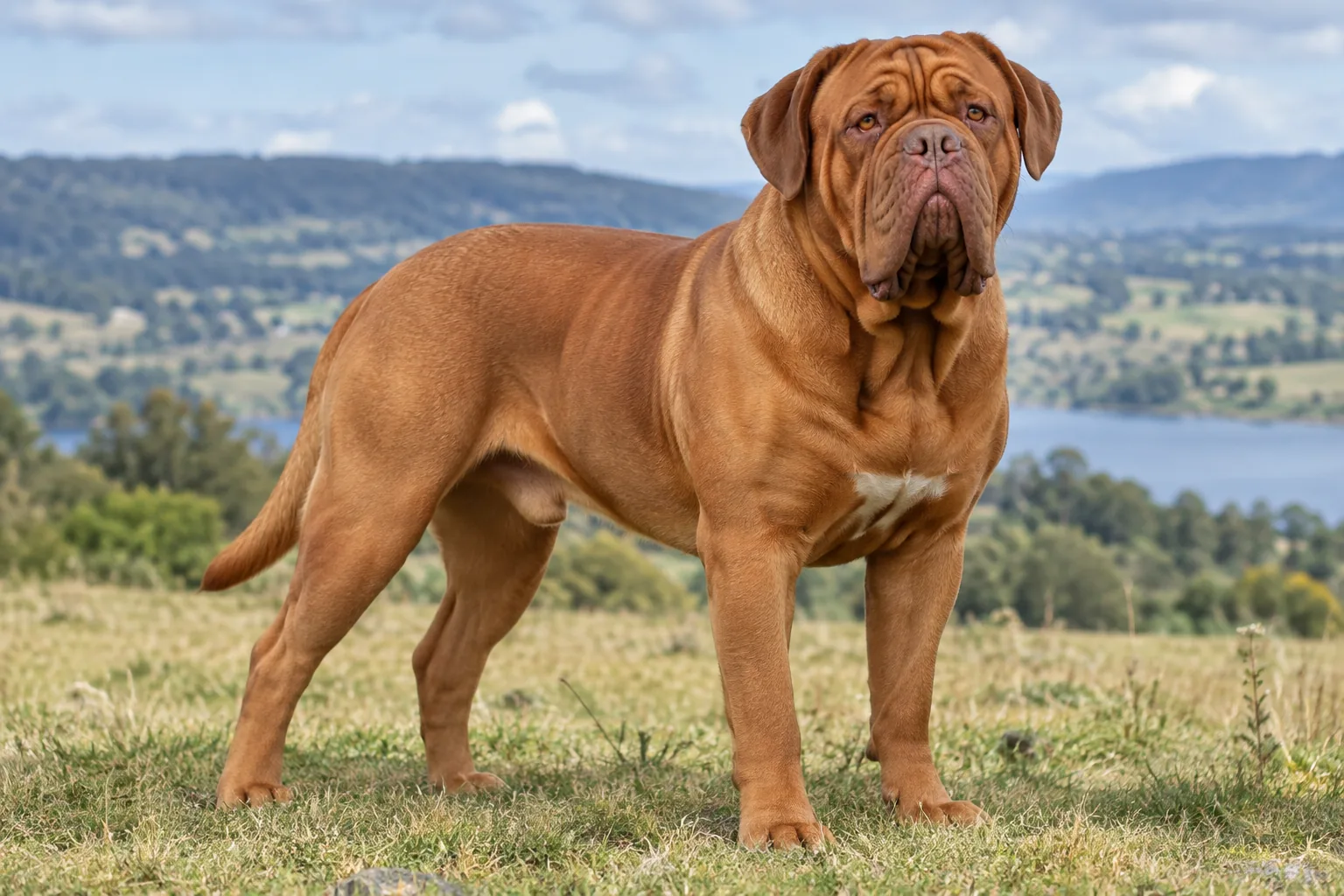
A Dogue de Bordeaux, also known as the French Mastiff or Bordeaux Mastiff, is a giant guardian breed with a lineage tracing back to 14th-century France, historically used to guard estates, protect livestock, and assist in hunting large game.
Also recognizable to American audiences as Hooch from the 1989 Tom Hanks film Turner & Hooch, the breed combines an intimidating, wrinkled presence with a genuinely devoted, affectionate temperament at home. This guide covers where the breed originated, its temperament, how big Dogue de Bordeaux get, how long they live, the health problems they are prone to, grooming, how much exercise they need, how easy they are to train, what to feed them, the pros and cons of owning one, and what else people ask.
What Is a Dogue de Bordeaux and Where Did the Breed Originate?
A Dogue de Bordeaux belongs to the American Kennel Club’s Working Group, covered here as part of our dedicated guardian breed cluster. The breed’s lineage traces back to the 14th century in France, gaining particular popularity in the Bordeaux region as a working dog used to guard estates, protect livestock, and assist in hunting large game. The breed nearly disappeared before Raymond Triquet founded the Dogue de Bordeaux Club of France and worked to save it, and the AKC officially recognized the breed in 2008 after the American population grew sufficiently. The breed’s American popularity surged after appearing in the 1989 film Turner & Hooch.
The American Kennel Club defines the breed in its “Official Standard of the Dogue de Bordeaux”, approved April 12, 2021, which sets out the size, coat, and temperament a Dogue de Bordeaux should have. As of September 2026, the AKC ranks the Dogue de Bordeaux 96th of 210 breeds in popularity.
What Is a Dogue de Bordeaux’s Temperament Like?
A Dogue de Bordeaux’s temperament is calm and gentle within the family, standing in striking contrast to the breed’s imposing, muscular appearance and enormous, wrinkled head. Dogues are unusually loyal and typically patient and affectionate with children, wanting to be near their people almost constantly. That devotion comes paired with a genuinely strong-willed, stubborn streak inherited from the breed’s mastiff ancestry, making strict, early training and socialization essential to prevent potential aggression toward strangers or other dogs.
How Big Do Dogue de Bordeaux Get?
Dogue de Bordeaux are a tall, muscular, giant breed with a broad, deeply wrinkled head often described as one of the largest of any dog breed relative to body size, and a short, dense coat in red, fawn, or mahogany.
What Is the Average Dogue de Bordeaux Height and Weight?
| Measure | American Kennel Club figure |
|---|---|
| Height | 23.27 inches (male), 23-26 inches (female) |
| Weight | 110 pounds & up (male), 99 pounds & up (female) |
| Life expectancy | 5-8 years |
Figures are from the American Kennel Club Dogue de Bordeaux breed profile, retrieved September 2026.
How Long Do Dogue de Bordeaux Live?
Dogue de Bordeaux live 5 to 8 years, a genuinely short lifespan even by giant-breed standards, driven largely by the breed’s documented heart disease and cancer risk combined with its brachycephalic, flat-faced structure. Regular veterinary care and careful attention to the breed’s known health risks matter considerably given this compressed lifespan.
What Health Problems Are Dogue de Bordeaux Prone To?
Dogue de Bordeaux are documented as being at higher risk for the following conditions.
- Cardiac disease, including dilated cardiomyopathy and aortic stenosis. A leading cause of death in the breed, making cardiac screening a genuine priority for this breed specifically.
- Cancer, lymphoma. A significant, well-documented cause of death in the breed.
- Bloat, or gastric dilatation-volvulus (GDV). A life-threatening emergency in deep-chested breeds requiring immediate veterinary care.
- Hip and elbow dysplasia. Joint conditions common in giant breeds given the substantial weight the joints must support.
- Heatstroke and skin fold dermatitis. The breed’s brachycephalic structure limits effective heat dissipation, and its deep facial wrinkles trap moisture and bacteria, requiring regular cleaning to prevent infection.
How Do You Groom a Dogue de Bordeaux?
Dogue de Bordeaux have a short, dense coat that’s genuinely low-maintenance, needing only weekly brushing to control shedding. The breed’s deep facial wrinkles need regular cleaning with a warm, damp cloth followed by a dry one to prevent skin fold infections, and Dogues drool considerably, in particular around mealtimes, so keeping a towel handy is a practical necessity.
How Much Exercise Does a Dogue de Bordeaux Need?
A Dogue de Bordeaux enjoys daily walks and playtime but isn’t an overly active breed, and mental stimulation through interactive games like fetch matters for preventing boredom given the breed’s genuine intelligence. Given the breed’s brachycephalic structure, exercise should be limited in warm or humid weather, scheduled for the cooler morning and evening hours, since this breed is distinctly not suited to being an outdoor dog.
Are Dogue de Bordeaux Easy to Train?
Dogue de Bordeaux are strong-willed and genuinely stubborn, much like other mastiff breeds, which makes strict, consistent training starting in puppyhood essential rather than optional. Early socialization matters considerably, both to prevent potential aggression toward unfamiliar dogs or people and because managing an untrained adult of this size and strength is genuinely difficult.
What Should You Feed a Dogue de Bordeaux?
Dogue de Bordeaux do well on a large-breed formula suited to their age and activity level, and because the breed carries a genuine bloat risk, feeding smaller, more frequent meals rather than one large meal is a commonly recommended precaution. A veterinarian can help set an appropriate feeding plan.
What Are the Pros and Cons of Owning a Dogue de Bordeaux?
Here are the main advantages of owning a Dogue de Bordeaux.
- Calm, deeply devoted temperament with family, children
- Genuinely low-maintenance short coat requiring minimal grooming
- Formidable, effective natural guardian
- Low exercise needs, well suited to a relaxed indoor lifestyle
Here are the main drawbacks of owning a Dogue de Bordeaux.
- Among the shortest average lifespans of any breed, 5 to 8 years
- Documented, significant cardiac disease and cancer risk
- Significant drooling, in particular around mealtimes
- Not recommended for first-time owners given size, stubbornness, and health demands
Dogue de Bordeaux rescue organizations place adult dogs, though the breed’s relative rarity can limit availability, worth a look for anyone drawn to the breed’s devoted temperament but not set on a breeder search.
What Else Do People Ask About the Dogue de Bordeaux?
The questions below cover how much a Dogue de Bordeaux costs, whether Dogue de Bordeaux are good family dogs, why they have such a short lifespan, and whether the dog in Turner & Hooch was a Dogue de Bordeaux.
How much does a Dogue de Bordeaux cost?
Dogue de Bordeaux prices vary by region, bloodline, and breeder reputation, and given the breed’s significant, well-documented health challenges, working with a breeder who provides cardiac and hip health testing matters more for this breed than for most. Adopting an adult Dogue de Bordeaux through a rescue is usually a lower-cost alternative, though the breed’s relative rarity in the U.S. Can limit availability.
Are Dogue de Bordeaux good family dogs?
Yes, Dogue de Bordeaux can be excellent family dogs for experienced owners, known for being unusually loyal and typically patient and affectionate with children. The breed’s genuine strength and stubborn streak mean early, consistent training and socialization matter considerably, and this isn’t a good match for first-time dog owners.
Why do Dogue de Bordeaux have such a short lifespan?
Dogue de Bordeaux have one of the shortest average lifespans of any breed, 5 to 8 years, driven by a combination of documented cardiac disease, cancer, and the breed’s brachycephalic, flat-faced structure, which contributes to heatstroke and breathing difficulty. Choosing a breeder who health-tests extensively gives a Dogue the best chance at the longer end of that range.
Was the dog in Turner & Hooch a Dogue de Bordeaux?
Yes, the dog named Beasley who played Hooch in the 1989 film Turner & Hooch was a Dogue de Bordeaux, and the movie’s popularity considerably boosted American interest in the breed, accelerating exports from France to North America through the 1990s. The AKC officially recognized the breed in 2008 after the American population had grown sufficiently as a result.
Related Guides
More guides on The Dogs Wiki cover behavior, grooming, nutrition, and adoption.
| Guide |
|---|
| Behavior |
| Grooming |
| Nutrition |
| Adoption |