Home → Dog Breeds → Guardian/LGD & Molosser → Leonberger
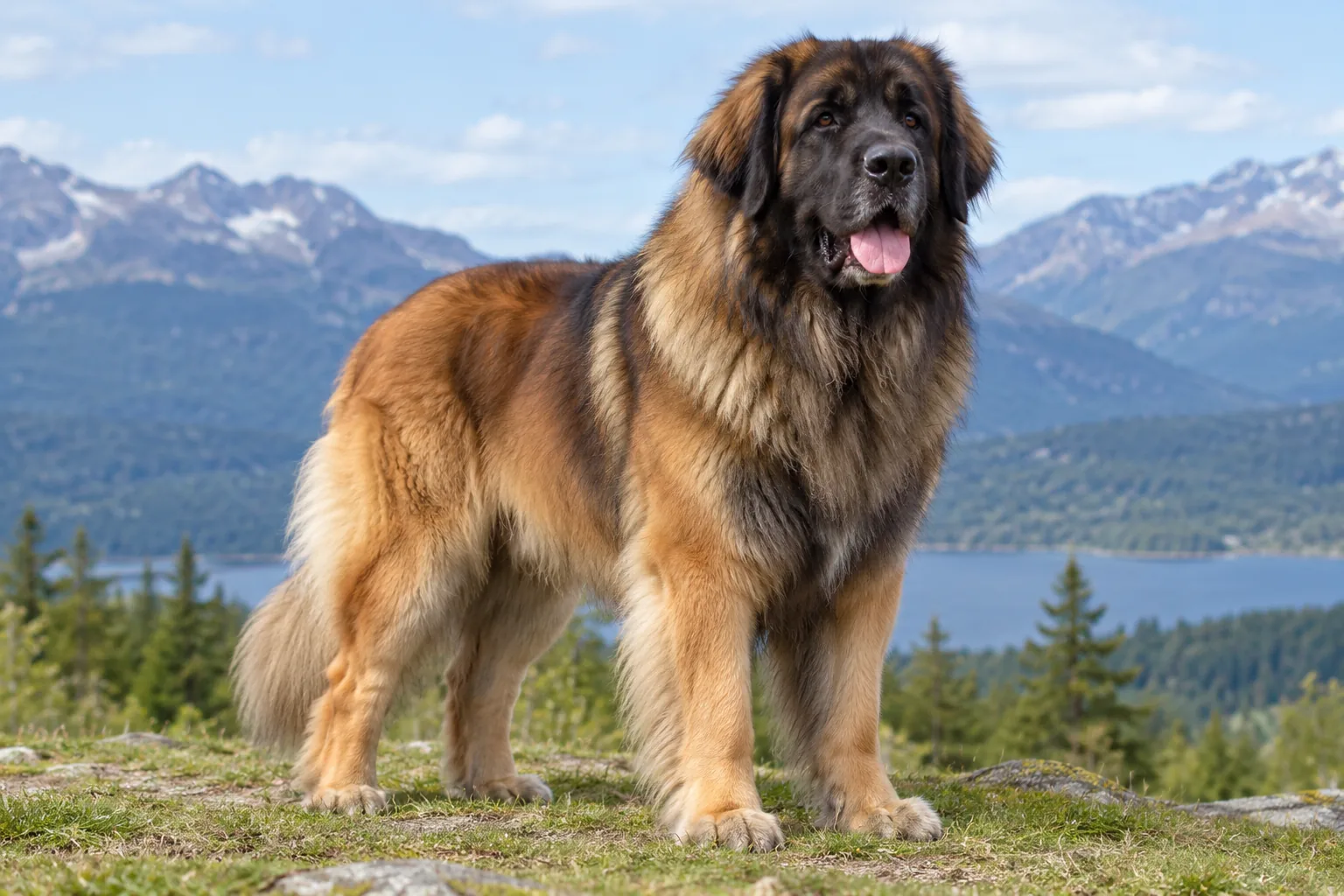
A Leonberger is a giant guardian breed named for the German town of Leonberg, reportedly bred in the 17th century by crossing Newfoundlands, Saint Bernards, and Great Pyrenees to resemble the lion on the town’s coat of arms.
Nearly wiped out during both World Wars, the breed was painstakingly rebuilt each time by dedicated European breeders and today serves both as a devoted family companion and as a genuine search-and-rescue and water-rescue working dog. This guide covers where the breed originated, its temperament, how big Leonbergers get, how long they live, the health problems they are prone to, grooming, how much exercise they need, how easy they are to train, what to feed them, the pros and cons of owning one, and what else people ask.
What Is a Leonberger and Where Did the Breed Originate?
A Leonberger belongs to the American Kennel Club’s Working Group, covered here as part of our dedicated guardian breed cluster. According to legend, the breed was developed in the 17th century in Leonberg, Germany, by crossing Newfoundlands, Saint Bernards, and Great Pyrenees to produce a dog resembling the lion depicted on the town’s coat of arms. Leonbergers were devastated during World War I, with only 25 dogs surviving and just five suitable for breeding, and the breed nearly disappeared again during World War II before dedicated European breeders rebuilt the population each time. The Fédération Cynologique Internationale recognized the breed in 1948, and the AKC followed in 2010.
The American Kennel Club defines the breed in its “Official Standard of the Leonberger”, approved July 12, 2016, which sets out the size, coat, and temperament a Leonberger should have. As of September 2026, the AKC ranks the Leonberger 99th of 210 breeds in popularity.
What Is a Leonberger’s Temperament Like?
A Leonberger’s temperament is loyal, gentle, and genuinely calm, and the breed is confident and patient enough to earn its own reputation as a true “gentle giant.” Leonbergers love to play but are equally content being a couch potato, and the breed genuinely wants and needs a great deal of affection from every member of its family, not just one person. Given their intelligence and easygoing nature, Leonbergers do best with a real job to focus on, whether that’s structured training, therapy work, or search and rescue.
How Big Do Leonbergers Get?
Leonbergers are a giant, sexually dimorphic breed, meaning males and females look distinctly different: males are powerful and masculine with a lion-like mane around the neck, while females are more slender and graceful. The breed carries a long, weather-resistant double coat in lion-yellow, red, red-brown, or sand with a black mask.
What Is the Average Leonberger Height and Weight?
| Measure | American Kennel Club figure |
|---|---|
| Height | 28-31.5 inches (male), 25.5-29.5 inches (female) |
| Weight | 110-170 pounds (male), 90-140 pounds (female) |
| Life expectancy | 7 years |
Figures are from the American Kennel Club Leonberger breed profile, retrieved September 2026.
How Long Do Leonbergers Live?
Leonbergers live 7 to 9 years, a short lifespan even for a giant breed, though breed-club research shows nearly 20% live beyond ten years, with some rare cases reaching thirteen. Regular veterinary screening for cancer, the breed’s most significant documented health risk, matters considerably for supporting a full lifespan.
What Health Problems Are Leonbergers Prone To?
Leonbergers are documented as being at higher risk for the following conditions.
- Cancer. The breed’s leading cause of death according to American and Canadian Leonberger Club surveys, responsible for 34 to 45% of deaths, with osteosarcoma, a bone cancer, common.
- Hip and elbow dysplasia. Two of the most common skeletal diseases in dogs, in which the hip or elbow joint has grown abnormally or is misshapen.
- Leonberger polyneuropathy. A genetic neurological condition specific enough to the breed that DNA testing is recommended for breeding stock.
- Heart disease. Accounting for roughly 9 to 11% of deaths in breed-club health surveys, worth screening for with a cardiac exam.
- Bloat, or gastric dilatation-volvulus (GDV). A life-threatening emergency in deep-chested breeds requiring immediate veterinary care.
How Do You Groom a Leonberger?
Leonbergers have a long, thick double coat that sheds heavily, blowing its coat twice a year, and daily brushing is genuinely recommended to keep shedding manageable between those heavier seasonal periods. A Leonberger should never be shaved, since the double coat helps regulate body temperature and protect the skin, and grooming sessions also offer a valuable chance to monitor the dog’s overall skin health and body condition.
How Much Exercise Does a Leonberger Need?
A Leonberger needs regular daily exercise, and the breed genuinely enjoys having a job to focus on, whether that’s structured training, water work, or search-and-rescue activities that tap into its heritage. Given the breed’s real potential for destructive behavior if bored or under-supervised, consistent mental engagement matters as much as physical exercise.
Are Leonbergers Easy to Train?
Yes, Leonbergers are intelligent, easy to train, and genuinely prefer having a job to focus on rather than being left without direction. Positive reinforcement training works well, and the breed’s calm, easygoing nature makes it a genuinely good fit for structured activities like therapy work once properly trained.
What Should You Feed a Leonberger?
Leonberger puppies should eat a large-breed puppy formula that supports slow, steady growth, since the breed’s rapid growth rate during puppyhood makes controlled development genuinely important for long-term joint health. Adult Leonbergers do well on a formula suited to their age and activity level, and a veterinarian can help set appropriate portions given the breed’s substantial size range.
What Are the Pros and Cons of Owning a Leonberger?
Here are the main advantages of owning a Leonberger.
- Loyal, gentle, genuinely patient temperament
- Does well at search and rescue, water rescue, and therapy work
- Calm with children and generally the whole family
- Intelligent and easy to train
Here are the main drawbacks of owning a Leonberger.
- Documented, significant cancer risk, the breed’s leading cause of death
- Heavy shedding requiring daily brushing
- Genuinely short lifespan even by giant-breed standards
- Needs real space and a job to avoid destructive behavior when bored
Leonberger rescue organizations place adult dogs, though the breed’s relative rarity can limit availability, worth a look for anyone drawn to the breed’s gentle temperament but not set on a breeder search.
What Else Do People Ask About the Leonberger?
The questions below cover how much a Leonberger costs, whether Leonbergers are good family dogs, why the Leonberger nearly went extinct, and what Leonberger polyneuropathy is.
How much does a Leonberger cost?
Leonberger prices vary by region, bloodline, and breeder reputation, and a puppy from a breeder who provides OFA or PennHIP hip evaluations, elbow evaluations, cardiac testing, and eye exams typically costs more than one that doesn’t. Adopting an adult Leonberger through a rescue is usually a lower-cost alternative, though the breed’s relative rarity can limit availability.
Are Leonbergers good family dogs?
Yes, Leonbergers are widely regarded as excellent family dogs, known as “gentle giants” for being calm, patient, and loyal to the whole family rather than attaching to just one person. Given their great size, this breed does best with a home that has real space and an owner prepared to supervise and train a dog this large from puppyhood.
Why did the Leonberger nearly go extinct?
Leonbergers nearly went extinct twice, once during World War I, when food shortages and destroyed breeding programs left only 25 dogs alive, just five of them suitable for breeding, and again during World War II under similar wartime pressures. Dedicated European breeders rebuilt the population both times, and the breed survives today as a direct result of their efforts.
What is Leonberger polyneuropathy?
Leonberger polyneuropathy is a genetic neurological condition specific enough to the breed that responsible breeders are encouraged to perform DNA testing on breeding stock to identify carriers. It affects the nerves and can impact a dog’s mobility and quality of life, which is why breed clubs prioritize screening for it alongside the more commonly discussed orthopedic and cardiac concerns.
Related Guides
More guides on The Dogs Wiki cover behavior, grooming, training, and nutrition.
| Guide |
|---|
| Behavior |
| Grooming |
| Training |
| Nutrition |