
Home → Dog Breeds → Herding Group → Old English Sheepdog
An Old English Sheepdog is a large Herding Group breed developed in 18th-century England’s West Country to drive sheep and cattle to market, known for its shaggy coat and playful personality.
An Old English Sheepdog is a large Herding Group breed developed in 18th-century England’s West Country, from a mix of Scottish Bearded Collies and Russian Owtchars, originally used to drove both sheep and cattle from farm to market rather than pure sheep herding. Instantly recognizable by its massive shaggy coat and nicknamed the “Bobtail” for its traditionally docked tail, the breed carries a genuinely playful, rough-and-tumble personality underneath all that fur. This guide covers where the breed originated, its temperament, how big Old English Sheepdogs get, how long they live, the health problems they are prone to, grooming, how much exercise they need, how easy they are to train, what to feed them, the pros and cons of owning one, and what else people ask.
What Is an Old English Sheepdog and Where Did the Breed Originate?
An Old English Sheepdog belongs to the American Kennel Club’s Herding Group. Despite its name, the breed is relatively recent, developed around the 1700s in England’s Somerset and Devon counties and the Duchy of Cornwall from a mix of European, Scottish, and Russian dogs, with Bearded Collies and Russian Owtchars cited as ancestors. The breed worked as a drover, moving both sheep and cattle to market, and its tail was traditionally docked, a practice that marked it as a working dog exempt from a historical English dog tax and gave rise to the nickname “Bobtail.” First exhibited in 1873, the breed was registered by the AKC in 1888.
The American Kennel Club defines the breed in its “Official Standard of the Old English Sheepdog”, approved February 10, 1990, which sets out the size, coat, and temperament an Old English Sheepdog should have. As of September 2026, the AKC ranks the Old English Sheepdog 89th of 210 breeds in popularity.
What Is an Old English Sheepdog’s Temperament Like?
An Old English Sheepdog’s temperament is amiable, gentle, and genuinely jolly, and the breed’s own parent club describes it as having a “happy, rough-and-tumble disposition.” Old English Sheepdogs are affectionate with family members of all ages and excellent with children, sometimes gently herding kids around the house through nudging rather than nipping, but the breed can need time to warm up to strangers and new animals. Despite their size, Sheepdogs are far from lazy and need genuine daily engagement to stay content.
How Big Do Old English Sheepdogs Get?
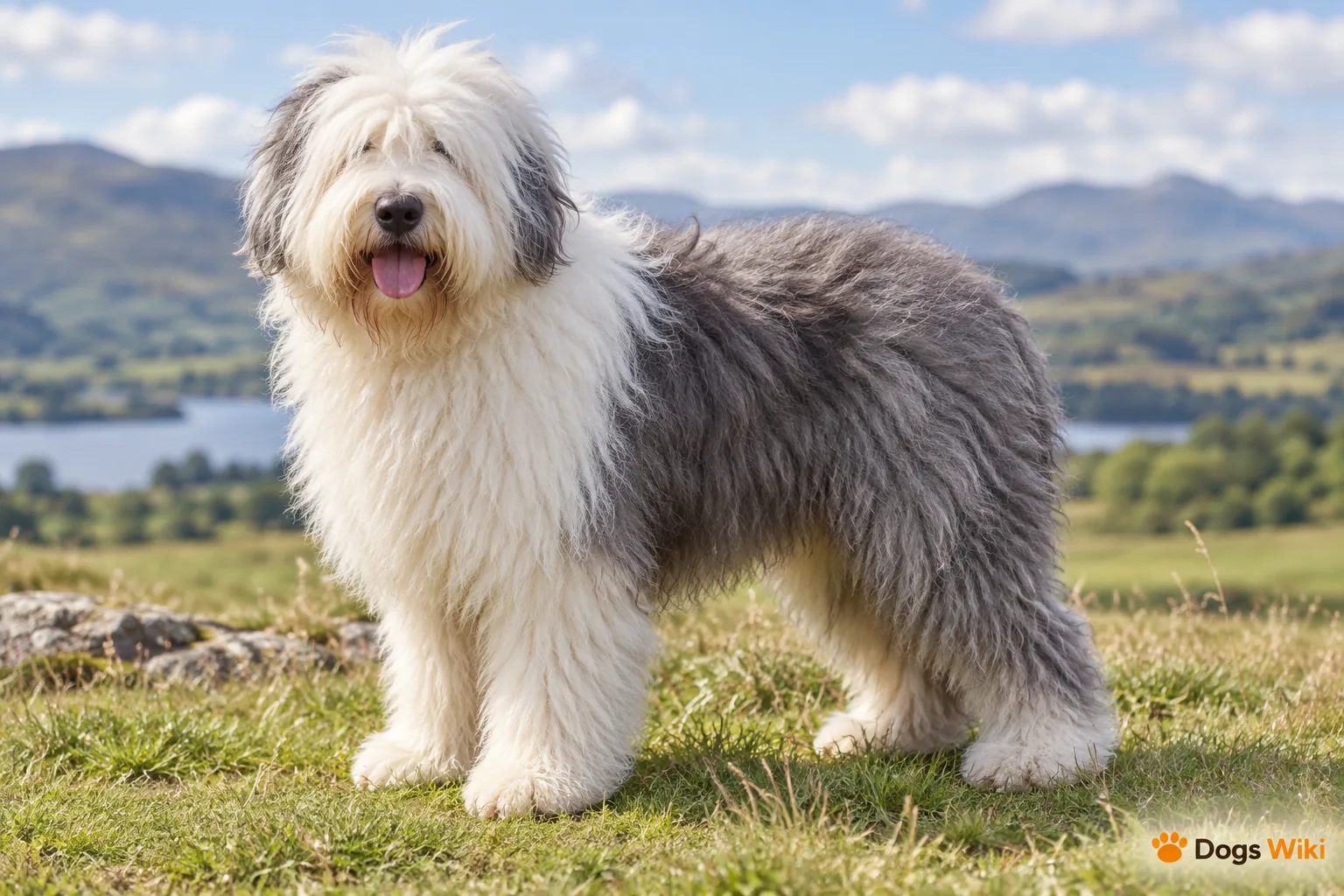
Old English Sheepdogs are a large, sturdy breed instantly recognizable by a massive, shaggy double coat, typically blue-gray and white, that covers the eyes and gives the breed its distinctive “panda bear covered in shag carpet” look.
What Is the Average Old English Sheepdog Height and Weight?
| Measure | American Kennel Club figure |
|---|---|
| Height | 22 inches & up (male), 21 inches & up (female) |
| Weight | 60-100 pounds |
| Life expectancy | 10-12 years |
Figures are from the American Kennel Club Old English Sheepdog breed profile, retrieved September 2026.
How Long Do Old English Sheepdogs Live?
Old English Sheepdogs live 10 to 12 years, with some individual dogs reaching 12 to 14 with excellent care. Given the breed’s documented risk of obesity and joint issues, regular veterinary care combined with careful weight management supports a full, comfortable lifespan.
What Health Problems Are Old English Sheepdogs Prone To?
Old English Sheepdogs are documented as being at higher risk for the following conditions.
- Hip dysplasia. The breed’s most significant orthopedic concern, screened for with hip x-rays in responsible breeding programs.
- Autoimmune thyroiditis and hypothyroidism. Immune-related thyroid conditions causing reduced hormone production, managed with daily medication once diagnosed.
- Hereditary cataracts and progressive retinal atrophy. Inherited eye conditions that can affect vision, screened for with regular eye exams.
- Gastric torsion (bloat). A life-threatening emergency in deep-chested breeds requiring immediate veterinary care.
- MDR1 drug sensitivity. A genetic mutation associated with merle coloring that makes some dogs more susceptible to severe reactions from certain medications, including sedatives and parasite preventives; genetic testing can identify carriers.
How Do You Groom an Old English Sheepdog?
Old English Sheepdogs have a thick, dense, profuse double coat that’s genuinely among the most demanding in the entire AKC roster, requiring a minimum of three to four hours a week to keep free of debris and matting. Many pet owners choose to shave the coat down or maintain a shorter “puppy cut” specifically to reduce this substantial time commitment, and heavy drooling can stain the fur around the mouth, sometimes managed with a cornstarch treatment.
How Much Exercise Does an Old English Sheepdog Need?
An Old English Sheepdog needs ample daily outdoor exercise, and despite the breed’s imposing, shaggy bulk, it genuinely isn’t content to laze around all day. An engaged owner who provides regular opportunities to stretch both mind and body helps prevent boredom, and the breed’s dense coat means exercise should be moderated in hot weather to avoid overheating.
Are Old English Sheepdogs Easy to Train?
Old English Sheepdogs are smart but genuinely independent, described by breed experts as strong-willed dogs that need a firm, consistent hand to guide them. Positive reinforcement training paired with real consistency works well, and the breed’s notable sense of humor means training sessions can be genuinely entertaining, even when the dog is clearly testing its owner’s patience.
What Should You Feed an Old English Sheepdog?
Old English Sheepdogs are genuinely prone to overfeeding and resulting obesity, which worsens the breed’s existing joint and health risks, so measured portions matter considerably for this breed specifically. A large-breed formula suited to the dog’s age and activity level, combined with consistent daily exercise, helps keep the breed at a healthy weight.
What Are the Pros and Cons of Owning an Old English Sheepdog?
Here are the main advantages of owning an Old English Sheepdog.
- Amiable, gentle, genuinely jolly temperament
- Excellent with children, often gently herding them rather than roughhousing
- Good sense of humor and playful personality
- Loyal and can be protective when it matters
Here are the main drawbacks of owning an Old English Sheepdog.
- Among the most demanding grooming commitments of any breed, 3-4 hours weekly minimum
- Genuinely prone to obesity, worsening existing joint risks
- Can be a nuisance barker without consistent training
- Needs time to warm up to strangers and unfamiliar animals
Old English Sheepdog rescue organizations occasionally place adult dogs, though the breed is genuinely uncommon in shelters, worth a look for anyone drawn to the breed’s jolly temperament but not set on a breeder search.
What Else Do People Ask About the Old English Sheepdog?
The questions below cover how much an Old English Sheepdog costs, whether Old English Sheepdogs are good family dogs, why the Old English Sheepdog is called the “Bobtail”, and how much grooming an Old English Sheepdog needs.
How much does an Old English Sheepdog cost?
Old English Sheepdog prices vary by region, bloodline, and breeder reputation, and a puppy from a breeder who screens for hip, eye, and thyroid health typically costs more than one that doesn’t. Adopting an adult Old English Sheepdog through a rescue is usually a lower-cost alternative, though the breed is genuinely uncommon in shelters and rescues.
Are Old English Sheepdogs good family dogs?
Yes, Old English Sheepdogs are widely regarded as excellent family dogs, known for being affectionate, patient, and genuinely good with children, sometimes even gently herding kids around with nudges rather than nipping. Their size and boisterous play style still call for some supervision around young children.
Why is the Old English Sheepdog called the “Bobtail”?
The nickname “Bobtail” comes from the breed’s historically docked tail, a practice originally used to mark working farm dogs as exempt from a dog tax in England. Docking a sheepdog’s tail served as visible proof the dog was a genuine working animal rather than a companion pet subject to taxation.
How much grooming does an Old English Sheepdog need?
An Old English Sheepdog needs a minimum of three to four hours of grooming a week according to the breed’s own parent club, making it among the most demanding coats in the entire dog world to maintain in full show condition. Many pet owners manage this by keeping the coat trimmed shorter in a “puppy cut,” which meaningfully reduces the time commitment without sacrificing the breed’s core comfort or health.
Related Guides
More guides on The Dogs Wiki cover behavior, health, grooming, training, nutrition, and adoption.
| Guide |
|---|
| Behavior |
| Health |
| Grooming |
| Training |
| Nutrition |
| Adoption |