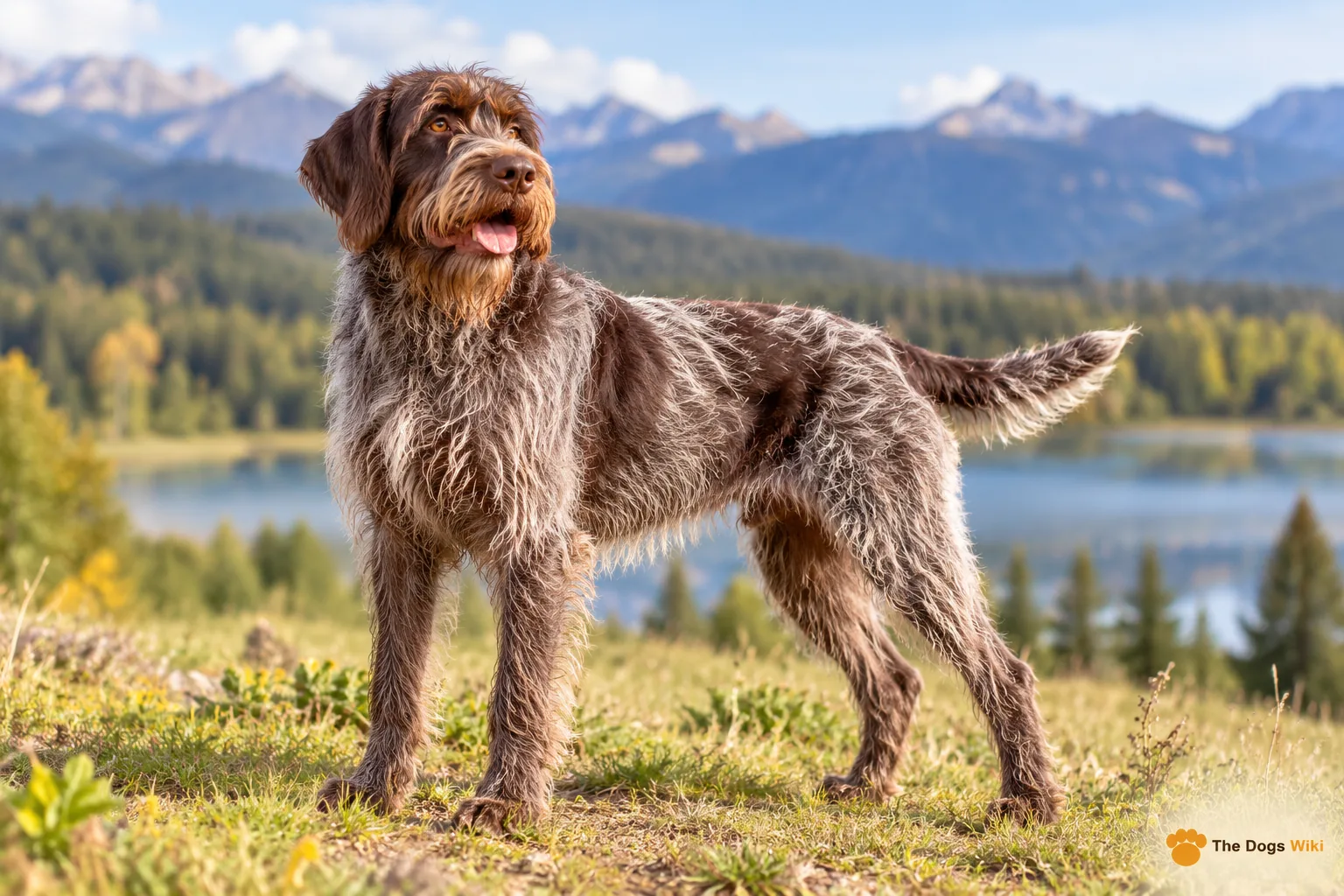
A Wirehaired Pointing Griffon, called simply a Griffon or Griff, is a medium-sized Sporting Group breed developed in the late 1800s by Dutch breeder Eduard Karel Korthals, who set out to create the most adaptable hunting dog possible.
The result, nicknamed the “supreme gundog” by admirers, points, flushes, and retrieves equally well on land and in water. This guide covers where the breed originated, its temperament, how big Wirehaired Pointing Griffons get, how long they live, the health problems they are prone to, grooming, how much exercise they need, how easy they are to train, what to feed them, the pros and cons of owning one, and what else people ask.
What Is a Wirehaired Pointing Griffon and Where Did the Breed Originate?
A Wirehaired Pointing Griffon belongs to the American Kennel Club’s Sporting Group. Dutch breeder Eduard Karel Korthals developed the breed in the late 19th century, carefully selecting dogs with strength, endurance, talented noses, water-repellent coats, and cooperative temperaments, with much of the breed’s actual development taking place in Germany and France. The breed standard was established in 1886, and the AKC recognized the breed in 1887, though it was initially mistakenly registered under the name Russian Setter. Most Wirehaired Pointing Griffons today are still bred in France, and the breed works closer to its handler in the field than the longer-ranging German Wirehaired Pointer.
The American Kennel Club defines the breed in its “Official Standard for the Wirehaired Pointing Griffon”, approved October 8, 1991, which sets out the size, coat, and temperament a Wirehaired Pointing Griffon should have. As of September 2026, the AKC ranks the Wirehaired Pointing Griffon 51st of 210 breeds in popularity.
What Is a Wirehaired Pointing Griffon’s Temperament Like?
A Wirehaired Pointing Griffon’s temperament is outgoing, friendly, and genuinely eager to please, and the breed is known for a goofy, playful side at home that contrasts with its dedicated, businesslike work ethic in the field. Griffons bond closely with their family and want to be involved in household activities, and the breed can be good with horses when properly introduced and socialized from a young age, reflecting its genuinely gentle, cooperative nature.
How Big Do Wirehaired Pointing Griffons Get?
Wirehaired Pointing Griffons are a medium-sized breed with a distinctive scruffy, unkempt appearance created by a dense, wiry double coat with a mustached, bearded face, giving the breed real character and immediate visual distinction from other pointing breeds.
What Is the Average Wirehaired Pointing Griffon Height and Weight?
| Measure | American Kennel Club figure |
|---|---|
| Height | 22-24 inches (male), 20-22 inches (female) |
| Weight | 50-70 pounds (male), 35-50 pounds (female) |
| Life expectancy | 12-15 years |
Figures are from the American Kennel Club Wirehaired Pointing Griffon breed profile, retrieved September 2026.
How Long Do Wirehaired Pointing Griffons Live?
Wirehaired Pointing Griffons live 12 to 15 years. The breed is considered healthy overall, and regular veterinary care supports a full lifespan.
What Health Problems Are Wirehaired Pointing Griffons Prone To?
Wirehaired Pointing Griffons are documented as being at higher risk for the following conditions.
- Hip dysplasia. A genetic condition in which the hip joint doesn’t conform properly, causing looseness that causes cartilage and bone wear over time and can result in degenerative joint disease and osteoarthritis.
- Thyroid disease. Reduced thyroid hormone production, managed with daily medication once diagnosed.
- Eye issues. Recognized, breed-associated conditions that a veterinarian can screen for with a CAER eye exam.
- Ear infections. A common concern given the breed’s floppy ears, managed with regular cleaning.
How Do You Groom a Wirehaired Pointing Griffon?
Wirehaired Pointing Griffons have a hard, coarse, wiry double coat that doesn’t shed heavily and needs only minimal grooming, though the coat isn’t considered fully hypoallergenic despite its low-shedding nature. Occasional hand-stripping helps maintain the coat’s proper texture, and the breed’s mustache and beard benefit from regular wiping after meals.
How Much Exercise Does a Wirehaired Pointing Griffon Need?
A Wirehaired Pointing Griffon needs substantial daily exercise, reflecting the breed’s genuine versatility as a hunting companion capable of working all day on land and in water. The breed’s strong prey drive means recall requires consistent, ongoing training, and a securely fenced area matters for off-leash time given the breed’s real hunting instincts.
Are Wirehaired Pointing Griffons Easy to Train?
Yes, Wirehaired Pointing Griffons are easy to moderately easy to train, genuinely intelligent, willing, and handler-focused. Positive reinforcement training works well, and field training tends to come naturally to the breed, though basic obedience should still begin early and stay consistent throughout the dog’s life.
What Should You Feed a Wirehaired Pointing Griffon?
A Wirehaired Pointing Griffon requires a high-quality, age-appropriate formula, whether commercially manufactured or home-prepared with a veterinarian’s supervision and approval. Given the breed’s genuinely high activity level, portions should reflect actual exercise and work demands.
What Are the Pros and Cons of Owning a Wirehaired Pointing Griffon?
Here are the main advantages of owning a Wirehaired Pointing Griffon.
- Outgoing, friendly, genuinely eager-to-please temperament
- Low-shedding wiry coat needing minimal grooming
- Adaptable across land and water hunting work
- Devoted family companion with a playful side at home
Here are the main drawbacks of owning a Wirehaired Pointing Griffon.
- Needs substantial daily exercise given genuine working stamina
- Strong prey drive requires consistent recall training
- Documented risk of hip dysplasia and thyroid disease
- Relatively uncommon breed, which can mean higher prices and longer waitlists
Wirehaired Pointing Griffon rescue organizations place adult dogs, though the breed’s relative rarity can limit availability, worth a look for anyone drawn to the breed’s versatility but not set on a breeder search.
What Else Do People Ask About the Wirehaired Pointing Griffon?
The questions below cover how much a Wirehaired Pointing Griffon costs, whether Wirehaired Pointing Griffons are good family dogs, the difference between the Wirehaired Pointing Griffon and the German Wirehaired Pointer, and whether a Wirehaired Pointing Griffon is hypoallergenic.
How much does a Wirehaired Pointing Griffon cost?
A Wirehaired Pointing Griffon puppy costs $1,500 to $3,000 from a reputable breeder who provides OFA hip, OFA thyroid, and CAER eye clearances, though prices vary by region and bloodline. Adopting an adult Griffon through a rescue is usually a lower-cost alternative.
Are Wirehaired Pointing Griffons good family dogs?
Yes, Wirehaired Pointing Griffons are widely regarded as excellent family dogs, known for a genuinely affectionate, devoted temperament and good-natured personality that suits active households well.
What Is the Difference Between the Wirehaired Pointing Griffon and the German Wirehaired Pointer?
Wirehaired Pointing Griffons and German Wirehaired Pointers are similar in temperament, appearance, and hunting purpose, but they differ in working style: the Griffon works close to its handler, while the German Wirehaired Pointer ranges farther out. Temperament-wise, Griffons tend to be more easygoing, while German Wirehaired Pointers can run somewhat more aloof.
Is a Wirehaired Pointing Griffon hypoallergenic?
No, despite shedding relatively little given its wiry, low-shedding coat, the Wirehaired Pointing Griffon isn’t considered a fully hypoallergenic breed, since allergens come from dander and saliva as well as shed hair. Allergy-sensitive individuals should spend time with the breed before committing.
Related Guides
More guides on The Dogs Wiki cover behavior, health, training, nutrition, and adoption.
| Guide |
|---|
| Behavior |
| Health |
| Training |
| Nutrition |
| Adoption |