
Home→Dog Breeds→Terrier Group→Kerry Blue Terrier
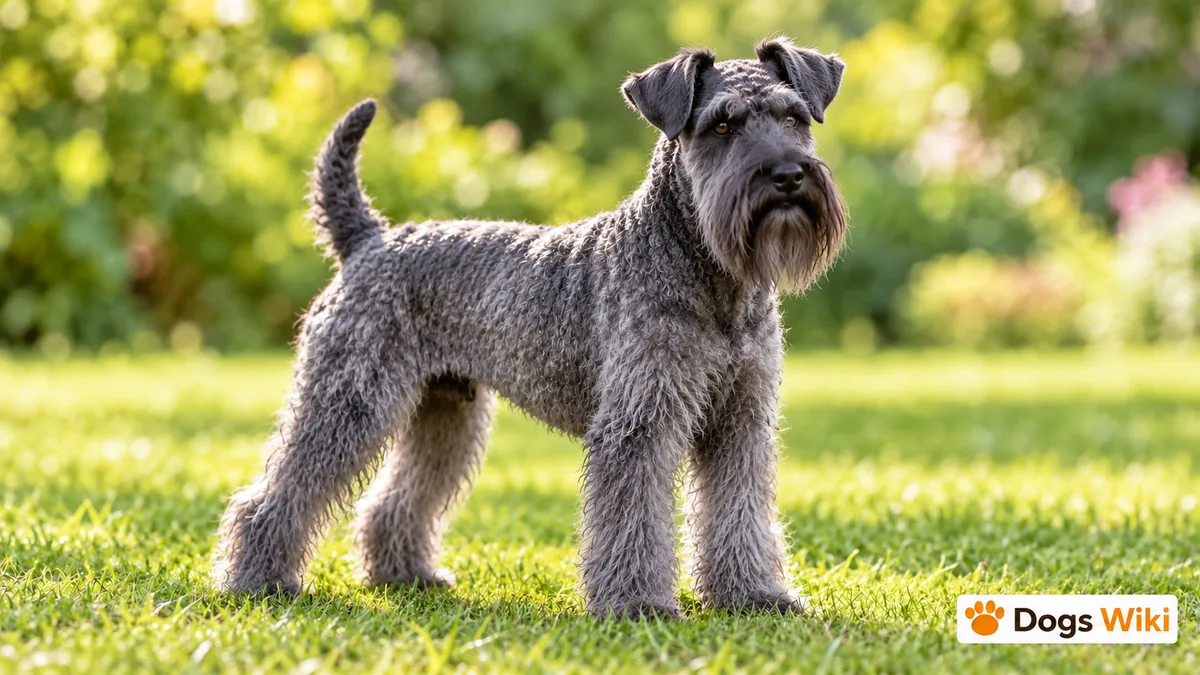
A Kerry Blue Terrier is a medium to large Terrier Group breed from County Kerry, Ireland.
It once controlled vermin and worked as a general farm dog, herding cattle and sheep. Among the largest AKC terriers, it’s known for a genuinely unique, show-stopping blue coat. This guide covers where the breed originated, its temperament, how big Kerry Blue Terriers get, how long they live, the health problems they are prone to, grooming, how much exercise they need, how easy they are to train, what to feed them, the pros and cons of owning one, and what else people ask.
What Is a Kerry Blue Terrier and Where Did the Breed Originate?
A Kerry Blue Terrier belongs to the AKC’s Terrier Group. The breed originated in County Kerry, Ireland, in the 1820s, developed to control vermin including rats, badgers, and foxes before expanding into general farm work like herding. Legend holds the breed may have arrived via the Spanish Armada. The AKC recognized it in 1922.
The American Kennel Club defines the breed in its “Official Standard of the Kerry Blue Terrier”, approved October 10, 2005, which sets out the size, coat, and temperament a Kerry Blue Terrier should have. As of September 2026, the AKC ranks the Kerry Blue Terrier 135th of 210 breeds in popularity.
What Is a Kerry Blue Terrier’s Temperament Like?
A Kerry Blue Terrier’s temperament is alert, intelligent, and genuinely strong-willed. The breed is fearless, energetic, and mischievous, a real handful without consistent structure. Kerries can be suspicious of new people and other dogs, so early, continued socialization matters considerably. This breed suits an experienced owner best.
How Big Do Kerry Blue Terriers Get?
Kerry Blue Terriers are a medium to large, deep-chested breed with a soft, dense, wavy coat that comes in various shades of blue. Puppies are born black, and the coat lightens to blue as the dog matures.
What Is the Average Kerry Blue Terrier Height and Weight?
| Measure | American Kennel Club figure |
|---|---|
| Height | 18-19.5 inches (male), 17.5-19 inches (female) |
| Weight | 33-40 pounds (male), females weigh proportionately less than males |
| Life expectancy | 12-15 years |
Figures are from the American Kennel Club Kerry Blue Terrier breed profile, retrieved September 2026.
How Long Do Kerry Blue Terriers Live?
Kerry Blue Terriers live 12 to 15 years. Regular veterinary care supports a full life, given the breed’s documented skin-specific conditions.
What Health Problems Are Kerry Blue Terriers Prone To?
Kerry Blue Terriers are documented as being at higher risk for the following conditions.
- Spiculosis. A painful skin condition specific to the breed, causing follicular hyperkeratosis.
- Footpad keratosis. An overgrowth of the footpad’s hard skin layer, a documented breed-specific concern.
- Hair follicle tumors. A recognized predisposition in the breed worth monitoring with regular veterinary checks.
- Hip dysplasia. A joint condition common across many breeds, screened for with x-rays.
How Do You Groom a Kerry Blue Terrier?
Kerry Blue Terriers have a soft, wavy coat that barely sheds but needs weekly brushing and combing to prevent knots. Professional grooming every six to eight weeks keeps the coat in proper condition.
How Much Exercise Does a Kerry Blue Terrier Need?
A Kerry Blue Terrier needs substantial daily exercise, reflecting its working farm-dog history. Without enough activity, this creative, inventive breed will find its own way to stay occupied, not in ways owners appreciate.
Are Kerry Blue Terriers Easy to Train?
Kerry Blue Terriers are intelligent but genuinely strong-willed, bred to work independently at singular tasks. Early, consistent training matters considerably, since this breed will take control if allowed to.
What Should You Feed a Kerry Blue Terrier?
A Kerry Blue Terrier does well on a formula suited to its age and genuinely active lifestyle. A veterinarian can help set appropriate portions for this medium to large terrier.
What Are the Pros and Cons of Owning a Kerry Blue Terrier?
Here are the main advantages of owning a Kerry Blue Terrier.
- Alert, intelligent, genuinely entertaining temperament
- Barely sheds, a real plus for allergy-sensitive households
- Adaptable working history across vermin control and herding
- Striking, distinctive blue coat
Here are the main drawbacks of owning a Kerry Blue Terrier.
- Genuinely strong-willed, best suited to experienced owners
- Suspicious of strangers and other dogs without consistent socialization
- High grooming commitment for the wavy coat
- Documented risk of breed-specific skin conditions
Kerry Blue Terrier rescue organizations place adult dogs regularly, worth a look for anyone drawn to this breed’s striking coat and spirited personality but not set on a breeder search.
What Else Do People Ask About the Kerry Blue Terrier?
The questions below cover how much a Kerry Blue Terrier costs, whether Kerry Blue Terriers are good family dogs, why a Kerry Blue Terrier is puppy born black, and whether Kerry Blue Terriers shed.
How much does a Kerry Blue Terrier cost?
Kerry Blue Terrier puppies cost $2,000 to $2,500 from a reputable breeder. Adopting an adult dog through a rescue is usually cheaper.
Are Kerry Blue Terriers good family dogs?
Kerry Blue Terriers can be good family dogs with consistent, early training, and they’re generally amiable with children, though introductions to other dogs and cats need to go slowly and carefully.
Why is a Kerry Blue Terrier puppy born black?
Kerry Blue Terrier puppies are genuinely born black, and the coat gradually lightens into the breed’s signature blue shade as the dog matures into adulthood, a genuine and well-documented breed trait.
Do Kerry Blue Terriers shed?
No, genuinely little. The breed’s soft, wavy coat sheds minimally, which is part of why it’s a popular option for allergy-sensitive households, though regular brushing is still needed to prevent matting.
Related Guides
More guides on The Dogs Wiki cover behavior, health, grooming, training, nutrition, and adoption.
| Guide |
|---|
| Behavior |
| Health |
| Grooming |
| Training |
| Nutrition |
| Adoption |