
Home→Dog Breeds→Terrier Group→Norwich Terrier
A Norwich Terrier is a small Terrier Group breed from East Anglia, England.
It’s one of the smallest working terriers, bred as a sturdy ratter and foxhunter. Its drop-eared cousin is the Norfolk Terrier, split off as a separate breed by the AKC in 1979. This guide covers where the breed originated, its temperament, how big Norwich Terriers get, how long they live, the health problems they are prone to, grooming, how much exercise they need, how easy they are to train, what to feed them, the pros and cons of owning one, and what else people ask.
What Is a Norwich Terrier and Where Did the Breed Originate?
A Norwich Terrier belongs to the AKC’s Terrier Group. It developed in 19th-century East Anglia, England, from Irish Terrier stock crossed with other local ratting terriers. Cambridge undergraduates kept and popularized the breed. Norwich and Norfolk Terriers were considered one breed with two ear types until 1979, when the AKC recognized the prick-eared Norwich as separate from the drop-eared Norfolk.
The American Kennel Club defines the breed in its “Official Standard of the Norwich Terrier”, approved October 13, 1981, which sets out the size, coat, and temperament a Norwich Terrier should have. As of September 2026, the AKC ranks the Norwich Terrier 104th of 210 breeds in popularity.
What Is a Norwich Terrier’s Temperament Like?
A Norwich Terrier’s temperament is fearless, loyal, and genuinely affectionate. The breed loves its people more than anything, though it can bark at strangers before deciding there’s no real danger. Norwich Terriers carry a strong prey drive, so smaller pets like birds or rodents need to stay out of reach. This breed is untrustworthy off leash given its urge to roam.
How Big Do Norwich Terriers Get?
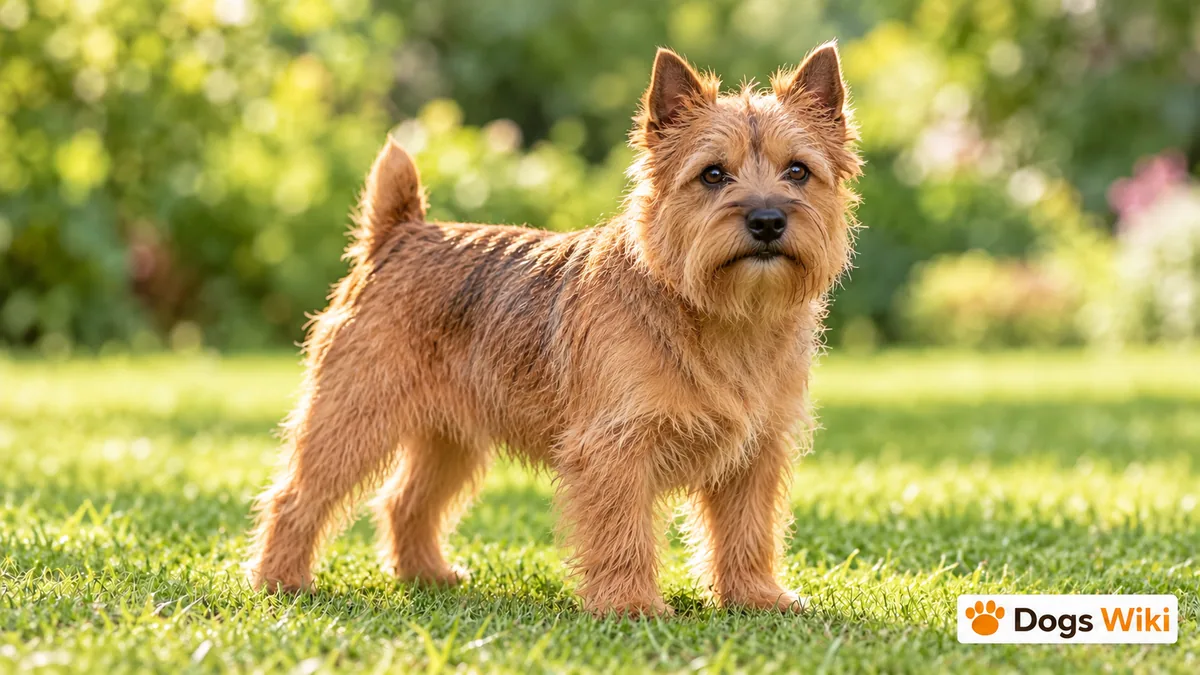
Norwich Terriers are among the smallest working terriers, with a fox-like head and short, compact body. The coat is hard, wiry, and comes in red, wheaten, black and tan, or grizzle.
What Is the Average Norwich Terrier Height and Weight?
| Measure | American Kennel Club figure |
|---|---|
| Height | 10 inches |
| Weight | 12 pounds |
| Life expectancy | 12-15 years |
Figures are from the American Kennel Club Norwich Terrier breed profile, retrieved September 2026.
How Long Do Norwich Terriers Live?
Norwich Terriers live 12 to 15 years. Regular veterinary care supports a full life for this healthy small breed.
What Health Problems Are Norwich Terriers Prone To?
Norwich Terriers are documented as being at higher risk for the following conditions.
- Luxating patella. A common issue in the breed, in which the kneecap slips out of its normal position.
- Hip dysplasia. A joint condition worth screening for with x-rays.
- Cesarean delivery risk. Not a health condition itself, but a documented birthing complication that adds real cost and complexity to responsible breeding.
- Overall good health. The breed is generally considered healthy given proper care.
How Do You Groom a Norwich Terrier?
Norwich Terriers have a hard, wiry coat that needs brushing and combing twice a week. The breed sheds twice a year, and hand-stripping helps maintain the coat’s proper texture between sessions.
How Much Exercise Does a Norwich Terrier Need?
A Norwich Terrier needs a large amount of people interaction plus regular exercise. It chews and digs if bored, so consistent walks and ratting-style games matter. A fenced yard or leash is essential given the breed’s roaming instinct.
Are Norwich Terriers Easy to Train?
Norwich Terriers respond well to food-based, varied training but less well to repetition. Consistency and patience matter more with this breed than with naturally more compliant ones.
What Should You Feed a Norwich Terrier?
A Norwich Terrier does well on about one cup of high-quality commercial food daily, adjusted for size and activity level. A veterinarian can help adjust portions for an individual dog.
What Are the Pros and Cons of Owning a Norwich Terrier?
Here are the main advantages of owning a Norwich Terrier.
- Fearless, loyal, genuinely affectionate temperament
- Good with children and other pets when raised with them
- Adapts well to urban and rural environments
- Long average lifespan for the breed’s small size
Here are the main drawbacks of owning a Norwich Terrier.
- Genuinely rare and expensive, given small litters and cesarean delivery risk
- Strong prey drive threatens small pets like birds and rodents
- Untrustworthy off leash given real roaming instinct
- Can bark and dig if under-stimulated
Norwich Terrier rescue organizations occasionally place adult dogs, worth a look for anyone drawn to this breed’s fearless charm but a breeder search isn’t easy given its rarity.
What Else Do People Ask About the Norwich Terrier?
The questions below cover how much a Norwich Terrier costs, whether Norwich Terriers are good family dogs, the difference between the Norwich Terrier and the Norfolk Terrier, and why the Norwich Terrier is so expensive.
How much does a Norwich Terrier cost?
Norwich Terrier prices range from $2,000 to $3,500, reflecting the breed’s genuine rarity, small litter sizes, and the real cesarean delivery risk that adds cost to responsible breeding.
Are Norwich Terriers good family dogs?
Yes. The breed bonds closely with its people and generally gets along well with children and other pets when raised together, though small pets like birds are genuinely at risk given the breed’s prey drive.
What Is the Difference Between the Norwich Terrier and the Norfolk Terrier?
The two breeds were considered one until 1979. The Norwich Terrier has erect, prick ears, while the Norfolk Terrier has folded, drop ears. Otherwise, they’re nearly identical in size and temperament.
Why is the Norwich Terrier so expensive?
The breed produces small litters, often just one or two puppies, and complications during birth can require a costly cesarean section. Responsible breeders also limit each female to a small number of litters total, keeping supply genuinely low.
Related Guides
More guides on The Dogs Wiki cover behavior, health, grooming, training, nutrition, and adoption.
| Guide |
|---|
| Behavior |
| Health |
| Grooming |
| Training |
| Nutrition |
| Adoption |