
Home→Dog Breeds→Working Group→Danish-Swedish Farmdog
A Danish-Swedish Farmdog is a small Working Group breed from Denmark and southern Sweden.
It’s nicknamed the “Little Big Dog” for a personality far larger than its size. The AKC’s 202nd recognized breed, it became fully eligible for AKC events on January 1, 2025. This guide covers where the breed originated, its temperament, how big Danish-Swedish Farmdogs get, how long they live, the health problems they are prone to, grooming, how much exercise they need, how easy they are to train, what to feed them, the pros and cons of owning one, and what else people ask.
What Is a Danish-Swedish Farmdog and Where Did the Breed Originate?
A Danish-Swedish Farmdog belongs to the AKC’s Working Group. The breed traces back to the 1700s, found historically across the UK, Germany, France, Denmark, and Sweden. It worked as a mouser, ratter, herder, hunter, and guardian on small farms, and its trainability even landed it circus jobs as a clown sidekick. As farming modernized, the breed nearly disappeared, until a partnership between the Danish and Swedish kennel clubs revived it.
What Is a Danish-Swedish Farmdog’s Temperament Like?
A Danish-Swedish Farmdog’s temperament is friendly, attentive, and genuinely lively. The breed loves people of all ages, even strangers, and does well with other dogs when socialized. Its warning bark serves a “doorbell” function only, quieting once a visitor is accepted. This breed is known to mature late, staying puppy-like longer than most.
How Big Do Danish-Swedish Farmdogs Get?
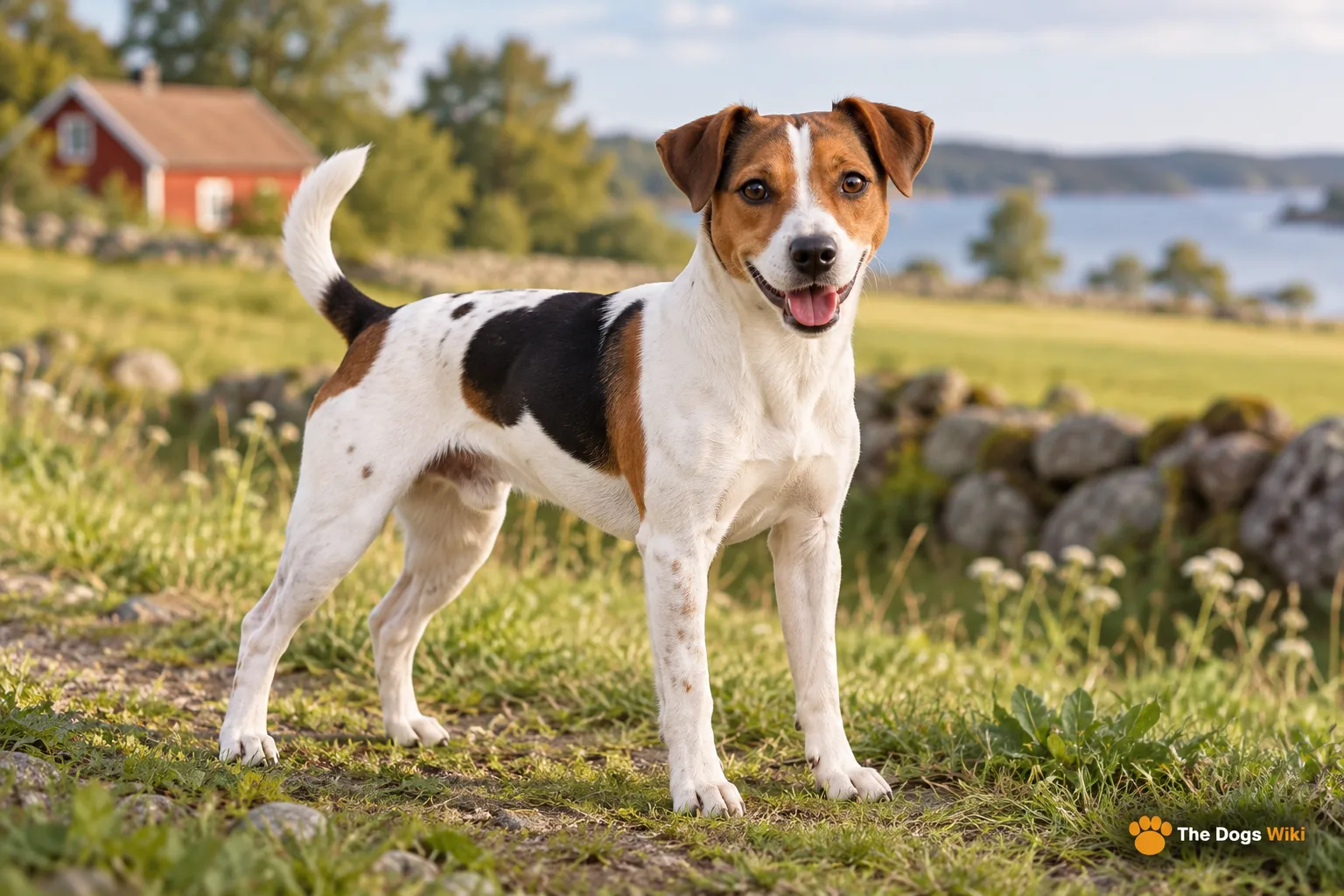
Danish-Swedish Farmdogs are a small, compact, slightly rectangular breed with a short, smooth coat. Colors are mostly white with patches of black, brown, or tan.
What Is the Average Danish-Swedish Farmdog Height and Weight?
| Measure | American Kennel Club figure |
|---|---|
| Height | 12.5-14.5 inches |
| Weight | 15-20 pounds |
| Life expectancy | 11-13 years |
Figures are from the American Kennel Club Danish-Swedish Farmdog breed profile, retrieved September 2026.
How Long Do Danish-Swedish Farmdogs Live?
Danish-Swedish Farmdogs live 11 to 13 years. The breed is generally healthy. Regular veterinary care supports a full life, with no major special health concerns reported.
What Health Problems Are Danish-Swedish Farmdogs Prone To?
Danish-Swedish Farmdogs are documented as being at higher risk for the following conditions.
- Hip dysplasia. A joint condition common across many breeds, screened for with x-rays.
- Elbow dysplasia. A joint condition affecting the front limbs.
- Progressive retinal atrophy. An inherited eye disease that can affect vision over time.
- Cataracts. An eye condition causing clouding of the lens, worth screening for with regular exams.
- Dental issues. A genuine concern given the breed’s small mouth, managed with regular brushing and cleanings.
How Do You Groom a Danish-Swedish Farmdog?
Danish-Swedish Farmdogs have a short, smooth coat that’s genuinely low-maintenance. Occasional brushing and bathing keep the coat looking its best, and regular ear checks matter to prevent wax buildup.
How Much Exercise Does a Danish-Swedish Farmdog Need?
A Danish-Swedish Farmdog needs daily physical and mental exercise. The breed is fast, agile, and genuinely happiest with a job to do, whether that’s rally, hiking, or interactive games.
Are Danish-Swedish Farmdogs Easy to Train?
Yes. This breed is highly trainable, attentive, and genuinely eager to please. Early socialization and puppy classes help set up a well-behaved adult, given the breed’s longer puppy phase.
What Should You Feed a Danish-Swedish Farmdog?
A Danish-Swedish Farmdog does well on a small-breed formula suited to its age and genuinely active lifestyle. A veterinarian can help set appropriate portions.
What Are the Pros and Cons of Owning a Danish-Swedish Farmdog?
Here are the main advantages of owning a Danish-Swedish Farmdog.
- Friendly, attentive, genuinely lively temperament
- Highly trainable and eager to please
- Low-maintenance short coat
- Good with strangers and other dogs when socialized
Here are the main drawbacks of owning a Danish-Swedish Farmdog.
- Genuinely rare, making puppies harder to find
- Matures late, extending the puppy training phase
- Prone to dental issues given small mouth
- Needs consistent daily mental and physical exercise
Danish-Swedish Farmdog rescue organizations occasionally place adult dogs, worth a look for anyone drawn to this breed’s lively personality but a breeder search isn’t easy given its rarity.
What Else Do People Ask About the Danish-Swedish Farmdog?
The questions below cover how much a Danish-Swedish Farmdog costs, whether Danish-Swedish Farmdogs are good family dogs, why the Danish-Swedish Farmdog is called the “Little Big Dog”, and whether the Danish-Swedish Farmdog is a terrier.
How much does a Danish-Swedish Farmdog cost?
Prices vary given the breed’s genuine rarity as a newly AKC-recognized breed. A puppy from a health-tested breeder typically costs more than average, and waitlists are common.
Are Danish-Swedish Farmdogs good family dogs?
Yes. The breed is friendly with people of all ages, including strangers, and adapts well to family life once its exercise and training needs are met.
Why is the Danish-Swedish Farmdog called the “Little Big Dog”?
The nickname reflects the breed’s outsized personality relative to its small, compact frame. Despite its size, it’s energetic, confident, and genuinely capable across many working roles.
Is the Danish-Swedish Farmdog a terrier?
No, despite a strong resemblance to terriers like the Jack Russell. The breed belongs to the Pinscher family and was historically called the Danish Pinscher.
Related Guides
More guides on The Dogs Wiki cover behavior, grooming, training, nutrition, and adoption.
| Guide |
|---|
| Behavior |
| Grooming |
| Training |
| Nutrition |
| Adoption |