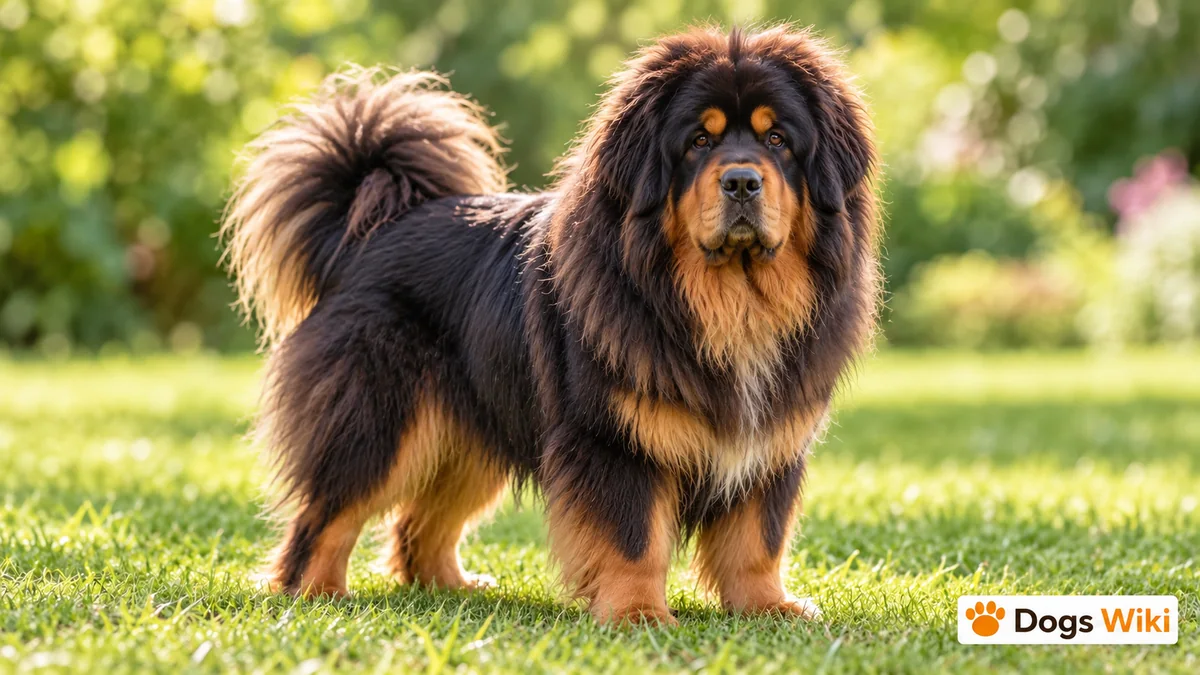
A Tibetan Mastiff is a giant Working Group breed from the Himalayan region.
It guarded livestock and monasteries across Tibet, China, Nepal, and India for centuries. The breed is genuinely more active at night, reflecting its history as a nocturnal flock guardian. This guide covers where the breed originated, its temperament, how big Tibetan Mastiffs get, how long they live, the health problems they are prone to, grooming, how much exercise they need, how easy they are to train, what to feed them, the pros and cons of owning one, and what else people ask.
What Is a Tibetan Mastiff and Where Did the Breed Originate?
A Tibetan Mastiff belongs to the AKC’s Working Group. The breed developed across the Himalayan region, guarding livestock and monasteries independently, often through the night while people slept. That solo, self-directed working style shaped a genuinely independent temperament that persists today.
The American Kennel Club defines the breed in its “Official Standard of the Tibetan Mastiff”, approved February 10, 2012, which sets out the size, coat, and temperament a Tibetan Mastiff should have. As of September 2026, the AKC ranks the Tibetan Mastiff 148th of 210 breeds in popularity.
What Is a Tibetan Mastiff’s Temperament Like?
A Tibetan Mastiff’s temperament is aloof, watchful, and genuinely independent. The breed is deeply loyal to its family but reserved with strangers, and introductions need care. Tibetan Mastiffs don’t look to people for constant direction, which some owners find genuinely challenging. They aren’t affectionate or cuddly, sometimes described as almost cat-like.
How Big Do Tibetan Mastiffs Get?
Tibetan Mastiffs are a giant, powerfully built breed with a thick double coat suited to cold climates. The coat comes in black, brown, gold, and other colors, often with tan points.
What Is the Average Tibetan Mastiff Height and Weight?
| Measure | American Kennel Club figure |
|---|---|
| Height | minimum 26 inches (male), minimum 24 inches (female) |
| Weight | 90-150 pounds (male), 70-120 pounds (female) |
| Life expectancy | 10-12 years |
Figures are from the American Kennel Club Tibetan Mastiff breed profile, retrieved September 2026.
How Long Do Tibetan Mastiffs Live?
Tibetan Mastiffs live 10 to 12 years, a solid lifespan for a giant breed. Regular veterinary care supports a full life for this hardy breed.
What Health Problems Are Tibetan Mastiffs Prone To?
Tibetan Mastiffs are documented as being at higher risk for the following conditions.
- Hip dysplasia. A joint condition common in giant breeds, screened for with x-rays.
- Elbow dysplasia. A joint condition affecting the front limbs.
- Hypothyroidism. Reduced thyroid hormone production, managed with daily medication once diagnosed.
- Obesity. A genuine risk given the breed’s limited endurance and tendency toward weight gain if under-exercised.
- Heatstroke. Not a disease, but a real risk given the breed’s thick coat and poor tolerance for hot weather.
How Do You Groom a Tibetan Mastiff?
Tibetan Mastiffs have a thick double coat that needs weekly brushing most of the year, with more frequent brushing during seasonal shedding. Grooming needs stay minimal outside of those heavier periods.
How Much Exercise Does a Tibetan Mastiff Need?
A Tibetan Mastiff needs moderate exercise, generally regular walks. The breed genuinely lacks endurance despite its size and strength, so it doesn’t make a good jogging partner. It needs a large, securely fenced yard to patrol, not suited to apartment living.
Are Tibetan Mastiffs Easy to Train?
Tibetan Mastiffs are highly intelligent but genuinely independent-minded, learning by watching and experiencing rather than following commands for their own sake. Positive, never punitive training is essential, and this breed suits experienced, patient owners best.
What Should You Feed a Tibetan Mastiff?
A Tibetan Mastiff does well on a large-breed formula suited to its age and activity level. Given the breed’s real tendency toward obesity, portion control matters considerably.
What Are the Pros and Cons of Owning a Tibetan Mastiff?
Here are the main advantages of owning a Tibetan Mastiff.
- Deeply loyal to family
- Formidable natural guardian
- Cold-tolerant, does well in cooler climates
- Moderate exercise needs given limited endurance
Here are the main drawbacks of owning a Tibetan Mastiff.
- Genuinely independent, doesn’t look to owners for direction
- Reserved and standoffish with strangers
- Not suited to apartment living, needs a large securely fenced yard
- Prone to obesity if under-exercised
Tibetan Mastiff rescue organizations occasionally place adult dogs, worth a look for anyone drawn to this breed’s independent loyalty but not set on a breeder search.
What Else Do People Ask About the Tibetan Mastiff?
The questions below cover how much a Tibetan Mastiff costs, whether Tibetan Mastiffs are good family dogs, why Tibetan Mastiffs are more active at night, and whether Tibetan Mastiffs are good with other dogs.
How much does a Tibetan Mastiff cost?
Prices vary widely by region, bloodline, and breeder reputation, and the breed’s rarity can push prices well above average for a giant breed. Adopting an adult dog through a rescue is usually cheaper.
Are Tibetan Mastiffs good family dogs?
Tibetan Mastiffs can work for experienced families, deeply loyal to their own household, but the breed isn’t affectionate or cuddly and needs firm, patient handling given its independence.
Why are Tibetan Mastiffs more active at night?
The breed was historically used to guard flocks and monasteries through the night while people slept, a role that shaped its nocturnal alertness. Many Tibetan Mastiffs today still show more energy and watchfulness after dark.
Are Tibetan Mastiffs good with other dogs?
Yes, generally, in particular with another large dog to play with. The breed is deeply loyal and social with animals it’s raised alongside, despite its reserved nature with unfamiliar people.
Related Guides
More guides on The Dogs Wiki cover behavior, health, grooming, training, nutrition, and adoption.
| Guide |
|---|
| Behavior |
| Health |
| Grooming |
| Training |
| Nutrition |
| Adoption |