Hemangiosarcoma is an aggressive cancer that develops from the cells lining blood vessels, most often forming in the spleen, heart, or skin, and the internal forms frequently go unnoticed until a tumor ruptures and causes sudden, severe bleeding.
This cancer’s reputation as a “silent” disease comes specifically from how it so often first presents as a sudden collapse rather than a gradual decline, which makes awareness of this pattern, particularly in predisposed breeds, genuinely important. This guide covers what causes hemangiosarcoma, its symptoms, how it’s diagnosed, how it’s treated, whether it can be prevented, and when to see a veterinarian.
This guide covers what hemangiosarcoma is, what causes it in dogs, its symptoms, how it’s diagnosed, how it’s treated, whether it can be prevented, when to see a vet, and what else people ask.
What Is Hemangiosarcoma in Dogs?
Hemangiosarcoma is a cancer that arises from the cells that normally line blood vessels, which is why it most commonly develops in blood-rich organs, particularly the spleen and heart, though it can also appear as a tumor in the skin. The tumors this cancer forms are fragile and prone to rupturing, which can cause sudden, significant internal bleeding, and this is often what brings an affected dog to veterinary attention in the first place rather than any gradual symptom buildup. Hemangiosarcoma affecting internal organs carries a serious outlook even with treatment, while the skin form, when caught early, generally has a better prognosis.
What Causes Hemangiosarcoma in Dogs?
The exact cause of hemangiosarcoma isn’t fully understood, but genetics plays a clear role, with breeds including the Golden Retriever and German Shepherd showing a particularly well-documented elevated risk for the internal, visceral form of the disease. Age is also a factor, since hemangiosarcoma is diagnosed far more often in middle-aged to older dogs than in younger ones. Ultraviolet light exposure is believed to contribute to the skin form of the disease, particularly in thin-coated or light-skinned dogs with less natural protection from sun exposure.
What Are the Symptoms of Hemangiosarcoma in Dogs?
Visceral hemangiosarcoma, affecting the spleen or heart, often produces no noticeable symptoms until a tumor ruptures, at which point a dog can suddenly collapse, show pale gums, and appear profoundly weak due to internal bleeding and blood loss. Some dogs show more subtle warning signs beforehand, including intermittent lethargy or weakness that resolves and returns, reflecting smaller bleeding episodes before a larger rupture occurs. The skin form of hemangiosarcoma typically appears as a dark red, purple, or black nodule on or just under the skin, which is usually more visible and noticed earlier than the internal forms.
How Is Hemangiosarcoma in Dogs Diagnosed?
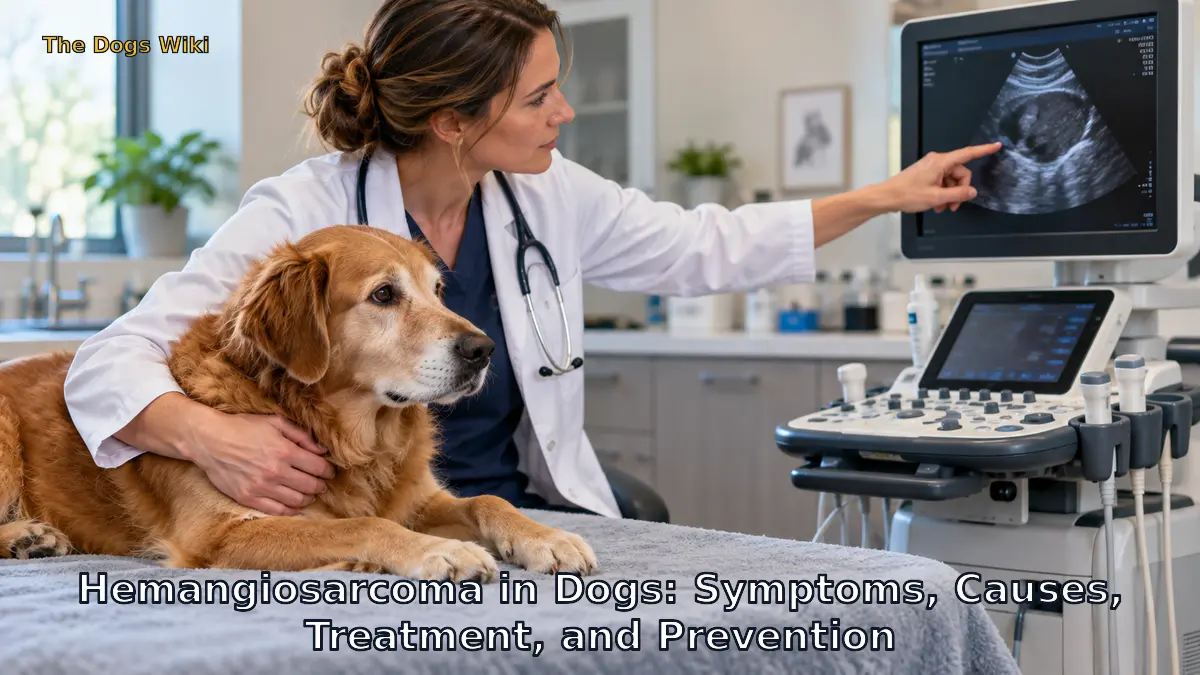
A veterinarian evaluating a dog with sudden collapse or weakness typically performs an ultrasound of the abdomen, which can reveal a mass on the spleen or evidence of internal bleeding, along with bloodwork that often shows anemia from blood loss. For the heart-affecting form, ultrasound of the heart specifically helps identify a mass in or around that organ. A definitive diagnosis comes from biopsy and microscopic examination of tissue, typically obtained during the surgery often needed to address active bleeding in an emergency situation.
How Is Hemangiosarcoma in Dogs Treated?
Emergency surgery to remove the affected organ, most often the spleen, and control active bleeding is frequently the immediate and necessary first step when a dog presents with a ruptured tumor and internal bleeding. Following surgery, chemotherapy is commonly recommended for visceral hemangiosarcoma in an effort to extend survival time, since the cancer has usually already spread microscopically by the time it’s diagnosed. The skin form of hemangiosarcoma, when caught early and confined to a small area, often has a better outcome with surgical removal alone, particularly if it hasn’t invaded deeper tissue.
Can Hemangiosarcoma in Dogs Be Prevented?
Hemangiosarcoma generally can’t be prevented, since the genetic factors driving the visceral form aren’t within an owner’s control. For the skin form, limiting prolonged sun exposure, particularly for thin-coated or light-skinned dogs, may help reduce risk, though this isn’t a guarantee against the disease. Because visceral hemangiosarcoma so often shows no warning signs until a crisis, there’s no reliable way to catch it early through routine observation alone, which is part of why some owners of high-risk breeds opt for periodic screening ultrasounds as dogs age.
When Should You See a Vet for Hemangiosarcoma in Dogs?
Seek emergency veterinary care immediately if a dog suddenly collapses, appears profoundly weak, or has pale gums, since these are signs of a potential internal bleeding emergency that needs urgent evaluation and treatment. Any new skin nodule, particularly a dark red, purple, or black one, is worth having checked by a veterinarian promptly rather than waiting to see if it changes. Predisposed breeds, including the Golden Retriever and German Shepherd, benefit from discussing hemangiosarcoma risk and screening options with a veterinarian as they enter their senior years.
What Else Do People Ask About Hemangiosarcoma in Dogs?
The questions below cover whether hemangiosarcoma is curable, how long dogs live after diagnosis, whether the skin form is less dangerous than the internal form, and which dogs are most at risk.
Is hemangiosarcoma in dogs curable?
No, hemangiosarcoma affecting internal organs is rarely curable, since it typically has already spread microscopically by the time it’s diagnosed, usually following a bleeding crisis. Treatment generally focuses on addressing the immediate emergency and extending survival time through chemotherapy rather than achieving a cure.
How long do dogs live after a hemangiosarcoma diagnosis?
Survival time for visceral hemangiosarcoma is typically measured in weeks to a few months even with surgery and chemotherapy, reflecting how aggressively this particular cancer behaves. The skin form, caught early and treated surgically, generally carries a considerably better outlook than the internal forms.
Is the skin form of hemangiosarcoma less dangerous than the internal form?
Generally yes, skin hemangiosarcoma caught early and confined to the surface tends to have a better prognosis than the visceral form, particularly if it hasn’t invaded into deeper tissue beneath the skin. A veterinarian determines the specific depth and behavior of a skin tumor through biopsy, which shapes the outlook for that individual case.
Which dogs are most at risk for hemangiosarcoma?
The Golden Retriever and German Shepherd show particularly well-documented elevated risk for visceral hemangiosarcoma, and middle-aged to older dogs of any breed face a higher risk than younger dogs. Thin-coated or light-skinned dogs face an elevated risk specifically for the skin form given its association with sun exposure.
Related Guides
More guides on The Dogs Wiki cover general dog health and senior dog care.
| Guide |
|---|
| Dog Health |