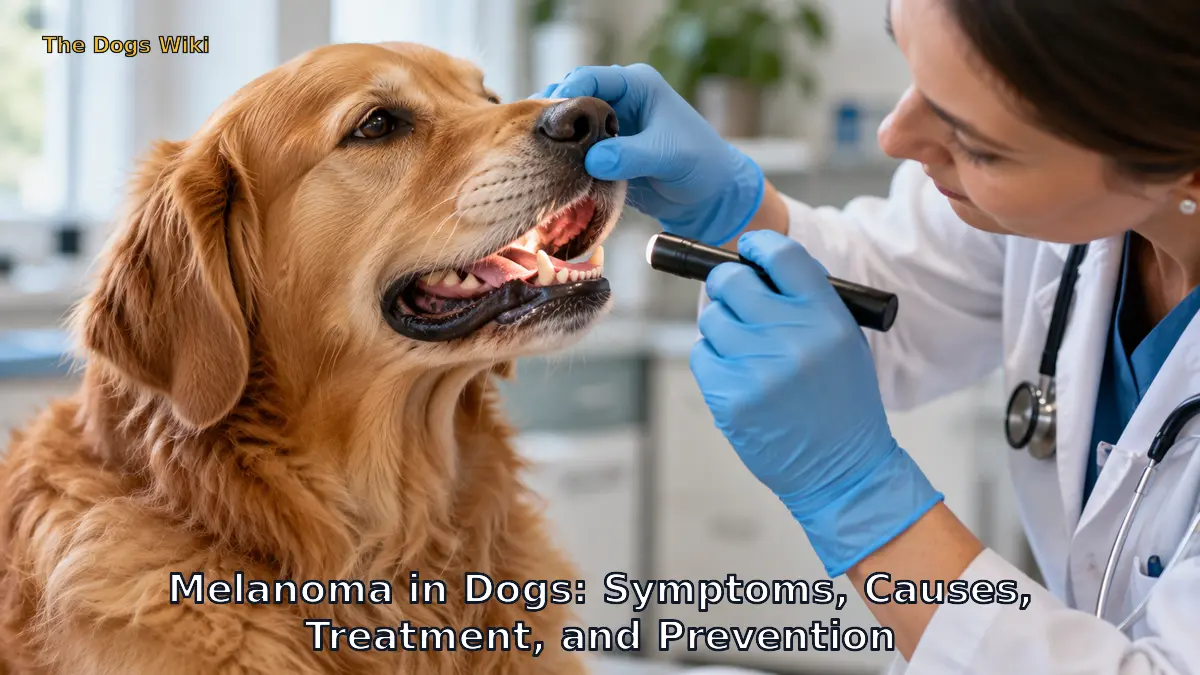
Melanoma in dogs is a cancer of pigment-producing cells, and its behavior depends heavily on location: melanoma on haired skin is often benign, while melanoma in the mouth or on nail beds is typically aggressive and prone to spreading.
This location-dependent behavior is one of the most important things to understand about canine melanoma, since a dark spot on a dog’s trunk and a dark mass inside its mouth represent very different levels of concern despite sharing the same name. This guide covers what causes melanoma, its symptoms, how it’s diagnosed, how it’s treated, whether it can be prevented, and when to see a veterinarian.
This guide covers what melanoma is, what causes it in dogs, its symptoms, how it’s diagnosed, how it’s treated, whether it can be prevented, when to see a vet, and what else people ask.
What Is Melanoma in Dogs?
Melanoma is a cancer that develops from melanocytes, the pigment-producing cells responsible for coloring skin, hair, and certain other tissues. Unlike in people, where most melanomas form on sun-exposed skin, the most clinically significant melanomas in dogs typically develop in the mouth, on the lips, or around the nail beds, areas where the cancer behaves considerably more aggressively than melanoma found on haired skin elsewhere on the body. Breeds including the Standard Poodle, Scottish Terrier, Doberman Pinscher, Golden Retriever, and Cocker Spaniel show a documented elevated risk for the oral form specifically.
What Causes Melanoma in Dogs?
The exact cause of melanoma in dogs isn’t fully understood, and unlike human melanoma, sun exposure doesn’t appear to be a major driving factor for the more dangerous oral and nail bed forms. Genetics plays a clear role, given how consistently certain breeds are overrepresented among diagnosed cases, particularly for oral melanoma. Dogs with heavily pigmented mouths are sometimes thought to face a somewhat different risk profile than lighter-pigmented dogs, though breed and individual genetic factors appear to matter more than pigmentation alone.
What Are the Symptoms of Melanoma in Dogs?
Oral melanoma typically appears as a dark, pigmented mass inside the mouth, on the gums, lips, or tongue, though some oral melanomas lack pigment entirely and appear pink or flesh-colored instead, which can make them easy to overlook. As an oral tumor grows, it can cause bad breath, drooling, bleeding from the mouth, or difficulty eating. Melanoma affecting a nail bed, called subungual melanoma, often looks like a swollen, sometimes ulcerated toe that can be mistaken for an infection or injury at first glance. Melanoma on haired skin elsewhere on the body usually appears as a small, dark, raised spot that’s often far less concerning than the oral or nail bed forms.
How Is Melanoma in Dogs Diagnosed?
A veterinarian diagnosing suspected melanoma relies on a biopsy to confirm the diagnosis and determine how the specific tumor is likely to behave, since appearance alone can’t reliably predict whether a given melanoma is aggressive or not. For oral melanoma specifically, given its tendency to spread, staging tests including chest imaging and lymph node evaluation are typically recommended to check whether the cancer has already spread beyond the original site. A dental X-ray or CT scan may also be used to assess how far an oral tumor has invaded into surrounding bone, which affects surgical planning.
How Is Melanoma in Dogs Treated?
Surgical removal with wide margins is the primary treatment for melanoma, and for oral tumors this sometimes requires removing a portion of the jaw to achieve margins clear of cancer cells, a procedure dogs generally tolerate and recover from well despite how it sounds. Radiation therapy is often used when surgery alone can’t achieve clear margins or when a tumor’s location makes extensive surgery impractical. A therapeutic vaccine specifically developed for canine oral melanoma is available and is sometimes used alongside surgery and other treatments to help the immune system target remaining cancer cells, though traditional chemotherapy tends to be less consistently effective against melanoma than it is against some other canine cancers.
Can Melanoma in Dogs Be Prevented?
Melanoma generally can’t be prevented, since the genetic factors driving the more dangerous oral and nail bed forms aren’t well understood or within an owner’s control. Regular at-home checks of a dog’s mouth, lips, and nail beds, particularly in predisposed breeds, help catch melanoma while it’s still small and more treatable. There’s no established lifestyle change proven to meaningfully reduce melanoma risk in dogs the way sun avoidance helps with human skin cancer prevention.
When Should You See a Vet for Melanoma in Dogs?
See a veterinarian promptly for any new dark mass or unusual growth found in a dog’s mouth, on the lips, or around a nail bed, since these locations carry a meaningfully higher risk of aggressive behavior than melanoma elsewhere on the body. Bad breath, drooling, bleeding from the mouth, or a swollen, non-healing toe are all worth a prompt veterinary evaluation rather than being dismissed as a minor issue. Routine veterinary dental exams, which include a look at the gums and oral tissue, can help catch oral melanoma incidentally even before an owner notices anything unusual at home.
What Else Do People Ask About Melanoma in Dogs?
The questions below cover whether all melanoma in dogs is dangerous, whether oral melanoma is curable, which dogs are most at risk, and whether melanoma in dogs is linked to sun exposure.
Is all melanoma in dogs dangerous?
No, melanoma on haired skin elsewhere on the body is often benign and far less concerning than melanoma in the mouth or on a nail bed, which tends to behave much more aggressively. A biopsy is the only reliable way to know how a specific tumor is likely to behave regardless of its location.
Is oral melanoma in dogs curable?
Oral melanoma is difficult to cure outright, since it tends to spread early, but aggressive surgical treatment combined with radiation or the therapeutic melanoma vaccine can meaningfully extend survival and control the disease for a period. The outlook depends considerably on how advanced the tumor is at diagnosis.
Which dogs are most at risk for melanoma?
Breeds including the Standard Poodle, Scottish Terrier, Doberman Pinscher, Golden Retriever, and Cocker Spaniel show a documented elevated risk for oral melanoma specifically. Dogs with heavily pigmented mouths are sometimes noted in this group as well, though breed appears to be a stronger predictor than pigmentation alone.
Is melanoma in dogs linked to sun exposure?
No, unlike human melanoma, sun exposure doesn’t appear to be a major driver of the oral and nail bed forms of melanoma that carry the most serious outlook in dogs. The factors driving canine melanoma appear to be primarily genetic rather than related to environmental UV exposure.
Related Guides
More guides on The Dogs Wiki cover general dog health and dental health.
| Guide |
|---|
| Dog Health |