
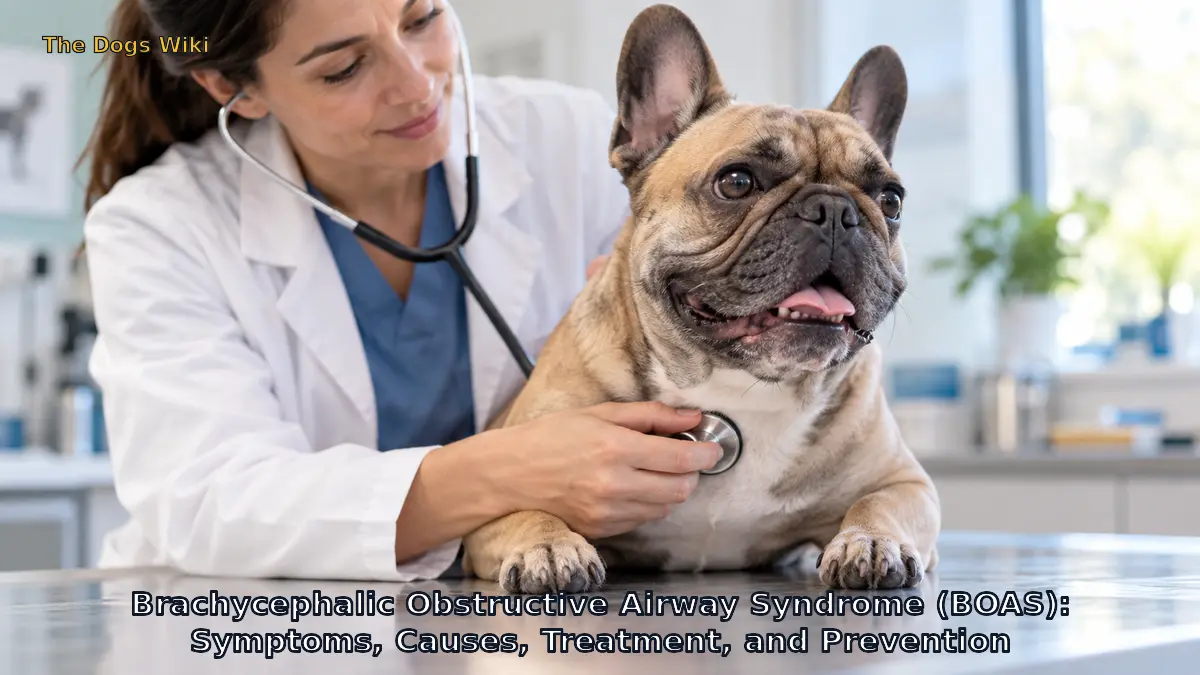
Brachycephalic obstructive airway syndrome, or BOAS, is a collection of airway abnormalities built directly into the compressed skull structure of flat-faced breeds, causing chronic breathing difficulty that ranges from mild snoring to genuine respiratory distress.
Because BOAS stems from the very skull and facial structure that defines these breeds’ appearance, it isn’t a condition that develops unexpectedly so much as one that’s present, to some degree, in nearly every dog born with that conformation. This guide covers what causes BOAS, its symptoms, how it’s diagnosed, how it’s treated, whether it can be prevented, and when to see a veterinarian.
This guide covers what BOAS is, what causes it in dogs, its symptoms, how it’s diagnosed, how it’s treated, whether it can be prevented, when to see a vet, and what else people ask.
What Is Brachycephalic Obstructive Airway Syndrome in Dogs?
Brachycephalic obstructive airway syndrome is a combination of several structural airway abnormalities that commonly occur together in flat-faced, or brachycephalic, breeds, including narrowed nostrils, an elongated soft palate that partially blocks the throat, and, in many affected dogs, inflamed tissue folds inside the voice box that further obstruct airflow. These abnormalities develop as a direct consequence of the compressed skull shape that defines the brachycephalic look, meaning the same facial structure prized for its appearance also creates the functional breathing problems. The severity of BOAS varies considerably between individual dogs, even within the same breed, ranging from mild snoring to significant, daily breathing difficulty.
What Causes BOAS in Dogs?
BOAS is caused directly by the anatomical compression involved in breeding for a shortened skull and flattened face, a defining characteristic of breeds including the Bulldog, French Bulldog, Pug, Boston Terrier, and Shih Tzu, among others. Because the soft tissue structures inside the head and throat don’t shrink proportionally to match the shortened skull, they end up crowded into a smaller space, directly causing the physical airway obstructions that define the syndrome. Excess body weight significantly worsens BOAS symptoms in affected dogs, since additional fat tissue around the neck and throat adds further pressure to an already compromised airway.
What Are the Symptoms of BOAS in Dogs?
Loud snoring, snorting, and generally noisy breathing, even while a dog is simply resting, are hallmark symptoms of BOAS and are often, mistakenly, considered a normal or even endearing trait of these breeds rather than a sign of a genuine medical condition. Poor tolerance for heat and reduced exercise tolerance are extremely common, since affected dogs can’t move air as efficiently as a normal-skulled dog, making it harder to cool down through panting. In more severe cases, a dog can experience an actual breathing crisis, particularly during heat, excitement, or exertion, which represents a genuine emergency.
How Is BOAS Diagnosed in Dogs?
A veterinarian often recognizes the visible signs of BOAS, including narrowed nostrils, during a routine physical exam, and a dog’s breed alone raises reasonable suspicion given how common the syndrome is in brachycephalic breeds. Assessing the severity of airway obstruction occurring further back in the throat, including the soft palate and voice box, typically requires sedated examination or additional imaging, which also helps a veterinarian plan appropriate surgical correction if needed. Exercise tolerance testing and monitoring body temperature response to mild exertion are sometimes used to objectively assess how significantly BOAS is affecting an individual dog’s function.
How Is BOAS Treated in Dogs?
Weight management is one of the most impactful non-surgical interventions for BOAS, since even a modest reduction in excess weight can meaningfully ease breathing in an affected dog. Avoiding heat exposure and limiting strenuous exercise, particularly in warm weather, helps reduce the risk of a breathing crisis in dogs with significant airway obstruction. For moderate to severe cases, surgical correction, including widening narrowed nostrils and shortening an elongated soft palate, can significantly improve breathing and quality of life, though surgery addresses the structural obstruction rather than fully reversing the underlying skull conformation that causes it.
Can BOAS Be Prevented in Dogs?
BOAS generally can’t be prevented in an individual dog born with a brachycephalic skull structure, since the condition is a direct, inherent consequence of that conformation rather than something that develops from an external cause. At a breeding level, some breed clubs and veterinary organizations have increasingly focused on selecting for somewhat less extreme facial conformation to reduce BOAS severity in future generations, though this remains an evolving area within affected breeds. For an individual dog already born with BOAS, maintaining a healthy weight and avoiding heat and overexertion are the most practical ways to minimize symptom severity.
When Should You See a Vet for BOAS in Dogs?
See a veterinarian if a brachycephalic dog shows loud, labored breathing even at rest, poor exercise tolerance, or notable difficulty cooling down in warm weather, since these symptoms warrant a proper evaluation rather than being accepted as normal for the breed. Seek emergency veterinary care immediately if a dog experiences significant breathing distress, collapse, or blue-tinged gums, particularly during heat or excitement, since this represents a genuine crisis. Any brachycephalic dog should also have BOAS severity discussed at routine veterinary visits, including before any procedure requiring anesthesia, since these dogs carry an elevated anesthesia-related risk.
What Else Do People Ask About BOAS in Dogs?
The questions below cover whether BOAS is curable, whether all flat-faced dogs have it, whether surgery is always needed, and whether BOAS affects anesthesia risk.
Is BOAS curable?
No, BOAS is not curable, since it stems from the dog’s fundamental skull and facial structure, but surgical correction of specific obstructions, including narrowed nostrils and an elongated soft palate, can significantly improve breathing and quality of life for affected dogs. Management through weight control and heat avoidance also meaningfully helps even without surgery.
Do all flat-faced dogs have BOAS?
Nearly all brachycephalic dogs have at least some degree of the anatomical features that define BOAS, though severity varies considerably between individual dogs, even within the same litter. Some dogs show only mild snoring, while others experience significant, daily breathing difficulty requiring active management or surgical correction.
Is surgery always needed for BOAS?
No, surgery isn’t always necessary, and dogs with milder BOAS symptoms are often successfully managed through weight control and avoiding heat and overexertion. A veterinarian typically recommends surgery when airway obstruction is significant enough to meaningfully affect a dog’s breathing, exercise tolerance, or overall quality of life.
Does BOAS affect anesthesia risk?
Yes, dogs with BOAS carry an elevated anesthesia-related risk compared to dogs without the condition, given their already compromised airway function. Veterinary teams typically take additional precautions, including careful monitoring during recovery, when anesthetizing a brachycephalic dog for any procedure.
Related Guides
More guides on The Dogs Wiki cover general dog health and senior dog care.
| Guide |
|---|
| Dog Health |
Comments
One response to “Brachycephalic Obstructive Airway Syndrome (BOAS): Symptoms, Causes, Treatment, and Prevention”
[…] CardiacBrachycephalic Obstructive Airway Syndrome (BOAS)CardiacCollapsing Trachea in DogsCardiacLaryngeal Paralysis in Dogs ←Why Is My Dog Coughing? […]