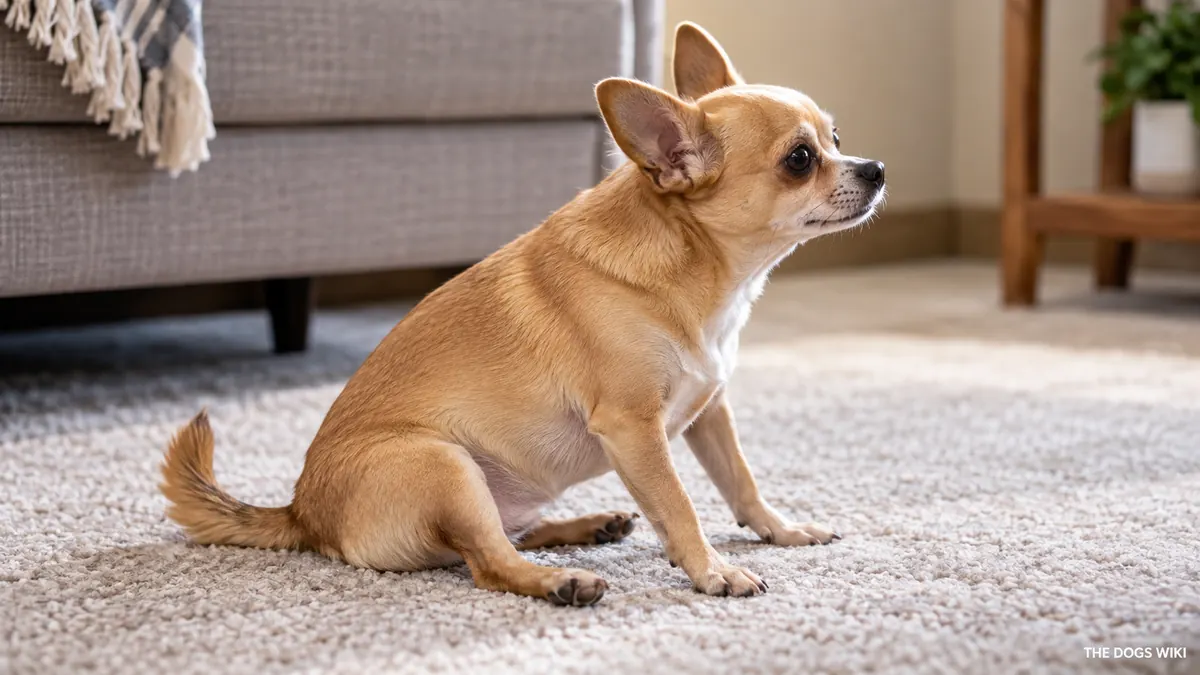
A dog scooting, or dragging its rear end along the ground, is most often caused by irritation or discomfort around the anus, with impacted or infected anal glands being the leading cause.
Scooting looks alarming the first time an owner sees it, but it’s a fairly common behavior with a short list of usual causes. This guide covers what causes scooting, the role anal glands play, what to do about it, and when it needs a vet visit.
Impacted or infected anal glands are the most common cause of scooting, since these two small glands near the anus can become swollen, painful, and itchy when they don’t empty normally during bowel movements. Intestinal parasites, including tapeworms, can also cause scooting, particularly when tapeworm segments around the anus create an itching sensation. Skin irritation, allergies, or diarrhea that leaves residue around the anus are additional, less common causes of the same behavior.
What Role Do Anal Glands Play in Scooting?
Anal glands normally release a small amount of scent fluid each time a dog has a bowel movement, and in most dogs this happens naturally without any owner involvement. When the glands don’t empty fully, the fluid inside thickens and builds up pressure, causing discomfort that the dog tries to relieve by scooting or excessively licking the area. Left unaddressed, impacted anal glands can become infected or form an abscess, which is considerably more painful and requires veterinary treatment.
What Should You Do If Your Dog Is Scooting?
Check the area around the anus for visible irritation, redness, or small rice-like segments, which point toward tapeworms rather than an anal gland issue. Have a vet or groomer express the anal glands if scooting is frequent, since attempting this at home without guidance can cause injury or miss an underlying infection. Keep the area clean and dry, and mention the scooting at the next regular vet visit even if it resolves, since recurring anal gland issues sometimes need a longer-term management plan.
When Should You See a Vet for Scooting?
See a vet if scooting is accompanied by visible swelling, redness, a foul odor, or blood near the anus, since these signs point toward an infected or ruptured anal gland that needs prompt treatment. Seek care if scooting happens repeatedly over several weeks despite gland expression, since recurring impaction sometimes requires a different management approach or, in persistent cases, surgical removal of the glands.
What Else Do People Ask About Dogs Scooting?
The questions below cover whether scooting always means anal gland problems, whether diet affects anal gland health, and whether scooting is painful.
Does scooting always mean anal gland problems?
No, scooting doesn’t always mean anal gland problems, since intestinal parasites, skin irritation, and residue from diarrhea can all trigger the same behavior, which is why checking the area is a useful first step.
Can diet affect how often a dog needs its anal glands expressed?
Yes, a diet with adequate fiber helps produce firmer stool, which applies more natural pressure to the anal glands during bowel movements and can reduce how often manual expression is needed.
Is scooting painful for dogs?
Yes, scooting is generally a response to discomfort or itching rather than being painless, and the underlying cause, particularly an infected anal gland, can become significantly more painful if left untreated.
Related Guides
More guides on The Dogs Wiki cover related digestive and parasite topics.