
Home → Dog Breeds → Guardian/LGD & Molosser → Anatolian Shepherd
Anatolian Shepherd: Breed Profile, Temperament, Health, and Care Guide
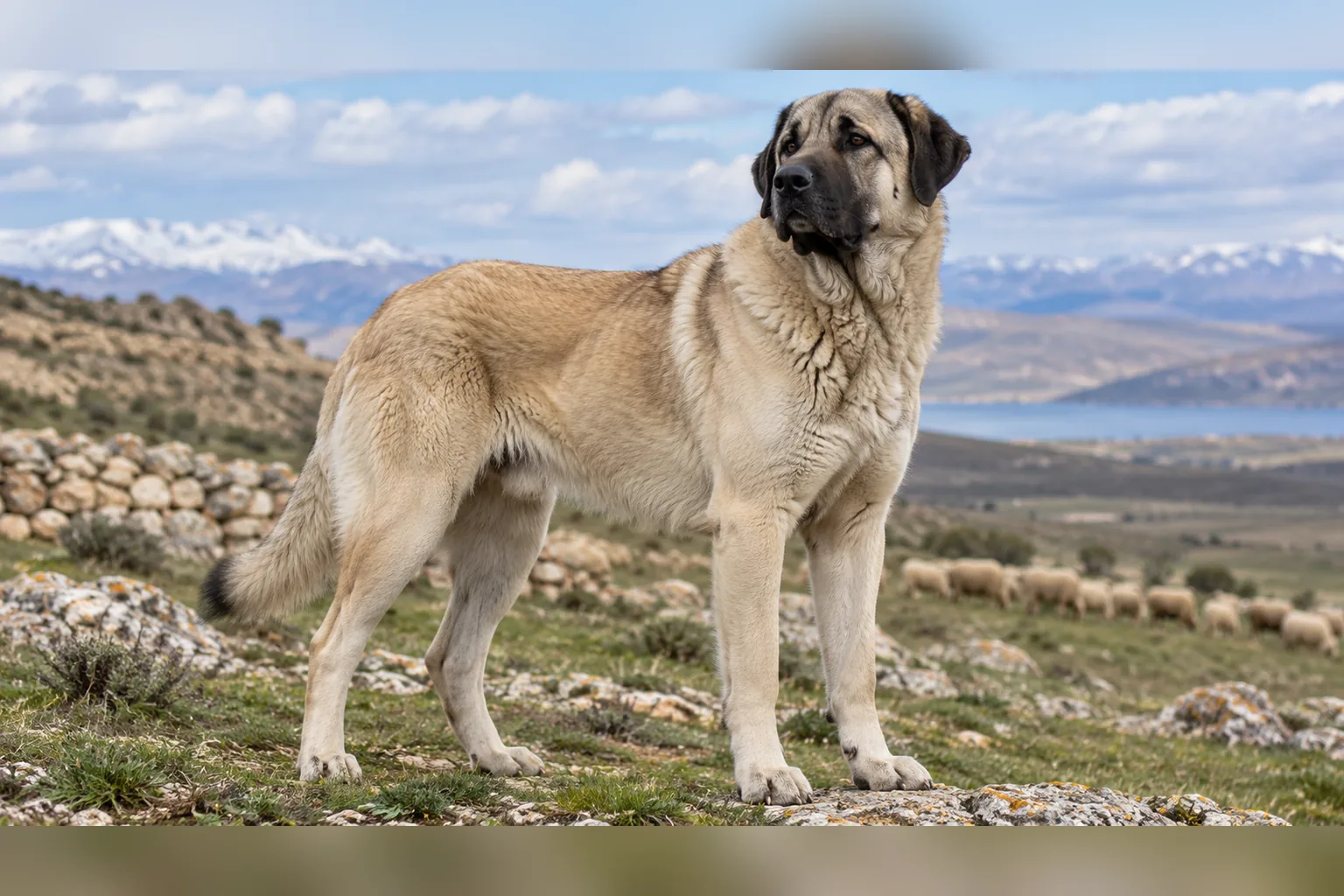
An Anatolian Shepherd is a giant livestock guardian breed from Turkey’s Anatolia region, with ancestors among the oldest domestic canine bloodlines known, dating back roughly 4,000 years.
Bred for millennia to live directly with a flock and drive off predators without a human giving direction, the Anatolian Shepherd has become respected enough as a working guardian to be employed protecting endangered cheetahs from farmer retaliation in Namibia, Africa. This guide covers where the breed originated, its temperament, how big Anatolian Shepherds get, how long they live, the health problems they are prone to, grooming, how much exercise they need, how easy they are to train, what to feed them, the pros and cons of owning one, and what else people ask.
What Is an Anatolian Shepherd and Where Did the Breed Originate?
An Anatolian Shepherd belongs to the American Kennel Club’s Working Group, covered here as part of our dedicated guardian breed cluster. According to the Anatolian Shepherd Dog Club of America, the breed’s ancestors are among the oldest known domestic canine bloodlines, dating back thousands of years in what’s now Turkey. Anatolian Shepherds made their way to the United States in the 1950s, and the breed’s genuine effectiveness as a livestock guardian has earned it work protecting endangered cheetahs in Namibia, where the dogs deter predation without the need for lethal predator control.
The American Kennel Club defines the breed in its “Official Standard of the Anatolian Shepherd Dog”, approved 1995, which sets out the size, coat, and temperament an Anatolian Shepherd should have. As of September 2026, the AKC ranks the Anatolian Shepherd 86th of 210 breeds in popularity.
What Is an Anatolian Shepherd’s Temperament Like?
An Anatolian Shepherd’s temperament is defined above all by one word: guardian. The breed is calm, alert, and intensely territorial, bred for millennia to live with a flock and independently drive off predators without waiting on a human’s direction. Anatolian Shepherds are calm and friendly with their own family but genuinely wary of strangers, and that independence, while a genuine feature of the breed’s working effectiveness, shapes nearly every part of ownership, from training to containment.
How Big Do Anatolian Shepherds Get?
Anatolian Shepherds are a giant, powerful breed with a short or rough double coat, roughly one to four inches long, over a thick, weather-resistant undercoat. Per the AKC breed standard, males must stand at least 29 inches at the withers and females at least 27 inches, measured at two years or older.
What Is the Average Anatolian Shepherd Height and Weight?
| Measure | American Kennel Club figure |
|---|---|
| Height | 29 inches (male), 27 inches (female) |
| Weight | 110-150 pounds (male), 80-120 pounds (female) |
| Life expectancy | 11-13 years |
Figures are from the American Kennel Club Anatolian Shepherd breed profile, retrieved September 2026.
How Long Do Anatolian Shepherds Live?
Anatolian Shepherds live 11 to 13 years, a relatively long lifespan for a giant breed. Regular veterinary care, including hip and eye screening, supports a full lifespan for this hardy breed.
What Health Problems Are Anatolian Shepherds Prone To?
Anatolian Shepherds are documented as being at higher risk for the following conditions.
- Hip and elbow dysplasia. Joint conditions common in giant breeds, in which the bones of the joint don’t line up properly during development.
- Bloat, or gastric dilatation-volvulus (GDV). A significant, deep-chested-breed emergency requiring preventive feeding and exercise routines along with immediate veterinary care if suspected.
- Entropion. An eyelid condition occurring more frequently in the breed that can require surgical correction.
- Congenital deafness and osteochondritis dissecans. A hearing condition present from birth and a joint condition, both recognized concerns.
- Cardiomyopathy and autoimmune thyroiditis. A heart muscle disease and an immune-related thyroid condition, both worth discussing with a veterinarian as part of routine screening.
How Do You Groom an Anatolian Shepherd?
Anatolian Shepherds have a coat that requires minimal grooming day to day, though the breed is a moderate shedder that needs more frequent brushing during seasonal coat changes. Beyond brushing, the grooming routine is minimal: routine nail trims, ear checks, and dental care.
How Much Exercise Does an Anatolian Shepherd Need?
An Anatolian Shepherd needs more than two hours of exercise daily to satisfy both its physical and mental needs, reflecting the breed’s genuine working stamina developed to patrol open country in all weather. This breed is best suited to a home with a large, securely fenced yard, and it’s not recommended for first-time owners or those in compact living spaces given both its size and its independent guardian instincts.
Are Anatolian Shepherds Easy to Train?
Anatolian Shepherds are intelligent, patient, and loyal, but genuinely independent given a working history that demanded initiative rather than constant direction from a handler. Disciplined yet understanding training works best, and this breed isn’t recommended for novice owners given the combination of size, strength, and independent thinking involved.
What Should You Feed an Anatolian Shepherd?
Anatolian Shepherds should be fed a diet with a balance of high-quality proteins and fats, avoiding foods with grain fillers like corn, soy, and wheat. Given the breed’s substantial weight range, from roughly 80 to 150 pounds, feeding requirements vary considerably by individual dog, and a veterinarian can help set an appropriate plan.
What Are the Pros and Cons of Owning an Anatolian Shepherd?
Here are the main advantages of owning an Anatolian Shepherd.
- Calm, loyal, genuinely effective natural guardian
- Relatively long lifespan for a giant breed
- Low-maintenance coat requiring minimal grooming
- Hardy and adaptable, capable of working independently
Here are the main drawbacks of owning an Anatolian Shepherd.
- Needs more than two hours of daily exercise
- Genuinely wary of strangers, not recommended for novice owners
- Independent temperament makes training a real, ongoing commitment
- Needs a large, securely fenced yard, not suited to compact living spaces
Anatolian Shepherd rescue organizations place adult dogs regularly, worth a look for anyone drawn to the breed’s guardian capability but not set on a breeder search.
What Else Do People Ask About the Anatolian Shepherd?
The questions below cover how much an Anatolian Shepherd costs, whether Anatolian Shepherds are good family dogs, why Anatolian Shepherds are used to protect cheetahs, and whether Anatolian Shepherds get along with other animals.
How much does an Anatolian Shepherd cost?
Anatolian Shepherd prices vary by region, bloodline, and breeder reputation, and a puppy from a breeder who screens for hip and cardiac health typically costs more than one that doesn’t. Adopting an adult Anatolian Shepherd through a rescue is usually a lower-cost alternative.
Are Anatolian Shepherds good family dogs?
Anatolian Shepherds can be good family guardians for experienced owners, calm and friendly with their own family, but the breed is genuinely wary of strangers and unlikely to be playful and outgoing with unfamiliar people the way some other large breeds are. Early, consistent socialization and an experienced handler matter considerably with this breed.
Why are Anatolian Shepherds used to protect cheetahs?
Anatolian Shepherds have been deployed in Namibia, Africa, to guard livestock from cheetahs, which has the secondary effect of reducing farmer retaliation against the endangered cats, since the presence of an effective guardian dog means fewer livestock losses to defend against. This conservation program has become a genuine, well-documented success story for the breed’s natural guarding ability.
Do Anatolian Shepherds get along with other animals?
Anatolian Shepherds can get along with other animals, livestock they’re raised to guard, but the breed has a strong preference for livestock specifically and may be territorial toward unfamiliar dogs, other males. Early socialization matters considerably for managing the breed’s guardian instincts around other pets.
Related Guides
More guides on The Dogs Wiki cover behavior, health, training, nutrition, and adoption.
| Guide |
|---|
| Behavior |
| Health |
| Training |
| Nutrition |
| Adoption |
Leave a Reply