
Home → Dog Breeds → Guardian/LGD & Molosser → Bullmastiff
Bullmastiff: Breed Profile, Temperament, Health, and Care Guide
A Bullmastiff is a giant guardian breed developed by 19th-century English gamekeepers, who crossed Bulldogs with Mastiffs to create a dog capable of silently tracking and restraining poachers on large estates without mauling them.
That precise, controlled power still defines the breed today, best known as a quiet, watchful, deeply devoted family companion. This guide covers where the breed originated, its temperament, how big Bullmastiffs get, how long they live, the health problems they are prone to, grooming, how much exercise they need, how easy they are to train, what to feed them, the pros and cons of owning one, and what else people ask.
What Is a Bullmastiff and Where Did the Breed Originate?
A Bullmastiff belongs to the American Kennel Club’s Working Group, covered here as part of our dedicated guardian breed cluster. According to the American Bullmastiff Association, British gamekeepers created the breed by crossing Bulldogs with Mastiffs specifically to protect large estates from poachers. Rather than mauling an intruder the way some guard breeds might, a Bullmastiff was trained to wait patiently until a poacher came within striking distance, then restrain them through sheer strength and intimidation rather than injury.
The American Kennel Club defines the breed in its “Official Standard of the Bullmastiff”, approved February 8, 1992, which sets out the size, coat, and temperament a Bullmastiff should have. As of September 2026, the AKC ranks the Bullmastiff 67th of 210 breeds in popularity.
What Is a Bullmastiff’s Temperament Like?
A Bullmastiff’s temperament is gentle, quiet, and genuinely bold, and the breed is not known for excessive barking, though it will bark to alert its family when something seems out of the ordinary. Bullmastiffs aren’t anxious or fearful, but they can be uncomfortable around unfamiliar people and animals without proper training and socialization. The breed forms deep bonds with its family and has an intense need to protect them, which is why early training matters enormously given the size this dog eventually reaches.
How Big Do Bullmastiffs Get?
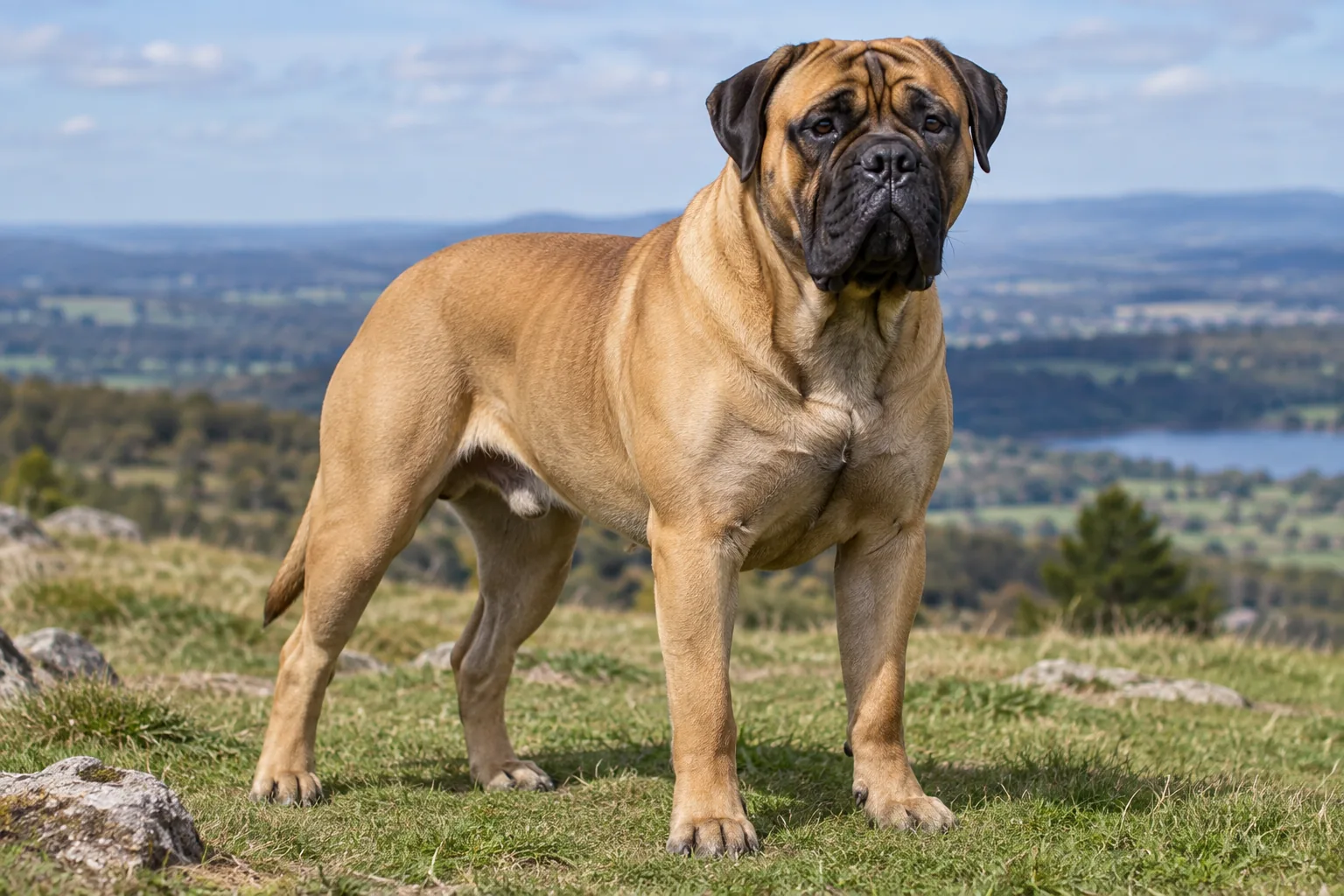
Bullmastiffs are a giant, powerfully built breed with great endurance and strength, known for a solid, muscular body and a short coat that requires minimal grooming.
What Is the Average Bullmastiff Height and Weight?
| Measure | American Kennel Club figure |
|---|---|
| Height | 25-27 inches (male), 24-26 inches (female) |
| Weight | 110-130 pounds (male), 100-120 pounds (female) |
| Life expectancy | 7-9 years |
Figures are from the American Kennel Club Bullmastiff breed profile, retrieved September 2026.
How Long Do Bullmastiffs Live?
Bullmastiffs live 7 to 9 years, a relatively short lifespan even accounting for the breed’s giant size, and cancer, lymphoma, is documented as a leading cause of death. Regular veterinary screening matters considerably for supporting a full lifespan given this breed’s health challenges.
What Health Problems Are Bullmastiffs Prone To?
Bullmastiffs are documented as being at higher risk for the following conditions.
- Dilated cardiomyopathy (DCM). A heart disease in which the heart muscles weaken and struggle to pump blood properly; mild to moderate cases may show no symptoms, while severe cases require ongoing medication.
- Hip and elbow dysplasia. Joint conditions common in giant breeds, screened for with hip and elbow evaluations in responsible breeding programs.
- Subaortic valvular stenosis (SAS). A genetic heart condition Bullmastiff puppies can inherit from their parents, screened for with a cardiac exam.
- Entropion. A painful condition in which the eyelid rolls inward, causing the eyelashes to rub against the cornea and potentially causing corneal ulcers if uncorrected.
- Bloat, or gastric torsion, and cancer. A life-threatening digestive emergency and a range of cancer types, both significant, well-documented risks in this breed specifically.
How Do You Groom a Bullmastiff?
Bullmastiffs have a short coat that doesn’t shed much, and regular brushing with a rubber curry brush, along with only bathing when needed, keeps the coat in good condition. Routine ear and skin checks, nail trims, and dental care round out the grooming routine for this genuinely low-maintenance coat.
How Much Exercise Does a Bullmastiff Need?
A Bullmastiff is a low-energy breed that requires daily walks and regular exercise to stay healthy and avoid obesity, but it genuinely doesn’t need intense activity, and this is a dog that’s happy lazing around the house. Given the breed’s heat sensitivity, walks should be brief and timed for cooler parts of the day, in particular during warmer months.
Are Bullmastiffs Easy to Train?
Bullmastiffs tend to be obedient with the proper attention, but early training matters enormously from a practical standpoint, since good habits like staying off furniture are much easier to establish before the dog reaches its full adult weight of over 100 pounds. Consistent exposure to different people and animals helps develop an even-tempered, well-behaved adult.
What Should You Feed a Bullmastiff?
Bullmastiff puppies should be fed large-breed puppy formula for slower, healthier growth, and adults eat around 3 to 4 cups of dry food daily, split into two or three smaller portions rather than one large meal given the breed’s bloat risk. A veterinarian can help set an appropriate feeding plan.
What Are the Pros and Cons of Owning a Bullmastiff?
Here are the main advantages of owning a Bullmastiff.
- Gentle, quiet, deeply devoted temperament
- Low exercise needs, genuinely happy at a relaxed pace
- Low-maintenance short coat
- Naturally protective without excessive barking or unnecessary aggression
Here are the main drawbacks of owning a Bullmastiff.
- Relatively short lifespan even for a giant breed
- Documented, significant cancer and cardiac disease risk
- Heat-sensitive, requires careful exercise timing in warm weather
- Needs early training given the dog’s eventual size and strength
Bullmastiff rescue organizations place adult dogs regularly, worth a look for anyone drawn to the breed’s gentle, protective temperament but not set on a breeder search.
What Else Do People Ask About the Bullmastiff?
The questions below cover how much a Bullmastiff costs, whether Bullmastiffs are good family dogs, why Bullmastiffs have such a short lifespan, and how Bullmastiffs were originally used.
How much does a Bullmastiff cost?
A Bullmastiff puppy costs between $1,000 and $2,000 from a breeder, with prices rising for dogs from champion lines and reputable breeders who provide cardiac and hip health testing. Adopting an adult Bullmastiff through a rescue, $150 to $400, is a lower-cost alternative.
Are Bullmastiffs good family dogs?
Yes, Bullmastiffs are widely regarded as sweet and loving family dogs, genuinely devoted to the people they consider their own. Their large size and protective instinct mean early training and socialization matter considerably, both for safety and for making sure the dog is comfortable around visitors and unfamiliar situations.
Why do Bullmastiffs have such a short lifespan?
Bullmastiffs have a relatively short lifespan, 7 to 9 years, even by giant-breed standards, largely driven by a documented elevated risk of cancer, lymphoma, along with cardiac conditions like dilated cardiomyopathy. Low population sizes in the breed also make it harder to breed away from these hereditary health issues, which is why health testing and pedigree research matter considerably when choosing a puppy.
How were Bullmastiffs originally used?
Bullmastiffs were originally bred by English gamekeepers to protect large estates from poachers, trained to silently track and then restrain an intruder using strength and intimidation rather than causing serious injury. This controlled, non-mauling approach is part of why the breed’s modern temperament tends toward calm and quiet rather than aggressive.
Related Guides
More guides on The Dogs Wiki cover behavior, grooming, nutrition, and adoption.
| Guide |
|---|
| Behavior |
| Grooming |
| Nutrition |
| Adoption |
Leave a Reply