
Home → Dog Breeds → Guardian/LGD & Molosser → Great Pyrenees
Great Pyrenees: Breed Profile, Temperament, Health, and Care Guide
A Great Pyrenees is a giant livestock guardian breed that developed in the Pyrenees Mountains along the border of France and Spain, working for centuries to protect sheep flocks from wolves and bears with minimal direction from a human handler.
Known as the Pyrenean Mountain Dog throughout most of Europe, the breed carries that same independent, watchful guardian instinct into modern homes, whether it’s guarding actual livestock or simply keeping an eye on its family. This guide covers where the breed originated, its temperament, how big Great Pyrenees get, how long they live, the health problems they are prone to, grooming, how much exercise they need, how easy they are to train, what to feed them, the pros and cons of owning one, and what else people ask.
What Is a Great Pyrenees and Where Did the Breed Originate?
A Great Pyrenees belongs to the American Kennel Club’s Working Group, though it’s covered here as part of our dedicated guardian breed cluster given its specific livestock-guardian role. The breed takes its name from the Pyrenees Mountains, the natural border between France and Spain, where it worked for centuries guarding sheep flocks against predators. The official AKC parent club, the Great Pyrenees Club of America, promotes responsible breeding, health testing, and owner education for a breed genuinely built for a working role rather than a purely decorative one.
The American Kennel Club defines the breed in its “Official Standard of the Great Pyrenees”, approved June 12, 1990, which sets out the size, coat, and temperament a Great Pyrenees should have. As of September 2026, the AKC ranks the Great Pyrenees 74th of 210 breeds in popularity.
What Is a Great Pyrenees’s Temperament Like?
A Great Pyrenees’s temperament is calm, gentle, and deeply loyal, paired with a genuine independence rooted in a working history that demanded the dog make its own decisions while patrolling open mountain terrain. Great Pyrenees are friendly with children, other dogs, and even cats when properly socialized, but their independent, sometimes willful nature means they can seem almost cat-like in how little they care about complying with a cue just because it’s given. The breed is genuinely vocal at night, a real guardian instinct rather than a training flaw, and prospective owners should expect regular barking as the dog patrols and alerts to anything unusual.
How Big Do Great Pyrenees Get?
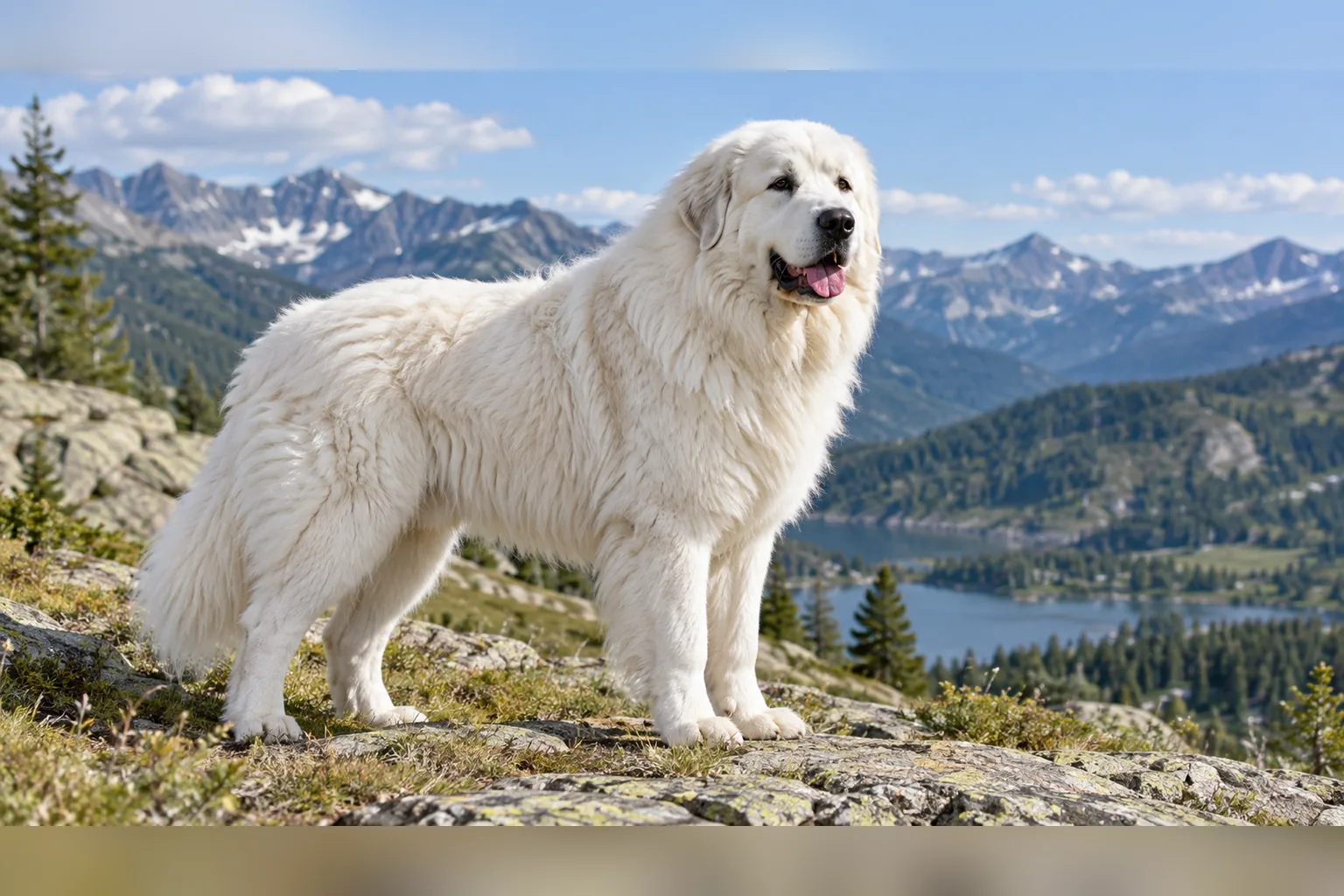
Great Pyrenees are a giant breed with a thick, weather-resistant white coat, often with gray or tan markings, built to withstand the harsh mountain climate of their native range. The breed is officially recognized among the AKC’s largest dogs.
What Is the Average Great Pyrenees Height and Weight?
| Measure | American Kennel Club figure |
|---|---|
| Height | 27-32 inches (male), 25-29 inches (female) |
| Weight | 100 pounds & up (male), 85 pounds & up (female) |
| Life expectancy | 10-12 years |
Figures are from the American Kennel Club Great Pyrenees breed profile, retrieved September 2026.
How Long Do Great Pyrenees Live?
Great Pyrenees live 10 to 12 years, slightly longer than average for a giant breed. Regular veterinary screening for the joint and cardiac risks covered below supports a full lifespan given the breed’s size-related health challenges.
What Health Problems Are Great Pyrenees Prone To?
Great Pyrenees are documented as being at higher risk for the following conditions.
- Hip and elbow dysplasia. Joint conditions in which the bones don’t line up properly during development, causing rubbing, grinding, and eventual joint deterioration; these can be hereditary or influenced by exercise, weight, and nutrition.
- Chondrodysplasia. An inherited growth disorder specific enough to the breed that it’s screened for, causing shortening of the limbs, trunk, and muzzle.
- Cardiac issues, including tricuspid valve dysplasia. A congenital heart condition worth screening for as part of routine breeding and veterinary health checks.
- Osteosarcoma. An aggressive bone cancer that disproportionately affects giant breeds, typically developing in a limb during middle age.
- Bloat, or gastric dilatation-volvulus (GDV). A life-threatening emergency in deep-chested breeds requiring immediate veterinary care.
How Do You Groom a Great Pyrenees?
Great Pyrenees are heavy shedders year-round, and regular brushing, several times a week at minimum, helps reduce the volume of loose hair around the house. The breed’s thick double coat is genuinely built for cold weather, so a Great Pyrenees should never be shaved down, since the coat also provides insulation against heat by trapping cooler air close to the skin.
How Much Exercise Does a Great Pyrenees Need?
A Great Pyrenees needs moderate exercise, generally daily walks or hikes, and the breed genuinely enjoys structured activities like obedience trials or pulling carts, tapping into its working background. Given the breed’s independent, willful streak, secure physical fencing matters more than exercise duration alone, since a Great Pyrenees left to patrol an unfenced property will genuinely roam.
Are Great Pyrenees Easy to Train?
Great Pyrenees are smart but genuinely willful, and the Great Pyrenees Club of America describes the breed as sometimes almost cat-like in its independence, not seeing the point in complying with a cue simply because it’s given. Consistency, positive reinforcement, and real patience are key, and early socialization matters given the breed’s eventual size and guardian instincts.
What Should You Feed a Great Pyrenees?
Great Pyrenees puppies need a large-breed puppy formula that supports slow, controlled growth to protect developing joints, since growing too fast raises the risk of orthopedic problems in this giant breed. Adult Great Pyrenees do well on a formula suited to their age and activity level, and because the breed carries a bloat risk, measured feeding practices are worth discussing with a veterinarian.
What Are the Pros and Cons of Owning a Great Pyrenees?
Here are the main advantages of owning a Great Pyrenees.
- Calm, gentle, deeply loyal temperament
- Generally good with children, other dogs, and cats when socialized
- Naturally protective without unnecessary aggression
- Genuinely comfortable in cold climates
Here are the main drawbacks of owning a Great Pyrenees.
- Genuinely vocal at night as part of natural guardian instinct
- Independent, willful streak makes training take real patience
- Heavy year-round shedding requiring regular brushing
- Documented risk of bloat, osteosarcoma, and joint disease
Great Pyrenees rescue organizations place adult dogs regularly, worth a look for anyone drawn to the breed’s calm guardian temperament but not set on a breeder search.
What Else Do People Ask About the Great Pyrenees?
The questions below cover how much a Great Pyrenees costs, whether Great Pyrenees are good family dogs, why Great Pyrenees bark so much at night, and the difference between the Great Pyrenees and the Anatolian Shepherd.
How much does a Great Pyrenees cost?
Great Pyrenees prices vary by region, bloodline, and breeder reputation, and a puppy from a breeder who screens for hip, elbow, and cardiac health typically costs more than one that doesn’t. Adopting an adult Great Pyrenees through a rescue is usually a lower-cost alternative.
Are Great Pyrenees good family dogs?
Yes, Great Pyrenees are widely regarded as good family dogs, with a calm temperament suitable for homes with children who understand how to appropriately interact with dogs. Their large size means small children might accidentally be bumped and knocked over, so supervision still matters.
Why do Great Pyrenees bark so much at night?
Great Pyrenees bark frequently, in particular at night, as a genuine part of their livestock-guardian instinct, patrolling boundaries and alerting to anything unusual in their territory. This isn’t a training failure but a real, hard-wired breed trait, which is worth knowing before bringing a Great Pyrenees into a noise-sensitive living situation.
What Is the Difference Between the Great Pyrenees and the Anatolian Shepherd?
Great Pyrenees and Anatolian Shepherds are both giant livestock guardian breeds with a calm, independent temperament, but they differ in coat and origin. Great Pyrenees have a thick, long white coat suited to mountain cold, developed in France and Spain, while Anatolian Shepherds have a shorter coat suited to Turkey’s more varied climate and tend to be even more territorial.
Related Guides
More guides on The Dogs Wiki cover behavior, grooming, training, nutrition, and adoption.
| Guide |
|---|
| Behavior |
| Grooming |
| Training |
| Nutrition |
| Adoption |
Leave a Reply