
Home → Dog Breeds → Herding Group → Icelandic Sheepdog
Icelandic Sheepdog: Breed Profile, Temperament, Health, and Care Guide
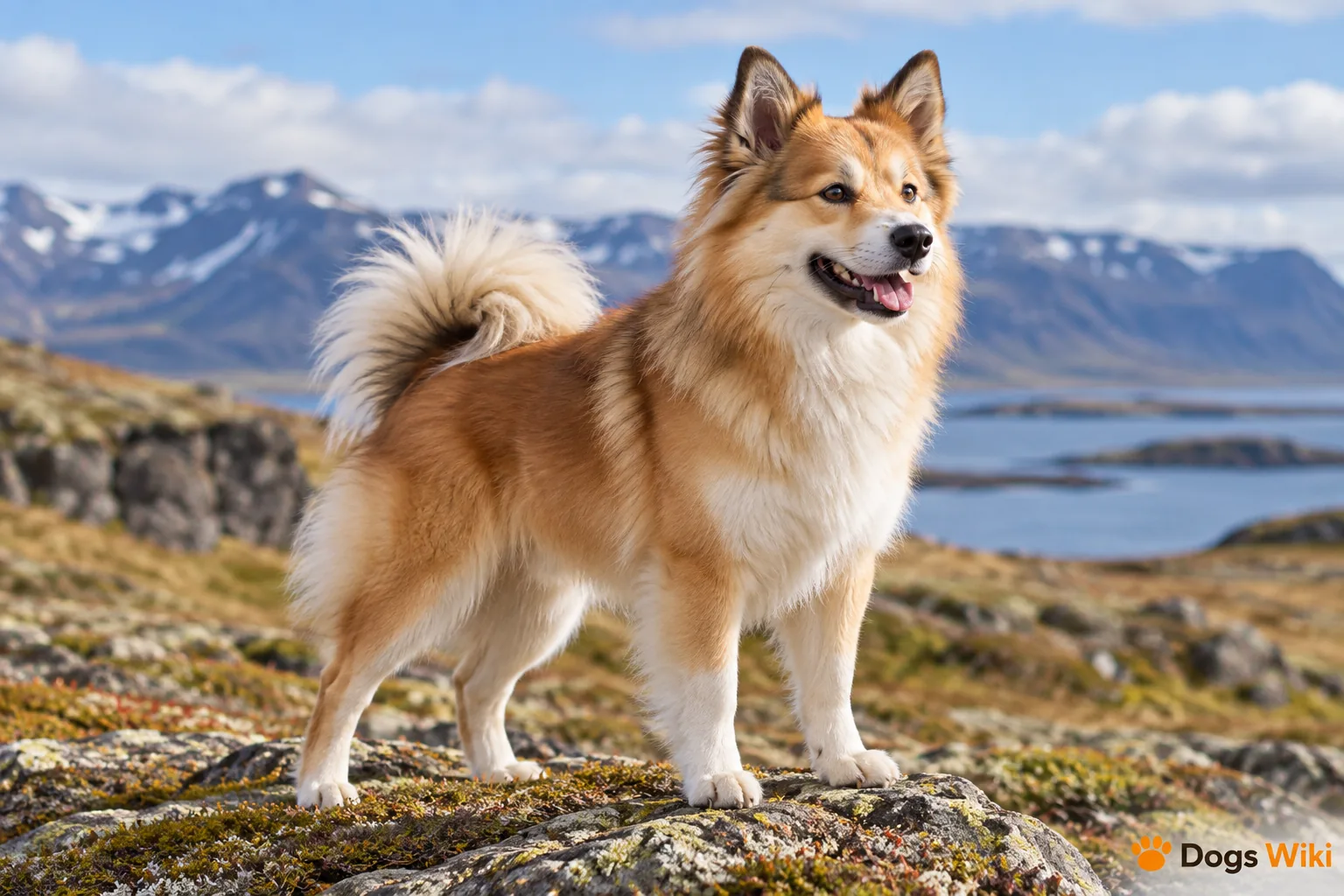
An Icelandic Sheepdog is a medium-sized Herding Group breed and the only dog breed native to Iceland.
Viking settlers brought its ancestors to the island, where the dogs herded horses, cattle, and sheep. Its fox-like face and curled tail reflect its Nordic Spitz heritage. This guide covers where the breed originated, its temperament, how big Icelandic Sheepdogs get, how long they live, the health problems they are prone to, grooming, how much exercise they need, how easy they are to train, what to feed them, the pros and cons of owning one, and what else people ask.
What Is an Icelandic Sheepdog and Where Did the Breed Originate?
An Icelandic Sheepdog belongs to the AKC’s Herding Group. According to the Icelandic Sheepdog Association of America, the breed descends from dogs Viking settlers brought to Iceland, related to the Karelian Bear Dog and historically used to herd horses, cattle, and sheep. It remains the only dog breed native to Iceland, classified as a Nordic Spitz type given its thick coat, pointed ears, and curled tail.
The American Kennel Club defines the breed in its “Official Standard of the Icelandic Sheepdog”, approved November 10, 2025, which sets out the size, coat, and temperament an Icelandic Sheepdog should have. As of September 2026, the AKC ranks the Icelandic Sheepdog 143rd of 210 breeds in popularity.
What Is an Icelandic Sheepdog’s Temperament Like?
An Icelandic Sheepdog’s temperament is affectionate, curious, and genuinely friendly, greeting strangers as old friends according to the breed’s own association. The breed isn’t known to be fearful or anxious. Its herding instinct persists today, showing up as a tendency to chase cars and neighborhood wildlife, so secure fencing or a leash matters outdoors.
How Big Do Icelandic Sheepdogs Get?
Icelandic Sheepdogs are smaller than a typical herding breed, with a thick double coat in short-haired or long-haired varieties. Colors range from tan, black, chocolate-brown, or gray, often with white markings.
What Is the Average Icelandic Sheepdog Height and Weight?
| Measure | American Kennel Club figure |
|---|---|
| Height | 18 inches (male), 16.5 inches (female) |
| Weight | 30 pounds (male), 25 pounds (female) |
| Life expectancy | 12-14 years |
Figures are from the American Kennel Club Icelandic Sheepdog breed profile, retrieved September 2026.
How Long Do Icelandic Sheepdogs Live?
Icelandic Sheepdogs live 12 to 14 years, average for a medium-sized dog. Regular veterinary care supports a full, healthy life for this hardy breed.
What Health Problems Are Icelandic Sheepdogs Prone To?
Icelandic Sheepdogs are documented as being at higher risk for the following conditions.
- Hip dysplasia. A joint condition common across many herding breeds, screened for with x-rays.
- Patellar luxation. A common condition in which the kneecap shifts out of its normal position.
- Eye conditions. Recognized concerns worth monitoring with regular veterinary exams.
- Overall good health. The breed is generally considered healthy given proper care.
How Do You Groom an Icelandic Sheepdog?
Icelandic Sheepdogs have a thick double coat, in short or long varieties, that needs regular brushing to manage shedding, in particular during seasonal blowouts. The coat provides genuine protection against harsh weather.
How Much Exercise Does an Icelandic Sheepdog Need?
An Icelandic Sheepdog needs an active household to be genuinely happiest, wanting nothing more than to be by its people’s side. Daily walks, play, and structured activity matter, and secure fencing helps manage the breed’s genuine chase instinct.
Are Icelandic Sheepdogs Easy to Train?
Yes. Icelandic Sheepdogs have a loving temperament and are known to be easy to train. When socialized, they’re well behaved around other pets and children, reflecting the breed’s genuinely cooperative nature.
What Should You Feed an Icelandic Sheepdog?
An Icelandic Sheepdog does well on a formula suited to its age and genuinely active lifestyle. A veterinarian can help set appropriate portions for this medium-sized breed.
What Are the Pros and Cons of Owning an Icelandic Sheepdog?
Here are the main advantages of owning an Icelandic Sheepdog.
- Affectionate, curious, genuinely friendly temperament
- Easy to train and well behaved when socialized
- Good with children and other pets
- Genuinely good with strangers, welcoming rather than wary
Here are the main drawbacks of owning an Icelandic Sheepdog.
- Strong herding instinct means chasing cars and wildlife without secure fencing
- Needs an active household, not suited to sedentary owners
- High grooming commitment for the thick double coat
- Genuinely rare outside Iceland, making puppies harder to find
Icelandic Sheepdog rescue organizations occasionally place adult dogs, worth a look for anyone drawn to this breed’s friendly temperament but a breeder search isn’t easy given its rarity.
What Else Do People Ask About the Icelandic Sheepdog?
The questions below cover how much an Icelandic Sheepdog costs, whether Icelandic Sheepdogs are good family dogs, whether the Icelandic Sheepdog is the only breed native to Iceland, and why Icelandic Sheepdogs chase cars.
How much does an Icelandic Sheepdog cost?
The average Icelandic Sheepdog puppy costs $1,200 to $2,500 from a reputable breeder, and prices vary by region and bloodline. Adopting an adult dog through a rescue is usually cheaper.
Are Icelandic Sheepdogs good family dogs?
Yes, genuinely. The breed’s affection and loyalty to family members make it a great family dog, good with children and other pets, including cats and other dogs, when introduced properly.
Is the Icelandic Sheepdog the only breed native to Iceland?
Yes, the Icelandic Sheepdog is the only dog breed native to Iceland, descended from dogs Viking settlers brought to the island centuries ago and developed specifically for the country’s unique herding needs.
Why do Icelandic Sheepdogs chase cars?
The breed’s herding history carries over into modern behavior, and Icelandic Sheepdogs are known to chase cars and neighborhood wildlife as an extension of that instinct, which is why supervision and secure fencing matter outdoors.
Related Guides
More guides on The Dogs Wiki cover behavior, health, grooming, training, nutrition, and adoption.
| Guide |
|---|
| Behavior |
| Health |
| Grooming |
| Training |
| Nutrition |
| Adoption |
Leave a Reply