
Home → Dog Breeds → Hound Group → Basenji
Basenji: Breed Profile, Temperament, Health, and Care Guide
A Basenji is a small Hound Group breed from central Africa, considered one of the oldest dog breeds in the world, with depictions of Basenji-type dogs found in cave paintings dating back thousands of years.
Bred to flush small game into hunters’ nets in near silence, the Basenji is famous today for being the “barkless dog,” though it’s far from silent. This guide covers where the breed originated, its temperament, how big Basenjis get, how long they live, the health problems they are prone to, grooming, how much exercise they need, how easy they are to train, what to feed them, the pros and cons of owning one, and what else people ask.
What Is a Basenji and Where Did the Breed Originate?
A Basenji belongs to the American Kennel Club’s Hound Group. The breed is native to central Africa, with a lineage tracing back thousands of years, and it was originally developed to flush small game toward hunters’ nets, working in near silence to avoid scaring prey away too early. The Basenji Club of America notes that Basenji-type dogs appear in cave paintings dated between 6000 BCE and 100 CE. The AKC recognized the breed in 1943, and additional dogs were imported from what was then Zaire in the 1980s to strengthen the breed’s genetic diversity and address certain health concerns.
The American Kennel Club defines the breed in its “Official Standard for the Basenji”, approved May 8, 1990, which sets out the size, coat, and temperament a Basenji should have. As of September 2026, the AKC ranks the Basenji 80th of 210 breeds in popularity.
What Is a Basenji’s Temperament Like?
A Basenji’s temperament is often described as catlike: independent, intelligent, and fastidiously clean, to the point that Basenjis will groom themselves much like a cat does. The breed is famous for being nearly barkless, though it’s far from silent, producing a distinctive yodel-like sound instead. Basenjis can be wary of strangers and are genuinely independent-minded, a trait rooted in the breed’s ancient, largely unchanged development as a hunting dog that worked with minimal direction.
How Big Do Basenjis Get?
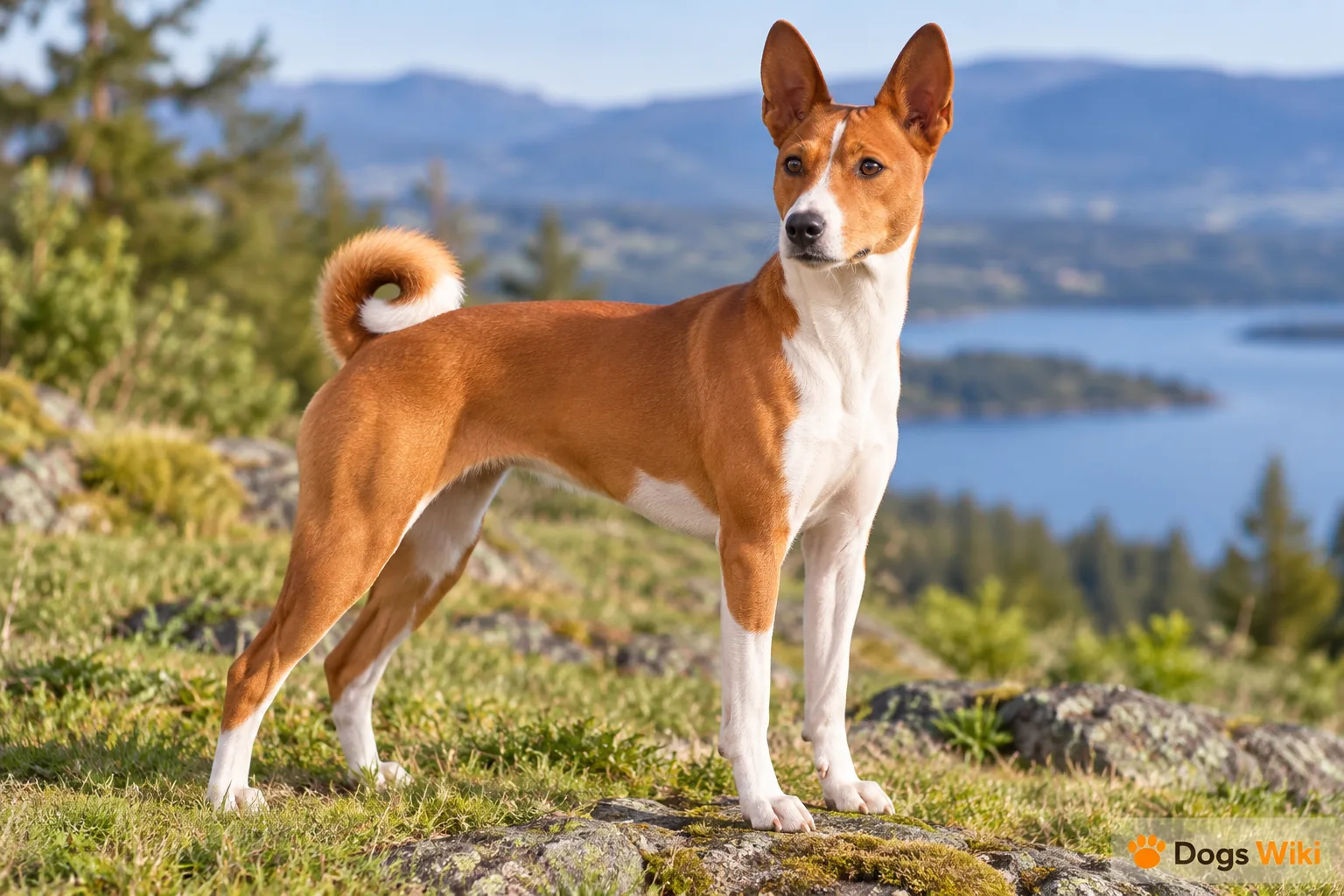
Basenjis are one of the smallest breeds in the Hound Group, with a graceful, agile build, a tightly curled tail, and a short, smooth coat.
What Is the Average Basenji Height and Weight?
| Measure | American Kennel Club figure |
|---|---|
| Height | 17 inches (male), 16 inches (female) |
| Weight | 24 pounds (male), 22 pounds (female) |
| Life expectancy | 13-14 years |
Figures are from the American Kennel Club Basenji breed profile, retrieved September 2026.
How Long Do Basenjis Live?
Basenjis live 13 to 14 years, a solid lifespan for the breed’s size. Regular veterinary care, including monitoring for the breed-specific kidney condition covered below, supports a full lifespan.
What Health Problems Are Basenjis Prone To?
Basenjis are documented as being at higher risk for the following conditions.
- Fanconi syndrome. A genetic kidney disease relatively specific to the breed, in which protein and sugar leak from the blood into the urine, eventually causing kidney failure if untreated; a DNA test can identify carriers.
- Hypothyroidism. Reduced thyroid hormone production, managed with daily medication once diagnosed.
- Progressive retinal atrophy. An inherited eye disease that gradually breaks down the retina and can lead to vision loss over time.
- Hip dysplasia. A condition where the hip joint doesn’t develop properly, causing stiffness and pain.
- Patellar luxation. A kneecap that slips out of place, which can cause an intermittent skip or hop in the dog’s gait.
How Do You Groom a Basenji?
Basenjis have a short, smooth coat that’s genuinely low-maintenance, needing only weekly combing with a soft-bristle brush or grooming mitt. The breed is famous for its cat-like self-grooming habits, which further reduces the actual hands-on coat care an owner needs to do. Routine nail trims, ear cleaning, and dental care round out the grooming routine.
How Much Exercise Does a Basenji Need?
A Basenji needs substantial daily exercise, and the breed’s alert, energetic nature means it does best with real opportunities to run in a well-fenced yard rather than a short leash walk alone. Without enough physical and mental engagement, Basenjis are prone to destructiveness, escape attempts, or excessive vocalization, since the breed doesn’t tolerate boredom well.
Are Basenjis Easy to Train?
Basenjis are intelligent but genuinely independent-minded, making them harder to train than the average breed. Positive reinforcement training works better than repetition or correction, and consistency matters more with this breed than with more naturally compliant ones, since Basenjis are quick to find their own solutions if a training approach doesn’t hold their interest.
What Should You Feed a Basenji?
Basenjis do well on a high-quality formula suited to their particular age and any health concerns, and some individual dogs gain excess weight as they age, so monitoring food intake and adjusting portions as needed matters over the dog’s lifetime. A veterinarian can help set appropriate feeding guidelines for an individual dog.
What Are the Pros and Cons of Owning a Basenji?
Here are the main advantages of owning a Basenji.
- Nearly barkless, a genuine advantage for noise-sensitive living situations
- Low-maintenance, self-grooming short coat
- Highly intelligent and genuinely unique personality
- Compact size relative to its athletic capability
Here are the main drawbacks of owning a Basenji.
- Independent temperament that’s more difficult to train than average
- Documented risk of Fanconi syndrome, a breed-specific kidney disease
- Needs substantial daily exercise and mental stimulation
- Can be wary of strangers without early, consistent socialization
Basenji rescue organizations place adult dogs, though the breed’s rarity means availability can be limited, worth a look for anyone drawn to the breed’s unique personality but not set on a breeder search.
What Else Do People Ask About the Basenji?
The questions below cover how much a Basenji costs, whether Basenjis are good family dogs, whether Basenjis never bark, and what Fanconi syndrome in Basenjis is.
How much does a Basenji cost?
Basenji prices vary by region, bloodline, and breeder reputation, and a puppy from a breeder who screens for Fanconi syndrome and hip dysplasia typically costs more than one that doesn’t. Adopting an adult Basenji through a rescue is usually a lower-cost alternative, though the breed’s relative rarity can limit availability.
Are Basenjis good family dogs?
Basenjis can be good family dogs for owners who understand and accommodate the breed’s independent, cat-like temperament, though their wariness with strangers and strong exercise needs mean they suit an experienced, engaged household better than a completely hands-off one.
Do Basenjis never bark?
Basenjis are often called the “barkless dog,” but that’s not entirely accurate: the breed’s unusually shaped larynx makes typical barking rare, but Basenjis do vocalize, producing a distinctive yodel-like sound sometimes called a “baroo.” They’re not silent, just quieter and different-sounding than most breeds.
What is Fanconi syndrome in Basenjis?
Fanconi syndrome is a genetic kidney disease relatively specific to the Basenji breed, in which the kidneys fail to properly reabsorb protein and sugar, causing them to leak into the urine and eventually causing kidney failure if left untreated. A DNA test is available to identify carriers, which is why responsible Basenji breeders test their breeding stock for the condition.
Related Guides
More guides on The Dogs Wiki cover health, grooming, behavior, training, nutrition, and adoption.
| Guide |
|---|
| Health |
| Grooming |
| Behavior |
| Training |
| Nutrition |
| Adoption |
Leave a Reply