Home → Dog Breeds → Hound Group → Whippet
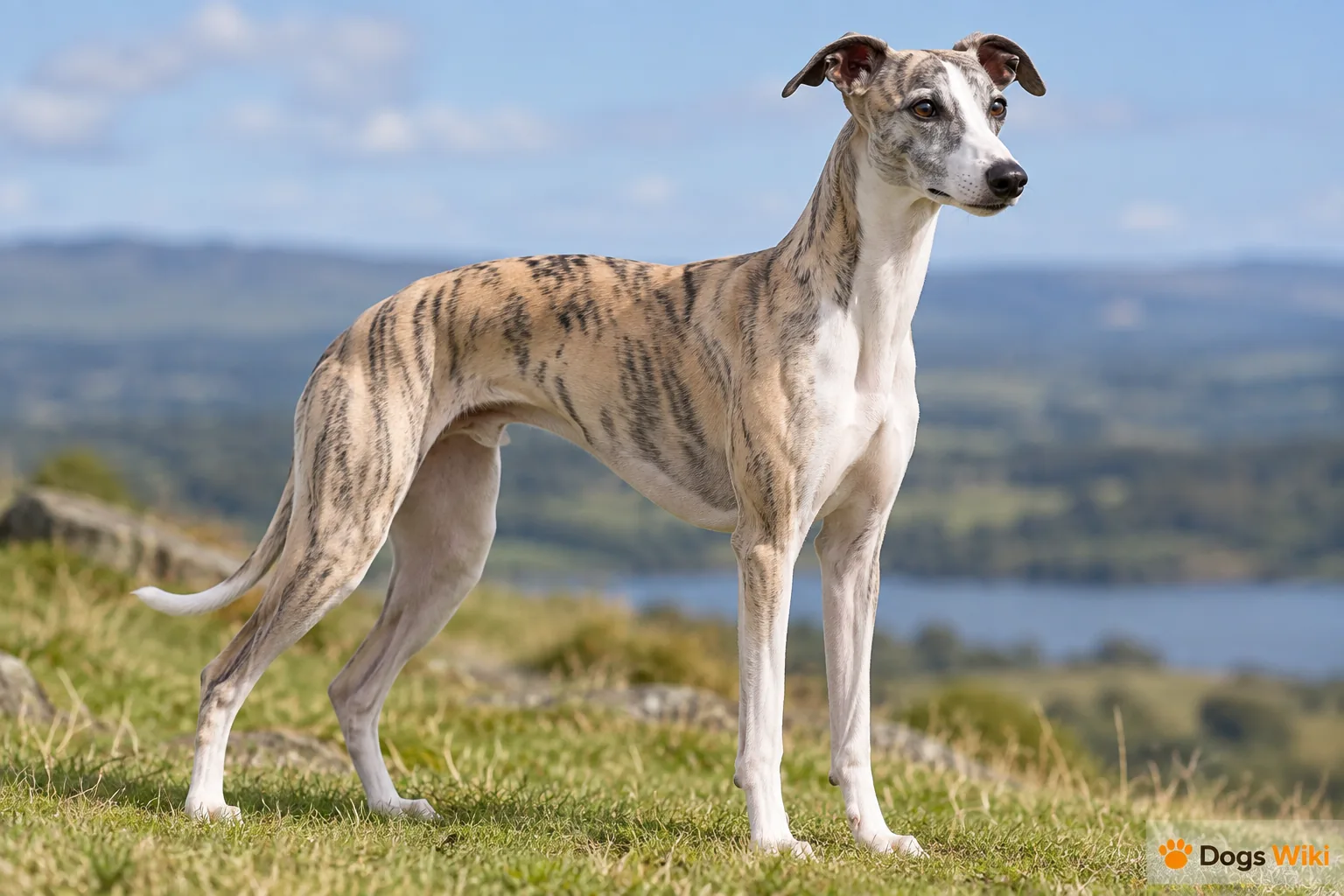
A Whippet is a medium-sized Hound Group sighthound developed in 19th-century England by crossing Greyhounds with smaller terriers, giving working-class coal miners and laborers a faster, more affordable alternative to the Greyhound for racing and small-game hunting.
Sometimes called the “poor man’s racehorse,” the Whippet combines genuine speed with a famously gentle, easygoing temperament at home. This guide covers where the breed originated, its temperament, how big Whippets get, how long they live, the health problems they are prone to, grooming, how much exercise they need, how easy they are to train, what to feed them, the pros and cons of owning one, and what else people ask.
What Is a Whippet and Where Did the Breed Originate?
A Whippet belongs to the American Kennel Club’s Hound Group, specifically the sighthound category bred to chase prey by sight. The breed was created in 19th-century England, where working-class laborers who couldn’t afford to keep and kennel a full-sized Greyhound bred them with smaller dogs to produce a leaner, more economical sprinting and hunting companion. The AKC recognized the breed in 1888. Whippets closely resemble small-scale Greyhounds and remain intermediate in size between the Greyhound and the even smaller Italian Greyhound.
The American Kennel Club defines the breed in its “Official Standard of the Whippet”, approved October 9, 2007, which sets out the size, coat, and temperament a Whippet should have. As of September 2026, the AKC ranks the Whippet 50th of 210 breeds in popularity.
What Is a Whippet’s Temperament Like?
A Whippet’s temperament is gentle, affectionate, and calm indoors, a combination that’s earned the breed a reputation as a genuine couch potato despite its sprinting ability. Whippets rarely bark and are generally easy keepers, adapting well to a quiet household routine. Given the chance to chase something, though, the breed’s hunting instinct switches on immediately, and Whippets are capable of quick bursts of speed and sharp direction changes when pursuing a moving target.
How Big Do Whippets Get?
Whippets are a sleek, medium-sized breed with a deep chest, long neck, narrow waist, and long, slender legs built for efficient sprinting. Both males and females share the same general build and size range.
What Is the Average Whippet Height and Weight?
| Measure | American Kennel Club figure |
|---|---|
| Height | 19-22 inches (male), 18-21 inches (female) |
| Weight | 25-40 pounds |
| Life expectancy | 12-15 years |
Figures are from the American Kennel Club Whippet breed profile, retrieved September 2026.
How Long Do Whippets Live?
Whippets live 12 to 15 years, a long lifespan that reflects the breed’s overall good health. Regular veterinary care, including cardiac monitoring as the dog ages, supports a full lifespan.
What Health Problems Are Whippets Prone To?
Whippets are documented as being at higher risk for the following conditions.
- Heart murmurs and mitral valve disease. Some Whippets are born with mild heart murmurs, and the breed can develop mitral valve disease later in life as the heart’s mitral valve wears down; a veterinary cardiologist can evaluate and monitor this.
- Hypothyroidism. Reduced thyroid hormone production, typically diagnosed in middle age and managed with daily medication.
- Bloat, or gastric dilatation-volvulus (GDV). A life-threatening emergency more common in deep-chested breeds.
- Progressive retinal atrophy. An inherited eye disease that gradually breaks down the retina and can affect vision over time.
- Anesthesia sensitivity. Not a disease, but a genuine trait tied to the breed’s low body fat, which means Whippets can process anesthesia and certain medications differently than other breeds; discussing this with a veterinarian before any procedure matters.
How Do You Groom a Whippet?
Whippets have a short, fine coat that sheds relatively little compared to most breeds, making coat care genuinely low-maintenance. Occasional brushing keeps loose hair under control, and because the breed’s thin coat and low body fat make it sensitive to cold, a coat or sweater for winter walks is a practical addition rather than an indulgence.
How Much Exercise Does a Whippet Need?
A Whippet needs regular opportunities to run at speed, ideally in a securely fenced area, balanced against long stretches of calm indoor time. The breed doesn’t need hours of continuous activity, but it does need genuine sprinting opportunities rather than just leash walks to feel satisfied, given its instinct to chase. Whippets adapt well to apartment living as long as this need is met consistently.
Are Whippets Easy to Train?
Yes, Whippets are generally easy to train, described by many owners and breed clubs as “easy keepers” thanks to a calm, cooperative temperament. Positive, gentle training methods suit the breed’s sensitive nature well, and early socialization helps channel the breed’s natural prey drive appropriately around smaller animals.
What Should You Feed a Whippet?
Whippets do well on a standard formula suited to their age and activity level, with close attention to weight given how directly extra pounds affect a slender sighthound’s joints. A veterinarian can help set an appropriate feeding plan, and because the breed can be sensitive to certain medications, any diet changes tied to a health condition are worth discussing directly.
What Are the Pros and Cons of Owning a Whippet?
Here are the main advantages of owning a Whippet.
- Gentle, calm, affectionate temperament, indoors
- Rarely barks
- Low-maintenance coat with minimal shedding
- Adapts well to apartment living given consistent sprinting opportunities
Here are the main drawbacks of owning a Whippet.
- Documented risk of heart conditions requiring monitoring as the dog ages
- Sensitive to cold weather given thin coat and low body fat
- Strong prey drive means small pets and unfenced areas need caution
- Anesthesia sensitivity requires extra care around any medical procedure
Whippet rescue organizations place adult dogs regularly, worth a look for anyone drawn to the breed’s temperament but not set on a breeder search.
What Else Do People Ask About the Whippet?
The questions below cover how much a Whippet costs, whether Whippets are good apartment dogs, the difference between the Greyhound and the Whippet, and whether Whippets are hypoallergenic.
How much does a Whippet cost?
Whippet prices vary by region, bloodline, and breeder reputation, and a puppy from a breeder who screens for cardiac and eye conditions typically costs more than one that doesn’t. Adopting an adult Whippet through a rescue is usually a lower-cost alternative.
Are Whippets good apartment dogs?
Yes, Whippets are well suited to apartment living, thanks to a calm indoor temperament and coat that sheds minimally. Access to a securely fenced area for regular sprinting sessions matters more than square footage for this breed’s overall satisfaction.
What Is the Difference Between the Greyhound and the Whippet?
Whippets and Greyhounds are both gentle, calm AKC sighthounds with a similar build, but Whippets are smaller, standing 18 to 22 inches compared to the Greyhound’s 27 inches and up. Whippets were bred down from Greyhounds in 19th-century England specifically to be a more affordable, apartment-friendly sprinting companion.
Are Whippets hypoallergenic?
No, Whippets are not considered a hypoallergenic breed, though the breed does shed relatively minimally compared to many others, which some allergy-sensitive owners find more manageable. No dog breed is completely allergen-free, since allergens come from dander and saliva as well as shed hair.
Related Guides
More guides on The Dogs Wiki cover health, grooming, training, nutrition, and adoption.
| Guide |
|---|
| Health |
| Grooming |
| Training |
| Nutrition |
| Adoption |