Home → Dog Breeds → Hound Group → Pharaoh Hound
A Pharaoh Hound is a medium-sized Hound Group breed.
Its roots trace back to around 4400 BCE Egypt. Maltese breeders later refined it into the Kelb tal-Fenek, or rabbit dog. The AKC recognized the breed in 1983. It’s known for a genuinely unique trait: it blushes rosy pink when happy or excited. This guide covers where the breed originated, its temperament, how big Pharaoh Hounds get, how long they live, the health problems they are prone to, grooming, how much exercise they need, how easy they are to train, what to feed them, the pros and cons of owning one, and what else people ask.
What Is a Pharaoh Hound and Where Did the Breed Originate?
A Pharaoh Hound belongs to the AKC’s Hound Group. According to the Pharaoh Hound Club of America, the breed’s history stretches back roughly 4,400 years to ancient Egypt. Maltese breeders later developed it further as the Kelb tal-Fenek, meaning rabbit dog in Maltese. The breed was used to course small game over Malta’s rugged, rocky terrain. The AKC officially recognized it in 1983.
The American Kennel Club defines the breed in its “Official Standard of the Pharaoh Hound”, approved May 10, 1983, which sets out the size, coat, and temperament a Pharaoh Hound should have. As of September 2026, the AKC ranks the Pharaoh Hound 185th of 210 breeds in popularity.
What Is a Pharaoh Hound’s Temperament Like?
A Pharaoh Hound’s temperament is friendly, playful, and genuinely intelligent. The breed settles down nicely at home despite real speed and energy in the field. It’s affectionate and loyal, good with kids and other pets. A Pharaoh Hound isn’t a great guard dog, since it’s too friendly with strangers to be genuinely protective.
How Big Do Pharaoh Hounds Get?
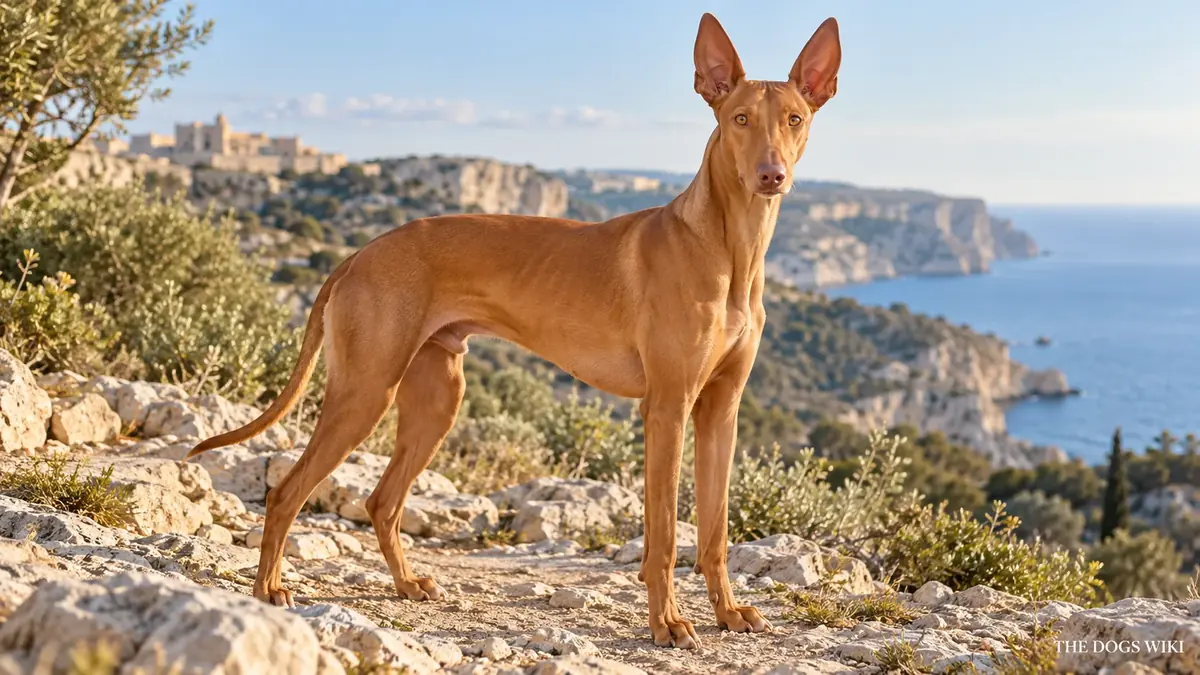
Pharaoh Hounds are a medium-sized, slender sighthound with large, erect ears and a short, glossy coat in shades of tan, chestnut, or golden-red. A hallmark trait: the inside of the ears and nose blush pink when the dog is happy or excited.
What Is the Average Pharaoh Hound Height and Weight?
| Measure | American Kennel Club figure |
|---|---|
| Height | 23-25 inches (male), 21-24 inches (female) |
| Weight | 45-55 pounds |
| Life expectancy | 12-14 years |
Figures are from the American Kennel Club Pharaoh Hound breed profile, retrieved September 2026.
How Long Do Pharaoh Hounds Live?
Pharaoh Hounds live 12 to 14 years, a typical lifespan for a medium breed. Regular veterinary care supports a full life for this healthy breed.
What Health Problems Are Pharaoh Hounds Prone To?
Pharaoh Hounds are documented as being at higher risk for the following conditions.
- Hip dysplasia. A joint condition common across many breeds, screened for with x-rays.
- Eye conditions. Recognized concerns worth screening for with regular exams.
- Anesthesia sensitivity. A trait common in lean sighthounds, given low body fat.
- Overall good health. The breed is generally considered one of the healthier medium sighthound breeds.
How Do You Groom a Pharaoh Hound?
Pharaoh Hounds have a short, smooth coat that’s genuinely easy to maintain. Occasional brushing keeps shedding under control. Given the thin coat and low body fat, cold-weather protection matters.
How Much Exercise Does a Pharaoh Hound Need?
A Pharaoh Hound needs regular daily exercise. The breed is energetic and athletic, genuinely built for coursing over rough terrain. Secure fencing matters given the breed’s sighthound chase instinct.
Are Pharaoh Hounds Easy to Train?
Yes. Pharaoh Hounds are wonderfully intelligent and genuinely eager to please. Positive reinforcement training works well with this breed, which fits easily into family life.
What Should You Feed a Pharaoh Hound?
A Pharaoh Hound does well on a formula suited to its age and activity level. A veterinarian can help set appropriate portions given the breed’s lean, athletic build.
What Are the Pros and Cons of Owning a Pharaoh Hound?
Here are the main advantages of owning a Pharaoh Hound.
- Friendly, playful, genuinely intelligent temperament
- Good with kids and other pets
- Low-maintenance short coat
- Settles down calmly at home
Here are the main drawbacks of owning a Pharaoh Hound.
- Not a good guard dog given its friendly nature with strangers
- Genuinely rare, making puppies harder to find
- Cold-sensitive given thin coat and low body fat
- Strong chase instinct requires secure fencing
Pharaoh Hound rescue organizations occasionally place adult dogs, worth a look for anyone drawn to this breed’s charm but a breeder search isn’t easy given its rarity.
What Else Do People Ask About the Pharaoh Hound?
The questions below cover how much a Pharaoh Hound costs, whether Pharaoh Hounds are good family dogs, why a Pharaoh Hound’s noses turn pink, and the difference between the Pharaoh Hound and the Ibizan Hound.
How much does a Pharaoh Hound cost?
Prices vary by region and breeder reputation, and the breed’s rarity can push prices above average. Adopting an adult dog through a rescue is usually cheaper but harder to find.
Are Pharaoh Hounds good family dogs?
Yes. The breed is friendly, playful, and genuinely good with children and other pets, fitting easily into family life once its exercise needs are met.
Why does a Pharaoh Hound’s nose turn pink?
The breed genuinely blushes. The skin inside the ears and around the nose turns a rosy pink when the dog is happy or excited, a trait unique among dog breeds.
What Is the Difference Between the Pharaoh Hound and the Ibizan Hound?
Both are ancient, slender sighthounds often confused for one another. Pharaoh Hounds are somewhat smaller and can have small white markings, while Ibizan Hounds run taller and can be all-white or have larger white patches.
Related Guides
More guides on The Dogs Wiki cover behavior, health, grooming, training, nutrition, and adoption.
| Guide |
|---|
| Behavior |
| Health |
| Grooming |
| Training |
| Nutrition |
| Adoption |