
Home → Dog Breeds → Designer & Mixed Breeds → Bernedoodle
Bernedoodle: Profile, Temperament, Health, and Care Guide
A Bernedoodle is a designer cross between a Bernese Mountain Dog and a Poodle, first bred in 2003 to combine the Bernese’s gentle temperament with a lower-shedding coat and a longer lifespan.
A Bernedoodle is a designer cross between a Bernese Mountain Dog and a Poodle, first bred in 2003 specifically to combine the Bernese’s gentle, affectionate temperament with the Poodle’s lower-shedding coat and a real chance at a longer lifespan than a purebred Bernese gets. Because the Bernese Mountain Dog carries one of the shortest average lifespans and highest cancer rates of any breed, that longevity benefit is a genuine part of the Bernedoodle’s appeal. This guide covers where the cross originated, its temperament, how big Bernedoodles get, how long they live, the health problems they are prone to, grooming, how much exercise they need, how easy they are to train, what to feed them, the pros and cons of owning one, and what else people ask.
What Is a Bernedoodle and Where Did the Cross Originate?
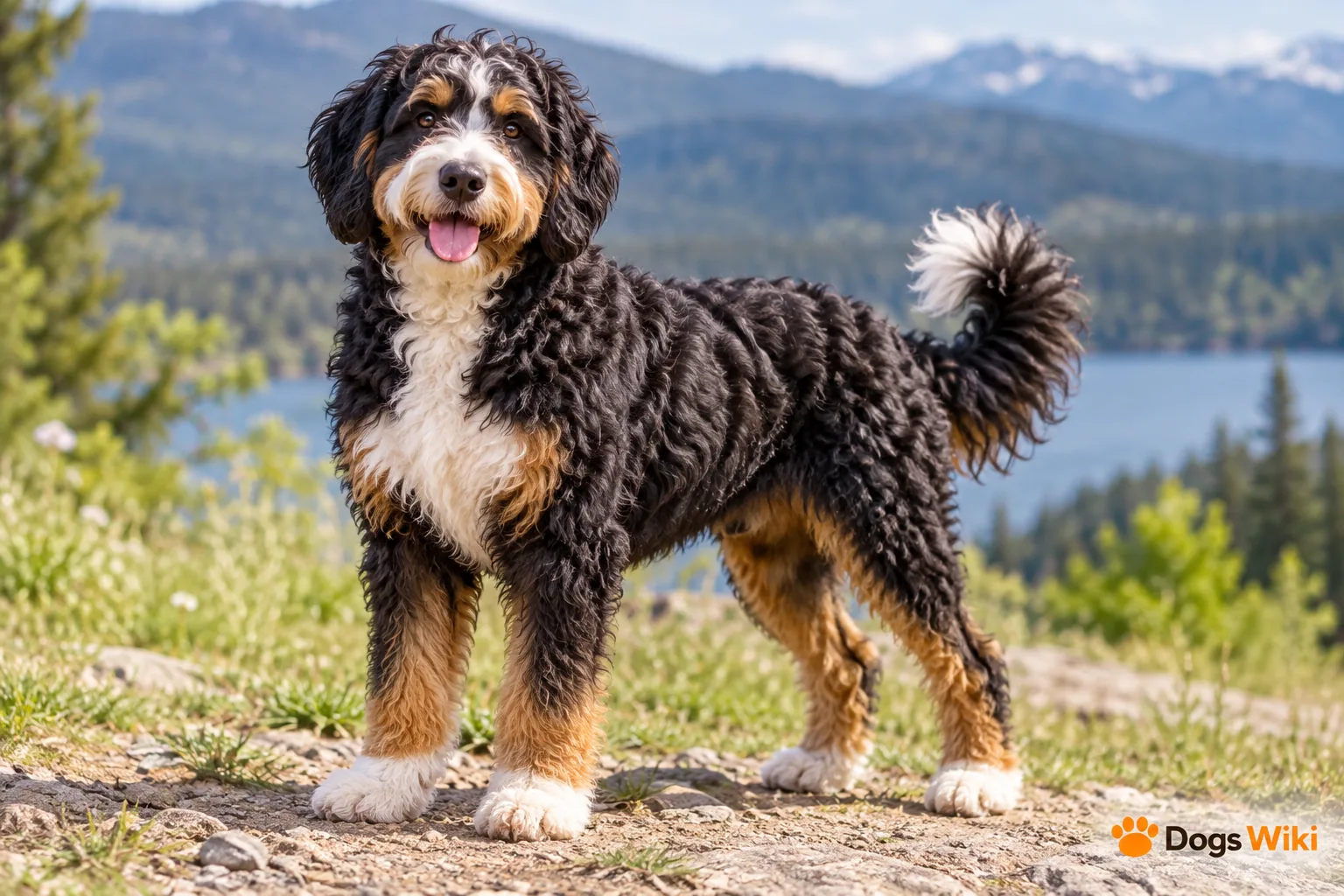
A Bernedoodle is a cross between a Bernese Mountain Dog and a Poodle, first deliberately bred in 2003. The cross aimed to combine the Bernese’s beloved, gentle temperament and striking tricolor markings with the Poodle’s lower-shedding coat and longer lifespan, since the purebred Bernese Mountain Dog carries a documented average lifespan of only about seven to nine years and a cancer rate exceeding 50% in some breed-club studies. Bernedoodles come in Standard, Mini, and Tiny size categories, with the Poodle parent’s size determining which category a litter falls into.
The American Kennel Club does not register the Bernedoodle as a breed, so there is no official Bernedoodle standard; its parent breeds are described in the AKC’s “Official Standard of the Bernese Mountain Dog”, approved February 10, 1990, and the AKC’s “Official Standard of the Poodle”, approved August 14, 1984.
What Is a Bernedoodle’s Temperament Like?
A Bernedoodle’s temperament is affectionate, gentle, and genuinely family-oriented, drawing on the Bernese Mountain Dog’s well-documented devotion to people of all ages rather than attaching to just one person. Bernedoodles bond warmly with the whole household, including children and other pets, when properly socialized. That devotion comes with a real trade-off: Bernedoodles crave company and can struggle with being left alone, making early crate training and gradual alone-time practice worthwhile investments.
How Big Do Bernedoodles Get?
A Bernedoodle’s size depends on which size of Poodle was used in the cross, ranging from Standard (large) to Mini to Tiny. Coat type also varies by individual dog, from a straight coat closer to the Bernese parent to a dense, curly, or corded coat closer to the Poodle parent, with wavy coats, which shed less than non-hypoallergenic breeds, being the most popular and common outcome.
How Long Do Bernedoodles Live?
Bernedoodles live 12 to 18 years, though this varies considerably by size: Standard Bernedoodles average closer to 7 to 12 years, while Mini and Tiny Bernedoodles reach 12 to 18 years, benefiting more from the smaller Poodle parent’s longevity. A well-bred Bernedoodle from health-tested parents frequently lives 4 to 6 years longer than a purebred Bernese Mountain Dog, though this benefit depends entirely on the breeder actively selecting for longevity, so regular veterinary care and a health-tested breeder both matter considerably for this cross.
What Health Problems Are Bernedoodles Prone To?
Because a Bernedoodle inherits traits from both parent breeds, it can be prone to health conditions documented in either the Bernese Mountain Dog or the Poodle.
- Cancer. The single most significant health consideration for this cross, inherited from the Bernese Mountain Dog side, which carries one of the highest documented cancer rates of any breed; hybrid vigor may reduce individual risk somewhat, though no Bernedoodle-specific studies confirm this.
- Hip and elbow dysplasia. Joint conditions common in larger dogs, relevant for Standard-sized Bernedoodles; OFA hip and elbow evaluations on the parents help reduce this risk.
- Progressive retinal atrophy. An inherited eye condition documented in the Poodle parent that can lead to impaired vision over time.
- Von Willebrand disease. An inherited bleeding disorder affecting the blood’s ability to clot properly.
- Skin issues, including hot spots. A recognized concern given the breed’s thick coat, along with general allergy sensitivity documented in the cross.
How Do You Groom a Bernedoodle?
A Bernedoodle’s coat needs regular brushing several times a week to prevent mats, and professional grooming every six to eight weeks is recommended, since the breed’s dense coat mats faster than many owners initially expect. Coat type varies meaningfully between individual dogs, so grooming needs should be assessed on a dog-by-dog basis rather than assumed from the parent breeds alone.
How Much Exercise Does a Bernedoodle Need?
A Bernedoodle benefits from daily walks, playtime, and mentally stimulating activities like puzzle toys or agility courses, and the breed is genuinely adaptable, so a well-exercised Bernedoodle of any size can happily fit into most family lifestyles. Exercise also plays a real role in weight management, which helps prevent additional strain on the joints given the breed’s documented dysplasia risk.
Are Bernedoodles Easy to Train?
Yes, Bernedoodles are intelligent and generally eager to please, combining the Bernese Mountain Dog’s genuine desire to work with its family and the Poodle’s sharp intelligence. Positive reinforcement training works well, and early socialization helps this affectionate cross settle comfortably into a busy, multi-person household.
What Should You Feed a Bernedoodle?
A Bernedoodle does well on a high-quality formula high in protein with beneficial nutrients like omega-3 fatty acids, suited to the dog’s size and activity level. Given the breed’s documented joint risks, weight management through consistent, measured feeding matters considerably for long-term mobility and comfort.
What Are the Pros and Cons of Owning a Bernedoodle?
Here are the main advantages of owning a Bernedoodle.
- Affectionate, gentle, genuinely family-oriented temperament
- Potential for a meaningfully longer lifespan than a purebred Bernese Mountain Dog
- Lower-shedding coat option, in particular in wavy-coated individuals
- Highly trainable and eager to please
Here are the main drawbacks of owning a Bernedoodle.
- Still carries a real, elevated cancer risk inherited from the Bernese side
- Can struggle with being left alone, craves company
- Coat mats faster than many owners expect, needs regular professional grooming
- Size and lifespan vary meaningfully depending on which Poodle size was used in the cross
Bernedoodle-specific rescue organizations and general shelters both place adult dogs, though the breed’s popularity can mean higher demand relative to availability, worth a look for anyone drawn to this cross but not set on a breeder search.
What Else Do People Ask About the Bernedoodle?
The questions below cover how much a Bernedoodle costs, whether Bernedoodles live longer than Bernese Mountain Dogs, whether Bernedoodles are good family dogs, and the difference between Standard, Mini, and Tiny Bernedoodles.
How much does a Bernedoodle cost?
Bernedoodle prices range from $2,000 to $5,000 from a reputable breeder, reflecting genuine demand and the rigorous health testing many American Bernedoodle breeders perform given the Bernese Mountain Dog’s cancer prevalence. Adopting an adult Bernedoodle through a rescue is usually a lower-cost alternative.
Do Bernedoodles live longer than Bernese Mountain Dogs?
Many Bernedoodles from health-tested breeders do live noticeably longer than a purebred Bernese Mountain Dog, by 4 to 6 years, since the Poodle parent doesn’t carry the same elevated cancer risk. This benefit depends heavily on breeder quality, though, since there are no confirmed studies proving a guaranteed lifespan extension across the Bernedoodle population as a whole.
Are Bernedoodles good family dogs?
Yes, Bernedoodles are widely regarded as excellent family dogs, inheriting the Bernese Mountain Dog’s genuine devotion to the whole household rather than just one person. Their tendency to struggle with being left alone means they do best in homes where someone is regularly present.
What’s the difference between Standard, Mini, and Tiny Bernedoodles?
The size categories reflect which size of Poodle was used in the cross: Standard Bernedoodles come from a Standard Poodle and run largest, Mini Bernedoodles come from a Miniature Poodle, and Tiny Bernedoodles come from a Toy Poodle and run smallest. Size directly affects lifespan too, with smaller Bernedoodles generally living longer than Standard-sized ones.
Related Guides
More guides on The Dogs Wiki cover behavior, health, training, nutrition, and adoption.
| Guide |
|---|
| Behavior |
| Health |
| Training |
| Nutrition |
| Adoption |
Leave a Reply