
Home → Dog Breeds → Herding Group → Border Collie
Border Collie: Breed Profile, Temperament, Health, and Care Guide
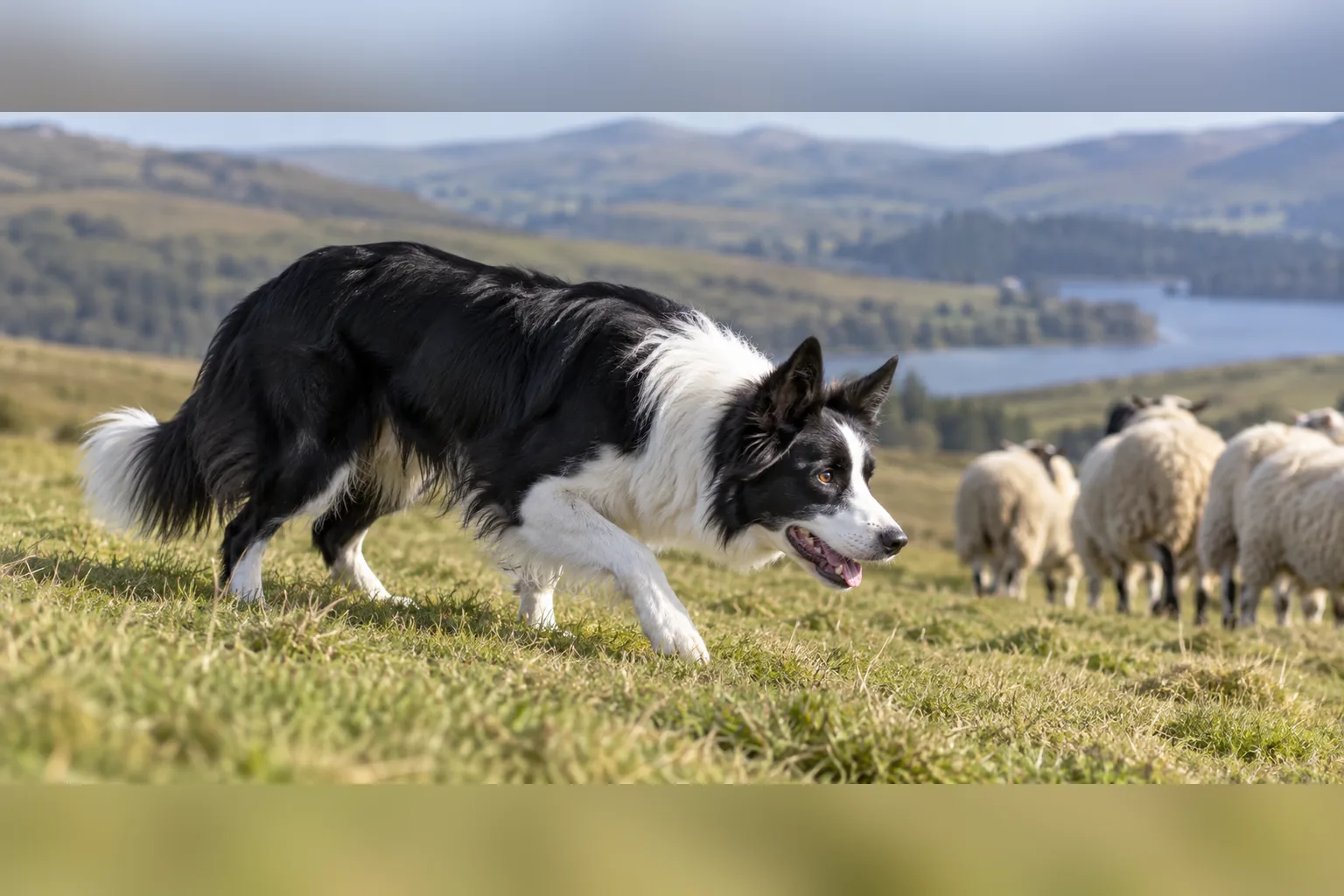
A Border Collie is a medium-sized Herding Group breed developed along the hilly border between Scotland and England to herd sheep with speed, agility, and an intense, focused stare known as “eye” rather than nipping or barking.
Widely regarded as the most intelligent dog breed in the world, the Border Collie remains a working dog at heart, whether that work happens on a real farm or through structured sport and training at home. This guide covers where the breed originated, its temperament, how big Border Collies get, how long they live, the health problems they are prone to, grooming, how much exercise they need, how easy they are to train, what to feed them, the pros and cons of owning one, and what else people ask.
What Is a Border Collie and Where Did the Breed Originate?
A Border Collie belongs to the American Kennel Club’s Herding Group. The breed developed in the border region between Scotland and England, where the first recorded sheepdog trials were held in the 1870s. Old Hemp, a dog born in Northumberland in 1893, is widely considered the breed’s founding father; his quiet, controlling style of working sheep with his eyes rather than his teeth was so admired that he sired a large share of the dogs that followed. Despite that long working history, the AKC didn’t recognize the Border Collie until 1995, since the breed’s working community long resisted formal show recognition out of concern it would shift breeding priorities away from herding ability.
As of September 2026, the AKC ranks the Border Collie 30th of 210 breeds in popularity.
How Smart Is a Border Collie?
The breed tops Stanley Coren’s widely cited ranking of working and obedience intelligence. One famous example is Chaser, a dog studied by psychologist John Pilley, who learned the names of more than 1,000 toys and could fetch each one by name. Pilley and Alliston Reid reported the work in 2011 in a paper titled “Border collie comprehends object names as verbal referents.” Sheepdog handlers see the same ability every day: a trained dog responds to dozens of whistle and voice commands at distances of half a mile or more.
What Is a Border Collie’s Temperament Like?
A Border Collie’s temperament is alert, loyal, and lively, driven by an intense work ethic and one of the sharpest minds in the entire dog world. Commonly cited as the smartest dog breed, these dogs are capable of learning new commands fast, but that intelligence comes with real expectations: this is a breed that needs a genuine job or purpose, not just a walk around the block. Without enough exercise and mental stimulation, bored dogs can develop obsessive or destructive behaviors, including herding anything that moves, from children to cars.
Why Do Border Collies Stare?
The stare is called “eye,” and it is the breed’s main herding tool. Crouched low, the dog fixes its gaze on the sheep, and moves them with pressure rather than force. In a pet home, the same instinct shows up as staring at a ball, other dogs, or the cat. Most of the time it is harmless, but a dog that fixates for long periods on shadows, lights, or moving cars needs more structured work and, in some cases, help from a behavior professional.
How Big Do Border Collies Get?
Border Collies are a medium-sized, athletic breed built for speed, agility, and endurance, with an alert, intelligent expression and a weather-resistant double coat that comes in many colors and patterns. The coat can be rough, with medium-length feathering, or smooth and short. Black and white is the most familiar pattern, but red, blue, merle, tricolor, and sable are all common.
What Is the Average Border Collie Height and Weight?
| Measure | American Kennel Club figure |
|---|---|
| Height | 19-22 inches (male), 18-21 inches (female) |
| Weight | 30-55 pounds |
| Life expectancy | 12-15 years |
Figures are from the American Kennel Club Border Collie breed profile, retrieved September 2026.
How Long Do Border Collies Live?
Most Border Collies live 12 to 15 years, with some sources citing a wider range up to 17. Regular veterinary care, including genetic screening for the neurological condition covered below, supports a full lifespan.
What Health Problems Are Border Collies Prone To?
Border Collies are documented as being at higher risk for the following conditions.
What Is Collie Eye Anomaly in Border Collies?
Collie eye anomaly is an inherited defect in the development of the retina, choroid, and sclera at the back of the eye. Mild cases cause no vision problems, while severe cases lead to retinal detachment and blindness. A DNA test identifies carriers, and puppies are best checked by a veterinary ophthalmologist at six to eight weeks of age. Progressive retinal atrophy and lens luxation, other inherited eye conditions, also occur in the breed.
What Is Neuronal Ceroid Lipofuscinosis in Border Collies?
Neuronal ceroid lipofuscinosis, known in the breed as CL, is a fatal inherited disease in which waste material builds up in nerve cells. Signs appear between about 15 and 20 months of age: behavior changes, anxiety, clumsiness, blindness, and seizures. There is no treatment, and affected dogs rarely live past two or three years. A DNA test identifies carriers, and pairing tested parents prevents affected puppies.
What Is Trapped Neutrophil Syndrome in Border Collies?
Trapped neutrophil syndrome is an inherited immune disorder in which white blood cells called neutrophils are made normally but stay trapped in the bone marrow. Affected puppies are small for their age and suffer repeated infections, and most die young. Like CL, it is recessive and has a DNA test. Imerslund-Grasbeck syndrome, an inherited inability to absorb vitamin B12, also has a test and is treated with lifelong B12 injections.
What Other Health Problems Affect Border Collies?
Hip dysplasia, in which the ball of the hip joint doesn’t fit correctly into the socket, causes inflammation, pain, and eventual arthritis. Osteochondritis dissecans, a joint cartilage defect, and patent ductus arteriosus, a congenital heart defect, are also recognized. Epilepsy occurs in the breed. Border Collie collapse is a condition in which some dogs become wobbly and disoriented after five to fifteen minutes of intense exercise, then recover; its cause is still being studied.
The Border Collie parent club sets out its recommended health screening in a breed health statement published by the American Kennel Club.
How Do You Groom a Border Collie?
Every Border Collie has a weather-resistant double coat, in both rough and smooth varieties, that needs weekly brushing to prevent matting and manage moderate, year-round shedding with heavier seasonal blowouts. Despite the coat’s density, the breed isn’t smelly when healthy and clean, and bathing every few months, or as needed, is enough.
| Grooming task | Rough coat | Smooth coat |
|---|---|---|
| Brush with a slicker brush and undercoat rake | Two to three times a week | Weekly |
| Comb behind the ears and through the feathering | Weekly | Not needed |
| Trim nails | Every 3 to 4 weeks | Every 3 to 4 weeks |
| Check paws after work or hikes | After every outing | After every outing |
| Bath | Every 2 to 3 months | Every 2 to 3 months |
How Much Exercise Does a Border Collie Need?
A Border Collie needs extensive daily exercise, both physical and mental, reflecting the breed’s history as a tireless working herder. This is one of the highest-energy breeds in the entire AKC roster, and activities like herding trials, agility, flyball, and frisbee suit the breed’s genuine working drive far better than casual walks alone. Without enough outlet for that drive, a Border Collie is a genuinely challenging dog to live with.
How Do You Tire Out a Border Collie?
Physical exercise alone builds a fitter dog that needs even more. The better approach mixes running with brain work: herding lessons, agility, nosework, and daily training sessions that teach something new. Food puzzles and scatter-feeding in the yard use up mental energy at mealtime. Just as important is teaching the dog to settle; rewarding calm lying down on a mat gives a Border Collie an off switch that many lack.
Are Border Collies Easy to Train?
Yes, Border Collies are exceptionally easy to train, widely regarded as the most trainable breed in existence given their combination of intelligence and eagerness to work. Consistent, varied training that keeps pace with the breed’s quick learning curve is essential, since a Border Collie that masters basic commands too easily will get bored without more advanced challenges.
What Should You Feed a Border Collie?
Working dogs of this breed need a high-quality, protein-rich formula suited to their high activity level, and working or sport-active dogs may need meaningfully more calories than a companion Border Collie living a calmer lifestyle. A veterinarian can help set an appropriate feeding plan based on the individual dog’s actual activity level.
How Many Meals a Day Does a Border Collie Need?
Puppies eat three meals a day until about six months, then two. Adults stay on two measured meals, with portions raised during lambing season or heavy competition and lowered in quieter months. A fit Border Collie is lean, with ribs easy to feel and a clear tuck at the waist. Dogs retired from work or sport need their portions cut back promptly, since an older collie that keeps eating like an athlete gains weight quickly and puts extra load on aging hips.
What Are the Pros and Cons of Owning a Border Collie?
Here are the main advantages and drawbacks of owning a Border Collie, side by side.
| Pros | Cons |
|---|---|
| Extraordinarily intelligent and trainable | Needs extensive daily physical and mental exercise, more than most breeds |
| Loyal, alert, and genuinely devoted to family | Can develop obsessive herding or destructive behavior without enough outlet |
| Does well at dog sports and structured activities | Documented risk of a serious, shortened-lifespan neurological condition |
| Relatively low-maintenance coat given its density | Not well suited to sedentary households or first-time owners unprepared for the demands |
Anyone drawn to the breed’s intelligence and drive who would rather not search for a breeder should strongly consider adopting a Border Collie through a rescue organization, since the breed’s demanding needs mean many end up needing new homes.
What Else Do People Ask About the Border Collie?
The questions below cover how much a Border Collie costs, whether a family home is a good fit, how the Australian Shepherd differs from the breed, and which traits earn the smartest-breed title for the Border Collie.
How much does a Border Collie cost?
Border Collie prices vary by region, bloodline, and whether the parents are working, sport, or show dogs, and a puppy from a breeder who runs the full set of DNA and eye tests costs more than one that doesn’t. Adopting an adult Border Collie through a rescue is a lower-cost alternative, and the breed’s demanding needs mean rescues are genuinely common.
Is a family home a good fit for a Border Collie?
Border Collies can be good family dogs for the right household, one that genuinely prioritizes exercise, mental stimulation, and consistent training. Families that can’t meet those substantial needs end up with a bored, frustrated dog prone to problem behaviors, so an honest assessment of lifestyle fit matters more with this breed than most.
How does the Australian Shepherd differ from the Border Collie?
Border Collies and Australian Shepherds are both high-energy herding breeds with similar appearances, but Border Collies are leaner and were developed on the border of Scotland and England, while Australian Shepherds are stockier, frequently have natural or docked bobtails, and were bred in the United States despite the name.
Which traits earn the smartest-breed title for the Border Collie?
Border Collies are widely cited as the smartest dog breed based on their exceptional working and obedience intelligence, learning new commands faster than most breeds and solving complex problems tied to their herding heritage. That same intelligence cuts both ways, since an under-stimulated Border Collie will find its own, less desirable ways to stay occupied.
Related Guides
More guides on The Dogs Wiki cover behavior, health, grooming, training, nutrition, and adoption.
| Guide |
|---|
| Behavior |
| Health |
| Grooming |
| Training |
| Nutrition |
| Adoption |
Leave a Reply