Home → Dog Breeds → Hound Group → Ibizan Hound
An Ibizan Hound is a medium to large Hound Group breed.
It was bred on Spain’s Balearic Islands to hunt rabbits over rough terrain. The breed closely resembles hounds pictured in ancient Egyptian tombs. The AKC recognized it in 1978. It remains genuinely rare, ranking near the bottom of AKC popularity. This guide covers where the breed originated, its temperament, how big Ibizan Hounds get, how long they live, the health problems they are prone to, grooming, how much exercise they need, how easy they are to train, what to feed them, the pros and cons of owning one, and what else people ask.
What Is an Ibizan Hound and Where Did the Breed Originate?
An Ibizan Hound belongs to the AKC’s Hound Group. It developed on Ibiza and the surrounding Balearic Islands of Spain, built to hunt rabbits and small game. The breed’s appearance closely echoes hounds depicted in ancient Egyptian tomb art, though its more direct history runs through Spain. The AKC recognized it in 1978, and it first appeared at Westminster in 1980. It remains a rare breed today, ranking 166th among AKC breeds in recent years.
The American Kennel Club defines the breed in its “Official Standard of the Ibizan Hound”, approved February 8, 2022, which sets out the size, coat, and temperament an Ibizan Hound should have. As of September 2026, the AKC ranks the Ibizan Hound 174th of 210 breeds in popularity.
What Is an Ibizan Hound’s Temperament Like?
An Ibizan Hound’s temperament is gentle, affectionate, and genuinely loyal. The breed is intelligent and fairly easy to train, though it carries real independence and can be stubborn at times. Ibizan Hounds are too friendly with strangers to make good guard dogs. Large, mobile ears give the breed exceptional hearing, though, making it an effective alert dog.
How Big Do Ibizan Hounds Get?
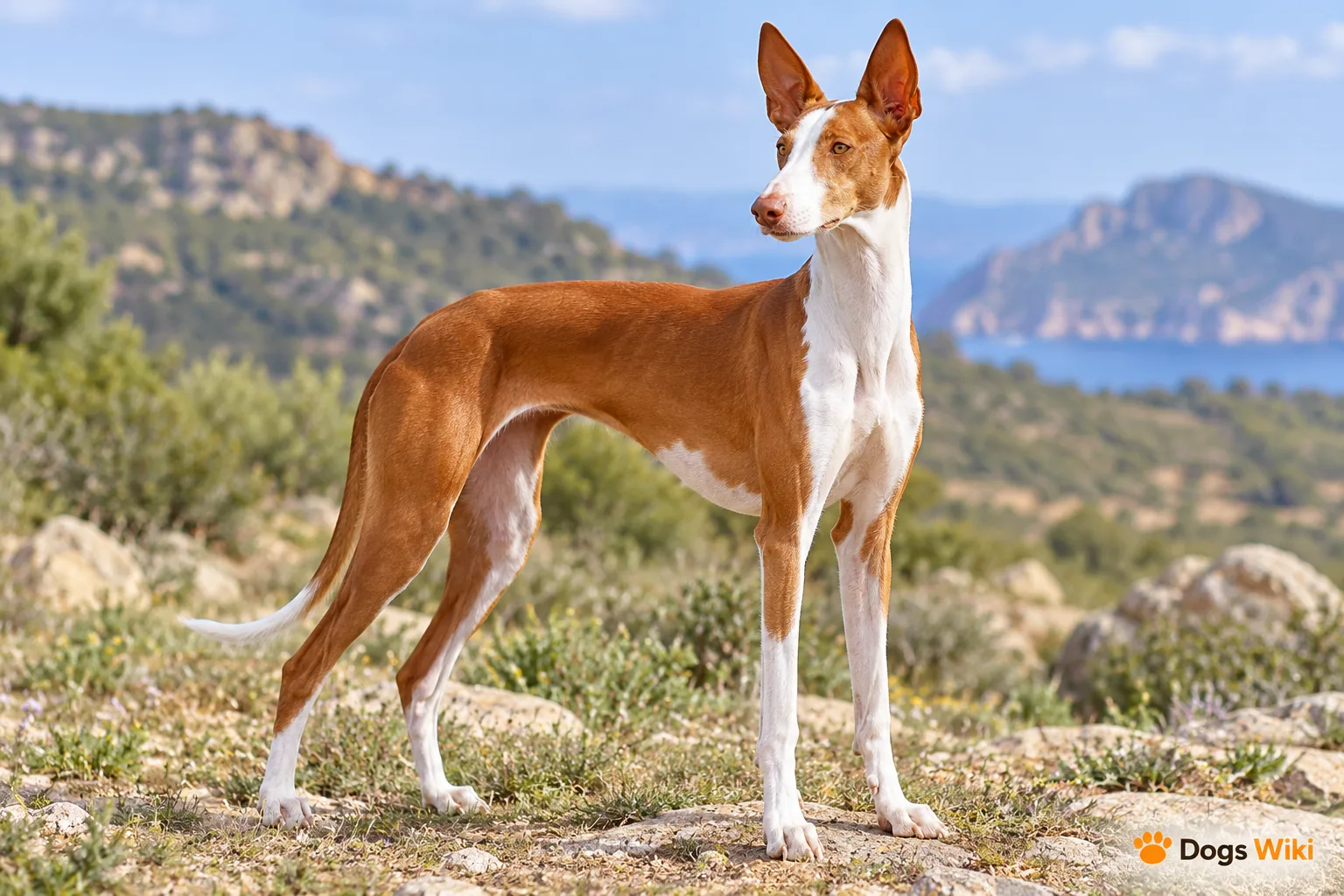
Ibizan Hounds are a tall, lean, athletic sighthound with a smooth or wire coat in red and white. The eyes are a striking amber color. This is one of the tallest hound breeds relative to its weight.
What Is the Average Ibizan Hound Height and Weight?
| Measure | American Kennel Club figure |
|---|---|
| Height | 23.5-27.5 inches (male), 22.5-26 inches (female) |
| Weight | 50 pounds (male), 45 pounds (female) |
| Life expectancy | 11-14 years |
Figures are from the American Kennel Club Ibizan Hound breed profile, retrieved September 2026.
How Long Do Ibizan Hounds Live?
Ibizan Hounds live 11 to 14 years. The breed is generally healthy overall. Regular veterinary care supports a full life, given the anesthesia sensitivity noted below.
What Health Problems Are Ibizan Hounds Prone To?
Ibizan Hounds are documented as being at higher risk for the following conditions.
- Hip dysplasia. A joint condition common across many breeds, screened for with x-rays.
- Eye problems and allergies. Recognized, breed-associated concerns worth monitoring.
- Seizures. A minor but documented health concern in the breed.
- Barbiturate anesthesia sensitivity. A genuine trait common in lean sighthounds, worth discussing with a veterinarian before any procedure.
How Do You Groom an Ibizan Hound?
Ibizan Hounds have a smooth or wire coat that’s genuinely low-maintenance. Occasional brushing controls shedding. The wire-coated variety needs slightly more frequent brushing than the smooth type.
How Much Exercise Does an Ibizan Hound Need?
An Ibizan Hound needs high-energy daily exercise. The breed loves to run, jump, and swim, and it’s not well suited to apartment living without genuine space. Secure, tall fencing matters, since the breed is an excellent leaper.
Are Ibizan Hounds Easy to Train?
Yes, generally. Ibizan Hounds are intelligent and fairly easy to train, though genuine independence and stubbornness show up at times. Consistent, positive reinforcement training works best with this breed.
What Should You Feed an Ibizan Hound?
An Ibizan Hound does well on a formula suited to its age and genuinely high activity level. A veterinarian can help set appropriate portions given the breed’s lean, athletic build.
What Are the Pros and Cons of Owning an Ibizan Hound?
Here are the main advantages of owning an Ibizan Hound.
- Gentle, affectionate, genuinely loyal temperament
- Fairly easy to train
- Low-maintenance coat
- Excellent watchdog given exceptional hearing
Here are the main drawbacks of owning an Ibizan Hound.
- Needs a yard or large space, not suited to apartment living
- Genuinely rare, making puppies harder to find
- Requires tall, secure fencing given real jumping ability
- Sensitive to barbiturate anesthesia
Ibizan Hound rescue organizations occasionally place adult dogs, worth a look for anyone drawn to this breed’s loyal temperament but a breeder search isn’t easy given its rarity.
What Else Do People Ask About the Ibizan Hound?
The questions below cover how much an Ibizan Hound costs, whether Ibizan Hounds are good family dogs, the difference between the Ibizan Hound and the Pharaoh Hound, and whether Ibizan Hounds can be left alone.
How much does an Ibizan Hound cost?
Prices vary by region and breeder reputation, and the breed’s rarity can push prices above average for a medium to large hound. Adopting an adult dog is usually cheaper but harder to find.
Are Ibizan Hounds good family dogs?
Yes. The breed is gentle and affectionate, good with children and other pets when properly socialized, though its high exercise needs mean families need real outdoor space.
What Is the Difference Between the Ibizan Hound and the Pharaoh Hound?
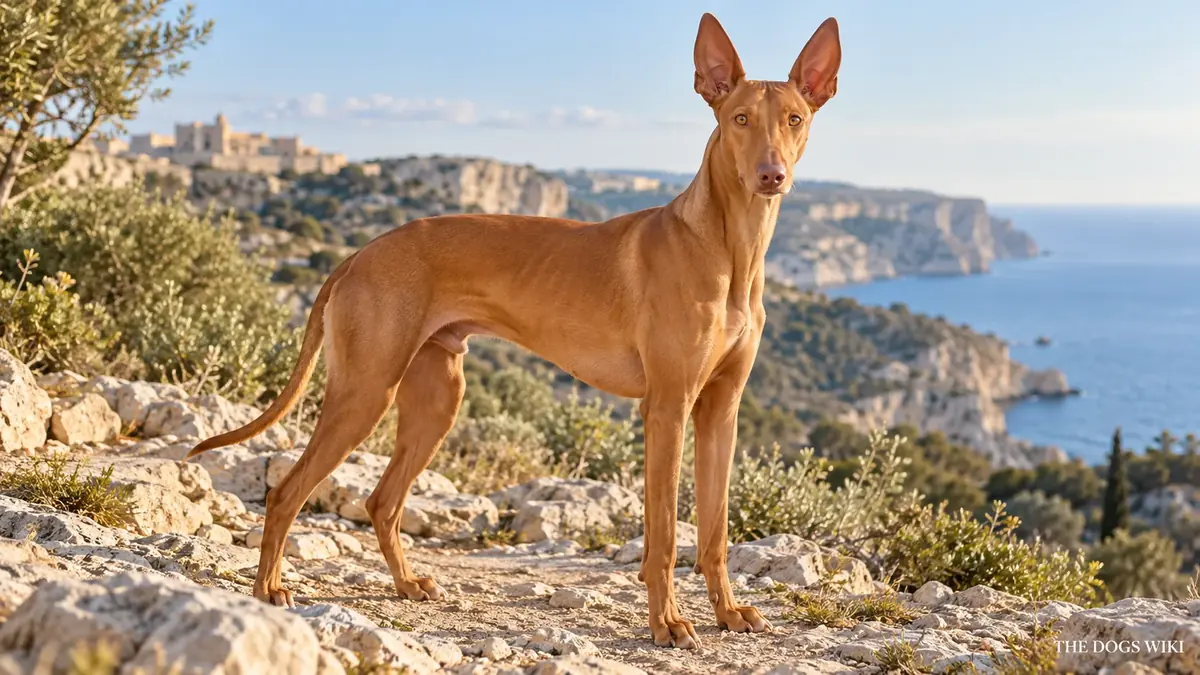
Both are ancient sighthounds with a similar sleek build, but Ibizan Hounds run taller and can be all-white or have large white markings, while Pharaoh Hounds are somewhat smaller with only small white markings.
Can Ibizan Hounds be left alone?
A well-trained, well-exercised Ibizan Hound can be left alone for short periods. The breed generally prefers company, though, and one that’s routinely left alone can become destructive and unhappy.
Related Guides
More guides on The Dogs Wiki cover behavior, health, grooming, training, nutrition, and adoption.
| Guide |
|---|
| Behavior |
| Health |
| Grooming |
| Training |
| Nutrition |
| Adoption |