Home → Dog Breeds → Hound Group → Otterhound
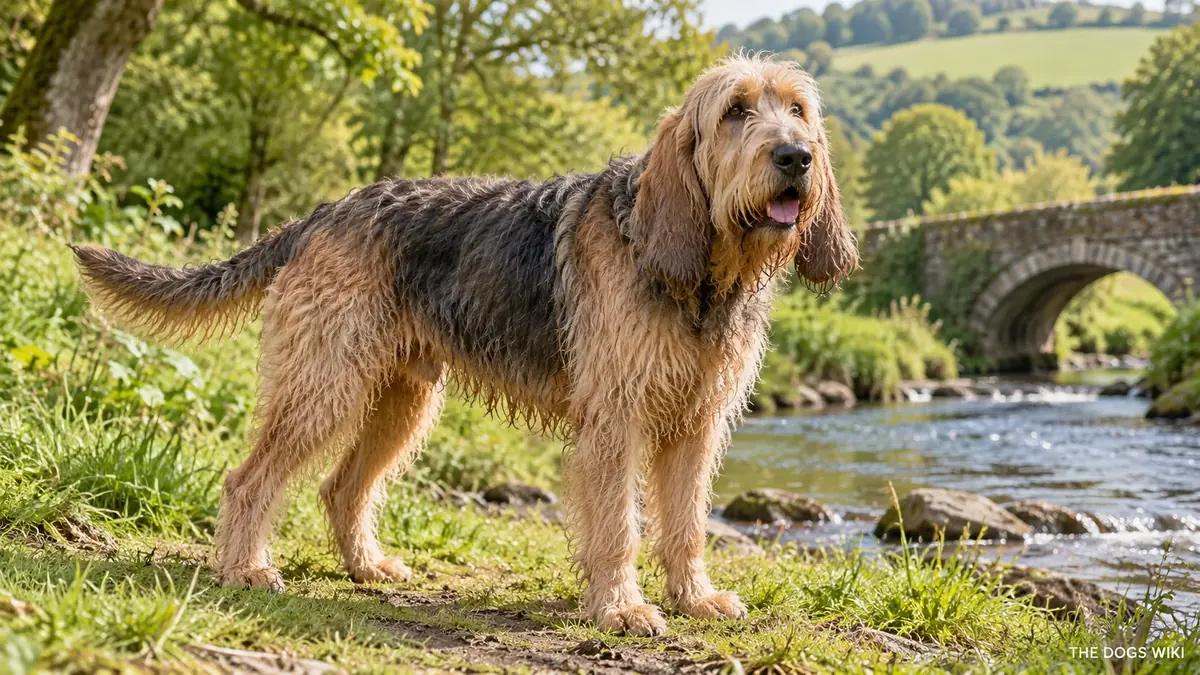
An Otterhound is a large Hound Group breed from medieval England.
It was bred to hunt otters preying on fish stocks, a now-outlawed activity. Today, the Otterhound is one of the rarest dog breeds on Earth. Fewer than a few hundred exist worldwide, rarer than the giant panda. This guide covers where the breed originated, its temperament, how big Otterhounds get, how long they live, the health problems they are prone to, grooming, how much exercise they need, how easy they are to train, what to feed them, the pros and cons of owning one, and what else people ask.
What Is an Otterhound and Where Did the Breed Originate?
An Otterhound belongs to the AKC’s Hound Group. Early types appeared in England as far back as the 12th century. The breed likely descends from the extinct Southern Hound, the Bloodhound, and rough-coated French breeds. Otterhounds arrived in America in 1900. The AKC formally recognized the breed in 1991. Fewer than 10 litters are born worldwide in a typical year.
The American Kennel Club defines the breed in its “Official Standard of the Otterhound”, approved October 10, 1995, which sets out the size, coat, and temperament an Otterhound should have. As of September 2026, the AKC ranks the Otterhound 196th of 210 breeds in popularity.
What Is an Otterhound’s Temperament Like?
An Otterhound’s temperament is affectionate, boisterous, and genuinely cheerful. The breed makes an excellent family dog, good with children and other pets. Its size and enthusiasm mean it can accidentally knock over small children during play, so training matters. Otterhounds are scent-driven and may wander off if an interesting trail catches their nose.
How Big Do Otterhounds Get?
Otterhounds are a large breed with a shaggy, waterproof double coat and distinctive webbed feet built for swimming. The coat can run two to six inches long and comes in many colors and patterns.
What Is the Average Otterhound Height and Weight?
| Measure | American Kennel Club figure |
|---|---|
| Height | 27 inches (male), 24 inches (female) |
| Weight | 115 pounds (male), 80 pounds (female) |
| Life expectancy | 10-13 years |
Figures are from the American Kennel Club Otterhound breed profile, retrieved September 2026.
How Long Do Otterhounds Live?
Otterhounds live 10 to 13 years. The Otterhound Club of America notes roughly one in four dogs lives past age 12. Regular veterinary care supports a full lifespan for this healthy breed.
What Health Problems Are Otterhounds Prone To?
Otterhounds are documented as being at higher risk for the following conditions.
- Bloat, or gastric dilatation-volvulus (GDV). A life-threatening emergency in deep-chested breeds. It needs immediate veterinary care.
- Hip dysplasia. A joint condition common in large breeds, screened for with x-rays.
- Elbow dysplasia. A joint condition affecting the front limbs.
- Glanzmann thrombasthenia. A rare inherited platelet disorder affecting blood clotting.
- Ear infections. A genuine concern given the breed’s floppy ears and love of water.
How Do You Groom an Otterhound?
Otterhounds have a shaggy, oily double coat that needs brushing twice weekly to prevent matting. The beard needs cleaning after every meal to prevent odor. The breed doesn’t need professional grooming, just regular home care.
How Much Exercise Does an Otterhound Need?
An Otterhound needs a long daily walk or run. The breed loves swimming and does well in dog sports like agility, tracking, and rally. Otterhounds should stay with their family when home, not left alone outside for long stretches.
Are Otterhounds Easy to Train?
Otterhounds are intelligent but genuinely stubborn, driven more by their nose than by a desire to please. Valuable treats and consistent training work best. Early socialization matters given the breed’s size and boisterous energy.
What Should You Feed an Otterhound?
An Otterhound does well on a formula suited to its age and activity level. Because the breed carries a bloat risk, smaller, more frequent meals are a commonly recommended precaution.
What Are the Pros and Cons of Owning an Otterhound?
Here are the main advantages of owning an Otterhound.
- Affectionate, boisterous, genuinely cheerful temperament
- Excellent with children and other pets
- Loves swimming and outdoor activity
- Calm by nature, not lazy
Here are the main drawbacks of owning an Otterhound.
- Unusually rare, genuinely hard to find a puppy
- Documented risk of bloat, requiring careful feeding practices
- Stubborn, scent-driven, and moderately difficult to train
- Large size means training matters early to prevent knocking people over
Otterhound rescue organizations occasionally place adult dogs, worth a look for anyone drawn to this breed’s cheerful temperament but a breeder search isn’t realistic given its rarity.
What Else Do People Ask About the Otterhound?
The questions below cover how much an Otterhound costs, whether Otterhounds are good family dogs, why the Otterhound is so rare, and whether Otterhounds like to swim.
How much does an Otterhound cost?
Otterhound prices vary widely given the breed’s extreme rarity. A puppy from one of the few active breeders typically costs more than average, and waitlists are common.
Are Otterhounds good family dogs?
Yes. Otterhounds are affectionate and good with kids and other pets. Their large size and boisterous nature mean training matters to prevent accidental knockdowns during play.
Why is the Otterhound so rare?
Otter hunting became illegal in England in the 1970s, removing the breed’s original job almost overnight. The population never recovered, and fewer than 10 litters are born worldwide each year today.
Do Otterhounds like to swim?
Yes, genuinely. The breed has webbed feet and a waterproof coat built specifically for swimming, reflecting its history hunting otters in rivers and streams.
Related Guides
More guides on The Dogs Wiki cover behavior, health, grooming, training, nutrition, and adoption.
| Guide |
|---|
| Behavior |
| Health |
| Grooming |
| Training |
| Nutrition |
| Adoption |