Home → Dog Breeds → Non-Sporting Group → Chow Chow
A Chow Chow is a medium to large Non-Sporting Group breed and one of the oldest dog breeds in existence, an all-purpose working dog of ancient China used historically for hunting, herding, pulling, and guarding.
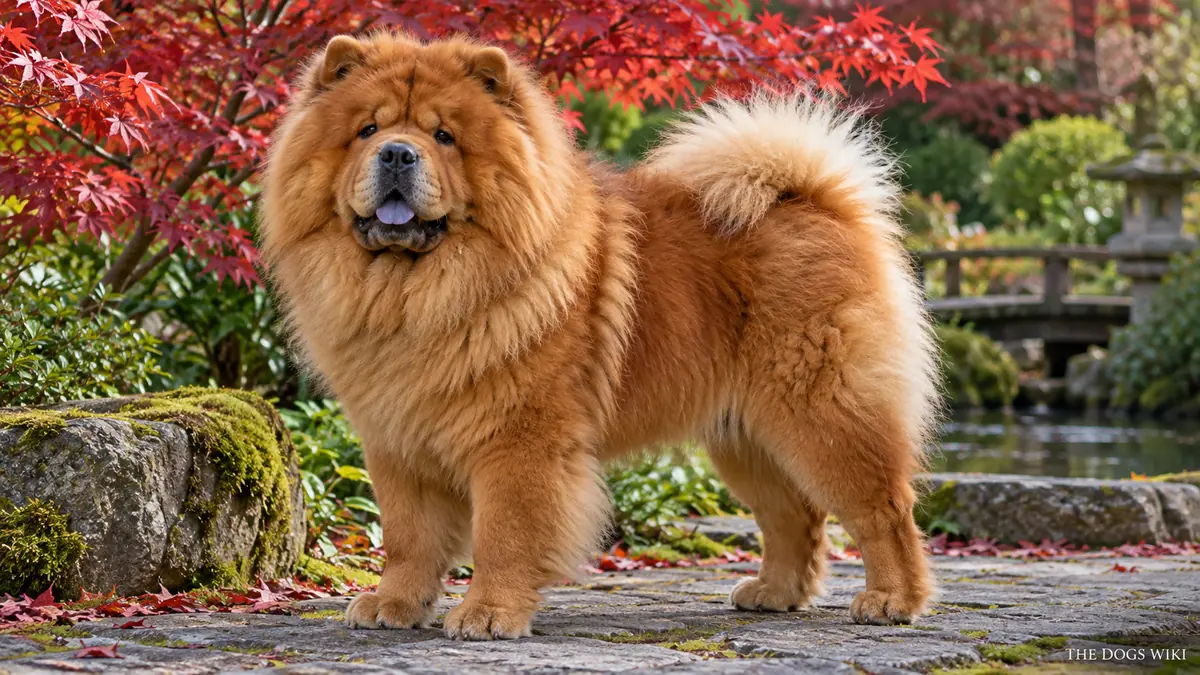
Instantly recognizable by a lion-like mane and a rare blue-black tongue shared only with the Chinese Shar-Pei, the Chow Chow carries an air of dignified, almost aristocratic reserve that sets it apart from more openly affectionate breeds. This guide covers where the breed originated, its temperament, how big Chow Chows get, how long they live, the health problems they are prone to, grooming, how much exercise they need, how easy they are to train, what to feed them, the pros and cons of owning one, and what else people ask.
What Is a Chow Chow and Where Did the Breed Originate?
A Chow Chow belongs to the American Kennel Club’s Non-Sporting Group. Genetic testing has confirmed the long-held belief that the Chow Chow is one of the oldest dog breeds in existence, developed as an all-purpose working dog in ancient China. The breed’s name is believed to get from a term originally meaning “Oriental knick-knack,” reflecting how the dogs were once catalogued among imported curiosities when first brought to England in the late 1800s. Queen Victoria helped popularize the breed in England, and the AKC recognized the Chow Chow in 1903, though it didn’t gain real traction in the United States until the 1980s.
The American Kennel Club defines the breed in its “Official Standard of the Chow Chow”, approved May 11, 2020, which sets out the size, coat, and temperament a Chow Chow should have. As of September 2026, the AKC ranks the Chow Chow 88th of 210 breeds in popularity.
What Is a Chow Chow’s Temperament Like?
A Chow Chow’s temperament is independent, dignified, and genuinely reserved, often compared to a cat for its self-possessed, owner-favoring nature. Chow Chows are loyal and protective of their family but aloof with strangers and other animals, needing real, consistent early socialization to become more welcoming. Despite an intimidating, scowling resting expression, a well-bred Chow Chow shouldn’t be aggressive or shy, generally keeping to itself and avoiding trouble rather than seeking it out.
How Big Do Chow Chows Get?
Chow Chows are a large, sturdy, powerfully built breed with thick bones, strong muscles, and a distinctive lion-like mane framing a broad, dignified head. The breed comes in both rough and smooth double-coat varieties.
What Is the Average Chow Chow Height and Weight?
| Measure | American Kennel Club figure |
|---|---|
| Height | 17-20 inches |
| Weight | 45-70 pounds |
| Life expectancy | 8-12 years |
Figures are from the American Kennel Club Chow Chow breed profile, retrieved September 2026.
How Long Do Chow Chows Live?
Chow Chows live 8 to 12 years, with some individuals reaching up to 15 with excellent care. Given the breed’s documented joint and eye risks, regular veterinary care matters considerably for supporting a full, comfortable lifespan.
What Health Problems Are Chow Chows Prone To?
Chow Chows are documented as being at higher risk for the following conditions.
- Hip dysplasia. A condition where the hip joint doesn’t develop properly, potentially causing reluctance to climb stairs, jump, or exercise for extended periods.
- Elbow dysplasia. Typically seen in younger dogs when the elbow joint doesn’t develop correctly, potentially causing arthritis as the dog ages.
- Entropion. A hereditary condition in which the eyelid rolls inward, causing chronic irritation and requiring surgical correction in more severe cases.
- Patellar luxation and cataracts. A kneecap condition and an eye condition, both recognized concerns in the breed.
- Heatstroke. Not a genetic condition, but a genuine risk given the breed’s thick, heat-trapping double coat, which means exercise should be limited and air-conditioned indoor space provided in hot weather.
How Do You Groom a Chow Chow?
Chow Chows have a thick double coat, in either rough or smooth varieties, that requires dedicated, regular brushing, at least once a week and considerably more during the breed’s heavier spring and fall shedding. The breed is not considered hypoallergenic given the volume of hair it sheds, and regular bathing depends on the individual dog’s activity level and environment.
How Much Exercise Does a Chow Chow Need?
A Chow Chow needs low to moderate exercise, generally brief daily walks rather than intense activity, reflecting the breed’s naturally calm, independent temperament. Given the breed’s thick, heat-trapping coat, exercise should be limited in hot weather, and a Chow Chow is genuinely comfortable spending time alone without constant attention, unlike more clingy companion breeds.
Are Chow Chows Easy to Train?
Chow Chows are highly intelligent but genuinely independent-minded, making training a real challenge compared to more naturally compliant breeds. Positive reinforcement with real patience works best, and the breed’s stubborn streak means training isn’t a good fit for first-time dog owners looking for a quick, easy learning curve.
What Should You Feed a Chow Chow?
Chow Chows do well on a formula suited to their age and moderate activity level, and because the breed isn’t high-energy, portion control matters for maintaining a healthy weight throughout life. A veterinarian can help set an appropriate feeding plan for an individual dog.
What Are the Pros and Cons of Owning a Chow Chow?
Here are the main advantages of owning a Chow Chow.
- Dignified, loyal, genuinely independent temperament
- Comfortable being alone, doesn’t require constant attention
- Low to moderate exercise needs
- Naturally protective without being needlessly aggressive when well socialized
Here are the main drawbacks of owning a Chow Chow.
- Genuinely reserved and aloof with strangers, needs early socialization
- High grooming commitment for the thick double coat
- Moderately difficult to train, not ideal for first-time owners
- Heat-sensitive given thick, heat-trapping coat
Chow Chow rescue organizations place adult dogs regularly, worth a look for anyone drawn to the breed’s dignified temperament but not set on a breeder search.
What Else Do People Ask About the Chow Chow?
The questions below cover how much a Chow Chow costs, whether Chow Chows are good family dogs, why Chow Chows have blue-black tongues, and whether Chow Chows are aggressive.
How much does a Chow Chow cost?
Chow Chow prices vary by region, bloodline, and breeder reputation, and a puppy from a breeder who screens for hip, elbow, and eye health typically costs more than one that doesn’t. Adopting an adult Chow Chow through a rescue is usually a lower-cost alternative.
Are Chow Chows good family dogs?
Chow Chows can be good family dogs for experienced owners, in particular in homes with older children, though the breed’s reserved, independent nature means it isn’t as openly affectionate or playful as many other family-oriented breeds. Consistent early socialization matters more with this breed than with more naturally friendly ones.
Why do Chow Chows have blue-black tongues?
Chow Chows have a naturally blue-black tongue, a rare trait shared with only one other breed, the Chinese Shar-Pei, and it’s simply a genetic characteristic of the breed rather than a sign of any health issue. This unique feature makes the breed instantly recognizable among dog enthusiasts.
Are Chow Chows aggressive?
No, despite a scowling, intimidating resting expression, a well-bred Chow Chow shouldn’t be aggressive, though the breed is genuinely reserved and cautious around strangers and unfamiliar animals without proper early socialization. The breed generally prefers to keep to itself rather than seek out confrontation.
Related Guides
More guides on The Dogs Wiki cover behavior, health, grooming, training, nutrition, and adoption.
| Guide |
|---|
| Behavior |
| Health |
| Grooming |
| Training |
| Nutrition |
| Adoption |