Home → Dog Breeds → Non-Sporting Group → Schipperke
A Schipperke is a small Non-Sporting Group breed from Belgium, historically known as a “little captain” dog that guarded barges and shops along the canals and streets of Flanders.
The breed’s name is widely believed to derive from the Flemish word for “little boatman” or “little captain,” a reference to its working history as a vigilant, all-black watchdog on Belgian canal boats. This guide covers where the breed originated, its temperament, how big Schipperkes get, how long they live, the health problems they are prone to, grooming, how much exercise they need, how easy they are to train, what to feed them, the pros and cons of owning one, and what else people ask.
What Is a Schipperke and Where Did the Breed Originate?
A Schipperke belongs to the American Kennel Club’s Non-Sporting Group. The breed developed in the Flemish region of Belgium, likely descending from larger black sheepdog-type breeds and bred down over generations into a compact watchdog and vermin hunter suited to working aboard canal barges and guarding small shops. Schipperkes became fashionable companions among Belgian royalty in the late 19th century after Queen Marie Henriette acquired one, a moment that helped establish the breed’s modern standard.
The American Kennel Club defines the breed in its own official breed standard, which sets out the size, coat, and temperament a Schipperke should have.
What Is a Schipperke’s Temperament Like?
A Schipperke’s temperament is alert, curious, and genuinely confident for its small size, a direct legacy of centuries spent as an independent working watchdog rather than a purely decorative companion. Schipperkes bond closely with their family and make effective watchdogs, quick to alert their owners to anything unfamiliar. The breed retains real vermin-hunting instincts and can be assertive toward small animals, including cats, without early socialization.
How Big Do Schipperkes Get?
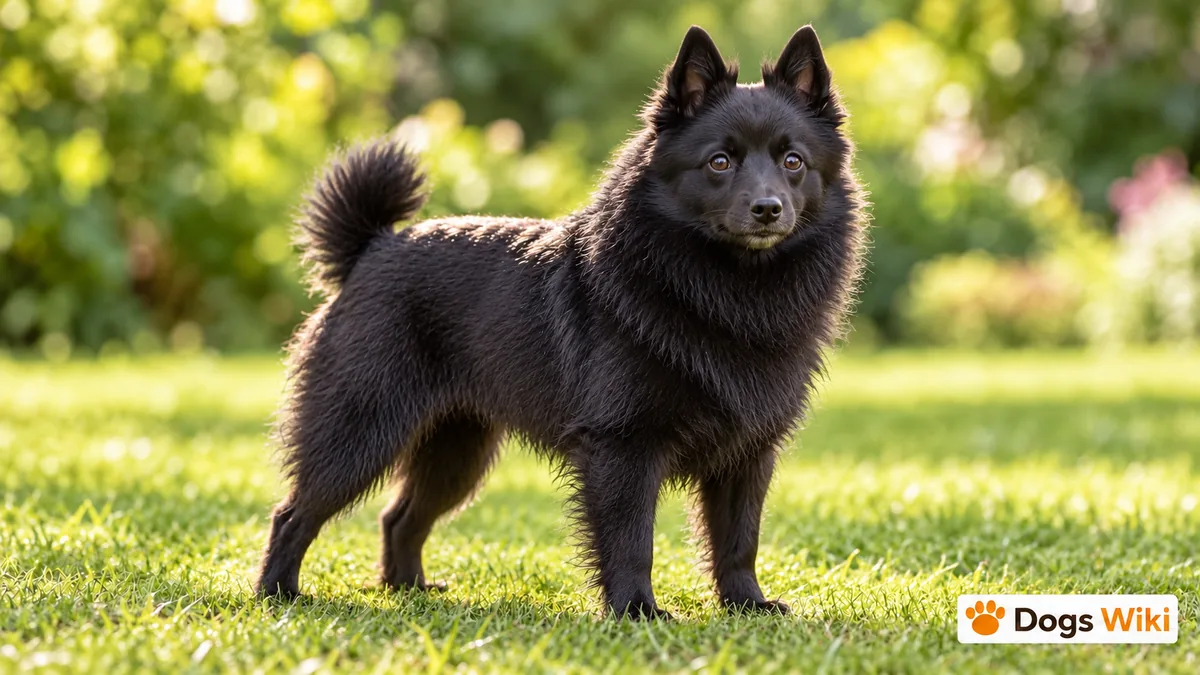
Schipperkes are a small, fox-faced breed with a dense black double coat, pointed ears, and a distinctive ruff around the neck and chest.
What Is the Average Schipperke Height and Weight?
| Measure | Typical breed standard figure |
|---|---|
| Height | 10-13 inches (male and female) |
| Weight | 10-16 pounds |
| Life expectancy | 12-14 years |
How Long Do Schipperkes Live?
Schipperkes live 12 to 14 years. Regular veterinary care, including the joint and eye screening covered below, supports a full, healthy lifespan for this breed.
What Health Problems Are Schipperkes Prone To?
Schipperkes are documented as being at higher risk for the following conditions.
- Patellar luxation. A kneecap condition common in small breeds, present in the Schipperke.
- Legg-Calve-Perthes disease. A degenerative hip condition documented in small breeds.
- Progressive retinal atrophy. An inherited eye condition that can affect vision over time; responsible breeders screen for it.
- Mucopolysaccharidosis (MPS IIIB). A rare inherited metabolic disorder documented in the breed, which genetic testing can screen for in breeding stock.
- Hypothyroidism. An underactive thyroid condition managed with medication once diagnosed.
How Do You Groom a Schipperke?
A Schipperke’s dense double coat needs regular brushing to manage shedding, which is moderate most of the year with heavier seasonal coat blows. The breed’s coat doesn’t require trimming and is considered relatively low-maintenance compared to longer-coated breeds, though the dense ruff around the neck benefits from extra attention.
How Much Exercise Does a Schipperke Need?
A Schipperke needs 30 to 60 minutes of daily exercise plus real mental stimulation, since the breed’s working watchdog heritage left it with genuine alertness and curiosity that need an outlet. A Schipperke that’s bored or under-exercised commonly channels that energy into digging, escaping, or excessive barking, so secure containment matters for this naturally curious breed.
Are Schipperkes Easy to Train?
Schipperkes are moderately easy to train, combining genuine intelligence with an independent streak inherited from centuries of working with minimal close supervision. Consistent, positive reinforcement training works well, and early socialization helps manage the breed’s natural wariness toward strangers and assertiveness with smaller animals.
What Should You Feed a Schipperke?
A Schipperke does well on a balanced, high-quality formula suited to its size and activity level, with portions based on the individual dog’s actual weight and body condition. A veterinarian can help set an appropriate feeding plan for this generally healthy small breed.
What Are the Pros and Cons of Owning a Schipperke?
Here are the main advantages of owning a Schipperke.
- Alert, confident, genuinely effective watchdog
- Relatively low-maintenance coat for its dense double-coat type
- Compact size suited to a range of living situations
- Long average lifespan for the breed’s size
Here are the main drawbacks of owning a Schipperke.
- Can be assertive toward small animals, including cats
- Independent streak that’s moderately challenging to train
- Naturally vocal and prone to barking if under-stimulated
- Needs secure containment given its curious, escape-prone nature
Schipperke rescue organizations place adult dogs regularly, worth a look for anyone drawn to this breed’s confident, watchful personality but not set on a breeder search.
What Else Do People Ask About the Schipperke?
The questions below cover how much a Schipperke costs, whether the breed is good with cats, what the name Schipperke means, and whether Schipperkes bark a lot.
How much does a Schipperke cost?
Schipperke prices vary by breeder and region, and a puppy from a breeder who performs hip, eye, and genetic testing on the parents typically costs more than one from a breeder who skips that testing. Adopting an adult Schipperke through a rescue is usually a lower-cost alternative.
Is the Schipperke good with cats?
Schipperkes can be good with cats they’re raised alongside from puppyhood, though their retained vermin-hunting instincts mean introductions to unfamiliar cats should happen carefully and under supervision. Early socialization significantly improves how well a Schipperke tolerates other small animals.
What does the name Schipperke mean?
The name Schipperke is widely believed to translate from Flemish as “little boatman” or “little captain,” a reference to the breed’s working history guarding Belgian canal barges. Some historians dispute this origin, but it remains the most commonly cited explanation for the breed’s name.
Do Schipperkes bark a lot?
Yes, Schipperkes can bark more than some other small breeds, a trait inherited directly from their history as an alert watchdog bred to notify owners of anything unfamiliar. Consistent training from puppyhood helps manage excessive barking in most individuals.
Related Guides
More guides on The Dogs Wiki cover behavior, health, grooming, training, nutrition, and adoption.
| Guide |
|---|
| Behavior |
| Health |
| Grooming |
| Training |
| Nutrition |
| Adoption |