
Home → Dog Breeds → Non-Sporting Group → Norwegian Lundehund
A Norwegian Lundehund is a small Non-Sporting Group breed from Norway’s remote Lofoten Islands, bred specifically to hunt puffins along steep sea cliffs and famous for a set of physical traits found in no other dog breed.
The breed’s name translates to “puffin dog,” a direct reference to its original job climbing narrow cliff ledges and squeezing into tight puffin burrows to retrieve birds and eggs for coastal communities. This guide covers where the breed originated, its temperament, how big Norwegian Lundehunds get, how long they live, the health problems they are prone to, grooming, how much exercise they need, how easy they are to train, what to feed them, the pros and cons of owning one, and what else people ask.
What Is a Norwegian Lundehund and Where Did the Breed Originate?
A Norwegian Lundehund belongs to the American Kennel Club’s Non-Sporting Group. The breed developed in isolation on Norway’s Lofoten Islands, bred over centuries specifically to hunt Atlantic puffins along steep sea cliffs, a job demanding extraordinary flexibility and climbing ability no other breed shares. When puffin hunting declined and canine distemper outbreaks nearly wiped out the breed in the 20th century, the Norwegian Lundehund came close to extinction twice, surviving only through a small number of dedicated Norwegian breeders. The AKC granted the breed full recognition in 2011.
The American Kennel Club defines the breed in its own official breed standard, which sets out the size, coat, and temperament a Norwegian Lundehund should have.
What Makes the Norwegian Lundehund Physically Unique?
The Norwegian Lundehund is best known for a set of physical adaptations found in no other dog breed, all evolved specifically for climbing narrow, uneven sea cliffs. The breed has at least six toes on each foot rather than the usual four or five, giving it extra grip on rock. A Norwegian Lundehund can also turn its head 180 degrees along its spine, fold its front legs out to the sides like a human arm, and bend its neck back to touch its spine, all traits that let the breed maneuver through tight puffin burrows and cliff crevices.
What Is a Norwegian Lundehund’s Temperament Like?
A Norwegian Lundehund’s temperament is alert, energetic, and genuinely independent, a direct legacy of working alone on remote cliffs far from a handler’s direct supervision. The breed bonds closely with its family but retains a strong-willed, sometimes mischievous streak that can make training more challenging than with naturally compliant breeds. Norwegian Lundehunds are known for being vocal and are skilled escape artists, capable of climbing and squeezing through gaps that would stop most other dogs.
How Big Do Norwegian Lundehunds Get?
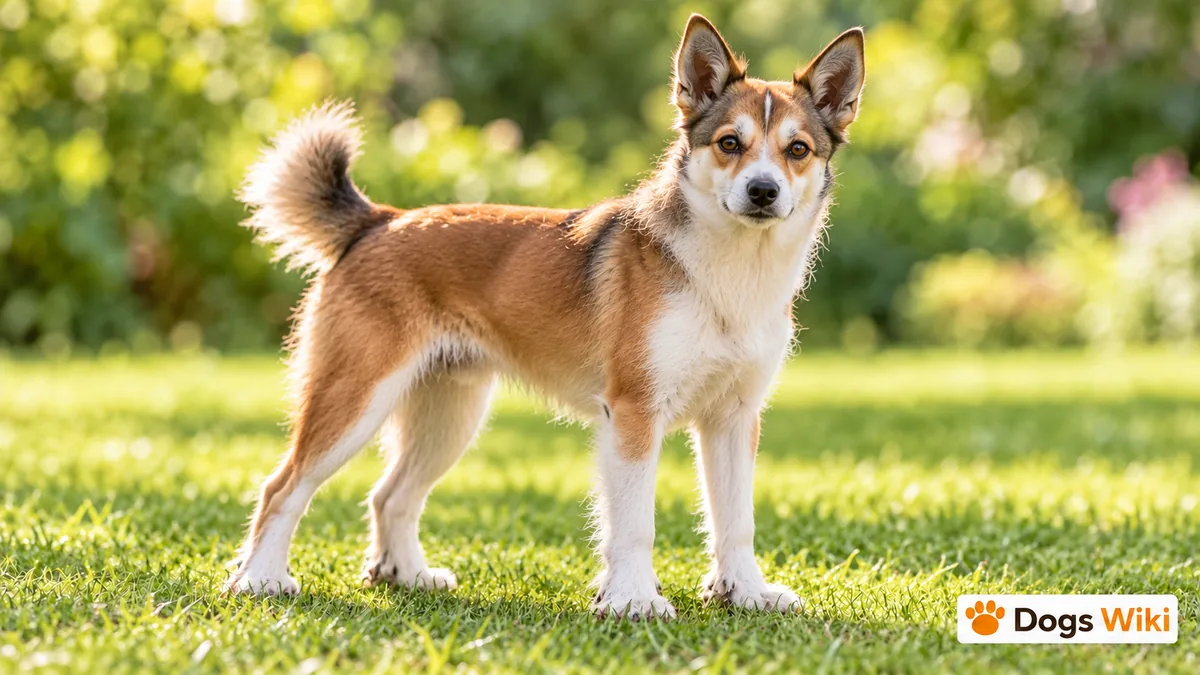
Norwegian Lundehunds are a small, agile breed with a dense double coat and the breed’s signature extra toes clearly visible on each foot.
What Is the Average Norwegian Lundehund Height and Weight?
| Measure | Typical breed standard figure |
|---|---|
| Height | 12-15 inches (male and female) |
| Weight | 13-20 pounds |
| Life expectancy | 12-15 years |
How Long Do Norwegian Lundehunds Live?
Norwegian Lundehunds live 12 to 15 years. Regular veterinary care, including the digestive health monitoring covered below, supports a full lifespan for this breed.
What Health Problems Are Norwegian Lundehunds Prone To?
Norwegian Lundehunds are documented as being at higher risk for the following conditions.
- Lundehund syndrome. A cluster of gastrointestinal disorders unique to the breed, including protein-losing enteropathy and intestinal lymphangiectasia, which can cause chronic digestive problems and require lifelong dietary management.
- Patellar luxation. A kneecap condition common in small breeds, present in the Norwegian Lundehund.
- Legg-Calve-Perthes disease. A degenerative hip condition documented in small breeds.
- Low genetic diversity. A consequence of the breed’s two near-extinctions, which breeders actively manage through careful, deliberately outcrossed pairings.
How Do You Groom a Norwegian Lundehund?
A Norwegian Lundehund’s dense double coat needs regular brushing to manage shedding, which is moderate year-round with heavier seasonal coat blows. The breed’s unusual foot structure doesn’t require special grooming beyond standard nail trims, though owners should check between the extra toes during routine care.
How Much Exercise Does a Norwegian Lundehund Need?
A Norwegian Lundehund needs 30 to 60 minutes of daily exercise, and given the breed’s documented climbing and escaping ability, secure containment matters more for this breed than for almost any other. A Norwegian Lundehund that’s bored or under-exercised can become destructive or escape-prone, channeling its cliff-climbing instincts into scaling fences or furniture at home.
Are Norwegian Lundehunds Easy to Train?
Norwegian Lundehunds can be moderately challenging to train, inheriting a genuinely independent streak from centuries of working alone without close handler direction. Consistent, positive reinforcement training produces the best results, and early socialization helps manage the breed’s strong-willed nature.
What Should You Feed a Norwegian Lundehund?
A Norwegian Lundehund needs careful attention to diet given the breed’s documented risk of Lundehund syndrome, and many owners work with a veterinarian to feed small, frequent meals rather than large portions to reduce digestive strain. A veterinarian can help design a feeding plan suited to an individual dog’s digestive health.
What Are the Pros and Cons of Owning a Norwegian Lundehund?
Here are the main advantages of owning a Norwegian Lundehund.
- Genuinely unique physical traits and a fascinating working history
- Alert, energetic, and engaging companion
- Compact size suited to a range of living situations
- A rare opportunity to own a breed found almost nowhere else
Here are the main drawbacks of owning a Norwegian Lundehund.
- Documented risk of Lundehund syndrome requiring lifelong dietary management
- Independent, sometimes mischievous temperament that’s moderately challenging to train
- Skilled escape artist that needs secure containment
- Low genetic diversity within the breed overall
Norwegian Lundehund rescue organizations place adult dogs occasionally, though the breed’s rarity makes availability limited, worth a look for anyone drawn to this breed’s unique history and traits but not set on a breeder search.
What Else Do People Ask About the Norwegian Lundehund?
The questions below cover how much a Norwegian Lundehund costs, what Lundehund syndrome is, why the breed almost went extinct, and whether Norwegian Lundehunds are good family dogs.
How much does a Norwegian Lundehund cost?
Norwegian Lundehund prices run higher than many breeds given the breed’s rarity and the careful, deliberately managed breeding programs working to preserve genetic diversity. Adopting an adult Norwegian Lundehund through a rescue is rare given the breed’s small overall population, though breed-specific rescues do occasionally place dogs.
What is Lundehund syndrome?
Lundehund syndrome is a cluster of gastrointestinal disorders specific to the breed, including protein-losing enteropathy and intestinal lymphangiectasia, which interfere with the body’s ability to absorb nutrients properly. Lifelong dietary management and regular veterinary monitoring help control symptoms in affected dogs.
Why did the Norwegian Lundehund almost go extinct?
The Norwegian Lundehund nearly went extinct twice, once when puffin hunting declined and once during a canine distemper outbreak in the 1960s that killed most of the breed’s remaining population. Dedicated Norwegian breeders rebuilt the breed from a small number of survivors both times, though the population remains genetically limited as a result.
Are Norwegian Lundehunds good family dogs?
Norwegian Lundehunds can be good family dogs for owners prepared for their independent streak and specific dietary needs, bonding closely with their family despite a strong-willed personality. The breed’s energy and climbing ability mean households with secure fencing and an understanding of Lundehund syndrome are the best fit.
Related Guides
More guides on The Dogs Wiki cover behavior, health, grooming, training, nutrition, and adoption.
| Guide |
|---|
| Behavior |
| Health |
| Grooming |
| Training |
| Nutrition |
| Adoption |