
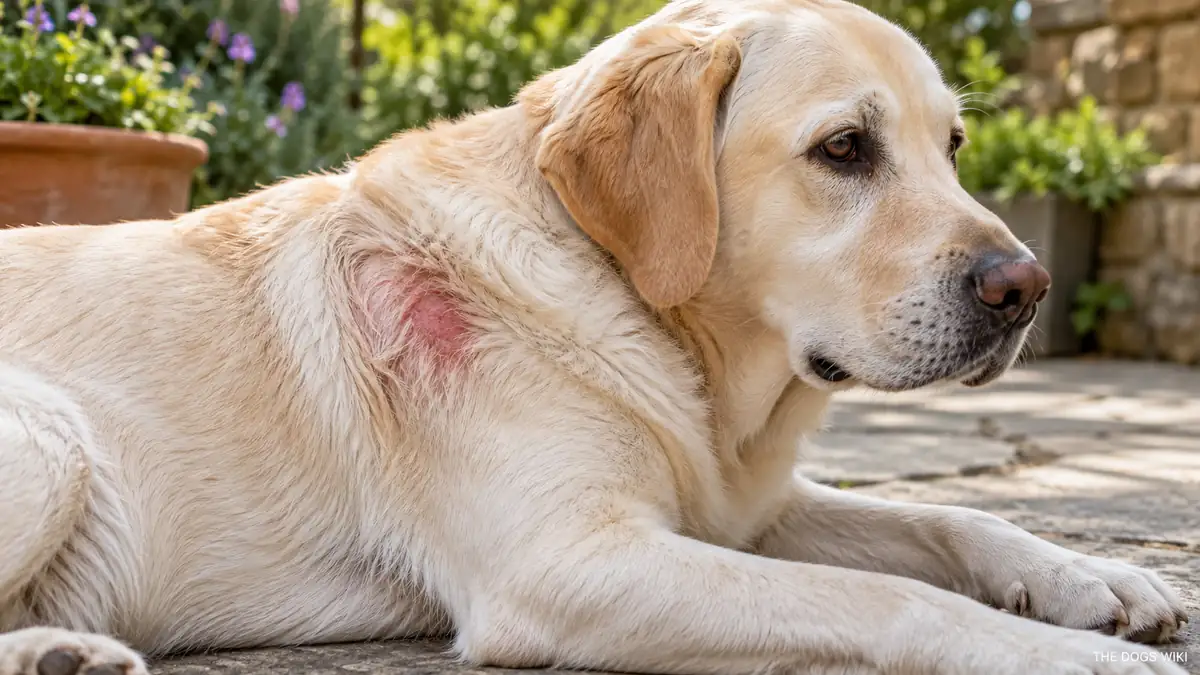
Hot spots, medically called acute moist dermatitis, are red, raw, rapidly spreading patches of irritated skin that develop when a dog’s self-trauma from licking, scratching, or chewing creates a cycle of worsening inflammation.
The speed at which a hot spot can develop is one of its most distinctive features, with a small irritation sometimes growing into a significant raw patch within just a few hours. This guide covers what causes hot spots, their symptoms, how they’re diagnosed, how they’re treated, whether they can be prevented, and when to see a veterinarian.
This guide covers what hot spots are, what causes them in dogs, their symptoms, how they’re diagnosed, how they’re treated, whether they can be prevented, when to see a vet, and what else people ask.
What Are Hot Spots on Dogs?
A hot spot begins with some form of underlying skin irritation, whether from an allergy, insect bite, or trapped moisture, that prompts a dog to lick, scratch, or chew at the area. This self-trauma breaks the skin’s surface and introduces bacteria, and the resulting infection drives even more itching and licking, creating a rapidly worsening cycle. Dogs with thick or dense coats, including Golden Retrievers and Labrador Retrievers, are especially prone to hot spots since moisture gets trapped against the skin more easily.
What Causes Hot Spots on Dogs?
Underlying allergies, flea bites, ear infections, and anal gland irritation are among the most common triggers that prompt the initial scratching or licking behind a hot spot. Trapped moisture from swimming, bathing, or humid weather, especially in a dog with a dense or heavy coat, creates ideal conditions for the bacterial overgrowth that defines a hot spot. Anxiety or boredom can also drive excessive licking at a single spot, triggering a hot spot even without an underlying skin irritation.
What Are the Symptoms of Hot Spots on Dogs?
A red, moist, rapidly enlarging patch of irritated skin, often with hair loss at the center and a distinct unpleasant odor, is the hallmark sign of a hot spot. The area is typically painful to the touch despite the dog’s continued urge to lick or scratch it, and a clear or yellowish discharge sometimes develops as the surface infection progresses. Hot spots can appear almost anywhere on the body but are especially common on the head, hips, and legs.
How Are Hot Spots Diagnosed on Dogs?
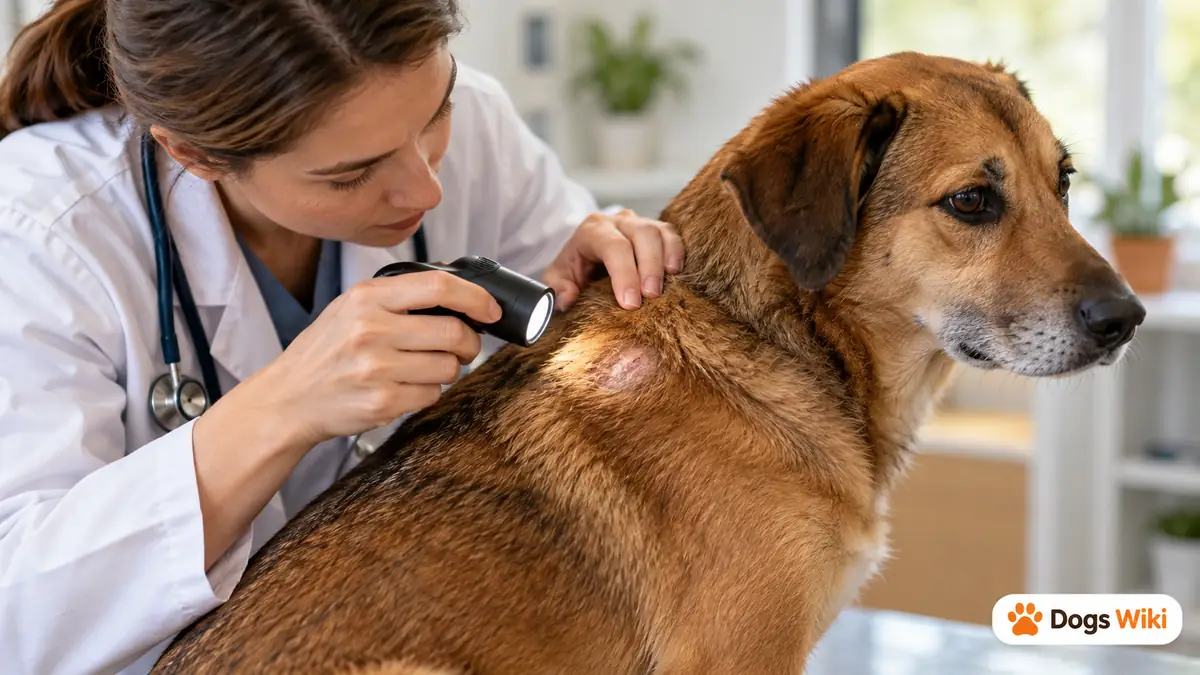
A veterinarian typically diagnoses a hot spot through visual examination alone, given its characteristic rapid onset and distinctive appearance. Identifying the underlying trigger, whether an allergy, flea infestation, or ear infection, often requires additional investigation, since the hot spot itself is a symptom of that deeper cause rather than a standalone problem. A skin cytology, which examines a sample of surface cells and bacteria under a microscope, sometimes helps confirm the type and severity of the secondary infection.
How Are Hot Spots Treated on Dogs?
Clipping the hair around the hot spot and gently cleaning the area come first, since removing hair that traps moisture and bacteria against the skin helps the area start healing. A veterinarian typically prescribes a topical or oral antibiotic to address the bacterial infection, along with a medication to control the itching that drives the underlying licking and scratching. An Elizabethan collar or similar barrier is often necessary for the first several days to physically prevent a dog from continuing to lick the area while it heals.
Can Hot Spots Be Prevented on Dogs?
Thoroughly drying a dog’s coat after swimming or bathing, particularly in dogs with thick or dense fur, considerably reduces the trapped moisture that contributes to hot spot development. Managing any underlying allergy or flea issue addresses the root triggers that most commonly prompt the initial scratching behind a hot spot. Regular grooming that keeps a dog’s coat free of mats and tangles also helps prevent moisture and bacteria from becoming trapped against the skin.
When Should You See a Vet for Hot Spots on Dogs?
See a veterinarian as soon as a hot spot is noticed, since prompt treatment considerably shortens how long the area takes to heal and prevents it from spreading further. Seek care the same day if the area is rapidly enlarging, clearly painful, or accompanied by a strong odor or discharge, since these signs point toward a significant secondary infection. A dog with recurring hot spots warrants a broader veterinary workup to identify and address whatever underlying allergy or condition keeps triggering new episodes.
What Else Do People Ask About Hot Spots on Dogs?
The questions below cover how quickly hot spots develop, whether they’re contagious, whether certain breeds are more prone to them, and whether home remedies help.
How quickly do hot spots develop on dogs?
Hot spots can develop remarkably fast, sometimes growing from a small irritation to a significant raw patch within a matter of hours. This rapid onset is part of why prompt attention matters so much once a hot spot is first noticed.
Are hot spots contagious between dogs?
No, hot spots themselves aren’t contagious, since they result from an individual dog’s self-trauma and secondary bacterial infection rather than a transmissible organism. An underlying cause like mange or ringworm, when that’s what’s actually responsible for the irritation, could still be contagious even though the hot spot itself isn’t.
Are certain dog breeds more prone to hot spots?
Yes, breeds with thick, dense, or heavy coats, including Golden Retrievers, Labrador Retrievers, and Saint Bernards, are more prone to hot spots since their coats trap moisture against the skin more readily. Regular grooming and thorough drying after water exposure matter especially for these breeds.
Do home remedies help treat hot spots on dogs?
Clipping hair and keeping the area clean and dry can provide some relief, but a hot spot with an established bacterial infection generally needs a veterinarian-prescribed antibiotic and anti-itch treatment to fully resolve. Relying on home remedies alone for more than a day or two often allows the underlying infection to worsen.
Related Guides
More guides on The Dogs Wiki cover general dog health and grooming.
| Guide |
|---|
| Dog Health |

Comments
One response to “Hot Spots on Dogs: Symptoms, Causes, Treatment, and Prevention”
[…] Eyes & EarsEar Infections in DogsParasitesEar Mites in DogsSkin & CoatHot Spots on Dogs […]