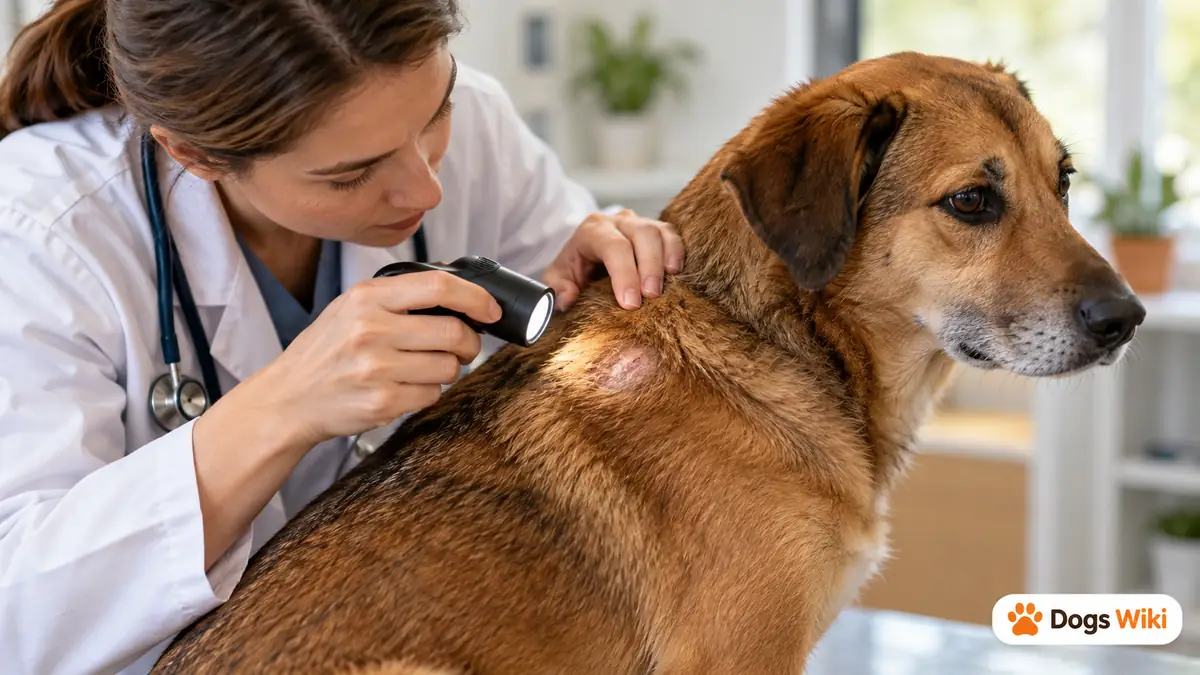
Mange is a skin condition caused by microscopic mites, and it comes in two very different forms: a highly contagious type common in young or immune-compromised dogs, and a non-contagious type tied to a dog’s own immune system.
Knowing which type of mange a dog has shapes everything about treatment and whether other pets in the household face any real risk. This guide covers what causes mange, its symptoms, how it’s diagnosed, how it’s treated, whether it can be prevented, and when to see a veterinarian.
This guide covers what mange is, what causes it in dogs, its symptoms, how it’s diagnosed, how it’s treated, whether it can be prevented, when to see a vet, and what else people ask.
What Is Mange in Dogs?
Mange refers to a skin condition caused by mites living in or on a dog’s skin, and it exists in two distinct forms with very different implications. Sarcoptic mange, caused by a highly contagious mite, spreads easily between dogs and can even affect humans temporarily. Demodectic mange, caused by a mite that’s actually a normal resident of healthy dog skin in small numbers, only becomes a problem when a dog’s immune system, often because it’s very young or otherwise compromised, fails to keep the mite population in check, and this form isn’t considered contagious.
What Causes Mange in Dogs?
Sarcoptic mange spreads through direct contact with an infected dog or a contaminated environment, since the responsible mite survives for a period off its host and can be picked up from bedding or shared spaces. Demodectic mange develops when a dog’s immune system, frequently in puppies with still-developing immunity or adult dogs with an underlying illness suppressing immune function, loses the ability to control the small population of mites that normally live harmlessly on the skin. A genetic predisposition toward weaker immune control of Demodex mites is also recognized in certain lines and breeds.
What Are the Symptoms of Mange in Dogs?
Intense itching, hair loss, and red, inflamed skin are common to both forms of mange, though sarcoptic mange tends to cause more severe itching relative to the visible skin changes. Thickened, crusty skin and a distinct odor often develop as either form progresses without treatment. Demodectic mange can appear as small, localized patches, especially in young puppies, or spread across much of the body in more severe generalized cases, which carry a more serious outlook.
How Is Mange Diagnosed in Dogs?
A veterinarian diagnoses mange through a skin scraping examined under a microscope, which identifies the specific mite responsible and distinguishes between the two forms. Because sarcoptic mites can be difficult to find even when present, a veterinarian sometimes bases a presumptive diagnosis on the pattern of itching and response to treatment rather than requiring a positive scraping. Additional bloodwork may be recommended for a dog with generalized demodectic mange, since this form can point toward an underlying immune-suppressing condition that also needs attention.
How Is Mange Treated in Dogs?
A course of mite-killing medication, often given over several weeks depending on the specific product and mange type, is the core treatment for both forms. Secondary bacterial infections, common in more advanced cases where the skin barrier has broken down, typically need their own course of antibiotics alongside the mite treatment. Generalized demodectic mange, particularly in adult dogs, sometimes requires addressing an underlying illness that’s suppressing the immune system in order to achieve lasting control.
Can Mange Be Prevented in Dogs?
Sarcoptic mange can largely be prevented by avoiding contact with infected dogs and contaminated environments, and some parasite preventives offer additional protection against this specific mite. Demodectic mange isn’t considered preventable in the same sense, since it stems from an individual dog’s own immune function rather than external exposure. Maintaining a dog’s overall health and promptly addressing any illness that could suppress immune function helps reduce the risk of demodectic mange taking hold.
When Should You See a Vet for Mange in Dogs?
See a veterinarian if a dog develops persistent itching combined with hair loss or visibly inflamed skin, since an accurate diagnosis determines which mange type, if any, is responsible and what treatment is needed. Seek care promptly if a puppy shows localized hair loss patches, since while many resolve on their own, a veterinarian can confirm whether treatment is needed and monitor for progression. Generalized mange covering much of the body warrants prompt veterinary attention given its more serious outlook and the possibility of an underlying contributing illness.
What Else Do People Ask About Mange in Dogs?
The questions below cover whether mange is contagious to humans, whether it’s curable, whether puppies outgrow it, and how long treatment typically takes.
Is mange contagious to humans?
Sarcoptic mange can cause temporary itching in humans who come into contact with an infected dog, though the mite can’t complete its full life cycle on human skin and the irritation typically resolves once contact ends and the dog is treated. Demodectic mange poses no risk to humans at all, since it involves a mite specific to dogs.
Is mange curable in dogs?
Yes, both forms of mange are generally treatable, with sarcoptic mange typically resolving fully with appropriate medication and demodectic mange often resolving in puppies as their immune system matures. Adult-onset generalized demodectic mange can be more challenging to fully resolve, particularly if an underlying illness is contributing.
Do puppies outgrow demodectic mange?
Yes, many puppies with localized demodectic mange outgrow it naturally as their immune system matures, often without needing extensive treatment beyond monitoring. A veterinarian should still evaluate any puppy with hair loss patches to confirm the diagnosis and watch for signs of progression to a more generalized case.
How long does mange treatment take in dogs?
Treatment duration varies by mange type and severity, with some cases resolving within a few weeks and more severe or generalized cases sometimes requiring several months of consistent treatment. A veterinarian can give a more specific timeline based on an individual dog’s diagnosis and response to treatment.
Related Guides
More guides on The Dogs Wiki cover general dog health and puppy care.
| Guide |
|---|
| Dog Health |
| Puppies |