
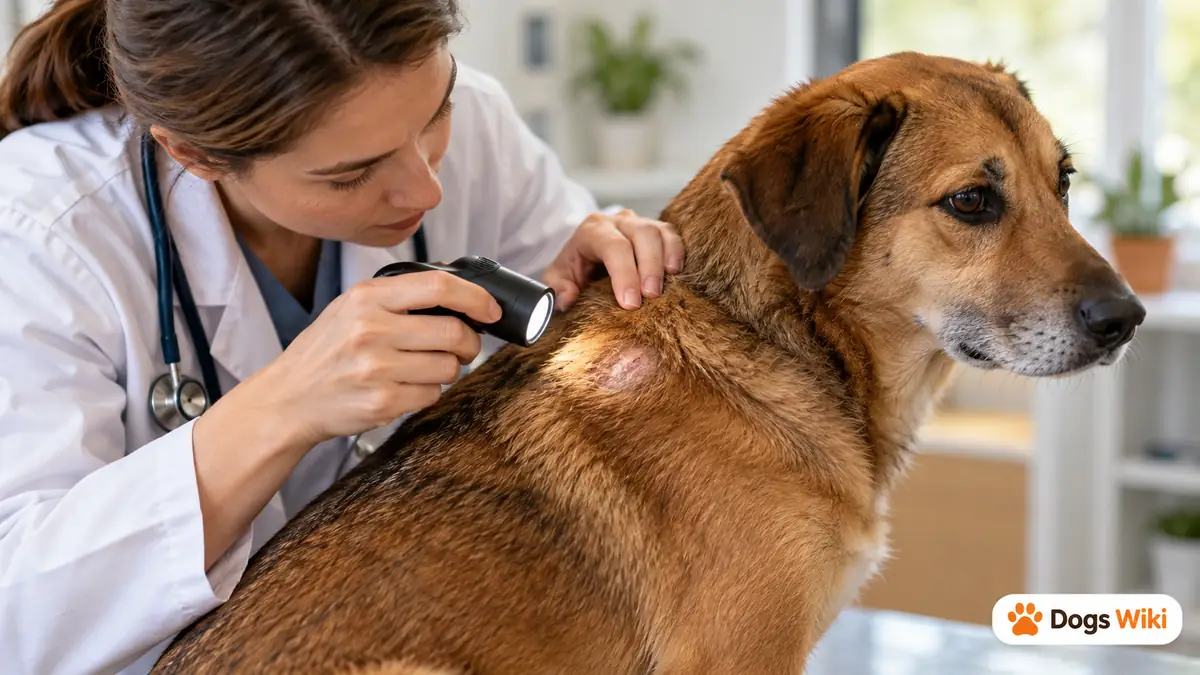
Ringworm in dogs, despite its name, isn’t caused by a worm at all but by a contagious fungus that infects the skin, hair, and sometimes nails, and it can spread readily between pets and people in the same household.
The name comes from the classic circular lesion the infection can produce, though not every case shows this distinctive pattern. This guide covers what causes ringworm, its symptoms, how it’s diagnosed, how it’s treated, whether it can be prevented, and when to see a veterinarian.
This guide covers what ringworm is, what causes it in dogs, its symptoms, how it’s diagnosed, how it’s treated, whether it can be prevented, when to see a vet, and what else people ask.
What Is Ringworm in Dogs?
Ringworm is a fungal infection of the skin, hair follicles, and occasionally nails, caused by a group of fungi collectively called dermatophytes. The infection feeds on keratin, the protein that makes up skin, hair, and nails, which is why hair loss and skin changes are the primary symptoms. Puppies, senior dogs, and dogs with weakened immune systems are more susceptible to developing a noticeable infection, though any dog exposed to the fungus can become infected.
What Causes Ringworm in Dogs?
Ringworm spreads through direct contact with an infected animal or through contact with fungal spores present in a contaminated environment, including bedding, grooming tools, and furniture. These spores are notably resistant and can persist in the environment for a long time, which makes environmental contamination a significant factor in both the initial infection and the risk of reinfection. Shelters, groomers, and other settings with multiple animals in close contact carry a higher risk of ringworm transmission.
What Are the Symptoms of Ringworm in Dogs?
Circular patches of hair loss, often with a scaly or crusty appearance at the edges, are the classic presentation of ringworm, though lesions can also appear irregular rather than perfectly round. Affected skin is sometimes red or inflamed, and the hair surrounding a lesion tends to break off easily rather than falling out at the root. Some infected dogs show minimal visible symptoms or carry the fungus without obvious signs, which complicates diagnosis and increases the risk of unknowingly spreading it to others.
How Is Ringworm Diagnosed in Dogs?
A veterinarian diagnosing ringworm often starts with a specialized ultraviolet light called a Wood’s lamp, which causes certain, though not all, ringworm species to fluoresce. A fungal culture, which involves collecting hair and skin samples and allowing any fungus present to grow over a period of days to weeks, provides the definitive diagnosis and identifies the specific organism involved. Microscopic examination of plucked hairs can sometimes provide a faster preliminary answer while waiting for culture results to confirm the diagnosis.
How Is Ringworm Treated in Dogs?
Treatment typically combines an oral antifungal medication with a topical antifungal shampoo or rinse, since using both approaches together clears the infection more reliably and reduces environmental contamination from loose infected hair. Thoroughly cleaning and disinfecting the home environment, including bedding, carpets, and any surfaces the dog has contacted, runs alongside medical treatment, since reinfection from a contaminated environment is a real risk otherwise. Treatment often continues for several weeks, and a veterinarian typically confirms clearance with a follow-up fungal culture rather than relying on visual improvement alone.
Can Ringworm Be Prevented in Dogs?
Avoiding contact with infected animals and contaminated environments reduces exposure risk, though complete prevention is difficult given how resistant the fungal spores are and how inconsistently infected animals show obvious symptoms. Regular cleaning of shared spaces, bedding, and grooming tools, particularly in multi-pet households or facilities, helps reduce the fungal load in the environment. A dog recovering from ringworm should be kept away from other pets and thoroughly groomed areas disinfected until a veterinarian confirms the infection has cleared.
When Should You See a Vet for Ringworm in Dogs?
See a veterinarian if a dog develops circular or irregular patches of hair loss, particularly with scaling or crusting at the edges, since ringworm needs a confirmed diagnosis and specific antifungal treatment rather than general skin care. Seek care promptly if multiple pets or household members develop similar skin lesions at the same time, since this pattern strongly suggests a contagious cause like ringworm that needs coordinated treatment. Given the contagion risk to people, anyone in the household with a new, unexplained circular skin lesion should also see their own doctor.
What Else Do People Ask About Ringworm in Dogs?
The questions below cover whether ringworm is contagious to humans, how long it takes to clear, whether cats and dogs can pass it to each other, and whether disinfecting the home is really necessary.
Is ringworm contagious from dogs to humans?
Yes, ringworm readily spreads from dogs to humans through direct contact or contact with a contaminated environment, making it one of the more notable zoonotic skin conditions in dogs. Good hygiene, including handwashing after handling an infected dog, considerably reduces this risk.
How long does it take to clear ringworm in dogs?
Treatment typically runs several weeks, and a veterinarian confirms full clearance through a follow-up fungal culture rather than visual appearance alone, since the fungus can persist even after skin looks normal. Stopping treatment too early based on visible improvement is a common reason for relapse.
Can cats and dogs pass ringworm to each other?
Yes, ringworm readily spreads between cats and dogs in the same household, since the responsible fungi aren’t species-specific. A household with multiple pets and one confirmed ringworm case should have all pets evaluated, since more than one may be infected.
Is disinfecting the home really necessary for ringworm in dogs?
Yes, disinfecting the home environment is a genuinely necessary part of treatment, since the fungal spores responsible for ringworm are resistant and can persist on surfaces, bedding, and grooming tools long enough to cause reinfection. Skipping this step is one of the most common reasons a treated dog becomes reinfected shortly after finishing medication.
Related Guides
More guides on The Dogs Wiki cover general dog health and grooming.
| Guide |
|---|
| Dog Health |


Comments
One response to “Ringworm in Dogs: Symptoms, Causes, Treatment, and Prevention”
[…] SkinRingworm in DogsSkinMange in DogsSkinDry Skin in Dogs ←Why Is My Dog Shaking Its Head? […]