Blog

  • Flat-Coated Retriever: Breed Profile, Temperament, Health, and Care Guide

    Flat-Coated Retriever: Breed Profile, Temperament, Health, and Care Guide

    Home → Dog Breeds → Sporting Group → Flat-Coated Retriever

    Flat-Coated Retriever: Breed Profile, Temperament, Health, and Care Guide

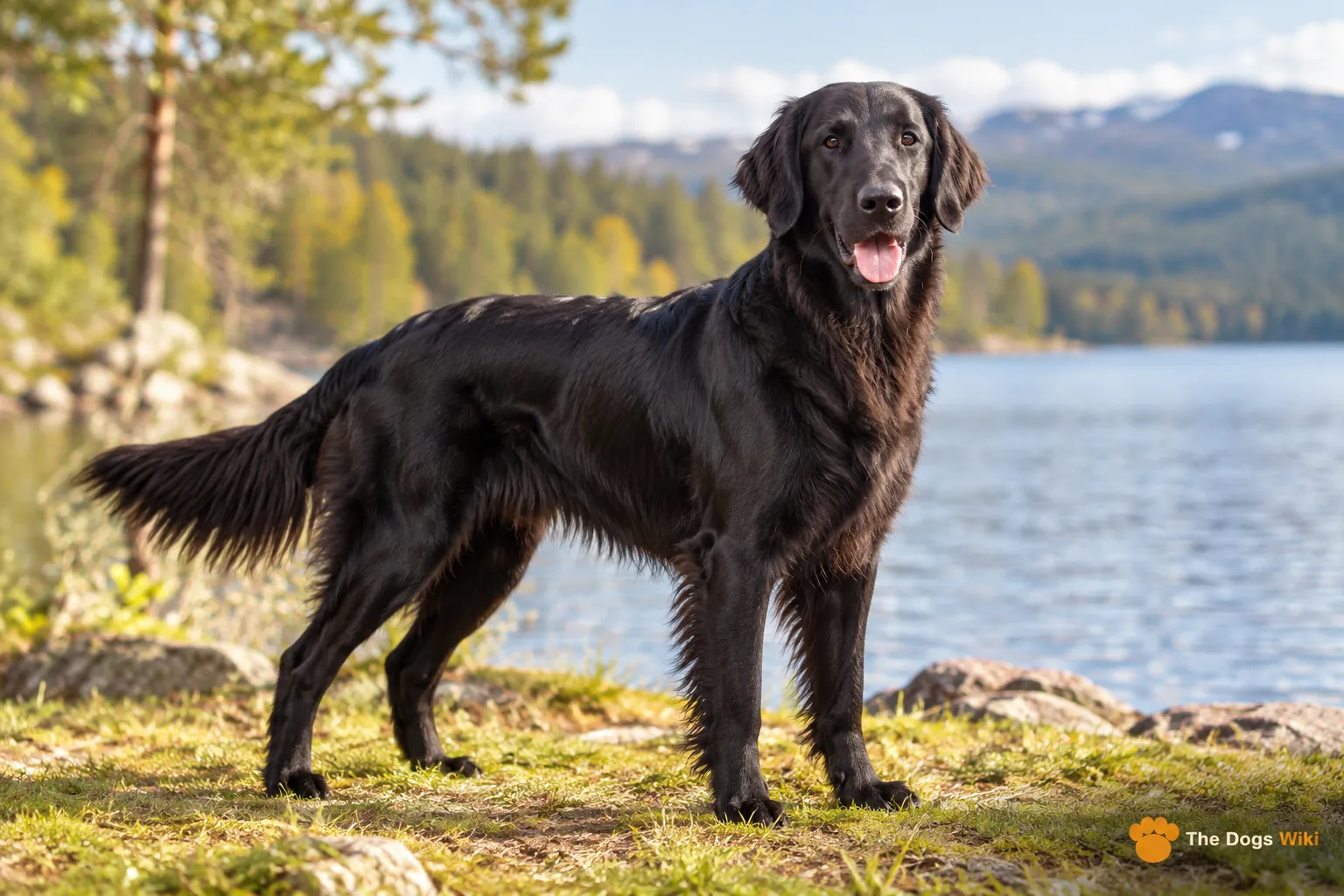
    A Flat-Coated Retriever is a large Sporting Group breed.

    It was developed in 19th-century England from a mix of setters, sheepdogs, and the now-extinct St. John’s Water Dog. The breed’s job was simple: retrieve game from land and water for hunters. Today, the Flat-Coated Retriever is best known for a happy, tail-wagging personality that rarely fades with age. This guide covers where the breed originated, its temperament, how big Flat-Coated Retrievers get, how long they live, the health problems they are prone to, grooming, how much exercise they need, how easy they are to train, what to feed them, the pros and cons of owning one, and what else people ask.

    What Is a Flat-Coated Retriever and Where Did the Breed Originate?

    A Flat-Coated Retriever belongs to the AKC’s Sporting Group. English breeders developed it in the 1800s. They crossed setters, sheepdogs, and the St. John’s Water Dog, an ancestor breed now extinct. The goal was a skilled, all-purpose retriever. Along with the Curly-Coated Retriever, the Flat-Coat was one of the first two retriever breeds established. Early recognition in England dates to around 1860. The AKC registered the breed in 1915.

    The American Kennel Club defines the breed in its “Official Standard for the Flat-Coated Retriever”, approved September 11, 1990, which sets out the size, coat, and temperament a Flat-Coated Retriever should have. As of September 2026, the AKC ranks the Flat-Coated Retriever 97th of 210 breeds in popularity.

    What Is a Flat-Coated Retriever’s Temperament Like?

    A Flat-Coated Retriever’s temperament is joyful, friendly, and genuinely outgoing. The breed’s tail rarely stops wagging. Flat-Coats love carrying things in their mouth, though they aren’t excessive chewers. They bond closely with their family and want to be part of everything. This breed stays puppy-like longer than most, well into adulthood. Flat-Coats generally do well with children, other dogs, and strangers alike.

    How Big Do Flat-Coated Retrievers Get?

    Flat-Coated Retrievers are a large, athletic breed. The coat lies flat, not wavy or curly like some other retrievers. Coat color is solid black or solid liver. The head is long and clean, without heavy jowls.

    What Is the Average Flat-Coated Retriever Height and Weight?

    Measure American Kennel Club figure
    Height 23-24.5 inches (male), 22-23.5 inches (female)
    Weight 60-70 pounds
    Life expectancy 8-10 years

    Figures are from the American Kennel Club Flat-Coated Retriever breed profile, retrieved September 2026.

    How Long Do Flat-Coated Retrievers Live?

    Flat-Coated Retrievers live around 10 years. This is shorter than most retriever breeds. The main reason is a well-documented, elevated cancer risk in the breed. Regular veterinary screening matters more here than for most Sporting Group breeds.

    What Health Problems Are Flat-Coated Retrievers Prone To?

    Flat-Coated Retrievers are documented as being at higher risk for the following conditions.

    • Cancer. A considerably elevated risk compared to most breeds. Hemangiosarcoma and lymphoma are two of the more common types. This is the single biggest factor behind the breed’s shorter average lifespan.
    • Hip dysplasia. A joint condition where the hip doesn’t fit together properly. It can lead to arthritis over time.
    • Glaucoma and cataracts. Eye conditions that can affect vision. Regular eye exams help catch problems early.
    • Bloat, or gastric dilatation-volvulus (GDV). A life-threatening emergency in deep-chested breeds. It needs immediate veterinary care.
    • Epilepsy. A neurological disorder that causes seizures. It’s managed with lifelong medication once diagnosed.

    How Do You Groom a Flat-Coated Retriever?

    Flat-Coated Retrievers have a medium-length, flat coat. It needs brushing two to three times a week to control shedding and prevent mats. The coat sheds moderately year-round, with heavier shedding in spring and fall. Routine nail trims and ear checks round out the grooming routine.

    How Much Exercise Does a Flat-Coated Retriever Need?

    A Flat-Coated Retriever needs at least an hour of exercise daily. The breed loves to swim, retrieve, and run. Physical activity alone isn’t enough, though. This breed also needs real mental engagement, or it can become bored and destructive.

    Are Flat-Coated Retrievers Easy to Train?

    Yes. Flat-Coated Retrievers are intelligent and eager to please. Positive reinforcement training works well with this breed. Training should start early, since the breed’s extended puppy phase can mean a longer road to settled adult manners.

    What Should You Feed a Flat-Coated Retriever?

    A Flat-Coated Retriever does well on a high-quality formula suited to its age and activity level. Because the breed is genuinely active, portions should reflect real daily exercise, not just body weight alone.

    What Are the Pros and Cons of Owning a Flat-Coated Retriever?

    Here are the main advantages of owning a Flat-Coated Retriever.

    • Joyful, friendly, genuinely outgoing temperament
    • Excellent with kids, other dogs, and strangers
    • Loves water and retrieving work
    • Stays playful well into adulthood

    Here are the main drawbacks of owning a Flat-Coated Retriever.

    • Documented, considerably elevated cancer risk
    • Shorter average lifespan than most retriever breeds
    • Needs real daily exercise and mental stimulation
    • Extended puppy-like phase can slow training progress

    Flat-Coated Retriever rescue organizations place adult dogs regularly, worth a look for anyone drawn to this breed’s cheerful personality but not set on a breeder search.

    What Else Do People Ask About the Flat-Coated Retriever?

    The questions below cover how much a Flat-Coated Retriever costs, whether Flat-Coated Retrievers are good family dogs, why Flat-Coated Retrievers have such a high cancer risk, and the difference between the Flat-Coated Retriever and the Golden Retriever.

    How much does a Flat-Coated Retriever cost?

    Prices vary by region, bloodline, and breeder reputation. A puppy from a breeder who screens for hip and eye health typically costs more than one that doesn’t. Adopting an adult dog through a rescue is usually cheaper.

    Are Flat-Coated Retrievers good family dogs?

    Yes. Flat-Coated Retrievers are widely known for a joyful, kid-friendly temperament. Their high energy means families need a real plan for daily exercise.

    Why do Flat-Coated Retrievers have such a high cancer risk?

    Flat-Coated Retrievers carry a documented, breed-wide predisposition to cancer, hemangiosarcoma and lymphoma. Researchers haven’t pinned down one single cause. Regular veterinary checkups give the best chance at early detection.

    What Is the Difference Between the Flat-Coated Retriever and the Golden Retriever?

    Both breeds share a similar friendly, retrieving heritage. Flat-Coats have a flatter, solid black or liver coat, while Goldens have a longer, feathered golden coat. Flat-Coats also tend to stay puppy-like longer and carry a higher documented cancer risk.

    Related Guides

    More guides on The Dogs Wiki cover behavior, health, grooming, training, nutrition, and adoption.

    Guide
    Behavior
    Health
    Grooming
    Training
    Nutrition
    Adoption
  • Field Spaniel: Breed Profile, Temperament, Health, and Care Guide

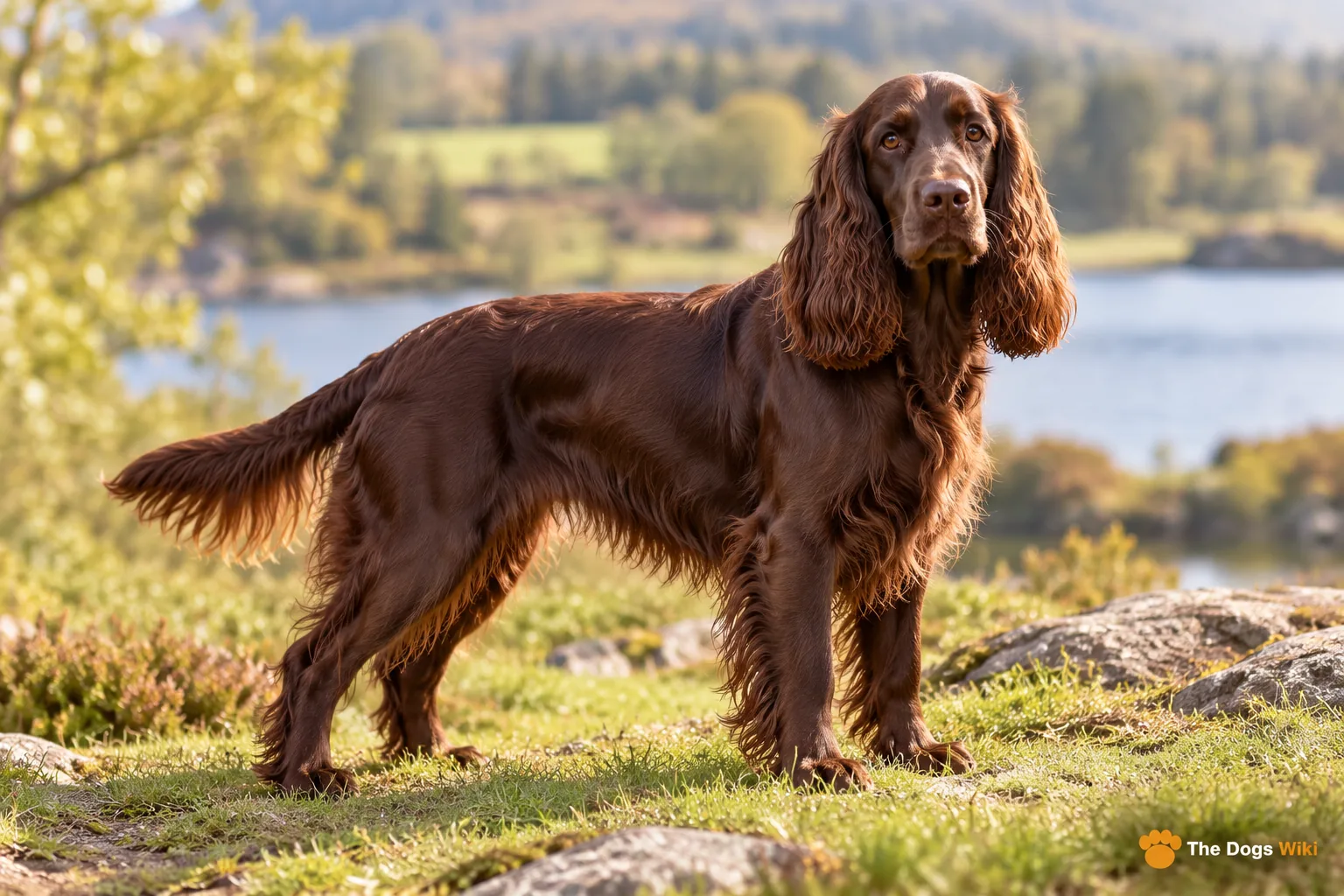
    Field Spaniel: Breed Profile, Temperament, Health, and Care Guide

    Home → Dog Breeds → Sporting Group → Field Spaniel

    Field Spaniel: Breed Profile, Temperament, Health, and Care Guide

    A Field Spaniel is a medium-sized Sporting Group breed.

    English breeders developed it in the 1800s as a flushing spaniel for hunting. The breed shares ancestry with the Cocker Spaniel and Springer Spaniel. Field Spaniels are genuinely uncommon today. Owners describe them as gentle, sensitive, and devoted. This guide covers where the breed originated, its temperament, how big Field Spaniels get, how long they live, the health problems they are prone to, grooming, how much exercise they need, how easy they are to train, what to feed them, the pros and cons of owning one, and what else people ask.

    What Is a Field Spaniel and Where Did the Breed Originate?

    A Field Spaniel belongs to the AKC’s Sporting Group. English breeders developed it in the 19th century alongside the Cocker and Springer Spaniel from shared ancestry. Early breeding favored an exaggerated long, low body, which nearly ruined the breed’s working ability. Later breeders corrected course, restoring a more balanced, functional build. The Field Spaniel remains far less common than its Cocker and Springer cousins.

    The American Kennel Club defines the breed in its “Official Standard of the Field Spaniel”, approved April 6, 2020, which sets out the size, coat, and temperament a Field Spaniel should have. As of September 2026, the AKC ranks the Field Spaniel 160th of 210 breeds in popularity.

    What Is a Field Spaniel’s Temperament Like?

    A Field Spaniel’s temperament is gentle, affectionate, and genuinely sensitive. The breed is deeply devoted to its family. Field Spaniels tend to be reserved, even timid, with strangers. They do best with thoughtful older children rather than young, boisterous ones. The breed is food-motivated and intelligent, though it thinks independently.

    How Big Do Field Spaniels Get?

    Field Spaniels are a medium-sized breed with a moderately long body and long, feathered ears. The coat is flat or slightly wavy, typically black, liver, or roan.

    What Is the Average Field Spaniel Height and Weight?

    Measure American Kennel Club figure
    Height 18 inches (male), 17 inches (female)
    Weight 35-50 pounds
    Life expectancy 12-13 years

    Figures are from the American Kennel Club Field Spaniel breed profile, retrieved September 2026.

    How Long Do Field Spaniels Live?

    Field Spaniels live 12 to 13 years. Regular veterinary care supports a full lifespan, in particular given the breed’s documented eye and thyroid risks.

    What Health Problems Are Field Spaniels Prone To?

    Field Spaniels are documented as being at higher risk for the following conditions.

    • Progressive retinal atrophy. An inherited eye disease that gradually breaks down the retina. It can lead to blindness.
    • Entropion and ectropion. Eyelid conditions, one rolling inward and one outward. Both can cause irritation.
    • Hypothyroidism. Reduced thyroid hormone production. It’s managed with daily medication once diagnosed.
    • Hip dysplasia. A joint condition screened for with x-rays in responsible breeding programs.
    • Ear infections. Common given the breed’s long, feathered ears, managed with regular cleaning.

    How Do You Groom a Field Spaniel?

    Field Spaniels have a flat to wavy coat with real feathering on the ears, legs, and belly. It needs regular brushing several times a week to prevent mats. The long ears need routine, dedicated cleaning to prevent infection.

    How Much Exercise Does a Field Spaniel Need?

    A Field Spaniel needs substantial daily exercise. The breed is genuinely active outside the home, despite a calmer indoor demeanor. Regular walks, play, and structured activity suit this breed’s real working heritage.

    Are Field Spaniels Easy to Train?

    Field Spaniels are intelligent and food-motivated, making them fairly trainable. The breed thinks independently, though, so mild, consistent methods work better than repetition or harsh correction. Early socialization matters given the breed’s natural reserve with strangers.

    What Should You Feed a Field Spaniel?

    A Field Spaniel does well on a formula suited to its age and activity level. A veterinarian can help set appropriate portions given the breed’s moderate size and genuine activity needs.

    What Are the Pros and Cons of Owning a Field Spaniel?

    Here are the main advantages of owning a Field Spaniel.

    • Gentle, affectionate, genuinely devoted temperament
    • Food-motivated and fairly trainable
    • Long average lifespan
    • Loyal, close bond with its family

    Here are the main drawbacks of owning a Field Spaniel.

    • Genuinely reserved, even timid, with strangers
    • Documented risk of progressive retinal atrophy and thyroid issues
    • Needs substantial daily exercise despite a calm indoor demeanor
    • Best suited to homes with older, thoughtful children

    Field Spaniel rescue organizations occasionally place adult dogs, worth a look for anyone drawn to this breed’s gentle temperament but a breeder search isn’t realistic given its rarity.

    What Else Do People Ask About the Field Spaniel?

    The questions below cover how much a Field Spaniel costs, whether Field Spaniels are good family dogs, the difference between the Field Spaniel and the Cocker Spaniel, and why the Field Spaniel is so rare.

    How much does a Field Spaniel cost?

    Field Spaniel prices vary given the breed’s genuine rarity. A puppy from a health-tested breeder typically costs more than average given limited breeding stock. Adopting an adult dog is usually cheaper but harder to find.

    Are Field Spaniels good family dogs?

    Field Spaniels can be good family dogs, in particular with older, thoughtful children. Their sensitive, reserved nature means they do best in calm, predictable households.

    What Is the Difference Between the Field Spaniel and the Cocker Spaniel?

    Both breeds share close ancestry and a similar gentle temperament. Field Spaniels run somewhat larger and are noticeably more reserved with strangers, while Cocker Spaniels are generally more universally outgoing.

    Why is the Field Spaniel so rare?

    Early breeders favored an exaggerated long, low body that hurt the breed’s working ability and popularity. Later corrections restored a functional build, but the breed’s numbers never recovered to match its spaniel cousins.

    Related Guides

    More guides on The Dogs Wiki cover behavior, health, grooming, training, nutrition, and adoption.

    Guide
    Behavior
    Health
    Grooming
    Training
    Nutrition
    Adoption
  • English Setter: Breed Profile, Temperament, Health, and Care Guide

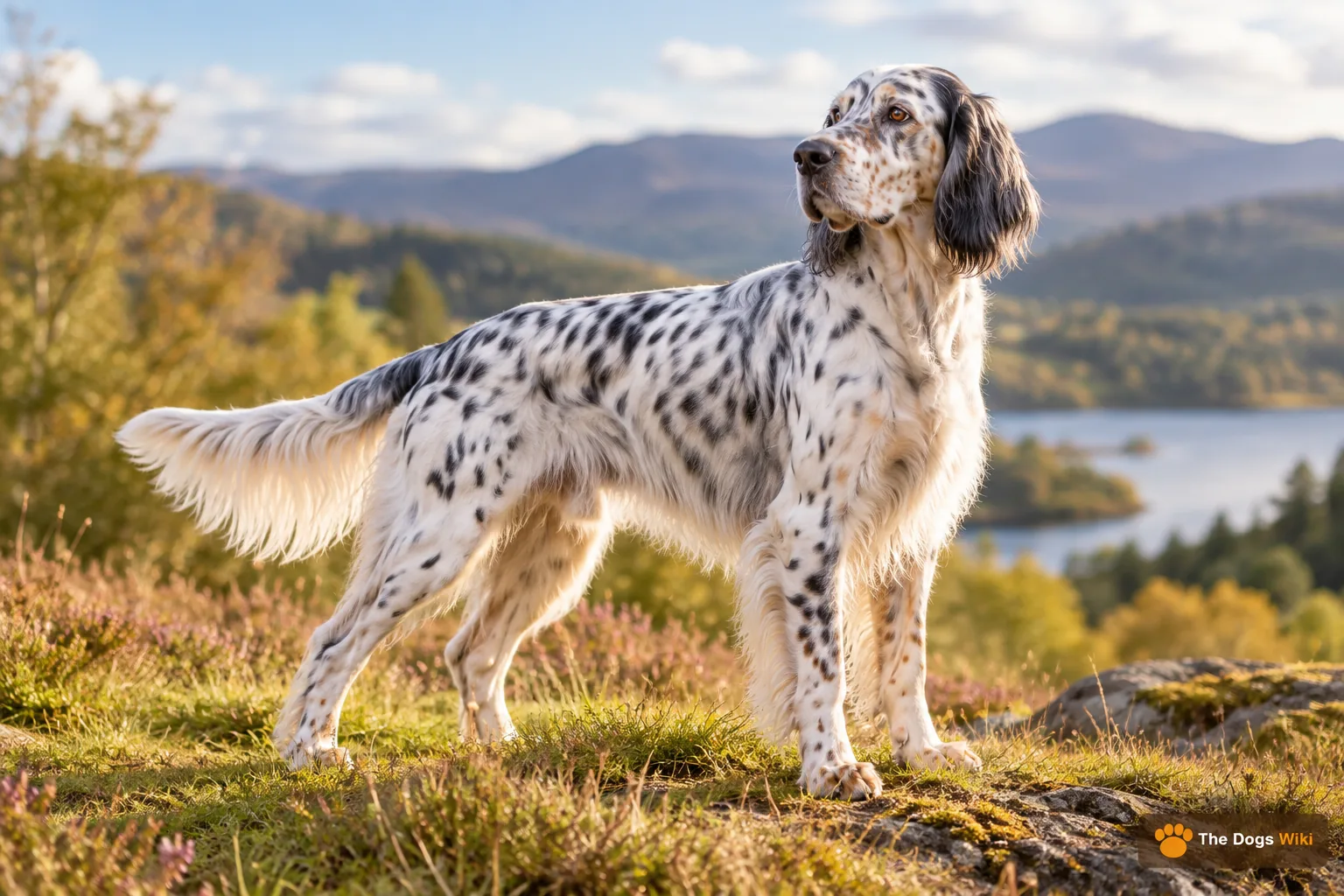
    English Setter: Breed Profile, Temperament, Health, and Care Guide

    Home → Dog Breeds → Sporting Group → English Setter

    English Setter: Breed Profile, Temperament, Health, and Care Guide

    An English Setter is a medium to large Sporting Group breed with a history tracing back roughly 400 years in England, developed to “set,” or crouch low, near game birds so hunters could throw a net or take a shot.

    One of the AKC’s four British setter breeds, the English Setter combines striking, elegant looks with a genuinely gentle, people-oriented temperament. This guide covers where the breed originated, its temperament, how big English Setters get, how long they live, the health problems they are prone to, grooming, how much exercise they need, how easy they are to train, what to feed them, the pros and cons of owning one, and what else people ask.

    What Is an English Setter and Where Did the Breed Originate?

    An English Setter belongs to the American Kennel Club’s Sporting Group, one of four British setter breeds developed to work the varied terrain of England, Ireland, and Scotland. The breed’s ancestors include the Spanish Pointer, French Pointer, and various spaniels, and English sportsmen Edward Laverack and R.L. Purcell Llewellin played key roles in refining the modern English Setter during the 19th century. Unlike breeds developed for speed and raw endurance, English Setters were selected for a steadier, more thorough hunting style paired with a cooperative temperament, which is why the breed crossed over so easily into companionship and the show ring.

    The American Kennel Club defines the breed in its “Official Standard for the English Setter”, approved November 11, 1986, which sets out the size, coat, and temperament an English Setter should have. As of September 2026, the AKC ranks the English Setter 93rd of 210 breeds in popularity.

    What Is an English Setter’s Temperament Like?

    An English Setter’s temperament is friendly, gentle, and affectionate, and the breed forms genuinely strong bonds with its family, doing well on human companionship. English Setters are calm and even-tempered indoors, good with children and, when properly socialized, other pets, but that mellow indoor demeanor gives way to real outdoor energy and hunting instinct once the dog is outside. The breed will bark to alert its family to strangers, though it quickly warms up to new faces once introduced.

    How Big Do English Setters Get?

    English Setters are a medium to large, elegant breed with a long, flowing, silky coat, large hazel eyes, and moderately long, downward-hanging ears. Show-bred lines tend to carry heavier feathering and bone than leaner field-bred lines developed for hunting trials.

    What Is the Average English Setter Height and Weight?

    Measure American Kennel Club figure
    Height 25-27 inches (male), 23-25 inches (female)
    Weight 65-80 pounds (male), 45-55 pounds (female)
    Life expectancy 12 years

    Figures are from the American Kennel Club English Setter breed profile, retrieved September 2026.

    How Long Do English Setters Live?

    English Setters live 12 to 15 years, though some sources cite a narrower 10 to 12 year average. The breed is considered healthy, and regular veterinary care, including thyroid screening given the condition’s documented prevalence, supports a full lifespan.

    What Health Problems Are English Setters Prone To?

    English Setters are documented as being at higher risk for the following conditions.

    • Hypothyroidism. A elevated risk in the breed, with OFA screening data showing prevalence among the highest recorded for any Sporting Group breed; managed with daily medication once diagnosed.
    • Hip dysplasia. A malformation of the hip joint that can lead to arthritis and mobility problems as the dog ages.
    • Elbow dysplasia. A joint condition affecting the front limbs, screened for with elbow x-rays in responsible breeding programs.
    • Congenital deafness. Documented in roughly 2% of tested puppies, affecting one or both ears.
    • Cancer. A recognized concern in the breed worth discussing with a veterinarian as part of routine preventive care.

    How Do You Groom an English Setter?

    English Setters have a long, flowing, silky coat that needs brushing two to three times a week to prevent knots and tangles, and dogs carrying a heavier show-type coat may benefit from occasional professional grooming help. Despite the coat’s length, the breed sheds only moderately, and starting a grooming routine early in puppyhood makes the process considerably easier throughout the dog’s life.

    How Much Exercise Does an English Setter Need?

    An English Setter needs substantially more daily activity than its calm indoor demeanor suggest, at least 45 to 60 minutes, reflecting the breed’s genuine field-hunting heritage. English Setters can be trained to participate in a range of AKC activities including field trials, agility, rally, and tracking, and the breed does best when training stays varied rather than repetitive, since boredom is a real risk.

    Are English Setters Easy to Train?

    Yes, English Setters are intelligent and intuitive, generally responsive to training, though the breed doesn’t respond well to negative reinforcement or harsh correction. Positive, encouraging training that avoids repetition and keeps the dog engaged produces the best results with this cooperative but genuinely sensitive breed.

    What Should You Feed an English Setter?

    English Setters do well on a formula suited to their age and activity level, and a balanced diet combined with regular veterinary checkups supports the breed’s overall well-being. A veterinarian can help set an appropriate feeding plan given the breed’s substantial size range between field and show lines.

    What Are the Pros and Cons of Owning an English Setter?

    Here are the main advantages of owning an English Setter.

    • Friendly, gentle, genuinely affectionate temperament
    • Calm and even-tempered indoors, good with children
    • Intelligent and adaptable across hunting, sport, and companionship
    • Only moderate shedding despite a long coat

    Here are the main drawbacks of owning an English Setter.

    • Needs substantially more exercise than its calm indoor demeanor suggests
    • Documented, elevated risk of hypothyroidism
    • Coat requires brushing two to three times weekly
    • Doesn’t respond well to harsh or repetitive training methods

    English Setter rescue organizations place adult dogs regularly, worth a look for anyone drawn to the breed’s gentle temperament but not set on a breeder search.

    What Else Do People Ask About the English Setter?

    The questions below cover how much an English Setter costs, whether English Setters are good family dogs, the difference between the English Setter and the Irish Setter, and why English Setters need so much exercise despite being calm indoors.

    How much does an English Setter cost?

    English Setter prices range from around $800 to $1,500 from a reputable breeder, though prices vary by region, bloodline, and whether the dog comes from field or show lines. Adopting an adult English Setter through a rescue is usually a lower-cost alternative.

    Are English Setters good family dogs?

    Yes, English Setters are widely regarded as excellent family dogs, known for a calm, loving temperament with children and other animals when properly socialized. Their substantial exercise needs mean families should have a realistic plan for daily activity.

    What Is the Difference Between the English Setter and the Irish Setter?

    English Setters and Irish Setters are both AKC setter breeds with gentle, people-oriented temperaments, but they differ in coat color and maturity rate. Irish Setters have a solid mahogany-red coat and are slower to mature, retaining puppy-like behavior longer, while English Setters have a speckled coat pattern and settle into adult temperament somewhat sooner.

    Why do English Setters need so much exercise despite being calm indoors?

    English Setters were bred as working gun dogs with real field stamina, and that inherited drive doesn’t fade just because the breed also happens to relax easily indoors. A dog that only gets a short walk is likely to become bored, so genuine daily activity matters for both physical and mental health.

    Related Guides

    More guides on The Dogs Wiki cover behavior, health, training, nutrition, and adoption.

    Guide
    Behavior
    Health
    Training
    Nutrition
    Adoption
  • Curly-Coated Retriever: Breed Profile, Temperament, Health, and Care Guide

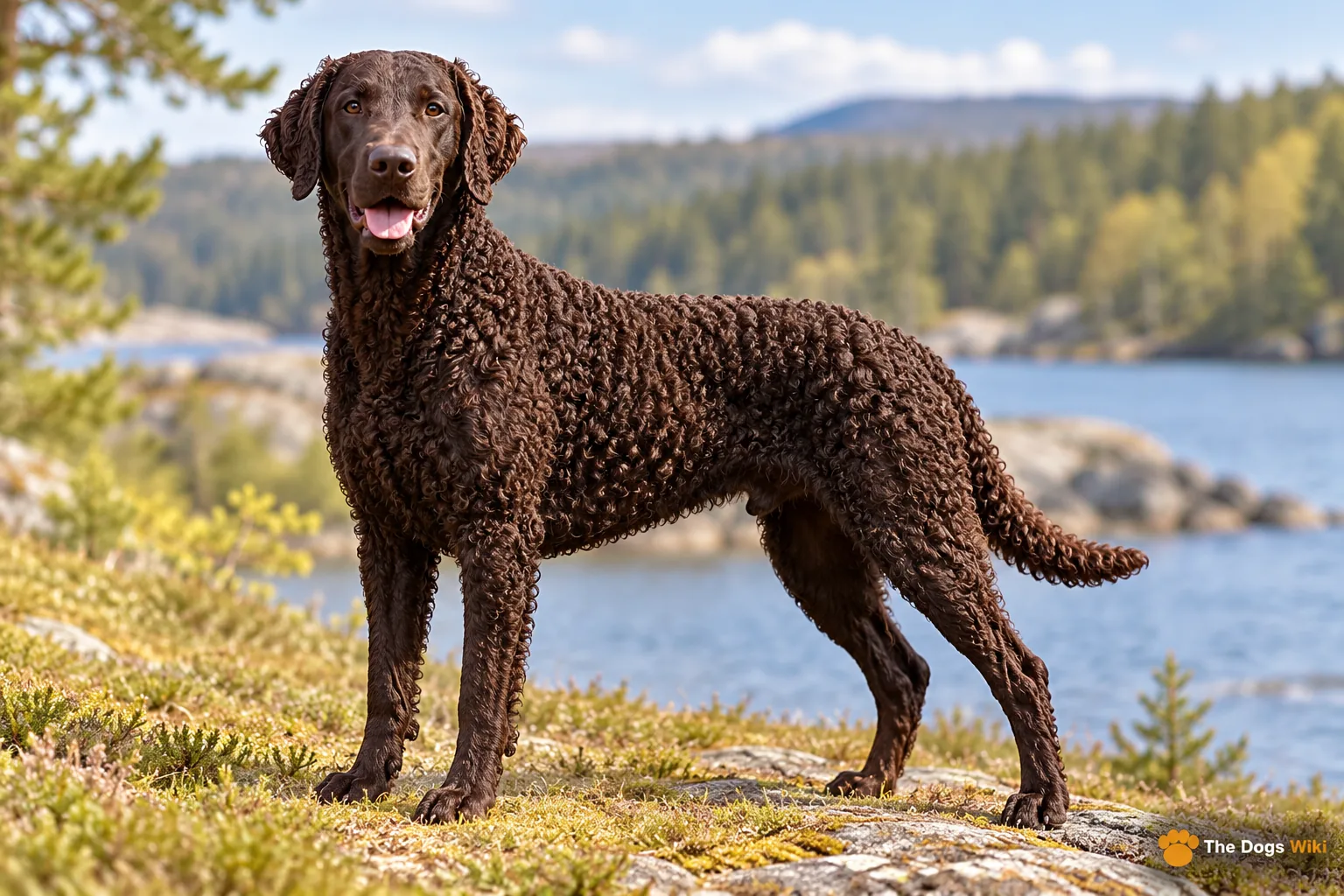
    Curly-Coated Retriever: Breed Profile, Temperament, Health, and Care Guide

    Home → Dog Breeds → Sporting Group → Curly-Coated Retriever

    Curly-Coated Retriever: Breed Profile, Temperament, Health, and Care Guide

    A Curly-Coated Retriever is a large Sporting Group breed believed to be the oldest of all the retriever breeds, developed in England from a mix that likely included the now-extinct Old English Water Spaniel, the old-style Retrieving Setter, the St.

    John’s Newfoundland, and possibly the Poodle. The breed’s tight, crisp curls, unlike any other retriever’s coat, were bred specifically to protect against thick bramble and icy water. This guide covers where the breed originated, its temperament, how big Curly-Coated Retrievers get, how long they live, the health problems they are prone to, grooming, how much exercise they need, how easy they are to train, what to feed them, the pros and cons of owning one, and what else people ask.

    What Is a Curly-Coated Retriever and Where Did the Breed Originate?

    A Curly-Coated Retriever belongs to the American Kennel Club’s Sporting Group and is widely believed to be the oldest of the retriever breeds. The AKC’s official breed standard describes the Curly as “self-confident, steadfast and proud,” and the breed was a favorite among English gamekeepers for its hunting prowess and agility. The Curly-Coated Retriever was first registered with the AKC in 1924, and the Curly-Coated Retriever Club of America was founded in 1979. Along with the Flat-Coated Retriever, the Curly was one of the first two retriever breeds established, originally recognized in England as early as 1860.

    The American Kennel Club defines the breed in its “Official Standard for the Curly-Coated Retriever”, approved October 12, 1993, which sets out the size, coat, and temperament a Curly-Coated Retriever should have. As of September 2026, the AKC ranks the Curly-Coated Retriever 163rd of 210 breeds in popularity.

    What Is a Curly-Coated Retriever’s Temperament Like?

    A Curly-Coated Retriever’s temperament is confident, intelligent, and even-tempered, though the breed is genuinely more reserved and independent than its friendlier, more attention-seeking cousins like the Labrador and Golden Retriever. Curlies love their families and enjoy spending time with them but can also tolerate being left alone reasonably well, and the breed tends to be more aloof with strangers, making it a somewhat better natural watchdog than most other retrievers. Early socialization matters given the breed’s tendency toward shyness without it.

    How Big Do Curly-Coated Retrievers Get?

    Curly-Coated Retrievers are a large, agile, muscular breed with a distinctive coat of small, tight, crisp curls covering the entire body, and a long, wedge-shaped head that sets the breed apart visually from other retrievers.

    What Is the Average Curly-Coated Retriever Height and Weight?

    Measure American Kennel Club figure
    Height 25-27 inches (male), 23-25 inches (female)
    Weight 60-95 pounds
    Life expectancy 10-12 years

    Figures are from the American Kennel Club Curly-Coated Retriever breed profile, retrieved September 2026.

    How Long Do Curly-Coated Retrievers Live?

    Curly-Coated Retrievers live 10 to 12 years. Regular veterinary care, including genetic screening for the breed-specific conditions covered below, supports a full lifespan.

    What Health Problems Are Curly-Coated Retrievers Prone To?

    Curly-Coated Retrievers are documented as being at higher risk for the following conditions.

    • Exercise-induced collapse (EIC). An inherited neuromuscular disease causing sudden hind-limb weakness after exercise, with body temperature potentially reaching a life-threatening 107 degrees Fahrenheit during an episode; a DNA test can detect the genetic mutation.
    • Glycogen storage disease type IIIa. An inherited disorder causing glycogen buildup in the liver, starting around 4 months of age and causing hypoglycemia and eventual liver failure if untreated.
    • Cataracts and other eye conditions. The lens becomes cloudy, with the degree of vision impairment depending on the cataract’s size; surgery can restore eyesight in some cases.
    • Bloat, or gastric dilatation-volvulus (GDV). A life-threatening emergency in deep-chested breeds; some veterinarians recommend a preventive gastropexy procedure.
    • Cancer, including lymphoma, and hip dysplasia. Both recognized, breed-associated risks worth screening for with a veterinarian.

    How Do You Groom a Curly-Coated Retriever?

    Curly-Coated Retrievers have a distinctive coat of tight curls that’s genuinely low-maintenance in one specific sense, rarely needing brushing since brushing can damage the curl pattern, but the coat is naturally oily, which can make the breed a poor choice for allergy-sensitive households. Occasional bathing and routine nail trims, ear checks, and dental care round out the grooming routine.

    How Much Exercise Does a Curly-Coated Retriever Need?

    A Curly-Coated Retriever needs 60 to 90 minutes of exercise daily, including walks, playtime, and genuine mental stimulation, and the breed does well with activities like swimming and retrieving that tap directly into its working heritage. A large, securely fenced yard matters given the breed’s genuine athleticism, and the breed’s large size means it could accidentally knock over smaller children during enthusiastic play.

    Are Curly-Coated Retrievers Easy to Train?

    Curly-Coated Retrievers are generally considered intelligent and easy to train, though the breed can be stubborn and is genuinely slow to mature, which means training may take longer to fully click compared to other retriever breeds. Firm but not aggressive, non-repetitive training with real variety works best for this independent-minded breed.

    What Should You Feed a Curly-Coated Retriever?

    Curly-Coated Retrievers do well on a balanced formula suited to their age and genuinely high activity level, and because the breed carries a documented risk of glycogen storage disease affecting blood sugar regulation, consistent, measured feeding matters. A veterinarian can help set an appropriate feeding plan.

    What Are the Pros and Cons of Owning a Curly-Coated Retriever?

    Here are the main advantages of owning a Curly-Coated Retriever.

    • Confident, even-tempered, genuinely loyal temperament
    • Distinctive, low-brushing curly coat
    • More naturally watchful than most other retriever breeds
    • Determined, durable worker in the field or water

    Here are the main drawbacks of owning a Curly-Coated Retriever.

    • Documented risk of exercise-induced collapse and glycogen storage disease
    • Genuinely slow to mature, which can extend the training timeline
    • Oily coat can be a poor fit for allergy-sensitive households
    • More reserved with strangers and less good with other dogs than most retrievers

    Curly-Coated Retriever rescue organizations place adult dogs, though the breed’s relative rarity can limit availability, worth a look for anyone drawn to the breed’s distinctive look and loyal temperament but not set on a breeder search.

    What Else Do People Ask About the Curly-Coated Retriever?

    The questions below cover how much a Curly-Coated Retriever costs, whether Curly-Coated Retrievers are good family dogs, why the Curly-Coated Retriever’s coat is so unique, and what exercise-induced collapse is in Curly-Coated Retrievers.

    How much does a Curly-Coated Retriever cost?

    Curly-Coated Retriever prices vary by region, bloodline, and breeder reputation, and a puppy from a breeder affiliated with the Curly-Coated Retriever Club of America who screens for eye, heart, and hip health typically costs more than one that doesn’t. Adopting an adult Curly through a rescue is usually a lower-cost alternative, though the breed’s rarity can limit availability.

    Are Curly-Coated Retrievers good family dogs?

    Curly-Coated Retrievers can be good family dogs, in particular for households with older children, given the breed’s large size and potential to accidentally knock over a small child during enthusiastic play. The breed is genuinely good with kids overall but tends to be less immediately social with other dogs than most retrievers.

    Why is the Curly-Coated Retriever’s coat so unique?

    The Curly-Coated Retriever’s coat of small, tight, crisp curls is unlike any other retriever breed’s coat, developed specifically to protect the dog while working through thick bramble and swimming in icy water during hunts. Unlike most dog coats, brushing can damage the curl pattern, so the breed needs far less routine brushing than its long-coated cousins.

    What is exercise-induced collapse in Curly-Coated Retrievers?

    Exercise-induced collapse is an inherited neuromuscular disease causing sudden weakness in the hind legs after intense exercise, with a dog’s body temperature able to reach a life-threatening 107 degrees Fahrenheit during a severe episode. A DNA test can identify whether an individual dog carries the genetic mutation responsible, which is why screening breeding stock matters considerably for this breed.

    Related Guides

    More guides on The Dogs Wiki cover behavior, health, grooming, training, nutrition, and adoption.

    Guide
    Behavior
    Health
    Grooming
    Training
    Nutrition
    Adoption
  • Chesapeake Bay Retriever: Breed Profile, Temperament, Health, and Care Guide

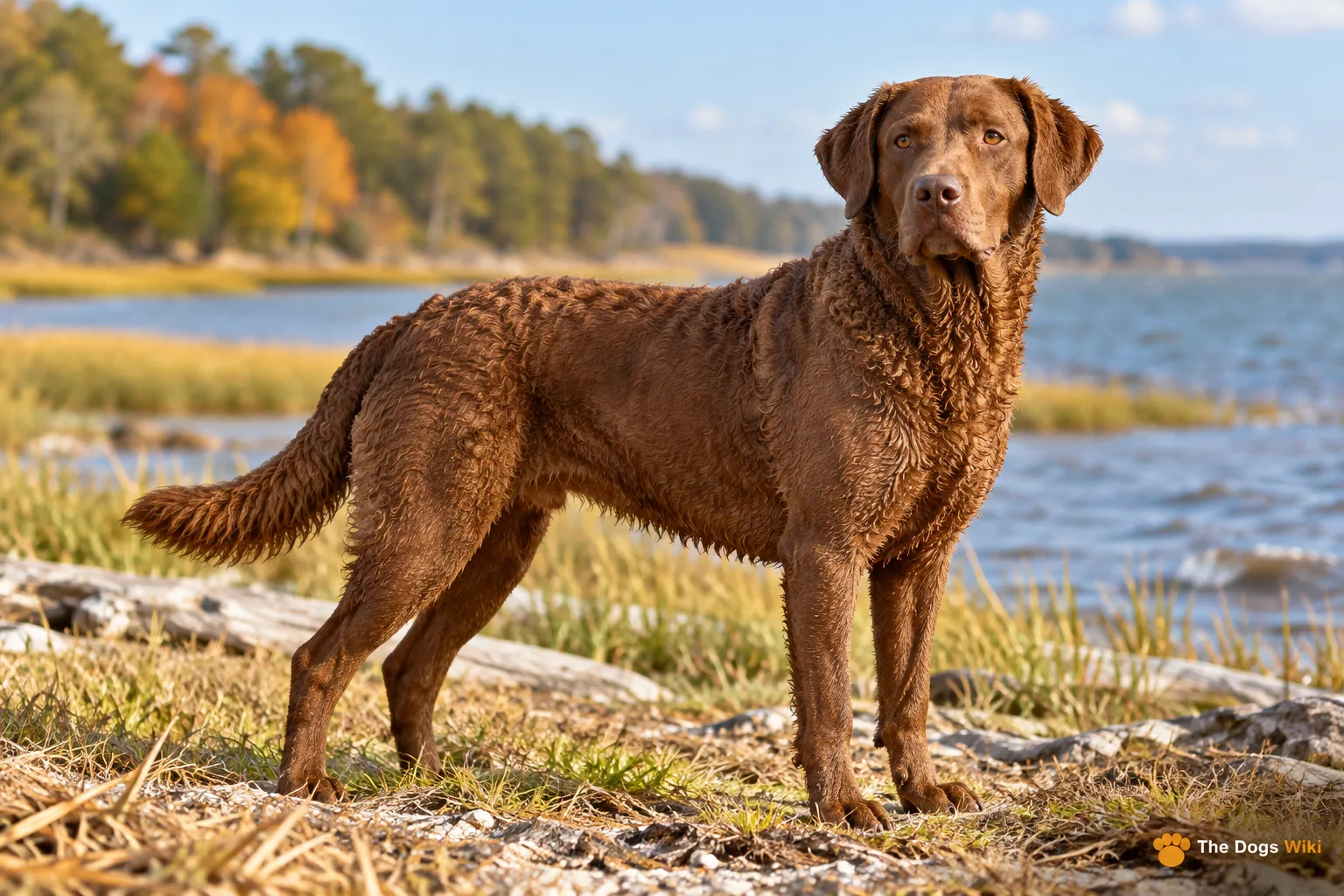
    Chesapeake Bay Retriever: Breed Profile, Temperament, Health, and Care Guide

    Home → Dog Breeds → Sporting Group → Chesapeake Bay Retriever

    Chesapeake Bay Retriever: Breed Profile, Temperament, Health, and Care Guide

    A Chesapeake Bay Retriever is a large Sporting Group breed developed in 19th-century Maryland to retrieve waterfowl from the cold, rough waters of the Chesapeake Bay.

    A Chesapeake Bay Retriever is a large Sporting Group breed developed in 19th-century Maryland to retrieve waterfowl from the cold, rough waters of the Chesapeake Bay, a job so demanding it shaped one of the toughest, most weather-resistant coats of any retriever breed. Officially the state dog of Maryland, the Chessie remains less common than its Labrador and Golden cousins but is prized by enthusiasts for its endurance and independent-minded intelligence. This guide covers where the breed originated, its temperament, how big Chesapeake Bay Retrievers get, how long they live, the health problems they are prone to, grooming, how much exercise they need, how easy they are to train, what to feed them, the pros and cons of owning one, and what else people ask.

    What Is a Chesapeake Bay Retriever and Where Did the Breed Originate?

    A Chesapeake Bay Retriever belongs to the American Kennel Club’s Sporting Group. The breed developed in 19th-century Maryland from dogs bred specifically to retrieve ducks from the Chesapeake Bay’s cold, choppy waters, sometimes hauling in hundreds of birds in a single day for market hunters. That extreme working demand shaped the breed’s oily, water-resistant double coat and powerful, deep-chested build. The AKC recognized the breed in 1885, and it remains the official state dog of Maryland.

    The American Kennel Club defines the breed in its “Official Standard for the Chesapeake Bay Retriever”, approved November 9, 1993, which sets out the size, coat, and temperament a Chesapeake Bay Retriever should have. As of September 2026, the AKC ranks the Chesapeake Bay Retriever 52nd of 210 breeds in popularity.

    What Is a Chesapeake Bay Retriever’s Temperament Like?

    A Chesapeake Bay Retriever’s temperament is loyal, upbeat, and affectionate, paired with an independent, strong-willed streak that sets it apart from more universally eager-to-please retrievers. Chessies are protective of their family and home, intelligent, and genuinely tireless workers, traits that made them prized as both hunting dogs and, historically, service dogs. That independence means the breed sometimes shows a more serious or reserved side than a Labrador or Golden Retriever, and it does best with owners who provide firm, consistent leadership rather than a purely permissive approach.

    How Big Do Chesapeake Bay Retrievers Get?

    Chesapeake Bay Retrievers are a large, well-boned, powerfully built breed with a broad, deep chest built for strength in rough water. A distinctive breed trait is that the hindquarters sit as high as, or higher than, the shoulders, giving the dog a slightly different silhouette than most other retrievers.

    What Is the Average Chesapeake Bay Retriever Height and Weight?

    Measure American Kennel Club figure
    Height 23-26 inches (male), 21-24 inches (female)
    Weight 65-80 pounds (male), 55-70 pounds (female)
    Life expectancy 10-13 years

    Figures are from the American Kennel Club Chesapeake Bay Retriever breed profile, retrieved September 2026.

    How Long Do Chesapeake Bay Retrievers Live?

    Chesapeake Bay Retrievers live 10 to 13 years, though some breed surveys report a wider range depending on the study. Regular veterinary care, consistent weight management, and attention to the joint and eye conditions covered below all support a full, active lifespan for this sturdy breed.

    What Health Problems Are Chesapeake Bay Retrievers Prone To?

    Chesapeake Bay Retrievers are documented as being at higher risk for the following conditions.

    • Hip and elbow dysplasia. Malformations of the joint that cause pain and early arthritis, screened for with OFA hip and elbow evaluations in reputable breeding programs.
    • Progressive retinal atrophy and hereditary cataracts. Inherited eye conditions that can affect vision over time; DNA and eye screening help identify carriers before breeding.
    • Degenerative myelopathy. A progressive spinal cord disease causing hind-leg weakness and eventual paralysis; the Chesapeake Bay Retriever is one of the breeds more commonly affected.
    • Exercise-induced collapse (EIC). A genetic condition causing weakness or collapse after intense exercise or excitement; a DNA test is available to screen for it.
    • Von Willebrand’s disease. An inherited bleeding disorder that affects the blood’s ability to clot properly, identified through genetic testing.

    How Do You Groom a Chesapeake Bay Retriever?

    Chesapeake Bay Retrievers have a short, wavy, water-resistant double coat with a fine, wooly undercoat that holds natural oils to protect the dog during cold-water retrieving. The coat needs only occasional brushing to manage shedding and distribute those protective oils, making it relatively low-maintenance for a working retriever breed. Regular nail trims and dental care round out the grooming routine, and because the coat is naturally oily, over-bathing can strip away the protection that makes it useful in water.

    How Much Exercise Does a Chesapeake Bay Retriever Need?

    A Chesapeake Bay Retriever needs substantial daily exercise, reflecting the breed’s history as a tireless working water retriever capable of hunting all day in harsh conditions. Swimming and retrieving games are a natural fit given the breed’s history, and a Chessie that isn’t getting enough physical and mental engagement can become restless or willful, in particular given the breed’s independent streak.

    Are Chesapeake Bay Retrievers Easy to Train?

    Chesapeake Bay Retrievers are intelligent but independent-minded, which means training generally takes more consistency and firmness than with a more naturally compliant retriever breed. Structured, consistent training that provides real mental stimulation tends to get the best results, since Chessies are smart enough to get bored with repetitive, low-challenge sessions.

    What Should You Feed a Chesapeake Bay Retriever?

    Chesapeake Bay Retrievers do well on a large-breed formula suited to their age and activity level, and maintaining an ideal body weight is important for this breed since excess weight worsens the joint problems the breed is already prone to. Measured feeding and controlled treats, factored into the dog’s overall daily calories, help keep weight in a healthy range.

    What Are the Pros and Cons of Owning a Chesapeake Bay Retriever?

    Here are the main advantages of owning a Chesapeake Bay Retriever.

    • Loyal, protective, and deeply devoted to family
    • Tireless working ability and strong swimming instincts
    • Relatively low-maintenance coat despite its water-resistant design
    • Well suited to active owners, those near water

    Here are the main drawbacks of owning a Chesapeake Bay Retriever.

    • Independent, strong-willed temperament needs firm, consistent handling
    • Documented risk of degenerative myelopathy, a serious spinal condition
    • Needs substantial daily exercise to stay physically and mentally satisfied
    • Less universally easygoing with strangers than some other retriever breeds

    Chesapeake Bay Retriever rescue organizations place adult dogs, though the breed’s relative rarity means availability can be more limited than with more common retrievers, worth a look for anyone drawn to the breed’s independence and working drive but not set on a breeder search.

    What Else Do People Ask About the Chesapeake Bay Retriever?

    The questions below cover how much a Chesapeake Bay Retriever costs, whether Chesapeake Bay Retrievers are good family dogs, the difference between the Chesapeake Bay Retriever and the Labrador Retriever, what degenerative myelopathy in Chesapeake Bay Retrievers is, and whether Chesapeake Bay Retrievers shed a lot.

    How much does a Chesapeake Bay Retriever cost?

    Chesapeake Bay Retriever prices range from around $1,000 to $2,500 from a reputable breeder who screens for hip, elbow, and eye conditions, and the breed’s relative rarity compared to Labradors and Golden Retrievers means waiting lists are common. Adopting an adult Chessie through a rescue is usually a lower-cost alternative, though availability can be limited given the breed’s smaller population.

    Are Chesapeake Bay Retrievers good family dogs?

    Chesapeake Bay Retrievers can be good family dogs, in particular for experienced owners, thanks to a loyal, protective temperament. Their independent streak and reserved nature with strangers mean they generally need more structured training and socialization than a Labrador or Golden Retriever to reach their full potential as a family companion.

    What Is the Difference Between the Chesapeake Bay Retriever and the Labrador Retriever?

    Chesapeake Bay Retrievers and Labrador Retrievers are both water-loving retriever breeds from the Sporting Group, but they differ meaningfully in temperament and coat. Chessies have a more independent, protective personality and a distinctive wavy, oily coat built for icy water, while Labradors are generally more universally friendly and food-motivated with a shorter, denser coat.

    What is degenerative myelopathy in Chesapeake Bay Retrievers?

    Degenerative myelopathy is a progressive disease of the spinal cord that gradually weakens the hind legs and eventually leads to paralysis, and the Chesapeake Bay Retriever is one of the breeds more commonly affected by it. There’s no cure, but physical therapy and mobility support can help manage the condition and maintain quality of life after diagnosis.

    Do Chesapeake Bay Retrievers shed a lot?

    Yes, Chesapeake Bay Retrievers shed, though the breed’s short, wavy coat is relatively easy to manage with occasional brushing compared to longer-coated retriever breeds. Regular brushing helps keep loose hair under control and distributes the coat’s natural protective oils.

    Related Guides

    More guides on The Dogs Wiki cover health, grooming, behavior, training, nutrition, and adoption.

    Guide
    Health
    Grooming
    Behavior
    Training
    Nutrition
    Adoption
  • Tibetan Terrier: Breed Profile, Temperament, Health, and Care Guide

    Home → Dog Breeds → Non-Sporting Group → Tibetan Terrier

    Tibetan Terrier: Breed Profile, Temperament, Health, and Care Guide

    A Tibetan Terrier is a medium-sized Non-Sporting Group breed from Tibet, despite its name not a true terrier at all, historically kept as a companion and watchdog in Buddhist monasteries and nomadic herding camps.

    Tibetan monks and herders considered the breed a good luck charm and rarely sold them, instead giving puppies away as gifts, which kept the Tibetan Terrier isolated and genetically distinct for centuries before the breed reached the West in the 20th century. This guide covers where the breed originated, its temperament, how big Tibetan Terriers get, how long they live, the health problems they are prone to, grooming, how much exercise they need, how easy they are to train, what to feed them, the pros and cons of owning one, and what else people ask.

    What Is a Tibetan Terrier and Where Did the Breed Originate?

    A Tibetan Terrier belongs to the American Kennel Club’s Non-Sporting Group. The breed developed in the isolated monasteries and nomadic camps of Tibet, bred as an all-purpose companion, watchdog, and occasional herding helper rather than for the vermin-hunting work that defines true terrier breeds. Despite its name, the Tibetan Terrier isn’t related to the AKC’s Terrier Group at all; English traders who encountered the breed in the early 20th century gave it the name based on its size and general appearance rather than its function. The breed gained AKC recognition in 1973.

    The American Kennel Club defines the breed in its own official breed standard, which sets out the size, coat, and temperament a Tibetan Terrier should have.

    What Is a Tibetan Terrier’s Temperament Like?

    A Tibetan Terrier’s temperament is affectionate, intelligent, and genuinely devoted to its family, a trait shaped by centuries as a close companion rather than an independent working dog. Tibetan Terriers bond closely with their household and are commonly described as sensitive to their owner’s moods, making them attentive but sometimes clingy companions. The breed can be reserved with strangers without early socialization, a trait that made it an effective monastery watchdog.

    How Big Do Tibetan Terriers Get?

    Tibetan Terriers are a medium-sized breed with large, flat, snowshoe-like paws suited to walking on snow, and a long, shaggy double coat that gives the breed its distinctive profile.

    What Is the Average Tibetan Terrier Height and Weight?

    Measure Typical breed standard figure
    Height 14-17 inches (male and female)
    Weight 18-30 pounds
    Life expectancy 12-15 years

    How Long Do Tibetan Terriers Live?

    Tibetan Terriers live 12 to 15 years. Regular veterinary care, including the eye and joint screening covered below, supports a full, healthy lifespan for this breed.

    What Health Problems Are Tibetan Terriers Prone To?

    Tibetan Terriers are documented as being at higher risk for the following conditions.

    • Progressive retinal atrophy. An inherited eye condition documented in the breed; responsible breeders screen for it with regular eye exams.
    • Lens luxation. An eye condition in which the lens shifts out of position, requiring prompt veterinary treatment when it occurs.
    • Hip dysplasia. A joint condition in which the hip joint develops abnormally during growth, documented in the breed.
    • Neuronal ceroid lipofuscinosis (NCL). A rare inherited neurological condition documented in the breed, which genetic testing can screen for in breeding stock.
    • Patellar luxation. A kneecap condition common in small and medium breeds.

    How Do You Groom a Tibetan Terrier?

    A Tibetan Terrier’s long, shaggy double coat needs thorough brushing several times a week to prevent matting, and many owners opt for a shorter, more manageable trim rather than maintaining the coat at full show length. The breed’s distinctive large, flat paws need regular trimming of hair between the pads to prevent matting and slipping on hard floors.

    How Much Exercise Does a Tibetan Terrier Need?

    A Tibetan Terrier needs 30 to 60 minutes of daily exercise, a moderate amount reflecting the breed’s companion-first heritage rather than a high-intensity working background. This breed thrives on real companionship during exercise and doesn’t do well left alone for long stretches, since its sensitive, people-focused temperament depends on consistent engagement.

    Are Tibetan Terriers Easy to Train?

    Yes, Tibetan Terriers are generally easy to train, inheriting genuine intelligence and a strong desire to please from their history as a close human companion. Positive reinforcement training works well, and this breed’s sensitivity means harsh correction tends to backfire, making a gentle, consistent approach the most effective.

    What Should You Feed a Tibetan Terrier?

    A Tibetan Terrier does well on a balanced, high-quality formula suited to its size and activity level, with portions based on the individual dog’s actual weight and body condition. A veterinarian can help set an appropriate feeding plan for this generally healthy, long-lived breed.

    What Are the Pros and Cons of Owning a Tibetan Terrier?

    Here are the main advantages of owning a Tibetan Terrier.

    • Affectionate, intelligent, highly trainable temperament
    • Genuinely devoted and attentive to its family
    • Distinctive, shaggy appearance and interesting monastery history
    • Long average lifespan for its size

    Here are the main drawbacks of owning a Tibetan Terrier.

    • Demanding coat maintenance requiring thorough, frequent brushing
    • Doesn’t tolerate being left alone for long stretches
    • Can be reserved with strangers without early socialization
    • Sensitive temperament that doesn’t respond well to harsh training

    Tibetan Terrier rescue organizations place adult dogs regularly, worth a look for anyone drawn to this breed’s devoted, affectionate nature but not set on a breeder search.

    What Else Do People Ask About the Tibetan Terrier?

    The questions below cover how much a Tibetan Terrier costs, whether the breed is actually a terrier, whether Tibetan Terriers are hypoallergenic, and whether they’re good with kids.

    How much does a Tibetan Terrier cost?

    Tibetan Terrier prices vary by breeder and region, and a puppy from a breeder who performs eye and hip testing on the parents typically costs more than one from a breeder who skips that testing. Adopting an adult Tibetan Terrier through a rescue is usually a lower-cost alternative.

    Is the Tibetan Terrier actually a terrier?

    No, the Tibetan Terrier is not actually a terrier in the working sense, despite its name; the breed was never bred to hunt vermin and shares no ancestry with the AKC’s Terrier Group. English traders gave the breed its name based on size and appearance alone when it first reached the West in the early 20th century.

    Are Tibetan Terriers hypoallergenic?

    Tibetan Terriers are often described as relatively allergy-friendly because their coat sheds less than many double-coated breeds, but no dog is completely allergen-free. Regular, thorough grooming helps manage loose hair and dander further.

    Are Tibetan Terriers good with kids?

    Yes, Tibetan Terriers are generally good with kids, known for a gentle, affectionate temperament that makes them attentive family companions. Their sensitivity means they do best with children who understand how to interact calmly and respectfully with a dog.

    Related Guides

    More guides on The Dogs Wiki cover behavior, health, grooming, training, nutrition, and adoption.

    Guide
    Behavior
    Health
    Grooming
    Training
    Nutrition
    Adoption
  • Shiba Inu: Breed Profile, Temperament, Health, and Care Guide

    Home → Dog Breeds → Non-Sporting Group → Shiba Inu

    Shiba Inu: Breed Profile, Temperament, Health, and Care Guide

    A Shiba Inu is a small to medium Non-Sporting Group breed and the smallest of Japan’s six native dog breeds, with ancestry believed to trace back to around 7,000 BC among the Jomon-jin people of ancient Japan.

    Originally bred to hunt small game in mountainous terrain, the Shiba Inu today is better known for a spirited, cat-like independence that’s made it an internet phenomenon and a genuinely demanding companion in equal measure. This guide covers where the breed originated, its temperament, how big Shiba Inus get, how long they live, the health problems they are prone to, grooming, how much exercise they need, how easy they are to train, what to feed them, the pros and cons of owning one, and what else people ask.

    What Is a Shiba Inu and Where Did the Breed Originate?

    A Shiba Inu belongs to the American Kennel Club’s Non-Sporting Group. The breed’s ancestors are believed to have arrived in Japan as early as 7,000 BC, living alongside the Jomon-jin people, and the modern Shiba is thought to have developed from crossing these early dogs with another type that arrived around 300 BC. Bred originally to hunt small game in Japan’s mountainous regions, the Shiba Inu is the smallest of Japan’s six native breeds, alongside larger relatives like the Akita. The AKC granted the breed full recognition in 1992.

    The American Kennel Club defines the breed in its “Official Standard of the Shiba Inu”, approved February 7, 1997, which sets out the size, coat, and temperament a Shiba Inu should have. As of September 2026, the AKC ranks the Shiba Inu 42nd of 210 breeds in popularity.

    What Is a Shiba Inu’s Temperament Like?

    A Shiba Inu’s temperament is confident, independent, and often genuinely described as cat-like, forming intense bonds with family while remaining aloof or uninterested toward strangers. Shibas have a strong sense of personal space and may not welcome other dogs into their home readily, making many individuals better suited to single-pet households. The breed is famously vocal, capable of a distinctive high-pitched vocalization sometimes called the “Shiba scream” when upset or overstimulated, and can show dominant or territorial behavior toward dogs of the same sex.

    How Big Do Shiba Inus Get?

    Shiba Inus are a small to medium, compact, fox-like breed with erect triangular ears, a curled tail, and a plush double coat that gives the breed its distinctive Spitz-type silhouette.

    What Is the Average Shiba Inu Height and Weight?

    Measure American Kennel Club figure
    Height 14.5-16.5 inches (male), 13.5-15.5 inches (female)
    Weight 23 pounds (male), 17 pounds (female)
    Life expectancy 13-16 years

    Figures are from the American Kennel Club Shiba Inu breed profile, retrieved September 2026.

    How Long Do Shiba Inus Live?

    Shiba Inus live 13 to 16 years, and the oldest Shiba ever recorded reportedly reached 26 years of age. Regular veterinary care, including joint and eye screening, supports a full, healthy lifespan for this hardy breed.

    What Health Problems Are Shiba Inus Prone To?

    Shiba Inus are documented as being at higher risk for the following conditions.

    • Patellar luxation. A common small-breed condition affecting up to 20% of dogs in some lines, in which the kneecap shifts out of its normal position.
    • Hip and elbow dysplasia. Joint conditions with a documented prevalence of roughly 5 to 10% for hip dysplasia in the breed.
    • Hereditary cataracts, progressive retinal atrophy, and glaucoma. A cluster of inherited eye conditions that a veterinarian can screen for with regular eye exams.
    • Atopic dermatitis and food allergies. Recognized, breed-associated skin issues that can cause itching, redness, and recurring ear infections.
    • Generally hardy health. The Shiba Inu is considered a hardy breed overall, and consistent weight management through diet and exercise supports long-term health.

    How Do You Groom a Shiba Inu?

    Shiba Inus have a thick double coat that’s naturally clean and largely resistant to matting, but the breed sheds heavily, “blowing” its entire undercoat twice a year during seasonal shedding. Daily brushing during those periods and weekly brushing otherwise helps manage the volume of loose hair, and the breed’s naturally waterproof, low-odor coat means baths are needed only occasionally. Nail trims are a genuine challenge with this breed, since Shibas typically dislike having their paws handled.

    How Much Exercise Does a Shiba Inu Need?

    A Shiba Inu needs regular daily exercise, generally a mix of walks and active play, to maintain its lean, toned form, and the breed can adapt well to apartment living as long as its exercise and mental stimulation needs are genuinely met. Given the breed’s independent streak, secure containment matters, since Shibas retain real hunting instincts and can be quick to chase and escape if given the opportunity.

    Are Shiba Inus Easy to Train?

    Shiba Inus are intelligent but genuinely strong-willed, making them moderately challenging to train compared to more naturally compliant breeds. Consistent training requires real patience, and positive reinforcement works better than repetition or correction, since Shibas respond poorly to harsh handling and can become even more stubborn if pushed too hard.

    What Should You Feed a Shiba Inu?

    Shiba Inus do well on a balanced, high-quality formula suited to their age and activity level, and maintaining an ideal weight through consistent portions and regular exercise supports the breed’s long-term joint health. A veterinarian can help adjust a feeding plan for an individual dog, in particular if food allergies are a concern.

    What Are the Pros and Cons of Owning a Shiba Inu?

    Here are the main advantages of owning a Shiba Inu.

    • Confident, independent, genuinely striking fox-like appearance
    • Long average lifespan for the breed’s size
    • Naturally clean coat with low odor and minimal need for bathing
    • Well suited to apartment living given proper exercise

    Here are the main drawbacks of owning a Shiba Inu.

    • Genuinely independent-minded, moderately challenging to train
    • Heavy seasonal shedding twice a year
    • Strong sense of personal space, often better as an only dog
    • Not always food-motivated and dislikes routine handling like nail trims

    Shiba Inu rescue organizations place adult dogs regularly, worth a look for anyone drawn to the breed’s independent spirit but not set on a breeder search.

    What Else Do People Ask About the Shiba Inu?

    The questions below cover how much a Shiba Inu costs, whether Shiba Inus are good family dogs, why Shiba Inus scream, and whether Shiba Inus are hard to train.

    How much does a Shiba Inu cost?

    A Shiba Inu puppy from a health-tested, AKC-registered breeder costs between $1,000 and $3,500, with show-quality or champion-bloodline puppies commanding more, and prices vary by region. Adopting an adult Shiba Inu through a rescue starts around $450 and is a lower-cost alternative.

    Are Shiba Inus good family dogs?

    Shiba Inus can be good family dogs, in particular with school-age children who respect the breed’s boundaries and personal space, though their independent, sometimes aloof nature means they aren’t the most naturally affectionate breed with everyone. The breed’s solitary history usually makes it best suited to single-pet households rather than homes with multiple dogs.

    Why do Shiba Inus scream?

    The “Shiba scream” is a distinctive, high-pitched vocalization the breed makes when upset, overstimulated, or resistant to something like nail trimming or bathing, a trait that’s become widely known through social media. It’s a normal breed characteristic rather than a sign of pain, though it can be startling to new owners the first time they hear it.

    Are Shiba Inus hard to train?

    Shiba Inus are intelligent but genuinely independent and strong-willed, which makes them moderately more challenging to train than naturally eager-to-please breeds. Consistent, patient, positive reinforcement training from puppyhood produces the best results, and harsh correction tends to backfire with this breed’s stubborn streak.

    Related Guides

    More guides on The Dogs Wiki cover behavior, health, grooming, training, nutrition, and adoption.

    Guide
    Behavior
    Health
    Grooming
    Training
    Nutrition
    Adoption
  • Schipperke: Breed Profile, Temperament, Health, and Care Guide

    Home → Dog Breeds → Non-Sporting Group → Schipperke

    Schipperke: Breed Profile, Temperament, Health, and Care Guide

    A Schipperke is a small Non-Sporting Group breed from Belgium, historically known as a “little captain” dog that guarded barges and shops along the canals and streets of Flanders.

    The breed’s name is widely believed to derive from the Flemish word for “little boatman” or “little captain,” a reference to its working history as a vigilant, all-black watchdog on Belgian canal boats. This guide covers where the breed originated, its temperament, how big Schipperkes get, how long they live, the health problems they are prone to, grooming, how much exercise they need, how easy they are to train, what to feed them, the pros and cons of owning one, and what else people ask.

    What Is a Schipperke and Where Did the Breed Originate?

    A Schipperke belongs to the American Kennel Club’s Non-Sporting Group. The breed developed in the Flemish region of Belgium, likely descending from larger black sheepdog-type breeds and bred down over generations into a compact watchdog and vermin hunter suited to working aboard canal barges and guarding small shops. Schipperkes became fashionable companions among Belgian royalty in the late 19th century after Queen Marie Henriette acquired one, a moment that helped establish the breed’s modern standard.

    The American Kennel Club defines the breed in its own official breed standard, which sets out the size, coat, and temperament a Schipperke should have.

    What Is a Schipperke’s Temperament Like?

    A Schipperke’s temperament is alert, curious, and genuinely confident for its small size, a direct legacy of centuries spent as an independent working watchdog rather than a purely decorative companion. Schipperkes bond closely with their family and make effective watchdogs, quick to alert their owners to anything unfamiliar. The breed retains real vermin-hunting instincts and can be assertive toward small animals, including cats, without early socialization.

    How Big Do Schipperkes Get?

    Schipperkes are a small, fox-faced breed with a dense black double coat, pointed ears, and a distinctive ruff around the neck and chest.

    What Is the Average Schipperke Height and Weight?

    Measure Typical breed standard figure
    Height 10-13 inches (male and female)
    Weight 10-16 pounds
    Life expectancy 12-14 years

    How Long Do Schipperkes Live?

    Schipperkes live 12 to 14 years. Regular veterinary care, including the joint and eye screening covered below, supports a full, healthy lifespan for this breed.

    What Health Problems Are Schipperkes Prone To?

    Schipperkes are documented as being at higher risk for the following conditions.

    • Patellar luxation. A kneecap condition common in small breeds, present in the Schipperke.
    • Legg-Calve-Perthes disease. A degenerative hip condition documented in small breeds.
    • Progressive retinal atrophy. An inherited eye condition that can affect vision over time; responsible breeders screen for it.
    • Mucopolysaccharidosis (MPS IIIB). A rare inherited metabolic disorder documented in the breed, which genetic testing can screen for in breeding stock.
    • Hypothyroidism. An underactive thyroid condition managed with medication once diagnosed.

    How Do You Groom a Schipperke?

    A Schipperke’s dense double coat needs regular brushing to manage shedding, which is moderate most of the year with heavier seasonal coat blows. The breed’s coat doesn’t require trimming and is considered relatively low-maintenance compared to longer-coated breeds, though the dense ruff around the neck benefits from extra attention.

    How Much Exercise Does a Schipperke Need?

    A Schipperke needs 30 to 60 minutes of daily exercise plus real mental stimulation, since the breed’s working watchdog heritage left it with genuine alertness and curiosity that need an outlet. A Schipperke that’s bored or under-exercised commonly channels that energy into digging, escaping, or excessive barking, so secure containment matters for this naturally curious breed.

    Are Schipperkes Easy to Train?

    Schipperkes are moderately easy to train, combining genuine intelligence with an independent streak inherited from centuries of working with minimal close supervision. Consistent, positive reinforcement training works well, and early socialization helps manage the breed’s natural wariness toward strangers and assertiveness with smaller animals.

    What Should You Feed a Schipperke?

    A Schipperke does well on a balanced, high-quality formula suited to its size and activity level, with portions based on the individual dog’s actual weight and body condition. A veterinarian can help set an appropriate feeding plan for this generally healthy small breed.

    What Are the Pros and Cons of Owning a Schipperke?

    Here are the main advantages of owning a Schipperke.

    • Alert, confident, genuinely effective watchdog
    • Relatively low-maintenance coat for its dense double-coat type
    • Compact size suited to a range of living situations
    • Long average lifespan for the breed’s size

    Here are the main drawbacks of owning a Schipperke.

    • Can be assertive toward small animals, including cats
    • Independent streak that’s moderately challenging to train
    • Naturally vocal and prone to barking if under-stimulated
    • Needs secure containment given its curious, escape-prone nature

    Schipperke rescue organizations place adult dogs regularly, worth a look for anyone drawn to this breed’s confident, watchful personality but not set on a breeder search.

    What Else Do People Ask About the Schipperke?

    The questions below cover how much a Schipperke costs, whether the breed is good with cats, what the name Schipperke means, and whether Schipperkes bark a lot.

    How much does a Schipperke cost?

    Schipperke prices vary by breeder and region, and a puppy from a breeder who performs hip, eye, and genetic testing on the parents typically costs more than one from a breeder who skips that testing. Adopting an adult Schipperke through a rescue is usually a lower-cost alternative.

    Is the Schipperke good with cats?

    Schipperkes can be good with cats they’re raised alongside from puppyhood, though their retained vermin-hunting instincts mean introductions to unfamiliar cats should happen carefully and under supervision. Early socialization significantly improves how well a Schipperke tolerates other small animals.

    What does the name Schipperke mean?

    The name Schipperke is widely believed to translate from Flemish as “little boatman” or “little captain,” a reference to the breed’s working history guarding Belgian canal barges. Some historians dispute this origin, but it remains the most commonly cited explanation for the breed’s name.

    Do Schipperkes bark a lot?

    Yes, Schipperkes can bark more than some other small breeds, a trait inherited directly from their history as an alert watchdog bred to notify owners of anything unfamiliar. Consistent training from puppyhood helps manage excessive barking in most individuals.

    Related Guides

    More guides on The Dogs Wiki cover behavior, health, grooming, training, nutrition, and adoption.

    Guide
    Behavior
    Health
    Grooming
    Training
    Nutrition
    Adoption
  • Norwegian Lundehund: Breed Profile, Temperament, Health, and Care Guide

    Home → Dog Breeds → Non-Sporting Group → Norwegian Lundehund

    Norwegian Lundehund: Breed Profile, Temperament, Health, and Care Guide

    A Norwegian Lundehund is a small Non-Sporting Group breed from Norway’s remote Lofoten Islands, bred specifically to hunt puffins along steep sea cliffs and famous for a set of physical traits found in no other dog breed.

    The breed’s name translates to “puffin dog,” a direct reference to its original job climbing narrow cliff ledges and squeezing into tight puffin burrows to retrieve birds and eggs for coastal communities. This guide covers where the breed originated, its temperament, how big Norwegian Lundehunds get, how long they live, the health problems they are prone to, grooming, how much exercise they need, how easy they are to train, what to feed them, the pros and cons of owning one, and what else people ask.

    What Is a Norwegian Lundehund and Where Did the Breed Originate?

    A Norwegian Lundehund belongs to the American Kennel Club’s Non-Sporting Group. The breed developed in isolation on Norway’s Lofoten Islands, bred over centuries specifically to hunt Atlantic puffins along steep sea cliffs, a job demanding extraordinary flexibility and climbing ability no other breed shares. When puffin hunting declined and canine distemper outbreaks nearly wiped out the breed in the 20th century, the Norwegian Lundehund came close to extinction twice, surviving only through a small number of dedicated Norwegian breeders. The AKC granted the breed full recognition in 2011.

    The American Kennel Club defines the breed in its own official breed standard, which sets out the size, coat, and temperament a Norwegian Lundehund should have.

    What Makes the Norwegian Lundehund Physically Unique?

    The Norwegian Lundehund is best known for a set of physical adaptations found in no other dog breed, all evolved specifically for climbing narrow, uneven sea cliffs. The breed has at least six toes on each foot rather than the usual four or five, giving it extra grip on rock. A Norwegian Lundehund can also turn its head 180 degrees along its spine, fold its front legs out to the sides like a human arm, and bend its neck back to touch its spine, all traits that let the breed maneuver through tight puffin burrows and cliff crevices.

    What Is a Norwegian Lundehund’s Temperament Like?

    A Norwegian Lundehund’s temperament is alert, energetic, and genuinely independent, a direct legacy of working alone on remote cliffs far from a handler’s direct supervision. The breed bonds closely with its family but retains a strong-willed, sometimes mischievous streak that can make training more challenging than with naturally compliant breeds. Norwegian Lundehunds are known for being vocal and are skilled escape artists, capable of climbing and squeezing through gaps that would stop most other dogs.

    How Big Do Norwegian Lundehunds Get?

    Norwegian Lundehunds are a small, agile breed with a dense double coat and the breed’s signature extra toes clearly visible on each foot.

    What Is the Average Norwegian Lundehund Height and Weight?

    Measure Typical breed standard figure
    Height 12-15 inches (male and female)
    Weight 13-20 pounds
    Life expectancy 12-15 years

    How Long Do Norwegian Lundehunds Live?

    Norwegian Lundehunds live 12 to 15 years. Regular veterinary care, including the digestive health monitoring covered below, supports a full lifespan for this breed.

    What Health Problems Are Norwegian Lundehunds Prone To?

    Norwegian Lundehunds are documented as being at higher risk for the following conditions.

    • Lundehund syndrome. A cluster of gastrointestinal disorders unique to the breed, including protein-losing enteropathy and intestinal lymphangiectasia, which can cause chronic digestive problems and require lifelong dietary management.
    • Patellar luxation. A kneecap condition common in small breeds, present in the Norwegian Lundehund.
    • Legg-Calve-Perthes disease. A degenerative hip condition documented in small breeds.
    • Low genetic diversity. A consequence of the breed’s two near-extinctions, which breeders actively manage through careful, deliberately outcrossed pairings.

    How Do You Groom a Norwegian Lundehund?

    A Norwegian Lundehund’s dense double coat needs regular brushing to manage shedding, which is moderate year-round with heavier seasonal coat blows. The breed’s unusual foot structure doesn’t require special grooming beyond standard nail trims, though owners should check between the extra toes during routine care.

    How Much Exercise Does a Norwegian Lundehund Need?

    A Norwegian Lundehund needs 30 to 60 minutes of daily exercise, and given the breed’s documented climbing and escaping ability, secure containment matters more for this breed than for almost any other. A Norwegian Lundehund that’s bored or under-exercised can become destructive or escape-prone, channeling its cliff-climbing instincts into scaling fences or furniture at home.

    Are Norwegian Lundehunds Easy to Train?

    Norwegian Lundehunds can be moderately challenging to train, inheriting a genuinely independent streak from centuries of working alone without close handler direction. Consistent, positive reinforcement training produces the best results, and early socialization helps manage the breed’s strong-willed nature.

    What Should You Feed a Norwegian Lundehund?

    A Norwegian Lundehund needs careful attention to diet given the breed’s documented risk of Lundehund syndrome, and many owners work with a veterinarian to feed small, frequent meals rather than large portions to reduce digestive strain. A veterinarian can help design a feeding plan suited to an individual dog’s digestive health.

    What Are the Pros and Cons of Owning a Norwegian Lundehund?

    Here are the main advantages of owning a Norwegian Lundehund.

    • Genuinely unique physical traits and a fascinating working history
    • Alert, energetic, and engaging companion
    • Compact size suited to a range of living situations
    • A rare opportunity to own a breed found almost nowhere else

    Here are the main drawbacks of owning a Norwegian Lundehund.

    • Documented risk of Lundehund syndrome requiring lifelong dietary management
    • Independent, sometimes mischievous temperament that’s moderately challenging to train
    • Skilled escape artist that needs secure containment
    • Low genetic diversity within the breed overall

    Norwegian Lundehund rescue organizations place adult dogs occasionally, though the breed’s rarity makes availability limited, worth a look for anyone drawn to this breed’s unique history and traits but not set on a breeder search.

    What Else Do People Ask About the Norwegian Lundehund?

    The questions below cover how much a Norwegian Lundehund costs, what Lundehund syndrome is, why the breed almost went extinct, and whether Norwegian Lundehunds are good family dogs.

    How much does a Norwegian Lundehund cost?

    Norwegian Lundehund prices run higher than many breeds given the breed’s rarity and the careful, deliberately managed breeding programs working to preserve genetic diversity. Adopting an adult Norwegian Lundehund through a rescue is rare given the breed’s small overall population, though breed-specific rescues do occasionally place dogs.

    What is Lundehund syndrome?

    Lundehund syndrome is a cluster of gastrointestinal disorders specific to the breed, including protein-losing enteropathy and intestinal lymphangiectasia, which interfere with the body’s ability to absorb nutrients properly. Lifelong dietary management and regular veterinary monitoring help control symptoms in affected dogs.

    Why did the Norwegian Lundehund almost go extinct?

    The Norwegian Lundehund nearly went extinct twice, once when puffin hunting declined and once during a canine distemper outbreak in the 1960s that killed most of the breed’s remaining population. Dedicated Norwegian breeders rebuilt the breed from a small number of survivors both times, though the population remains genetically limited as a result.

    Are Norwegian Lundehunds good family dogs?

    Norwegian Lundehunds can be good family dogs for owners prepared for their independent streak and specific dietary needs, bonding closely with their family despite a strong-willed personality. The breed’s energy and climbing ability mean households with secure fencing and an understanding of Lundehund syndrome are the best fit.

    Related Guides

    More guides on The Dogs Wiki cover behavior, health, grooming, training, nutrition, and adoption.

    Guide
    Behavior
    Health
    Grooming
    Training
    Nutrition
    Adoption
  • Lhasa Apso: Breed Profile, Temperament, Health, and Care Guide

    Home → Dog Breeds → Non-Sporting Group → Lhasa Apso

    Lhasa Apso: Breed Profile, Temperament, Health, and Care Guide

    A Lhasa Apso is a small Non-Sporting Group breed roughly a thousand years old, developed in the Himalayan mountains of Tibet and bred by Buddhist monks as a companion and monastery watchdog.

    Named for the sacred city of Lhasa and translating roughly to “bearded lion dog” or, per its native name, “Bark Lion Sentinel Dog,” the breed carries a genuine watchdog instinct in a small, glamorous frame. This guide covers where the breed originated, its temperament, how big Lhasa Apsos get, how long they live, the health problems they are prone to, grooming, how much exercise they need, how easy they are to train, what to feed them, the pros and cons of owning one, and what else people ask.

    What Is a Lhasa Apso and Where Did the Breed Originate?

    A Lhasa Apso belongs to the American Kennel Club’s Non-Sporting Group. The breed emerged around 800 AD in Tibet, developed and cared for by Buddhist monks as companions and protectors for temples, palaces, and monasteries in the Himalayan mountains, at altitudes up to 13,000 feet. In the 1930s, the 13th Dalai Lama gifted a Lhasa Apso to American traveler Charles Suydam Cutting, which led to increased imports and the breed’s establishment in the United States. The AKC recognized the breed in 1935, initially placing it in the Terrier Group before moving it to the Non-Sporting Group in 1959.

    The American Kennel Club defines the breed in its “Official Standard for the Lhasa Apso” which sets out the size, coat, and temperament a Lhasa Apso should have. As of September 2026, the AKC ranks the Lhasa Apso 94th of 210 breeds in popularity.

    What Is a Lhasa Apso’s Temperament Like?

    A Lhasa Apso’s temperament is alert, devoted, and genuinely assertive for its small size, carrying real confidence rooted in centuries of work as a monastery sentinel. Lhasa Apsos are wary and aloof around strangers, a trait that traces directly back to their watchdog heritage, and the breed may bark excessively to alert its family to anything unusual. Lhasas are fiercely loyal to their own people but genuinely independent-minded, doing best with owners who provide calm, consistent leadership rather than a purely permissive approach.

    How Big Do Lhasa Apsos Get?

    Lhasa Apsos are a small, strong, assertive breed, longer than they are tall, with a heavy, straight double coat and a proudly carried head that gives the breed its dignified bearing.

    What Is the Average Lhasa Apso Height and Weight?

    Measure American Kennel Club figure
    Height 10-11 inches (male), slightly smaller (female)
    Weight 12-18 pounds
    Life expectancy 12-15 years

    Figures are from the American Kennel Club Lhasa Apso breed profile, retrieved September 2026.

    How Long Do Lhasa Apsos Live?

    Lhasa Apsos live 12 to 15 years, and the breed is genuinely long-lived, with well-cared-for individuals reaching 17 to 20 years and the record holder reportedly living to 29. Regular veterinary care, including dental attention and weight management, supports the breed’s remarkable longevity potential.

    What Health Problems Are Lhasa Apsos Prone To?

    Lhasa Apsos are documented as being at higher risk for the following conditions.

    • Patellar luxation. A common small-breed condition in which the kneecap shifts out of its normal position.
    • Progressive retinal atrophy and dry eye. Inherited eye conditions that can affect vision and comfort over time, worth screening for with regular eye exams.
    • Renal dysplasia (familial nephropathy). A serious, potentially fatal inherited kidney condition affecting the kidneys’ ability to filter properly; signs in affected puppies include increased thirst, urination, and poor growth.
    • Entropion and distichiasis. Structural eyelid and eyelash abnormalities that can cause chronic eye irritation.
    • Sebaceous adenitis and allergies. A skin condition affecting the oil-producing glands, along with food and environmental allergies, both worth managing with veterinary guidance.

    How Do You Groom a Lhasa Apso?

    Lhasa Apsos have a heavy, long, flat coat that’s genuinely demanding to maintain in full length, requiring daily brushing to prevent matting, though many pet owners opt for a shorter, more manageable trim rather than the breed’s dramatic floor-length show coat. The coat is considered relatively good for allergy-sensitive households, since shed hair tends to stay trapped in the coat rather than spreading around the home.

    How Much Exercise Does a Lhasa Apso Need?

    A Lhasa Apso needs moderate daily exercise, a solid 30-minute walk plus some interactive play, and the breed adapts beautifully to apartment living given both its size and moderate activity needs. Given the breed’s genuinely slow metabolism, consistent exercise matters for weight management, since excess weight puts real strain on the Lhasa’s back and joints.

    Are Lhasa Apsos Easy to Train?

    Lhasa Apsos are intelligent but genuinely independent-minded, making them moderately challenging to train, and the breed responds best to an owner who projects calm, confident, consistent leadership rather than a permissive approach. Early socialization matters given the breed’s natural wariness toward strangers.

    What Should You Feed a Lhasa Apso?

    Lhasa Apsos do well on an AAFCO-compliant small-breed formula suited to their current life stage, and because the breed has a genuinely slow metabolism and can easily become overweight, strict portion control and minimizing table scraps matter considerably. Some Lhasas benefit from a diet rich in omega-3 and omega-6 fatty acids to support skin health given the breed’s documented skin-condition risk.

    What Are the Pros and Cons of Owning a Lhasa Apso?

    Here are the main advantages of owning a Lhasa Apso.

    • Alert, devoted, genuinely confident temperament
    • Exceptionally long average lifespan for a small breed
    • Coat relatively manageable for allergy-sensitive households
    • Adapts well to apartment living given moderate exercise needs

    Here are the main drawbacks of owning a Lhasa Apso.

    • Genuinely independent-minded, moderately challenging to train
    • Prone to excessive barking given watchdog heritage
    • High grooming commitment for the full-length coat
    • Documented risk of a serious, potentially fatal kidney condition

    Lhasa Apso rescue organizations place adult dogs regularly, worth a look for anyone drawn to the breed’s confident personality but not set on a breeder search.

    What Else Do People Ask About the Lhasa Apso?

    The questions below cover how much a Lhasa Apso costs, whether Lhasa Apsos are good family dogs, the difference between the Lhasa Apso and the Shih Tzu, and why Lhasa Apsos bark so much.

    How much does a Lhasa Apso cost?

    Lhasa Apso prices vary by region, bloodline, and breeder reputation, and a puppy from a breeder who screens for kidney and eye health typically costs more than one that doesn’t. Adopting an adult Lhasa Apso through a rescue is usually a lower-cost alternative.

    Are Lhasa Apsos good family dogs?

    Lhasa Apsos can be good family dogs for owners who understand and respect the breed’s independent, somewhat aloof temperament, though they aren’t as naturally eager to please as some companion breeds. Early socialization helps the breed become more comfortable around visitors and unfamiliar situations.

    What Is the Difference Between the Lhasa Apso and the Shih Tzu?

    Lhasa Apsos and Shih Tzus are both small, long-coated Tibetan-origin companion breeds, but they differ in coat texture and temperament. The Shih Tzu has a softer, more flowing coat and a more universally outgoing personality, while the Lhasa Apso has a heavier, straighter coat and is more wary and aloof around strangers, reflecting its history as a monastery watchdog.

    Why do Lhasa Apsos bark so much?

    Lhasa Apsos were bred specifically as monastery watchdogs in Tibet, valued for sharp hearing and a natural ability to detect potential threats, and that alert, protective instinct persists today as a tendency to bark at anything unusual. Consistent training can meaningfully reduce excessive barking, though the breed’s genuinely watchful nature won’t disappear entirely.

    Related Guides

    More guides on The Dogs Wiki cover behavior, health, grooming, training, nutrition, and adoption.

    Guide
    Behavior
    Health
    Grooming
    Training
    Nutrition
    Adoption