Blog

  • Cane Corso Guardian Traits: What Makes This Breed a Natural Protector

    Cane Corso Guardian Traits: What Makes This Breed a Natural Protector

    Home → Dog Breeds → Guardian/LGD & Molosser → Cane Corso Guardian Traits

    Cane Corso Guardian Traits: What Makes This Breed a Natural Protector

    The Cane Corso’s guardian instinct is among the most defining, and most misunderstood, traits of the breed, rooted in centuries of work as a Roman farmyard and property protector.

    This page covers where the Cane Corso’s guardian instinct comes from, how a Cane Corso protects its family, and what else people ask. For general information on the breed’s size, health, grooming, and diet, see the full Cane Corso breed profile, which this page intentionally doesn’t repeat.

    Where Does the Cane Corso’s Guardian Instinct Come From?

    The Cane Corso’s guardian instinct traces back to the ancient Roman Molossian war dogs, prized for strength, courage, and loyalty, and to the breed’s later role protecting Italian farms and property. The breed’s name is thought to come from the Latin word “cohors,” translating roughly to “protector” or “guardian of the farmyard,” a role the Cane Corso filled for centuries before nearly going extinct as Italian farming mechanized in the 20th century. Enthusiasts revived the breed in the 1970s, preserving that same guarding temperament in the dog recognized by the AKC in 2010.

    The guardian role is written into the AKC’s “Official Standard of the Cane Corso”, approved October 20, 2009, and current breed details are on the American Kennel Club Cane Corso breed page, retrieved September 2026.

    How Does a Cane Corso Protect Its Family?

    A Cane Corso’s protective behavior typically shows up as heightened territorial awareness, genuine watchfulness around the property, and a physical presence that can include positioning itself between its family and a perceived threat. The breed is reserved to indifferent with strangers by design, a trait that’s genuinely part of effective guarding rather than a flaw, though it means a Cane Corso won’t warm up to visitors the way a more universally friendly breed might. This watchfulness is a deliberate, bred-in trait rather than fearfulness or poor socialization on its own.

    What Else Do People Ask About the Cane Corso Guardian Traits?

    The questions below cover whether Cane Corsos make good guard dogs, at what age a Cane Corso’s protectives instinct develop, whether the Cane Corso is or the Boerboel the better guardian breed, and whether Cane Corsos need special guardian-dog training.

    Do Cane Corsos make good guard dogs?

    Yes, Cane Corsos make excellent natural guard dogs, drawing on centuries of breeding specifically for property and family protection, and the breed’s size, confidence, and watchfulness make it a genuinely effective deterrent. That effectiveness depends entirely on proper training and socialization; an unmanaged Cane Corso’s guarding instinct can become a liability rather than an asset.

    At what age does a Cane Corso’s protective instinct develop?

    A Cane Corso’s protective instincts typically become more apparent as the dog matures into adolescence and adulthood, generally becoming more pronounced sometime after the first year, though exact timing varies by individual dog. Early socialization during puppyhood, well before this instinct fully develops, is what determines whether that protectiveness matures into balanced, well-managed watchfulness or genuine over-guarding.

    Is the Cane Corso or the Boerboel the better guardian breed?

    Cane Corsos and Boerboels are both formidable natural guardians, but they differ in size and intensity: Boerboels run considerably larger and heavier, while Cane Corsos are somewhat more agile and commonly used in structured protection sports. Both breeds require extensive socialization and an experienced handler, and “better” depends on the specific guarding role, property size, and owner experience level involved. See our full Boerboel guide for more detail.

    Do Cane Corsos need special guardian-dog training?

    Yes, Cane Corsos benefit considerably from structured, early socialization specifically aimed at channeling their guardian instincts appropriately, ideally working with a professional trainer experienced in guardian breeds. General obedience training alone isn’t enough for this breed; the guarding instinct needs deliberate, consistent management from puppyhood to develop into safe, well-calibrated protectiveness rather than problem behavior.

    Related Guides

    More guides on The Dogs Wiki cover Cane Corso, behavior, and boerboel.

    Guide
    Cane Corso
    Behavior
    Boerboel
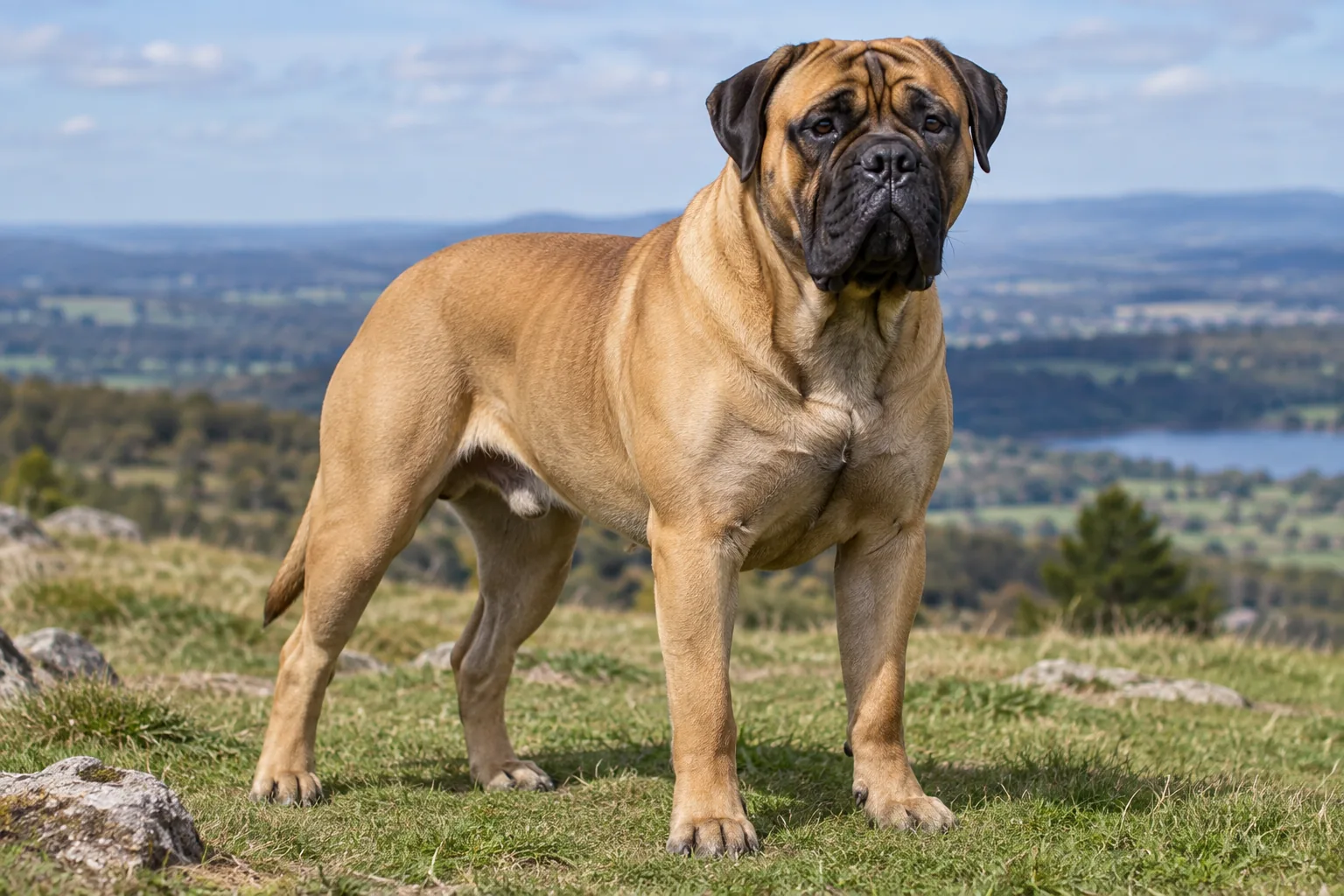
  • Bullmastiff: Breed Profile, Temperament, Health, and Care Guide

    Bullmastiff: Breed Profile, Temperament, Health, and Care Guide

    Home → Dog Breeds → Guardian/LGD & Molosser → Bullmastiff

    Bullmastiff: Breed Profile, Temperament, Health, and Care Guide

    A Bullmastiff is a giant guardian breed developed by 19th-century English gamekeepers, who crossed Bulldogs with Mastiffs to create a dog capable of silently tracking and restraining poachers on large estates without mauling them.

    That precise, controlled power still defines the breed today, best known as a quiet, watchful, deeply devoted family companion. This guide covers where the breed originated, its temperament, how big Bullmastiffs get, how long they live, the health problems they are prone to, grooming, how much exercise they need, how easy they are to train, what to feed them, the pros and cons of owning one, and what else people ask.

    What Is a Bullmastiff and Where Did the Breed Originate?

    A Bullmastiff belongs to the American Kennel Club’s Working Group, covered here as part of our dedicated guardian breed cluster. According to the American Bullmastiff Association, British gamekeepers created the breed by crossing Bulldogs with Mastiffs specifically to protect large estates from poachers. Rather than mauling an intruder the way some guard breeds might, a Bullmastiff was trained to wait patiently until a poacher came within striking distance, then restrain them through sheer strength and intimidation rather than injury.

    The American Kennel Club defines the breed in its “Official Standard of the Bullmastiff”, approved February 8, 1992, which sets out the size, coat, and temperament a Bullmastiff should have. As of September 2026, the AKC ranks the Bullmastiff 67th of 210 breeds in popularity.

    What Is a Bullmastiff’s Temperament Like?

    A Bullmastiff’s temperament is gentle, quiet, and genuinely bold, and the breed is not known for excessive barking, though it will bark to alert its family when something seems out of the ordinary. Bullmastiffs aren’t anxious or fearful, but they can be uncomfortable around unfamiliar people and animals without proper training and socialization. The breed forms deep bonds with its family and has an intense need to protect them, which is why early training matters enormously given the size this dog eventually reaches.

    How Big Do Bullmastiffs Get?

    Bullmastiffs are a giant, powerfully built breed with great endurance and strength, known for a solid, muscular body and a short coat that requires minimal grooming.

    What Is the Average Bullmastiff Height and Weight?

    Measure American Kennel Club figure
    Height 25-27 inches (male), 24-26 inches (female)
    Weight 110-130 pounds (male), 100-120 pounds (female)
    Life expectancy 7-9 years

    Figures are from the American Kennel Club Bullmastiff breed profile, retrieved September 2026.

    How Long Do Bullmastiffs Live?

    Bullmastiffs live 7 to 9 years, a relatively short lifespan even accounting for the breed’s giant size, and cancer, lymphoma, is documented as a leading cause of death. Regular veterinary screening matters considerably for supporting a full lifespan given this breed’s health challenges.

    What Health Problems Are Bullmastiffs Prone To?

    Bullmastiffs are documented as being at higher risk for the following conditions.

    • Dilated cardiomyopathy (DCM). A heart disease in which the heart muscles weaken and struggle to pump blood properly; mild to moderate cases may show no symptoms, while severe cases require ongoing medication.
    • Hip and elbow dysplasia. Joint conditions common in giant breeds, screened for with hip and elbow evaluations in responsible breeding programs.
    • Subaortic valvular stenosis (SAS). A genetic heart condition Bullmastiff puppies can inherit from their parents, screened for with a cardiac exam.
    • Entropion. A painful condition in which the eyelid rolls inward, causing the eyelashes to rub against the cornea and potentially causing corneal ulcers if uncorrected.
    • Bloat, or gastric torsion, and cancer. A life-threatening digestive emergency and a range of cancer types, both significant, well-documented risks in this breed specifically.

    How Do You Groom a Bullmastiff?

    Bullmastiffs have a short coat that doesn’t shed much, and regular brushing with a rubber curry brush, along with only bathing when needed, keeps the coat in good condition. Routine ear and skin checks, nail trims, and dental care round out the grooming routine for this genuinely low-maintenance coat.

    How Much Exercise Does a Bullmastiff Need?

    A Bullmastiff is a low-energy breed that requires daily walks and regular exercise to stay healthy and avoid obesity, but it genuinely doesn’t need intense activity, and this is a dog that’s happy lazing around the house. Given the breed’s heat sensitivity, walks should be brief and timed for cooler parts of the day, in particular during warmer months.

    Are Bullmastiffs Easy to Train?

    Bullmastiffs tend to be obedient with the proper attention, but early training matters enormously from a practical standpoint, since good habits like staying off furniture are much easier to establish before the dog reaches its full adult weight of over 100 pounds. Consistent exposure to different people and animals helps develop an even-tempered, well-behaved adult.

    What Should You Feed a Bullmastiff?

    Bullmastiff puppies should be fed large-breed puppy formula for slower, healthier growth, and adults eat around 3 to 4 cups of dry food daily, split into two or three smaller portions rather than one large meal given the breed’s bloat risk. A veterinarian can help set an appropriate feeding plan.

    What Are the Pros and Cons of Owning a Bullmastiff?

    Here are the main advantages of owning a Bullmastiff.

    • Gentle, quiet, deeply devoted temperament
    • Low exercise needs, genuinely happy at a relaxed pace
    • Low-maintenance short coat
    • Naturally protective without excessive barking or unnecessary aggression

    Here are the main drawbacks of owning a Bullmastiff.

    • Relatively short lifespan even for a giant breed
    • Documented, significant cancer and cardiac disease risk
    • Heat-sensitive, requires careful exercise timing in warm weather
    • Needs early training given the dog’s eventual size and strength

    Bullmastiff rescue organizations place adult dogs regularly, worth a look for anyone drawn to the breed’s gentle, protective temperament but not set on a breeder search.

    What Else Do People Ask About the Bullmastiff?

    The questions below cover how much a Bullmastiff costs, whether Bullmastiffs are good family dogs, why Bullmastiffs have such a short lifespan, and how Bullmastiffs were originally used.

    How much does a Bullmastiff cost?

    A Bullmastiff puppy costs between $1,000 and $2,000 from a breeder, with prices rising for dogs from champion lines and reputable breeders who provide cardiac and hip health testing. Adopting an adult Bullmastiff through a rescue, $150 to $400, is a lower-cost alternative.

    Are Bullmastiffs good family dogs?

    Yes, Bullmastiffs are widely regarded as sweet and loving family dogs, genuinely devoted to the people they consider their own. Their large size and protective instinct mean early training and socialization matter considerably, both for safety and for making sure the dog is comfortable around visitors and unfamiliar situations.

    Why do Bullmastiffs have such a short lifespan?

    Bullmastiffs have a relatively short lifespan, 7 to 9 years, even by giant-breed standards, largely driven by a documented elevated risk of cancer, lymphoma, along with cardiac conditions like dilated cardiomyopathy. Low population sizes in the breed also make it harder to breed away from these hereditary health issues, which is why health testing and pedigree research matter considerably when choosing a puppy.

    How were Bullmastiffs originally used?

    Bullmastiffs were originally bred by English gamekeepers to protect large estates from poachers, trained to silently track and then restrain an intruder using strength and intimidation rather than causing serious injury. This controlled, non-mauling approach is part of why the breed’s modern temperament tends toward calm and quiet rather than aggressive.

    Related Guides

    More guides on The Dogs Wiki cover behavior, grooming, nutrition, and adoption.

    Guide
    Behavior
    Grooming
    Nutrition
    Adoption
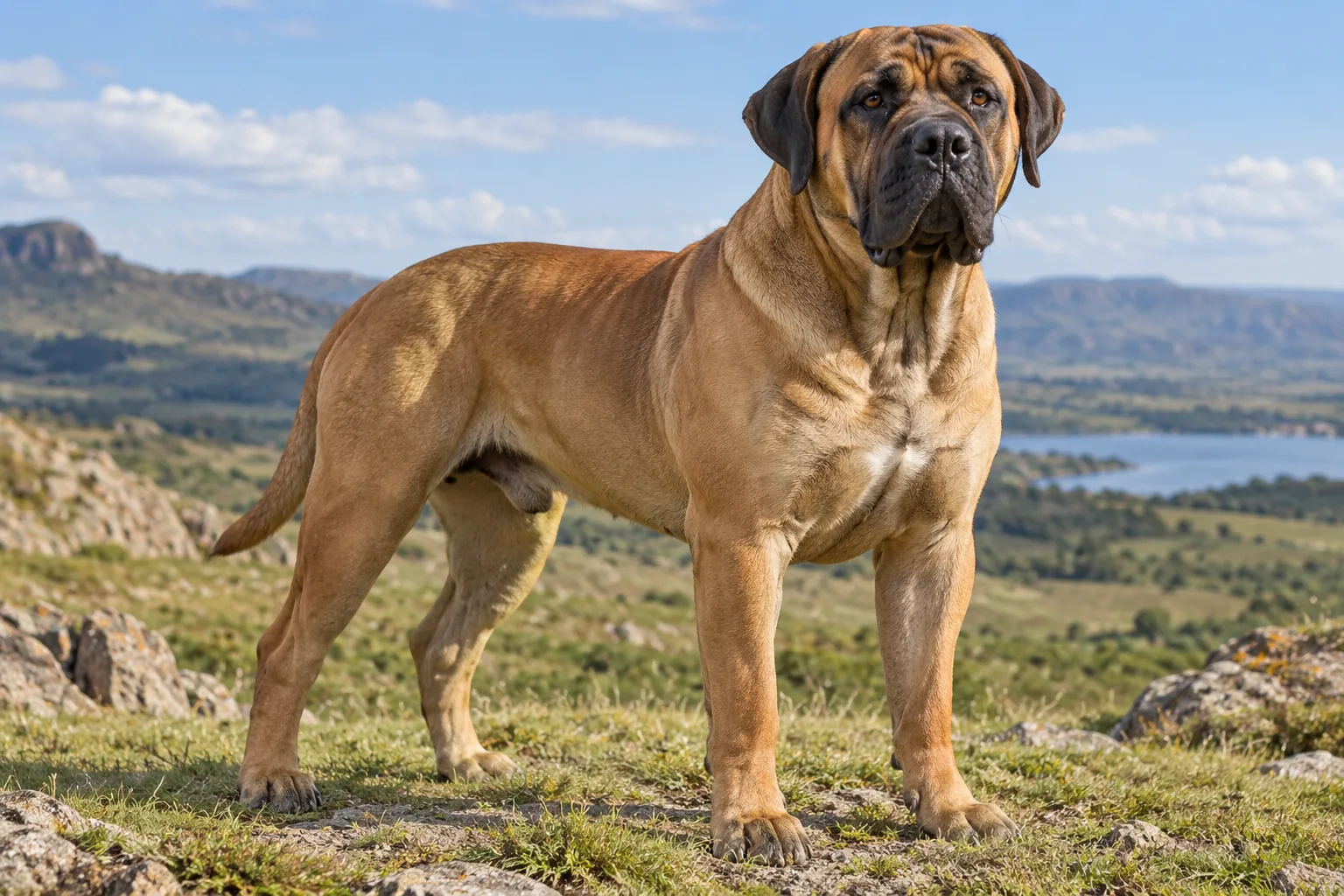
  • Boerboel: Breed Profile, Temperament, Health, and Care Guide

    Boerboel: Breed Profile, Temperament, Health, and Care Guide

    Home → Dog Breeds → Guardian/LGD & Molosser → Boerboel

    Boerboel: Breed Profile, Temperament, Health, and Care Guide

    A Boerboel is a giant guardian breed from South Africa, whose name translates to “farmer’s dog” in Afrikaans, descended from crossbred mastiffs and bulldogs brought by colonial settlers and developed to guard remote farms against dangerous wildlife.

    Also called the South African Mastiff, the Boerboel combines a massive, powerful build with a genuinely affectionate, gentle side reserved for its own family. This guide covers where the breed originated, its temperament, how big Boerboels get, how long they live, the health problems they are prone to, grooming, how much exercise they need, how easy they are to train, what to feed them, the pros and cons of owning one, and what else people ask.

    What Is a Boerboel and Where Did the Breed Originate?

    A Boerboel belongs to the Mastiff family and is sometimes called the South African Mastiff, though it’s covered here as part of our dedicated guardian breed cluster given its specific farm-guardian role. The breed developed in South Africa from crossbred mastiffs and bulldogs brought by colonial settlers, kept since the late 19th century as guard dogs on remote farms. Beyond guarding livestock, Boerboels were also used for hunting, tracking, and holding down wounded big game, a job their fearless nature and large stature suited well. The breed’s popularity in the U.S. Has climbed to around 118th on the AKC’s most popular breeds list.

    The American Kennel Club defines the breed in its “Official Standard of the Boerboel” which sets out the size, coat, and temperament a Boerboel should have. As of September 2026, the AKC ranks the Boerboel 114th of 210 breeds in popularity.

    What Is a Boerboel’s Temperament Like?

    A Boerboel’s temperament is affectionate and calm with family, children, while remaining naturally wary and protective around unfamiliar people. The breed is intelligent, confident, and genuinely independent-minded, which means the Boerboel’s gentle-giant reputation can be misleading for first-time owners, since managing a dog this size and strength takes real confidence and consistency. Without early socialization and training, Boerboels can become aggressive toward unfamiliar dogs or people, though most do well with animals already living in the same household.

    How Big Do Boerboels Get?

    Boerboels are a large, muscular, stocky breed with a broad, blocky skull, pronounced cheeks, and a short, dense coat, historically bred with a docked tail, though modern docking practices vary and are now largely cosmetic where still performed.

    What Is the Average Boerboel Height and Weight?

    Measure American Kennel Club figure
    Height 24-27 inches (male), 22-25 inches (female)
    Weight 150-200 pounds
    Life expectancy 9-11 years

    Figures are from the American Kennel Club Boerboel breed profile, retrieved September 2026.

    How Long Do Boerboels Live?

    Boerboels live 9 to 11 years, a typical lifespan for a giant breed. Regular veterinary care and attentiveness to the breed’s documented joint and cardiac risks support a full lifespan.

    What Health Problems Are Boerboels Prone To?

    Boerboels are documented as being at higher risk for the following conditions.

    • Hip and elbow dysplasia. Joint conditions common in giant breeds given the substantial weight the joints must support throughout life.
    • Heart disease, including dilated cardiomyopathy. A condition worth monitoring as the dog ages, given its documented presence in the breed.
    • Ectropion and entropion. Eyelid abnormalities, one rolling outward and one inward, both correctable with minor surgery when needed.
    • Epilepsy. A neurological seizure disorder that can appear in young dogs, sometimes triggered by hormonal changes or high stress; genuinely hereditary in nature, which makes screening breeding stock important.
    • Bloat, or gastric dilatation-volvulus (GDV). A life-threatening emergency in deep-chested breeds requiring immediate veterinary care.

    How Do You Groom a Boerboel?

    Boerboels have a short, dense coat that’s genuinely low-maintenance, needing only regular brushing to manage the breed’s relatively minimal shedding, which increases somewhat during seasonal changes. Routine nail trims, ear checks, and dental care round out the grooming routine.

    How Much Exercise Does a Boerboel Need?

    A Boerboel needs regular, moderate-to-high exercise, daily long walks and task-based activities, and both insufficient and excessive exercise can cause real problems, the former causing restlessness and behavioral issues, the latter potentially stressing developing joints. This breed doesn’t do well crammed into a small apartment and prefers a fenced yard with real room to roam.

    Are Boerboels Easy to Train?

    Boerboels are smart and genuinely trainable, but their confident, independent thinking means the breed can be challenging to manage without a firm, experienced hand. Structured obedience training should start in puppyhood and continue into adulthood, and this breed’s massive size and protective drive make early socialization essential rather than optional.

    What Should You Feed a Boerboel?

    Boerboels do well on a large-breed diet appropriate for their age and activity level, and given the breed’s genuine size, portion planning should account for a substantial daily food requirement. A veterinarian can help set an appropriate feeding plan suited to the individual dog.

    What Are the Pros and Cons of Owning a Boerboel?

    Here are the main advantages of owning a Boerboel.

    • Affectionate, calm temperament with its own family, children
    • Genuinely low-maintenance short coat
    • Formidable natural protector
    • Intelligent and trainable with an experienced handler

    Here are the main drawbacks of owning a Boerboel.

    • Not recommended for first-time owners given size and independent drive
    • Documented risk of cardiac disease and epilepsy
    • Needs a large home with a securely fenced yard, not suited to apartments
    • Requires extensive early socialization to manage guarding instincts safely

    Boerboel rescue organizations place adult dogs, though the breed’s relative rarity can limit availability, worth a look for anyone drawn to the breed’s loyalty and protective nature but not set on a breeder search.

    What Else Do People Ask About the Boerboel?

    The questions below cover how much a Boerboel costs, whether Boerboels are good family dogs, the difference between the Boerboel and the Cane Corso, and whether a Boerboel is dangerous.

    How much does a Boerboel cost?

    Boerboel prices vary by region, bloodline, and breeder reputation, and a puppy from a breeder affiliated with the American Boerboel Club who screens for hip, elbow, and cardiac health typically costs more than one that doesn’t. Adopting an adult Boerboel through a rescue is usually a lower-cost alternative, though the breed’s relative rarity can limit availability.

    Are Boerboels good family dogs?

    Yes, Boerboels can be good family dogs for experienced owners, known for being affectionate with their family and gentle with young children who understand how to interact with dogs. Their massive size and protective drive mean early socialization and consistent training matter more with this breed than with more naturally easygoing ones.

    What Is the Difference Between the Boerboel and the Cane Corso?

    Boerboels and Cane Corsos are both powerful guardian breeds, but Boerboels are considerably larger, weighing 150 to 200 pounds compared to the Cane Corso’s 88 to 110 pounds. Both breeds require experienced handling and extensive socialization, though the Boerboel’s greater size raises the stakes on proper training even further.

    Is a Boerboel dangerous?

    A Boerboel isn’t dangerous, but the breed’s guarding instinct, strength, and size mean it can become genuinely aggressive toward unfamiliar people or animals without proper early socialization and consistent training. Responsible ownership, starting structured training and socialization in puppyhood, is essential for managing this breed safely.

    Related Guides

    More guides on The Dogs Wiki cover behavior, health, grooming, training, nutrition, and adoption.

    Guide
    Behavior
    Health
    Grooming
    Training
    Nutrition
    Adoption
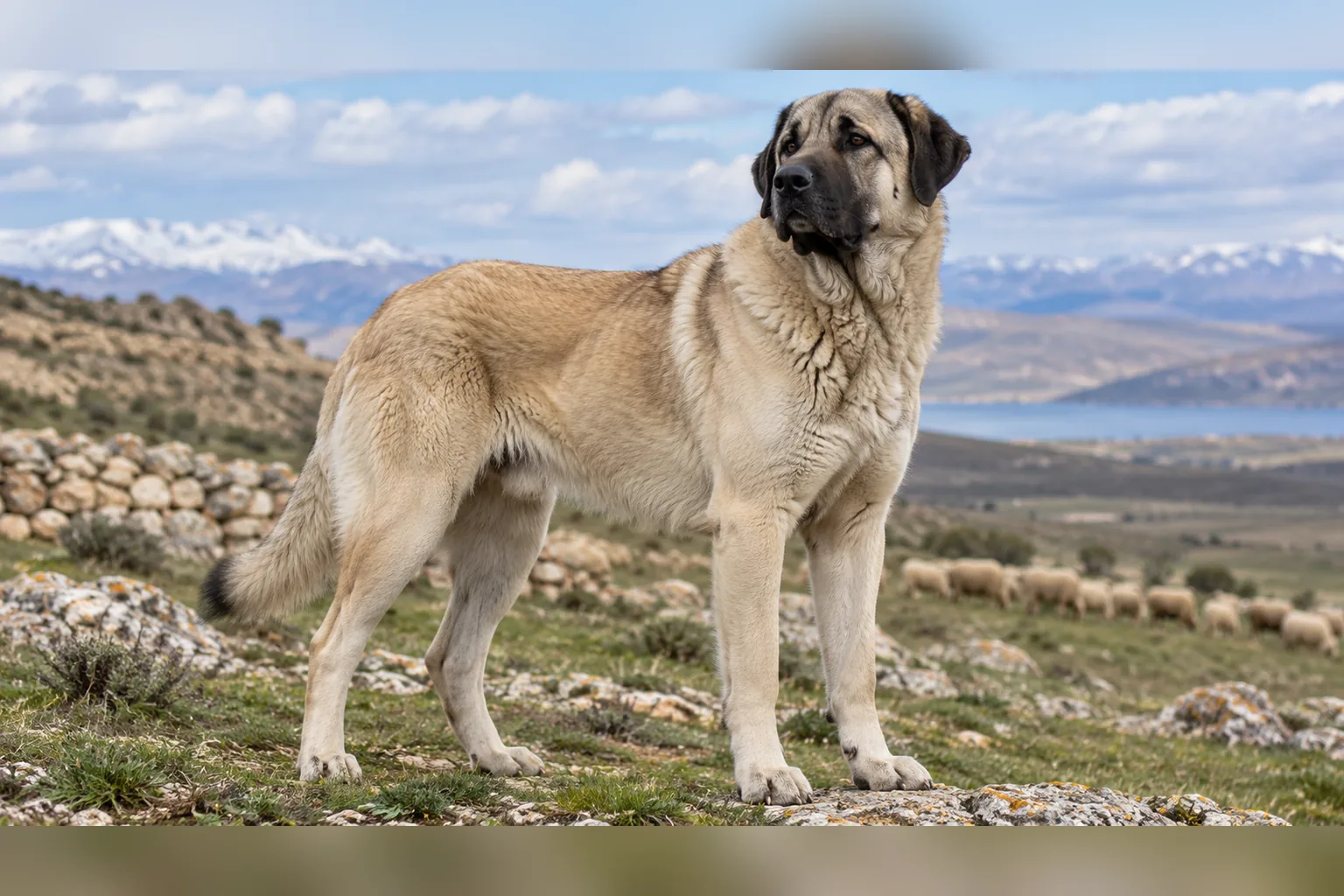
  • Anatolian Shepherd: Breed Profile, Temperament, Health, and Care Guide

    Anatolian Shepherd: Breed Profile, Temperament, Health, and Care Guide

    Home → Dog Breeds → Guardian/LGD & Molosser → Anatolian Shepherd

    Anatolian Shepherd: Breed Profile, Temperament, Health, and Care Guide

    An Anatolian Shepherd is a giant livestock guardian breed from Turkey’s Anatolia region, with ancestors among the oldest domestic canine bloodlines known, dating back roughly 4,000 years.

    Bred for millennia to live directly with a flock and drive off predators without a human giving direction, the Anatolian Shepherd has become respected enough as a working guardian to be employed protecting endangered cheetahs from farmer retaliation in Namibia, Africa. This guide covers where the breed originated, its temperament, how big Anatolian Shepherds get, how long they live, the health problems they are prone to, grooming, how much exercise they need, how easy they are to train, what to feed them, the pros and cons of owning one, and what else people ask.

    What Is an Anatolian Shepherd and Where Did the Breed Originate?

    An Anatolian Shepherd belongs to the American Kennel Club’s Working Group, covered here as part of our dedicated guardian breed cluster. According to the Anatolian Shepherd Dog Club of America, the breed’s ancestors are among the oldest known domestic canine bloodlines, dating back thousands of years in what’s now Turkey. Anatolian Shepherds made their way to the United States in the 1950s, and the breed’s genuine effectiveness as a livestock guardian has earned it work protecting endangered cheetahs in Namibia, where the dogs deter predation without the need for lethal predator control.

    The American Kennel Club defines the breed in its “Official Standard of the Anatolian Shepherd Dog”, approved 1995, which sets out the size, coat, and temperament an Anatolian Shepherd should have. As of September 2026, the AKC ranks the Anatolian Shepherd 86th of 210 breeds in popularity.

    What Is an Anatolian Shepherd’s Temperament Like?

    An Anatolian Shepherd’s temperament is defined above all by one word: guardian. The breed is calm, alert, and intensely territorial, bred for millennia to live with a flock and independently drive off predators without waiting on a human’s direction. Anatolian Shepherds are calm and friendly with their own family but genuinely wary of strangers, and that independence, while a genuine feature of the breed’s working effectiveness, shapes nearly every part of ownership, from training to containment.

    How Big Do Anatolian Shepherds Get?

    Anatolian Shepherds are a giant, powerful breed with a short or rough double coat, roughly one to four inches long, over a thick, weather-resistant undercoat. Per the AKC breed standard, males must stand at least 29 inches at the withers and females at least 27 inches, measured at two years or older.

    What Is the Average Anatolian Shepherd Height and Weight?

    Measure American Kennel Club figure
    Height 29 inches (male), 27 inches (female)
    Weight 110-150 pounds (male), 80-120 pounds (female)
    Life expectancy 11-13 years

    Figures are from the American Kennel Club Anatolian Shepherd breed profile, retrieved September 2026.

    How Long Do Anatolian Shepherds Live?

    Anatolian Shepherds live 11 to 13 years, a relatively long lifespan for a giant breed. Regular veterinary care, including hip and eye screening, supports a full lifespan for this hardy breed.

    What Health Problems Are Anatolian Shepherds Prone To?

    Anatolian Shepherds are documented as being at higher risk for the following conditions.

    • Hip and elbow dysplasia. Joint conditions common in giant breeds, in which the bones of the joint don’t line up properly during development.
    • Bloat, or gastric dilatation-volvulus (GDV). A significant, deep-chested-breed emergency requiring preventive feeding and exercise routines along with immediate veterinary care if suspected.
    • Entropion. An eyelid condition occurring more frequently in the breed that can require surgical correction.
    • Congenital deafness and osteochondritis dissecans. A hearing condition present from birth and a joint condition, both recognized concerns.
    • Cardiomyopathy and autoimmune thyroiditis. A heart muscle disease and an immune-related thyroid condition, both worth discussing with a veterinarian as part of routine screening.

    How Do You Groom an Anatolian Shepherd?

    Anatolian Shepherds have a coat that requires minimal grooming day to day, though the breed is a moderate shedder that needs more frequent brushing during seasonal coat changes. Beyond brushing, the grooming routine is minimal: routine nail trims, ear checks, and dental care.

    How Much Exercise Does an Anatolian Shepherd Need?

    An Anatolian Shepherd needs more than two hours of exercise daily to satisfy both its physical and mental needs, reflecting the breed’s genuine working stamina developed to patrol open country in all weather. This breed is best suited to a home with a large, securely fenced yard, and it’s not recommended for first-time owners or those in compact living spaces given both its size and its independent guardian instincts.

    Are Anatolian Shepherds Easy to Train?

    Anatolian Shepherds are intelligent, patient, and loyal, but genuinely independent given a working history that demanded initiative rather than constant direction from a handler. Disciplined yet understanding training works best, and this breed isn’t recommended for novice owners given the combination of size, strength, and independent thinking involved.

    What Should You Feed an Anatolian Shepherd?

    Anatolian Shepherds should be fed a diet with a balance of high-quality proteins and fats, avoiding foods with grain fillers like corn, soy, and wheat. Given the breed’s substantial weight range, from roughly 80 to 150 pounds, feeding requirements vary considerably by individual dog, and a veterinarian can help set an appropriate plan.

    What Are the Pros and Cons of Owning an Anatolian Shepherd?

    Here are the main advantages of owning an Anatolian Shepherd.

    • Calm, loyal, genuinely effective natural guardian
    • Relatively long lifespan for a giant breed
    • Low-maintenance coat requiring minimal grooming
    • Hardy and adaptable, capable of working independently

    Here are the main drawbacks of owning an Anatolian Shepherd.

    • Needs more than two hours of daily exercise
    • Genuinely wary of strangers, not recommended for novice owners
    • Independent temperament makes training a real, ongoing commitment
    • Needs a large, securely fenced yard, not suited to compact living spaces

    Anatolian Shepherd rescue organizations place adult dogs regularly, worth a look for anyone drawn to the breed’s guardian capability but not set on a breeder search.

    What Else Do People Ask About the Anatolian Shepherd?

    The questions below cover how much an Anatolian Shepherd costs, whether Anatolian Shepherds are good family dogs, why Anatolian Shepherds are used to protect cheetahs, and whether Anatolian Shepherds get along with other animals.

    How much does an Anatolian Shepherd cost?

    Anatolian Shepherd prices vary by region, bloodline, and breeder reputation, and a puppy from a breeder who screens for hip and cardiac health typically costs more than one that doesn’t. Adopting an adult Anatolian Shepherd through a rescue is usually a lower-cost alternative.

    Are Anatolian Shepherds good family dogs?

    Anatolian Shepherds can be good family guardians for experienced owners, calm and friendly with their own family, but the breed is genuinely wary of strangers and unlikely to be playful and outgoing with unfamiliar people the way some other large breeds are. Early, consistent socialization and an experienced handler matter considerably with this breed.

    Why are Anatolian Shepherds used to protect cheetahs?

    Anatolian Shepherds have been deployed in Namibia, Africa, to guard livestock from cheetahs, which has the secondary effect of reducing farmer retaliation against the endangered cats, since the presence of an effective guardian dog means fewer livestock losses to defend against. This conservation program has become a genuine, well-documented success story for the breed’s natural guarding ability.

    Do Anatolian Shepherds get along with other animals?

    Anatolian Shepherds can get along with other animals, livestock they’re raised to guard, but the breed has a strong preference for livestock specifically and may be territorial toward unfamiliar dogs, other males. Early socialization matters considerably for managing the breed’s guardian instincts around other pets.

    Related Guides

    More guides on The Dogs Wiki cover behavior, health, training, nutrition, and adoption.

    Guide
    Behavior
    Health
    Training
    Nutrition
    Adoption
  • Vizsla vs Weimaraner

    Vizsla vs Weimaraner

    Home → Dog Breeds → Breed Comparisons → Vizsla vs Weimaraner

    Vizsla vs Weimaraner

    The Vizsla is the smaller, gentler dog that wants constant closeness, while the Weimaraner is larger, more independent, and needs even more exercise and consistent training.

    Vizslas and Weimaraners are both sleek, short-coated European Sporting Group breeds with high energy and an intense attachment to their owners, which makes them a common comparison for active households. The two differ most noticeably in size and coat color. This comparison covers how the Vizsla and Weimaraner compare at a glance, how they differ in temperament, size and build, how they compare on health and exercise, whether you should choose the Vizsla or the Weimaraner, and what else people ask.

    How Do the Vizsla and Weimaraner Compare at a Glance?

    Vizsla Weimaraner
    Height 21–24 in 23–27 in
    Weight 45–65 lb 55–90 lb
    Lifespan 12–14 years 10–13 years
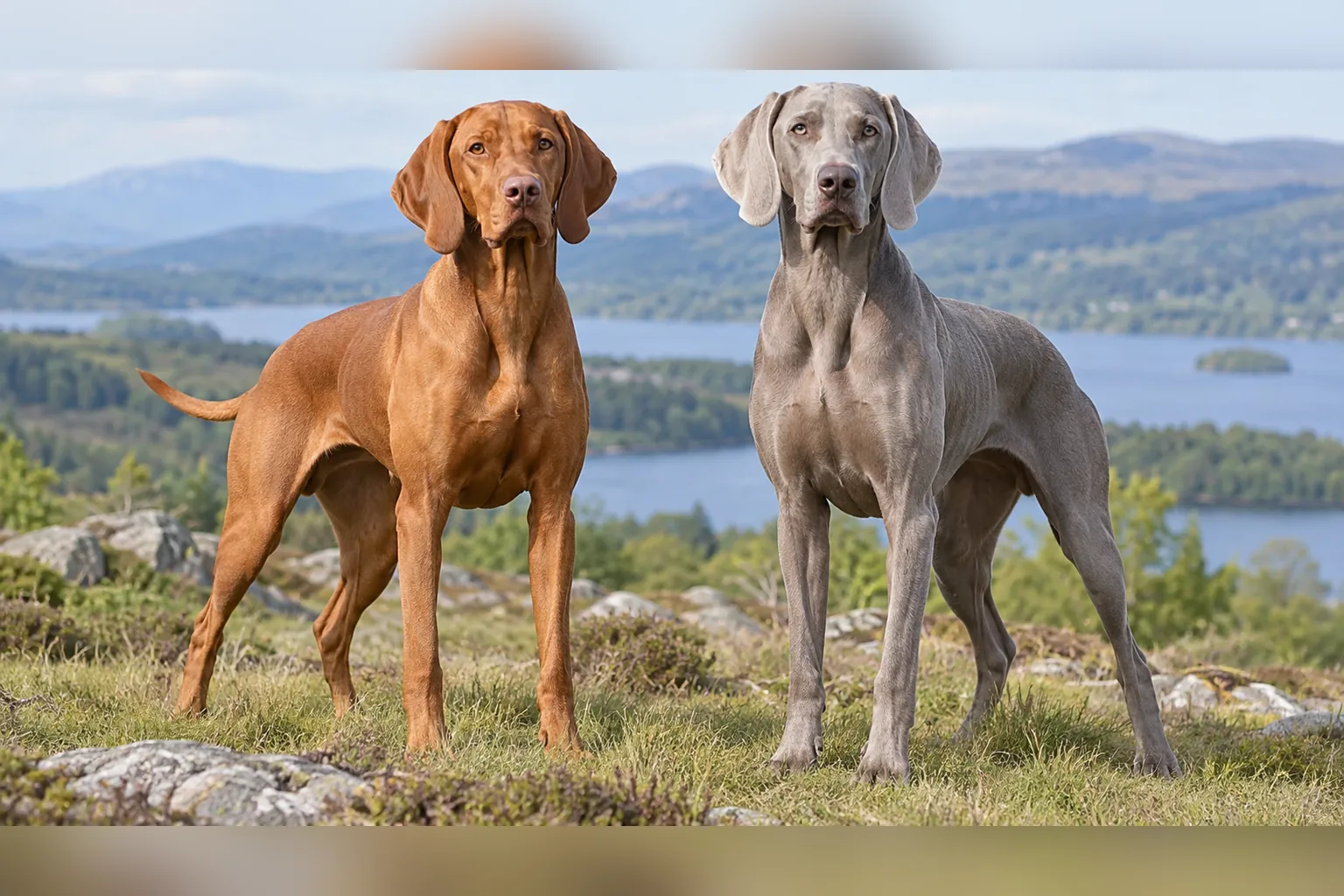
    Coat Color Solid golden-rust Distinctive silver-gray
    Temperament Gentle, intensely attached (“Velcro dog”) Loyal, energetic, independent
    Exercise Needs 60+ minutes daily 90+ minutes daily

    Figures for both breeds follow the AKC’s “Official Standard for the Vizsla”, approved January 13, 2009, and the AKC’s “Official Standard for the Weimaraner”, approved December 14, 1971, with current details on the American Kennel Club’s Vizsla and Weimaraner breed pages, retrieved September 2026.

    How Does the Vizsla Differ From the Weimaraner in Temperament?

    Vizslas are known as “Velcro dogs” for their intense, near-constant desire for physical closeness with their owner, a gentler and more overtly affectionate temperament than most Sporting Group breeds. Weimaraners are also deeply loyal but carry a somewhat more independent, assertive streak, and the breed can develop genuine separation anxiety and destructive behavior if left alone frequently.

    How Do the Vizsla and Weimaraner Differ in Size and Build?

    Weimaraners run noticeably larger than Vizslas at a similar lean, athletic build, and the two breeds are easy to tell apart by coat color alone: the Vizsla’s solid golden-rust coat versus the Weimaraner’s distinctive silver-gray, which earned the breed its “Silver Ghost” nickname.

    How Do the Vizsla and Weimaraner Compare on Health and Exercise?

    Both breeds need substantial daily exercise, though the Weimaraner’s larger size and documented bloat risk mean feeding practices matter even more for this breed specifically. Vizslas carry a documented risk of epilepsy and allergies, while Weimaraners are more associated with entropion and progressive retinal atrophy, alongside a shared risk of hip dysplasia in both breeds.

    Should You Choose the Vizsla or the Weimaraner?

    The Vizsla is the better emotional fit for an owner who wants a slightly smaller, gentler dog that wants to be physically close to its person constantly. The Weimaraner is worth considering for an owner who wants a larger, striking-looking dog and can commit to even more exercise and consistent training to manage the breed’s independent streak. See the full Vizsla guide and Weimaraner guide for complete profiles.

    What Else Do People Ask About Vizsla vs Weimaraner?

    The questions below cover which breed is more expensive, which is easier to train, which sheds more, and whether a Vizsla and a Weimaraner can live together.

    Which is more expensive, Vizsla or Weimaraner?

    Vizsla prices range from around $1,000 to $2,000, while Weimaraner prices span a wider range, from roughly $500 to $3,000 depending on breeder and bloodline, so neither breed is consistently more expensive than the other.

    Which is easier to train, Vizsla or Weimaraner?

    Both breeds are trainable but sensitive, requiring gentle, positive methods rather than harsh correction. Vizslas are sometimes considered marginally easier given their gentler overall temperament, though both need consistency.

    Which sheds more, Vizsla or Weimaraner?

    Both breeds have short coats and shed at a moderate, comparable level, so coat maintenance isn’t a major differentiating factor between the two.

    Can a Vizsla and Weimaraner live together?

    Yes, the two breeds generally get along well, sharing similar high energy, hunting heritage, and a genuine attachment to their people, which makes this a workable pairing in an active, multi-dog household.

    Related Guides

    More guides on The Dogs Wiki cover weimaraner.

    Guide
    Weimaraner
  • Siberian Husky vs Alaskan Malamute

    Siberian Husky vs Alaskan Malamute

    Home → Dog Breeds → Breed Comparisons → Siberian Husky vs Alaskan Malamute

    Siberian Husky vs Alaskan Malamute

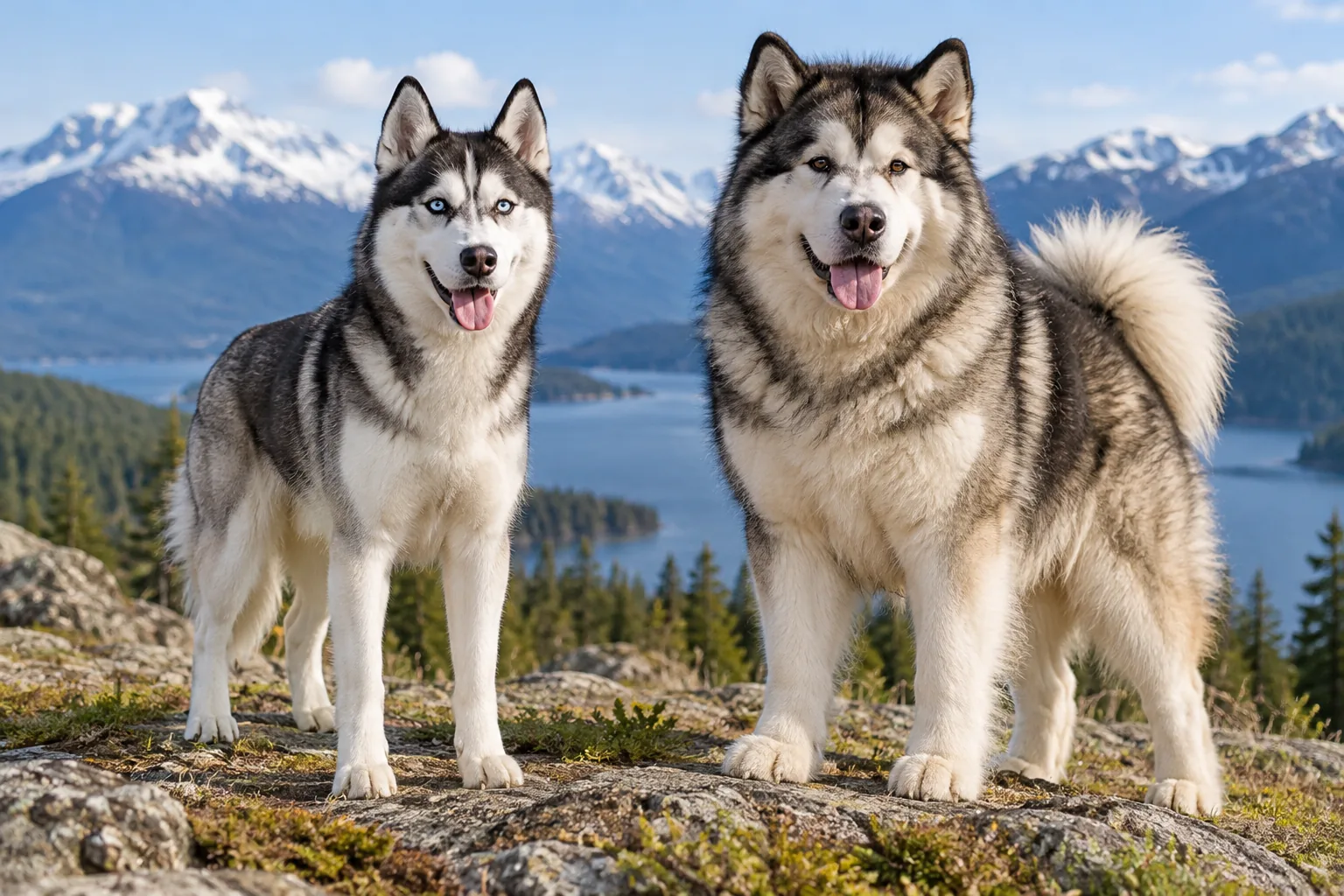
    The Siberian Husky is the smaller, friendlier sled breed built for speed, while the Alaskan Malamute is larger, built for hauling freight, and needs firm leadership and more space; neither suits a first-time owner.

    Siberian Huskies and Alaskan Malamutes are both Arctic sled breeds frequently confused for one another given their similar wolfish appearance, but they were bred for genuinely different jobs: the Husky for speed and endurance, the Malamute for raw freight-pulling power. This comparison covers how the Siberian Husky and Alaskan Malamute compare at a glance, how they differ in temperament, size and build, how they compare on health and exercise, whether you should choose the Siberian Husky or the Alaskan Malamute, and what else people ask.

    How Do the Siberian Husky and Alaskan Malamute Compare at a Glance?

    Siberian Husky Alaskan Malamute
    Height 20–23.5 in 23–26 in
    Weight 35–60 lb 75–100 lb
    Lifespan 12–14 years 10–14 years
    Original Purpose Fast, light-load endurance sledding Heavy freight hauling
    Temperament Friendly, even with strangers Loyal, strong-willed, social
    Vocalization Howls, rarely barks “Woo-woo” sounds, rarely barks

    Figures for both breeds follow the AKC’s “Official Standard of the Siberian Husky”, approved February 9, 2021, and the AKC’s “Official Standard of the Alaskan Malamute”, approved April 12, 1994, with current details on the American Kennel Club’s Siberian Husky and Alaskan Malamute breed pages, retrieved September 2026.

    How Does the Siberian Husky Differ From the Alaskan Malamute in Temperament?

    Siberian Huskies are famously friendly even with strangers, which makes them poor guard dogs despite their appearance. Alaskan Malamutes are also affectionate but genuinely more strong-willed, requiring firm, consistent leadership from an experienced owner, and the breed doesn’t tolerate being left alone as well as a Husky can.

    How Do the Siberian Husky and Alaskan Malamute Differ in Size and Build?

    This is the clearest distinguishing factor: Alaskan Malamutes are considerably larger and more heavily boned than Siberian Huskies, built for hauling heavy freight over long distances rather than covering ground quickly. Huskies are leaner and built more for speed, which is part of why the two breeds, despite looking superficially similar, feel different to handle on a leash.

    How Do the Siberian Husky and Alaskan Malamute Compare on Health and Exercise?

    Both breeds need substantial daily exercise and secure fencing given real prey drive and escape tendencies, though the Malamute’s greater size means it needs an even larger, more securely fenced space. Health risks overlap considerably between the two, including hip dysplasia and eye conditions, though the two breeds carry somewhat different specific documented risks given their clear genetic backgrounds.

    Should You Choose the Siberian Husky or the Alaskan Malamute?

    The Siberian Husky is the more forgiving choice for an owner who wants a slightly more manageable size and a breed that’s genuinely friendly with everyone, including strangers. The Alaskan Malamute is worth considering for an owner who wants a larger, even more devoted companion and can commit to firm, consistent leadership plus a serious amount of space, though neither breed suits a first-time or casual owner well. See the full Siberian Husky guide and Alaskan Malamute guide for complete profiles.

    What Else Do People Ask About Siberian Husky vs Alaskan Malamute?

    The questions below cover which breed is more expensive, which is easier to train, which sheds more, and whether a Siberian Husky and an Alaskan Malamute can live together.

    Which is more expensive, Siberian Husky or Alaskan Malamute?

    Prices for both breeds vary by region and bloodline, and neither is consistently more expensive than the other, though Malamute puppies from health-tested working lines can command a premium given the breed’s relative rarity.

    Which is easier to train, Siberian Husky or Alaskan Malamute?

    Both breeds are intelligent but genuinely independent, making training a real, ongoing commitment either way. Neither breed is considered easier than the other, and both benefit considerably from an experienced handler.

    Which sheds more, Siberian Husky or Alaskan Malamute?

    Both breeds are heavy shedders with two intense seasonal coat blowouts a year, and neither sheds meaningfully less than the other given their similar thick double-coat structure.

    Can a Siberian Husky and Alaskan Malamute live together?

    Yes, the two breeds generally get along well together, sharing a similar Arctic working heritage, social nature, and play style, which makes this a genuinely common and successful pairing in multi-dog households.

    Related Guides

    More guides on The Dogs Wiki cover Alaskan Malamute.

    Guide
    Alaskan Malamute
  • Rottweiler vs Doberman Pinscher

    Rottweiler vs Doberman Pinscher

    Home → Dog Breeds → Breed Comparisons → Rottweiler vs Doberman Pinscher

    Rottweiler vs Doberman Pinscher

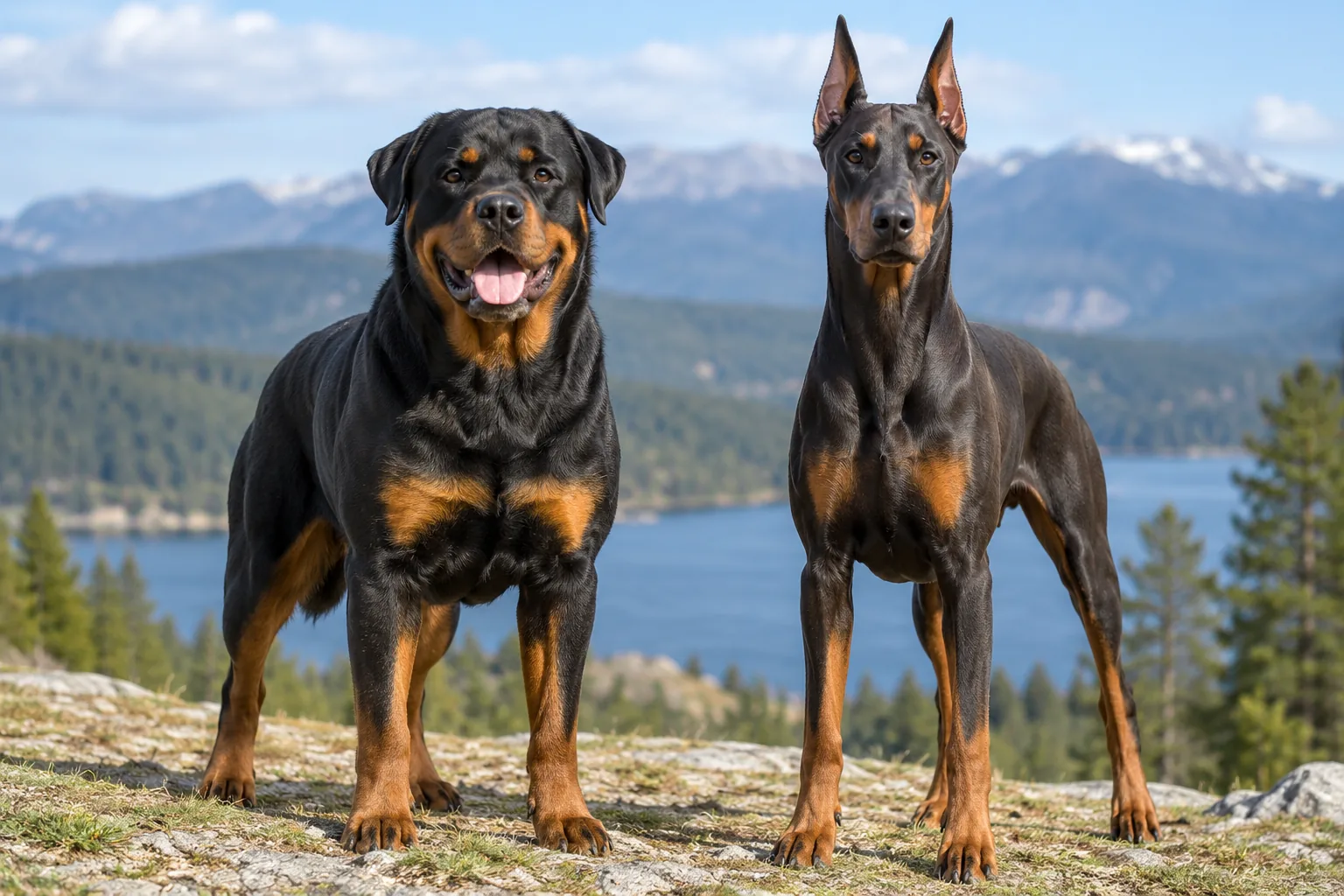
    The Rottweiler is the calmer, heavier protector with a higher hip dysplasia risk, while the Doberman Pinscher is leaner and more athletic, lives a couple of years longer, and needs regular cardiac screening.

    Rottweilers and Doberman Pinschers are both German Working Group breeds prized for loyalty, intelligence, and a genuine protective instinct, which is why they’re frequently compared by owners deciding between the two. The real distinctions come down to build, lifespan, and a few documented health differences. This comparison covers how the Rottweiler and Doberman Pinscher compare at a glance, how they differ in temperament, size and build, which is healthier and lives longer, whether you should choose the Rottweiler or the Doberman Pinscher, and what else people ask.

    How Do the Rottweiler and Doberman Pinscher Compare at a Glance?

    Rottweiler Doberman Pinscher
    Height 22–27 in 24–28 in
    Weight 80–135 lb 60–100 lb
    Lifespan 8–10 years 10–12 years
    Build Heavier, more powerful Leaner, more athletic
    Temperament Calm, confident, aloof with strangers Alert, energetic, deeply loyal
    Coat Short, sheds heavily Short, low shedding

    Figures for both breeds follow the AKC’s “Official Standard of the Rottweiler”, approved May 10, 2022, and the AKC’s “Official Standard of the Doberman Pinscher”, approved February 6, 1982, with current details on the American Kennel Club’s Rottweiler and Doberman Pinscher breed pages, retrieved September 2026.

    How Does the Rottweiler Differ From the Doberman Pinscher in Temperament?

    Both breeds are intelligent and protective, but Rottweilers tend to run calmer and more self-assured, sometimes described as almost clownish with familiar people while remaining genuinely aloof with strangers. Doberman Pinschers are more energetic and alert overall, requiring more consistent physical and mental engagement to stay settled.

    How Do the Rottweiler and Doberman Pinscher Differ in Size and Build?

    Rottweilers are noticeably heavier and more powerfully built, while Doberman Pinschers are leaner and more athletic at a similar or slightly taller height. This build difference shows up in daily life too: Dobermans move with a lighter, quicker gait, while Rottweilers carry themselves with more visible mass and strength.

    Which Is Healthier and Lives Longer, the Rottweiler or the Doberman Pinscher?

    Doberman Pinschers typically live a couple of years longer on average than Rottweilers, though both breeds carry serious documented health risks. Rottweilers face among the highest hip dysplasia rates of any breed along with elevated osteosarcoma risk, while Dobermans carry a well-documented risk of dilated cardiomyopathy, a serious heart condition.

    Should You Choose the Rottweiler or the Doberman Pinscher?

    The Rottweiler is worth considering for an owner who wants a somewhat calmer, heavier-built protector and can commit to the joint-health management the breed’s dysplasia risk demands. The Doberman Pinscher is the better fit for an owner who prefers a leaner, more athletic dog with a couple more years of average lifespan and can commit to consistent cardiac screening. See the full Rottweiler guide and Doberman Pinscher guide for complete profiles.

    What Else Do People Ask About Rottweiler vs Doberman Pinscher?

    The questions below cover which breed is more expensive, which is easier to train, which sheds more, and which lives longer.

    Which is more expensive, Rottweiler or Doberman Pinscher?

    Doberman Pinschers, in particular from championship bloodlines with full health testing, often command higher prices than Rottweilers, though both vary considerably by region, breeder reputation, and bloodline.

    Which is easier to train, Rottweiler or Doberman Pinscher?

    Both breeds are highly trainable and intelligent, with a strong history in police and military work. Dobermans are sometimes considered marginally more responsive given their higher energy and eagerness for mental engagement.

    Which sheds more, Rottweiler or Doberman Pinscher?

    Rottweilers shed considerably more than Doberman Pinschers, despite both having short coats, since the Rottweiler’s coat is denser and sheds more heavily year-round.

    Which lives longer, Rottweiler or Doberman Pinscher?

    Doberman Pinschers live a couple of years longer on average than Rottweilers, 10 to 12 years compared to the Rottweiler’s 8 to 10 years, though individual dogs vary considerably based on genetics and care.

    Related Guides

    More guides on The Dogs Wiki cover Doberman Pinscher.

    Guide
    Doberman Pinscher
  • Poodle vs Goldendoodle

    Poodle vs Goldendoodle

    Home → Dog Breeds → Breed Comparisons → Poodle vs Goldendoodle

    Poodle vs Goldendoodle

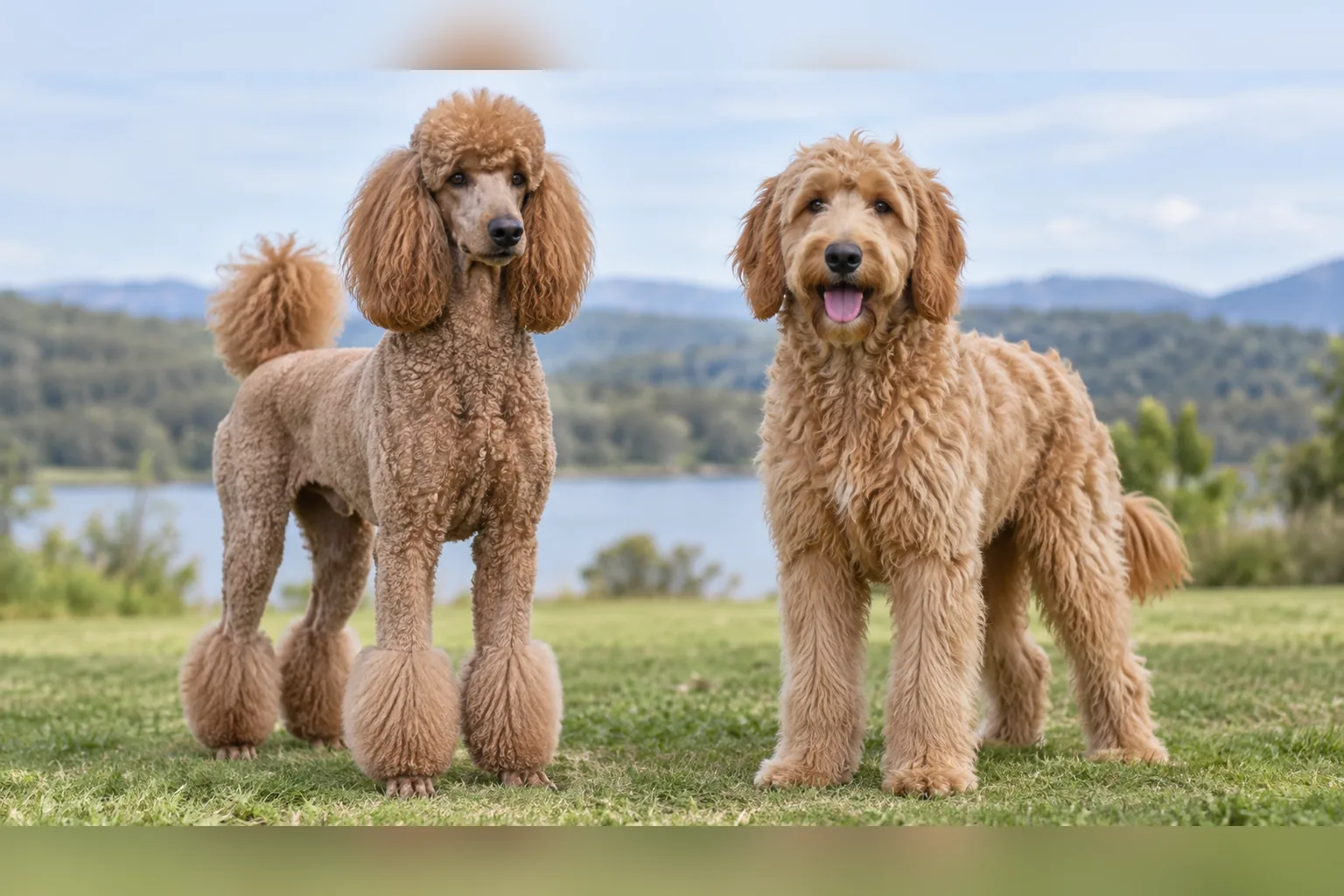
    A Poodle is a purebred with a predictable coat, size, and temperament, while a Goldendoodle is a Poodle and Golden Retriever cross with a friendlier but more variable result.

    A Poodle is a purebred AKC breed with a fixed standard, while a Goldendoodle is an intentional cross between a Poodle and a Golden Retriever, which means the two share real similarities in coat and intelligence but differ meaningfully in predictability and temperament. This comparison covers how the Poodle and Goldendoodle compare at a glance, how they differ in temperament, how they differ in coat and predictability, which is healthier and lives longer, whether you should choose the Poodle or the Goldendoodle, and what else people ask.

    How Do the Poodle and Goldendoodle Compare at a Glance?

    Poodle (Standard) Goldendoodle
    Height 18–24 in 14–24+ in (varies by Poodle parent size)
    Weight 40–70 lb under 35 to 100+ lb (varies)
    Lifespan 10–18 years 10–15 years
    Coat Curly, low-shedding, predictable Wavy to curly, variable by generation
    Temperament Intelligent, reserved with strangers Friendly, highly social
    Breed Status AKC-recognized purebred Not AKC-recognized, mixed breed

    Figures for the Standard Poodle follow the AKC’s “Official Standard of the Poodle”, approved August 14, 1984, and the American Kennel Club’s Standard Poodle breed page, retrieved September 2026. The Goldendoodle is a cross, not an AKC-recognized breed, so it has no official standard.

    How Does the Poodle Differ From the Goldendoodle in Temperament?

    Purebred Poodles are highly intelligent but genuinely reserved and sometimes territorial with strangers without consistent early socialization. Goldendoodles, drawing heavily on the Golden Retriever side of their parentage, tend to be more universally friendly and outgoing with unfamiliar people from the start, generally requiring less deliberate socialization effort to achieve a welcoming temperament.

    How Do the Poodle and Goldendoodle Differ in Coat and Predictability?

    Because the Poodle is a purebred with a fixed standard, its coat texture, size, and temperament are highly predictable from one dog to the next. A Goldendoodle’s traits vary depending on the specific cross and generation; an F1B Goldendoodle, bred back with a Poodle, leans closer to the Poodle’s coat and temperament, while an F1 Goldendoodle sits more evenly between the two parent breeds.

    Which Is Healthier and Lives Longer, the Poodle or the Goldendoodle?

    Poodles carry documented risks including hip dysplasia, bloat, and Addison’s disease. A Goldendoodle can inherit health risks from either parent breed, including the Golden Retriever’s elevated cancer risk, which means a Goldendoodle’s overall health profile is genuinely less predictable than a purebred Poodle’s, since it depends on which parent’s risks show up more strongly.

    Should You Choose the Poodle or the Goldendoodle?

    The purebred Poodle is the more consistent choice whenever predictability in coat, size, and temperament matters most. The Goldendoodle is worth considering for an owner who wants a Poodle-like low-shedding coat paired with a more universally friendly, Golden-Retriever-influenced temperament and is comfortable with more individual variation. See the full Poodle guide and Goldendoodle guide for complete profiles.

    What Else Do People Ask About Poodle vs Goldendoodle?

    The questions below cover which is more expensive, which is easier to train, which sheds more, and whether a Goldendoodle is just a mixed-breed Poodle.

    Which is more expensive, Poodle or Goldendoodle?

    Prices for both vary widely by breeder, region, and bloodline, and neither is consistently more expensive; well-bred Standard Poodles and well-bred Goldendoodles from health-tested parents often fall in a similar general range.

    Which is easier to train, Poodle or Goldendoodle?

    Both are highly trainable given the Poodle’s exceptional intelligence, which the Goldendoodle inherits. Goldendoodles are sometimes considered slightly easier given the added eagerness to please from the Golden Retriever side.

    Which sheds more, Poodle or Goldendoodle?

    Purebred Poodles are consistently low-shedding given their fixed genetics. A Goldendoodle’s shedding varies by generation, with F1B (more Poodle-heavy) crosses shedding less than F1 crosses.

    Is a Goldendoodle just a mixed-breed Poodle?

    A Goldendoodle is a deliberate, intentional cross between a Poodle and a Golden Retriever, separate from an accidental or undocumented mixed-breed dog, though it’s still not recognized by the AKC as an official breed given the lack of a fixed, multi-generational standard.

    Related Guides

    More guides on The Dogs Wiki cover goldendoodle.

    Guide
    Goldendoodle
  • Golden Retriever vs Labrador Retriever

    Golden Retriever vs Labrador Retriever

    Home → Dog Breeds → Breed Comparisons → Golden Retriever vs Labrador Retriever

    Golden Retriever vs Labrador Retriever

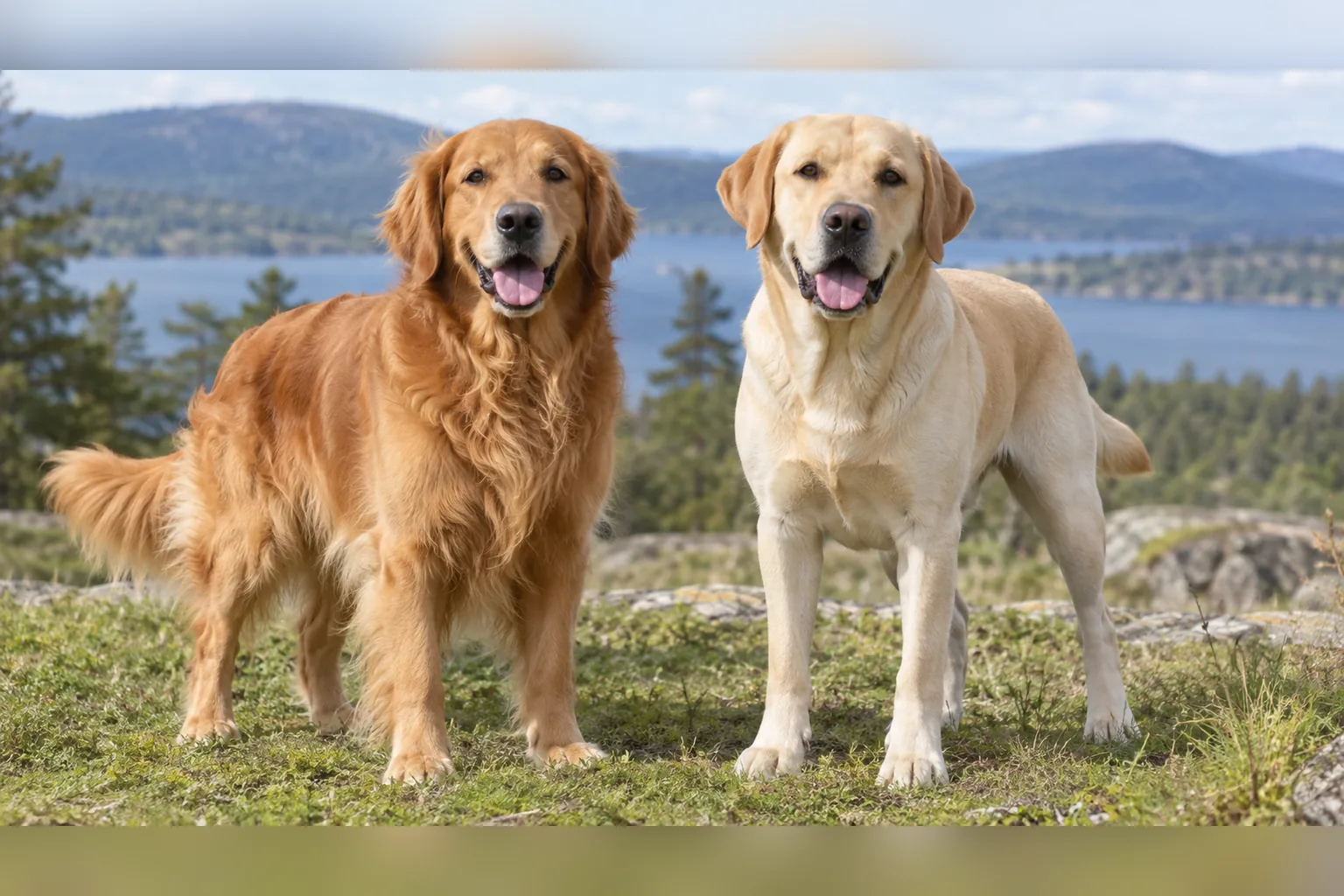
    Golden Retrievers and Labrador Retrievers are both friendly, trainable family dogs; the Labrador’s short coat is easier to groom, while the Golden is a slightly gentler companion that needs more brushing.

    Golden Retrievers and Labrador Retrievers are the two most beloved retriever breeds in America, both friendly, trainable, and genuinely great family dogs, which is exactly why choosing between them can be surprisingly hard. The real differences come down to coat, grooming demands, and a few subtle temperament distinctions rather than any gap in overall friendliness. This comparison covers how the Golden Retriever and Labrador Retriever compare at a glance, how they differ in temperament, how they compare on grooming and shedding, which is healthier and lives longer, whether you should choose the Golden Retriever or the Labrador Retriever, and what else people ask.

    How Do the Golden Retriever and Labrador Retriever Compare at a Glance?

    Golden Retriever Labrador Retriever
    Height 21.5–24 in 21.5–24.5 in
    Weight 55–75 lb 55–80 lb
    Lifespan 10–12 years 10–13 years
    Coat Long, feathered, moderate-high grooming Short, dense, low grooming
    Temperament Gentle, eager to please Friendly, food-driven, outgoing
    Exercise Needs 60+ minutes daily 60+ minutes daily

    Figures for both breeds follow the AKC’s “Official Standard for the Golden Retriever”, approved October 13, 1981, and the AKC’s “Official Standard for the Labrador Retriever”, approved February 12, 1994, with current details on the American Kennel Club’s Golden Retriever and Labrador Retriever breed pages, retrieved September 2026.

    How Does the Golden Retriever Differ From the Labrador Retriever in Temperament?

    Both breeds are famously friendly and non-aggressive, developed specifically for hunting work that rewarded a dog for cooperating closely with people. Golden Retrievers tend to be a bit more affectionate and clingy, forming intense bonds that can tip into separation-related stress if left alone too often. Labrador Retrievers are similarly people-oriented but tend to be slightly more food-driven and, on average, a touch more energetic and boisterous well into adulthood.

    How Do the Golden Retriever and Labrador Retriever Compare on Grooming and Shedding?

    This is the most practical difference between the two breeds. Golden Retrievers have a longer, feathered double coat that needs brushing two to three times a week and considerably more during seasonal shedding. Labrador Retrievers have a short, dense coat that sheds just as much hair overall but requires far less brushing time to manage, since there’s no feathering to keep tangle-free.

    Which Is Healthier and Lives Longer, the Golden Retriever or the Labrador Retriever?

    Golden Retrievers carry a documented, elevated lifetime cancer risk, including hemangiosarcoma and lymphoma, which contributes to the breed’s slightly shorter average lifespan. Labrador Retrievers are more prone to obesity given their genetic predisposition toward food-seeking behavior, along with hip and elbow dysplasia and exercise-induced collapse. Both breeds should be screened for hip and eye conditions before breeding.

    Should You Choose the Golden Retriever or the Labrador Retriever?

    The Labrador’s short coat is the easier choice whenever low-maintenance grooming matters most. The Golden Retriever fits well for an owner prepared for more brushing who wants a slightly gentler, more velcro-like companion. Both breeds need substantial daily exercise and do well with active, engaged owners, so the decision comes down to coat care tolerance and which breed’s subtle temperament leans you prefer. See the full Golden Retriever guide and Labrador Retriever guide for complete breed profiles.

    What Else Do People Ask About Golden Retriever vs Labrador Retriever?

    The questions below cover which breed is more expensive, which is easier to train, which sheds more, and whether you can keep both a Golden Retriever and a Labrador Retriever in the same home.

    Which is more expensive, Golden Retriever or Labrador Retriever?

    Prices for both breeds vary widely by region, bloodline, and breeder reputation, and neither breed is consistently more expensive than the other; both fall in a similar general price range from reputable, health-tested breeders.

    Which is easier to train, Golden Retriever or Labrador Retriever?

    Both breeds are highly trainable and rank among the most responsive to positive reinforcement of any AKC breed. Labradors are often considered marginally easier given their strong food motivation, though Golden Retrievers are just as capable and eager to please.

    Which sheds more, Golden Retriever or Labrador Retriever?

    Both breeds shed heavily and year-round, with seasonal blowouts in spring and fall, so total hair volume is comparable. The Golden Retriever’s longer coat just makes the shedding more visible and harder to manage day to day.

    Can you have both a Golden Retriever and a Labrador Retriever in the same home?

    Yes, Golden Retrievers and Labrador Retrievers generally get along well together, sharing similar energy levels, play styles, and a social, non-aggressive temperament that makes multi-dog households of this pairing common and successful.

    Related Guides

    More guides on The Dogs Wiki cover Labrador Retriever.

    Guide
    Labrador Retriever
  • German Shepherd vs Belgian Malinois

    German Shepherd vs Belgian Malinois

    Home → Dog Breeds → Breed Comparisons → German Shepherd vs Belgian Malinois

    German Shepherd vs Belgian Malinois

    The Belgian Malinois is the leaner, more intense working dog that needs hours of daily activity, while the German Shepherd offers similar intelligence and loyalty and is easier to manage as a household companion.

    German Shepherds and Belgian Malinois are both intensely intelligent Herding Group breeds that dominate police, military, and protection work worldwide, and the two are frequently confused given a similar general coloring. The real differences come down to build, intensity, and how much working drive each breed brings to an ordinary household. This comparison covers how the German Shepherd and Belgian Malinois compare at a glance, how they differ in temperament, size and build, which is healthier and lives longer, whether you should choose the German Shepherd or the Belgian Malinois, and what else people ask.

    How Do the German Shepherd and Belgian Malinois Compare at a Glance?

    German Shepherd Belgian Malinois
    Height 22–26 in 22–26 in
    Weight 50–90 lb 40–80 lb
    Lifespan 9–13 years 12–14 years
    Coat Dense double coat, heavy shedding Short double coat, moderate shedding
    Temperament Confident, protective, loyal Intense, driven, high-strung
    Exercise Needs 1–2 hours daily 2+ hours daily

    Figures for both breeds follow the AKC’s “Official Standard of the German Shepherd Dog”, approved February 11, 1978, and the AKC’s “Official Standard of the Belgian Malinois”, approved July 13, 2021, with current details on the American Kennel Club’s German Shepherd and Belgian Malinois breed pages, retrieved September 2026.

    How Does the German Shepherd Differ From the Belgian Malinois in Temperament?

    Both breeds are confident, intelligent, and protective, but the Belgian Malinois is generally the more intense of the two, described by trainers as needing a genuine job to stay manageable. German Shepherds are also serious working dogs, but the breed tends to settle somewhat more easily into companion life than the Malinois, which is why Malinois are less commonly recommended for first-time owners or purely casual households.

    How Do the German Shepherd and Belgian Malinois Differ in Size and Build?

    German Shepherds are typically heavier-boned and more substantial in build, while Belgian Malinois run leaner and more athletic at a similar height, built for speed and agility rather than raw mass. The German Shepherd’s dense double coat sheds considerably more than the Malinois’s shorter coat, though both are genuine year-round shedders.

    Which Is Healthier and Lives Longer, the German Shepherd or the Belgian Malinois?

    Both breeds are prone to hip and elbow dysplasia, and German Shepherds carry a documented risk of degenerative myelopathy and bloat. The Belgian Malinois is generally considered the hardier of the two, benefiting from a breeding tradition that has prioritized working soundness over strict conformation standards, which has helped the breed avoid some of the more severe structural issues that affect certain German Shepherd lines.

    Should You Choose the German Shepherd or the Belgian Malinois?

    The Belgian Malinois is the more intense, demanding option for an owner who wants a highly capable working or protection dog and can commit to hours of daily structured activity. The German Shepherd is the better starting point for most owners who want similar intelligence and loyalty in a dog that’s somewhat easier to manage as a household companion. See the full German Shepherd guide and Belgian Malinois guide for complete breed profiles.

    What Else Do People Ask About German Shepherd vs Belgian Malinois?

    The questions below cover which breed is more expensive, which is easier to train, which sheds more, and whether a Belgian Malinois is more aggressive than a German Shepherd.

    Which is more expensive, German Shepherd or Belgian Malinois?

    Both breeds vary considerably in price by bloodline, with working and protection-line dogs of either breed commanding higher prices than companion-bred puppies. Neither breed is consistently more expensive than the other overall.

    Which is easier to train, German Shepherd or Belgian Malinois?

    Both breeds are exceptionally trainable, but German Shepherds are generally considered somewhat easier for the average owner, since the Belgian Malinois’s higher intensity means training requires real expertise and consistency to channel productively.

    Which sheds more, German Shepherd or Belgian Malinois?

    German Shepherds shed considerably more than Belgian Malinois, given the breed’s denser, longer double coat, though both breeds are genuine year-round shedders that need regular brushing.

    Is a Belgian Malinois more aggressive than a German Shepherd?

    Neither breed is more aggressive when properly trained and socialized, but the Belgian Malinois’s higher intensity and drive can look more reactive in an inexperienced handler’s hands, which is why the breed isn’t typically recommended for first-time owners.

    Related Guides

    More guides on The Dogs Wiki cover Belgian Malinois.

    Guide
    Belgian Malinois