Blog

  • French Bulldog vs Boston Terrier

    French Bulldog vs Boston Terrier

    Home → Dog Breeds → Breed Comparisons → French Bulldog vs Boston Terrier

    French Bulldog vs Boston Terrier

    Both are small, easygoing brachycephalic companions, but the Boston Terrier costs less, has a little more energy, and carries fewer breathing-related health risks than the French Bulldog.

    French Bulldogs and Boston Terriers are both small, brachycephalic companion breeds with an easygoing temperament and low exercise needs, which makes them a common head-to-head choice for apartment dwellers. The two do differ meaningfully in price, ear shape, and breathing-related health risk. This comparison covers how the French Bulldog and Boston Terrier compare at a glance, how they differ in temperament, size and build, which is healthier and lives longer, whether you should choose the French Bulldog or the Boston Terrier, and what else people ask.

    How Do the French Bulldog and Boston Terrier Compare at a Glance?

    French Bulldog Boston Terrier
    Height 11–13 in 15–17 in
    Weight under 28 lb 12–25 lb
    Lifespan 10–12 years 11–13 years
    Coat Short, minimal grooming Short, minimal grooming
    Temperament Easygoing, affectionate Happy-go-lucky, gentle
    Exercise Needs Low, short walks Low to moderate, several short sessions

    Figures for both breeds follow the AKC’s “Official Standard of the French Bulldog”, approved April 10, 2018, and the AKC’s “Official Standard of the Boston Terrier”, approved February 11, 2011, with current details on the American Kennel Club’s French Bulldog and Boston Terrier breed pages, retrieved September 2026.

    How Does the French Bulldog Differ From the Boston Terrier in Temperament?

    Both breeds are affectionate, low-key companions well suited to apartment living, but Boston Terriers tend to be slightly more energetic and playful throughout the day, doing best with several short bursts of activity rather than one long walk. French Bulldogs are generally content with shorter, less frequent activity and can be prone to separation anxiety if left alone often.

    How Do the French Bulldog and Boston Terrier Differ in Size and Build?

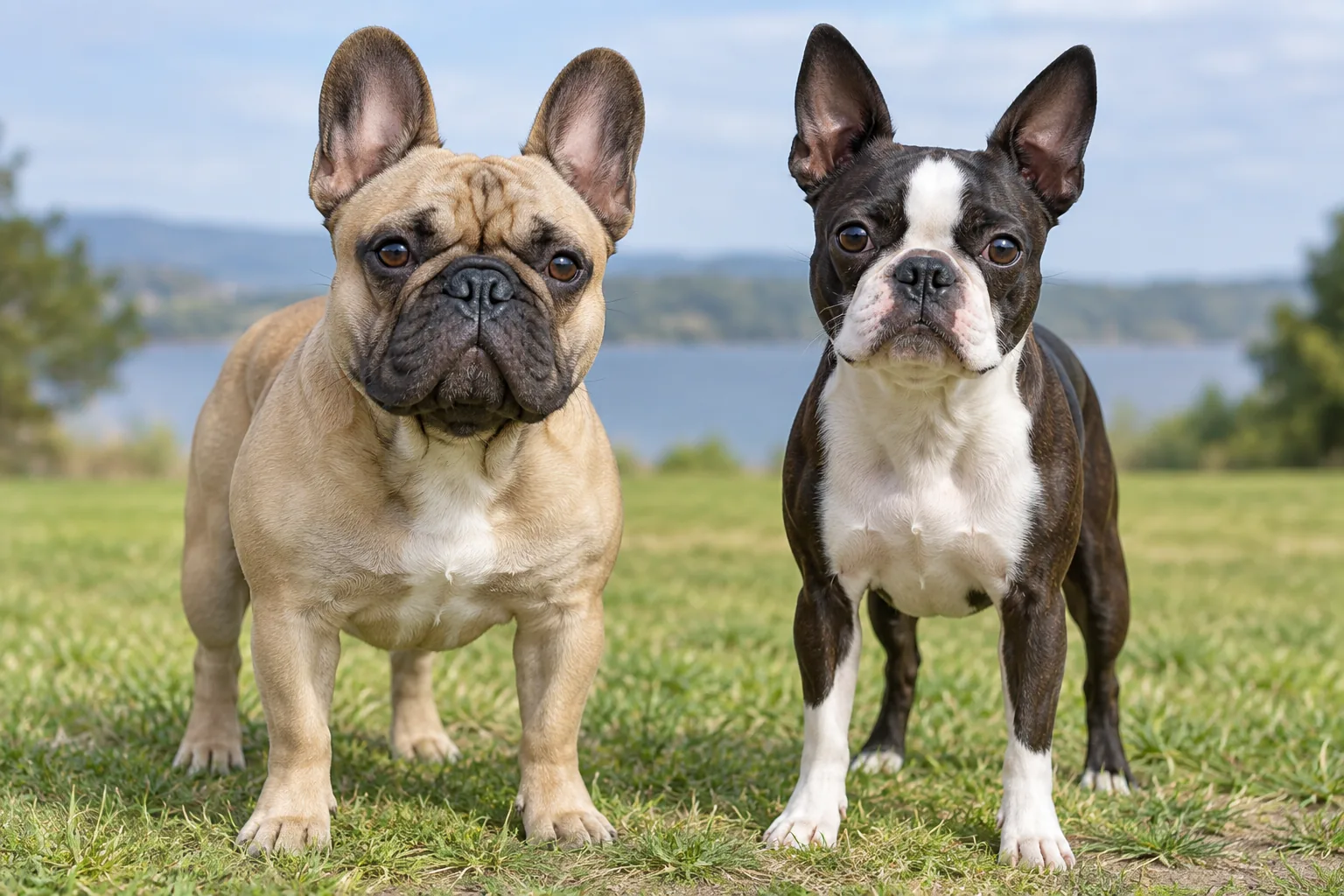
    French Bulldogs are shorter and more compact, with distinctive upright “bat ears” and a heavier, more front-loaded build. Boston Terriers stand somewhat taller with a more balanced, athletic frame and a distinctive tuxedo-patterned coat, and the breed’s longer muzzle relative to the French Bulldog’s gives it slightly less severe breathing challenges on average.

    Which Is Healthier and Lives Longer, the French Bulldog or the Boston Terrier?

    Both breeds carry documented brachycephalic airway risk, but French Bulldogs tend to have a more pronounced flat face and correspondingly more significant breathing difficulty than Boston Terriers. Boston Terriers are more prone to specific eye injuries given their prominent eyes, while French Bulldogs carry a higher documented spinal and hemivertebrae risk tied to their compact build.

    Should You Choose the French Bulldog or the Boston Terrier?

    Boston Terriers are typically considerably less expensive than French Bulldogs, which currently command some of the highest prices of any popular breed given demand, a real factor whenever cost matters. The Boston Terrier is also the somewhat hardier choice for an owner who wants slightly fewer breathing-related health risks and a bit more natural energy. See the full French Bulldog guide and Boston Terrier guide for complete breed profiles.

    What Else Do People Ask About French Bulldog vs Boston Terrier?

    The questions below cover which breed is more expensive, which is easier to train, which sheds more, and whether you can keep both a French Bulldog and a Boston Terrier in the same home.

    Which is more expensive, French Bulldog or Boston Terrier?

    French Bulldogs are typically considerably more expensive than Boston Terriers, reflecting the French Bulldog’s current position as the AKC’s most popular breed and the resulting high demand relative to available puppies.

    Which is easier to train, French Bulldog or Boston Terrier?

    Both breeds are intelligent and generally easy to train with positive reinforcement, though Boston Terriers are often considered slightly more responsive given their somewhat higher energy and eagerness to engage in activity-based training.

    Which sheds more, French Bulldog or Boston Terrier?

    Both breeds shed lightly given their short coats, and neither is a heavy shedder compared to double-coated breeds, making coat maintenance a minor factor either way.

    Can you have both a French Bulldog and a Boston Terrier in the same home?

    Yes, French Bulldogs and Boston Terriers generally get along well together, sharing similar size, low exercise needs, and an easygoing temperament that makes this a common and successful small-breed pairing.

    Related Guides

    More guides on The Dogs Wiki cover Boston Terrier.

    Guide
    Boston Terrier
  • Cane Corso vs Presa Canario

    Cane Corso vs Presa Canario

    Home → Dog Breeds → Breed Comparisons → Cane Corso vs Presa Canario

    Cane Corso vs Presa Canario

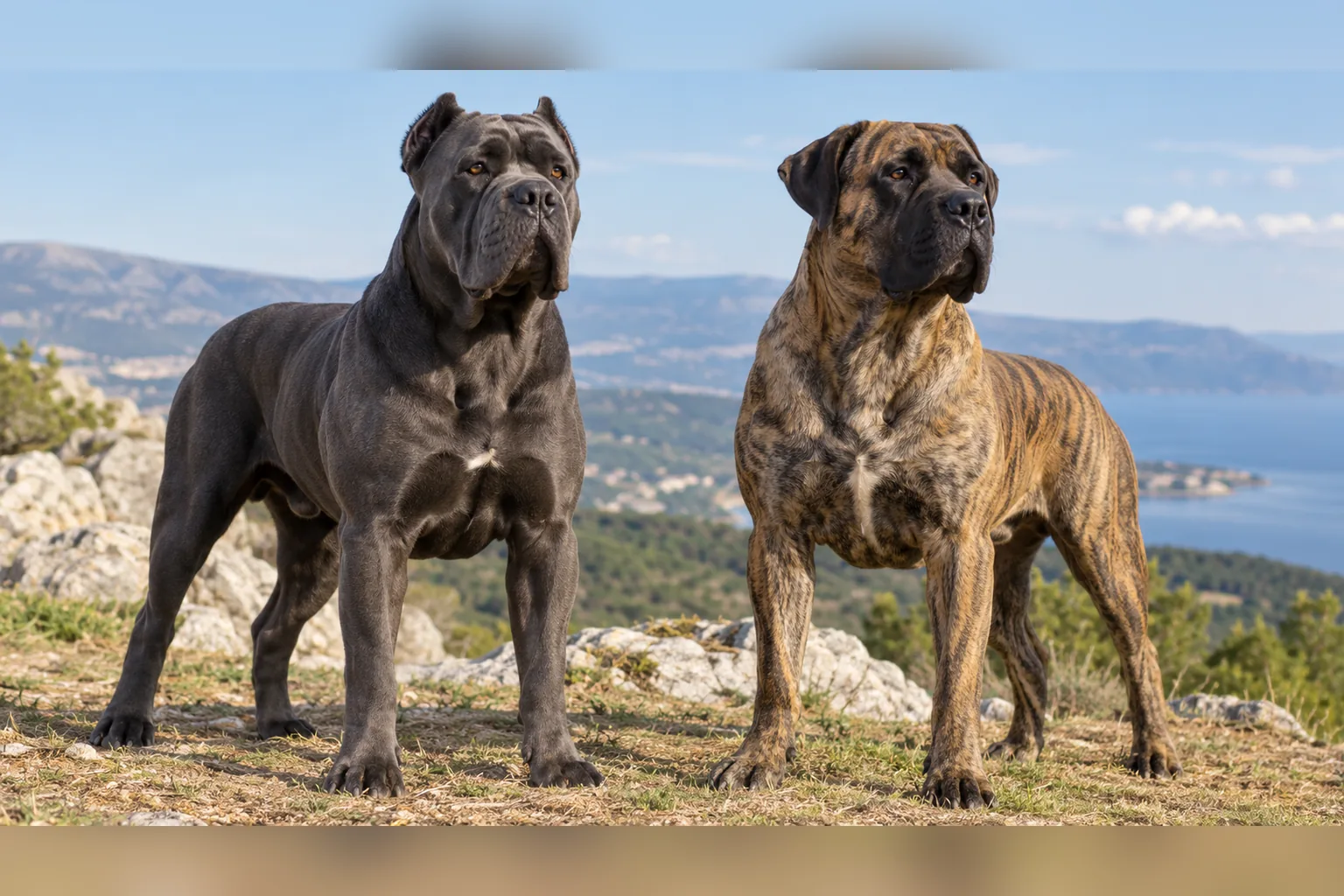
    The Cane Corso and Presa Canario are both powerful Mediterranean guardian breeds that need an experienced handler; the Cane Corso is AKC-recognized and easier to find, and neither suits a first-time owner.

    Cane Corsos and Presa Canarios are both powerful Mediterranean molosser breeds developed for guarding and working large livestock, and both require genuinely experienced handling. The Cane Corso is AKC-recognized with an established profile on this site; the Presa Canario is not yet AKC-recognized, so its traits here are presented as documented by breed clubs and veterinary sources rather than a fixed AKC standard. This comparison covers how the Cane Corso and Presa Canario compare at a glance, how they differ in temperament, size and build, which is healthier and lives longer, whether you should choose the Cane Corso or the Presa Canario, and what else people ask.

    How Do the Cane Corso and Presa Canario Compare at a Glance?

    Cane Corso Presa Canario
    Height 23–27.5 in 22–26 in
    Weight 88–110+ lb 84–110 lb
    Lifespan 9–12 years 9–11 years
    Origin Italy Canary Islands, Spain
    Temperament Intelligent, reserved, protective Confident, docile with family, distant with strangers
    AKC Status Recognized (2010) Not yet AKC-recognized

    Figures for the Cane Corso follow the AKC’s “Official Standard of the Cane Corso”, approved October 20, 2009, and the American Kennel Club’s Cane Corso breed page, retrieved September 2026. The Presa Canario is not AKC-recognized, so its figures come from breed-club sources.

    How Does the Cane Corso Differ From the Presa Canario in Temperament?

    Both breeds are calm and affectionate with their own family while remaining reserved to wary with strangers, a trait genuinely useful for their historical guardian roles. The Presa Canario is often described by its breed club as capable of “astounding” loyalty, frequently staying physically close to its owner, while the Cane Corso tends to display its devotion in a slightly more independent, watchful way.

    How Do the Cane Corso and Presa Canario Differ in Size and Build?

    The two breeds are similar in overall size and weight, though the Presa Canario tends to have a broader head, heavier jowls, and a body proportionally longer than tall, while the Cane Corso carries a leaner, more athletic build suited to its historical use in both guarding and hunting large game.

    Which Is Healthier and Lives Longer, the Cane Corso or the Presa Canario?

    Both breeds share documented risks of hip and elbow dysplasia given their size, along with bloat risk common to deep-chested breeds. The Cane Corso carries an additional documented risk of juvenile laryngeal paralysis and polyneuropathy (JLPP), a genetic neurological condition specific enough to the breed that DNA testing is considered essential in responsible breeding programs.

    Should You Choose the Cane Corso or the Presa Canario?

    Both breeds demand an experienced handler committed to extensive socialization, so the choice often comes down to availability and breeder access, since the Cane Corso is more established and easier to find through AKC-affiliated breeders in the U.S. Neither breed suits a first-time or casual dog owner. See the full Cane Corso guide for a complete profile.

    What Else Do People Ask About Cane Corso vs Presa Canario?

    The questions below cover which breed is more expensive, which is easier to train, which sheds more, and whether a Presa Canario is legal to own.

    Which is more expensive, Cane Corso or Presa Canario?

    Presa Canarios often command higher prices than Cane Corsos in the U.S., reflecting the breed’s relative rarity and lack of full AKC recognition, though prices vary considerably by breeder and region for both.

    Which is easier to train, Cane Corso or Presa Canario?

    Both breeds are intelligent but independent, and neither is considered easier to train than the other; both respond best to calm, consistent, experienced handling rather than forceful correction.

    Which sheds more, Cane Corso or Presa Canario?

    Both breeds have short, low-shedding coats, and neither sheds meaningfully more than the other, making grooming a minor factor between the two.

    Is a Presa Canario legal to own?

    Presa Canario ownership is subject to breed-specific legislation in some jurisdictions given the breed’s historical association with dog fighting in Spain, so checking local and state laws before acquiring one is genuinely important; this varies considerably by location.

  • Bulldog vs American Bulldog vs Olde English Bulldogge

    Bulldog vs American Bulldog vs Olde English Bulldogge

    Home → Dog Breeds → Breed Comparisons → Bulldog vs American Bulldog vs Olde English Bulldogge

    Bulldog vs American Bulldog vs Olde English Bulldogge

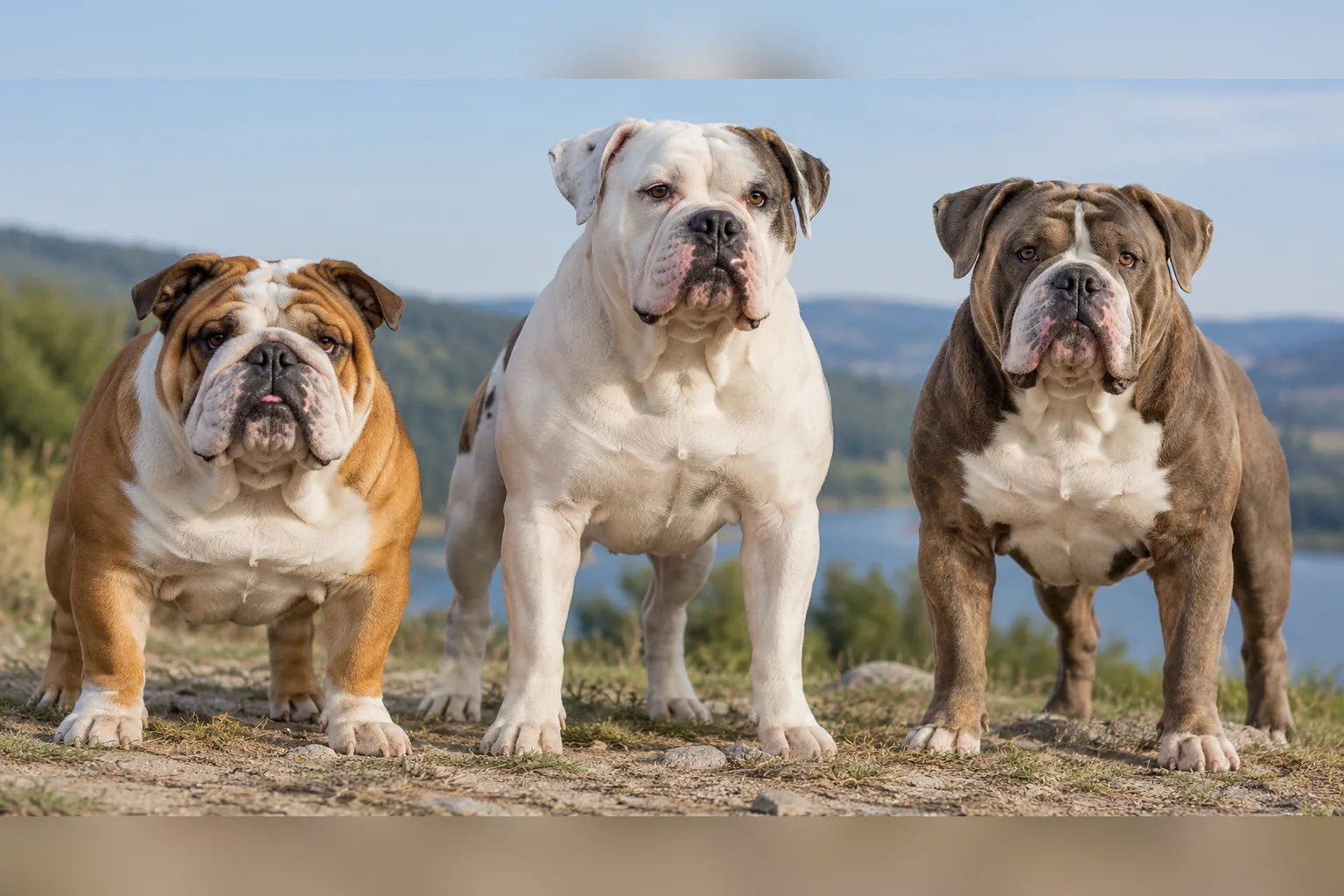
    The Bulldog, American Bulldog, and Olde English Bulldogge share bull-baiting ancestry, but the American Bulldog and Olde English Bulldogge are more athletic, with longer muzzles, fewer breathing problems, and longer lifespans than the Bulldog.

    The Bulldog, American Bulldog, and Olde English Bulldogge all descend from the same general bull-baiting ancestry but diverged into genuinely clear breeds, each with a different balance of appearance, athleticism, and health. The Bulldog is AKC-recognized with a full profile on this site; the American Bulldog and Olde English Bulldogge are not, so their traits here reflect breed-club and veterinary sources rather than fixed AKC standards. This comparison covers how the Bulldog, American Bulldog, and Olde English Bulldogge compare at a glance, the key differences between them, which is healthiest, and what else people ask.

    How Do the Bulldog, American Bulldog, and Olde English Bulldogge Compare at a Glance?

    Bulldog American Bulldog Olde English Bulldogge
    Weight 40–50 lb 60–120 lb 50–80 lb
    Lifespan 8–10 years 10–16 years 9–14 years
    Muzzle Length Short, brachycephalic Moderate, less brachycephalic Longer, minimal breathing issues
    Athleticism Low High Moderate to high
    AKC Status Recognized Not yet AKC-recognized Not yet AKC-recognized

    Figures for the Bulldog follow the AKC’s “Official Standard of the Bulldog”, approved July 12, 2016, and the American Kennel Club’s Bulldog breed page, retrieved September 2026. The American Bulldog and Olde English Bulldogge are not AKC-recognized, so their figures come from breed-club sources.

    What Are the Key Differences Between the Bulldog, American Bulldog, and Olde English Bulldogge?

    The English Bulldog carries the most extreme brachycephalic (flat-faced) structure of the three, which directly translates to the most significant documented breathing difficulty and heat intolerance, along with the lowest activity level. The American Bulldog was deliberately bred to retain more of the original working bulldog’s athleticism and longer muzzle, giving it meaningfully fewer breathing problems and a longer average lifespan. The Olde English Bulldogge was created in 1971 specifically to recreate the appearance of the pre-Victorian working bulldog while deliberately breeding out the modern Bulldog’s health issues, and breed advocates describe the result as largely free of the breathing, whelping, and joint problems that plague today’s show-standard Bulldog.

    Which Is Healthiest, the Bulldog, American Bulldog, or Olde English Bulldogge?

    All three breeds can experience hip and elbow dysplasia, screened for with standard OFA evaluations. Breathing-related issues in the English Bulldog specifically, and to a lesser extent all brachycephalic-leaning individuals in the other two breeds, are diagnosed through veterinary airway assessment and can require corrective surgery in severe cases. Skin fold dermatitis, common in the wrinkled English Bulldog, is managed with regular cleaning rather than medical treatment in most cases.

    What Else Do People Ask About Bulldog vs American Bulldog vs Olde English Bulldogge?

    The questions below cover whether a Bulldog mix can have traits of the American Bulldog and Olde English Bulldogge, which of the three is most common, and which Bulldog breed has the most breathing problems.

    Can a Bulldog mix have traits of the American Bulldog and Olde English Bulldogge?

    Yes, since the American Bulldog and Olde English Bulldogge both descend from crosses involving the English Bulldog and other bull-and-terrier stock, individual dogs, in particular from less carefully bred lines, can show a genuine blend of traits from more than one of these related breeds.

    Which is more common, English Bulldog, American Bulldog, or Olde English Bulldogge?

    The English Bulldog is by far the most common of the three in the United States, consistently ranking among the AKC’s most popular breeds, while the American Bulldog and Olde English Bulldogge remain considerably less common and aren’t yet fully AKC-recognized.

    Which Bulldog breed has the most breathing problems?

    The English Bulldog experiences the most severe and well-documented breathing difficulty of the three, given its extreme brachycephalic structure, while the American Bulldog and Olde English Bulldogge were both deliberately bred with longer muzzles specifically to reduce this risk, resulting in meaningfully fewer breathing-related health problems.

  • Low-Shedding Dog Breeds

    Low-Shedding Dog Breeds

    Home → Dog Breeds → Breed by Trait / Filter → Low-Shedding Dog Breeds

    Low-Shedding Dog Breeds

    Low-shedding dog breeds have single or continuously growing coats that drop little loose hair, such as the Poodle, Greyhound, Whippet, Basenji, and Chihuahua.

    Shedding volume depends on coat structure: single coats and continuously growing coats shed far less loose hair than a double coat’s seasonal blowouts. This page covers what makes a dog breed low-shedding, which breeds shed the least, whether a low-shedding breed is right for you, and what else people ask.

    What Makes a Dog Breed Low-Shedding?

    A genuinely low-shedding breed lacks the dense undercoat that drives heavy seasonal shedding in double-coated breeds, instead carrying a single coat or a continuously growing coat that requires trimming rather than natural shedding cycles.

    Breed details on this list follow each breed’s American Kennel Club profile, for example the AKC’s “Official Standard of the Poodle”, approved August 14, 1984, and the AKC Greyhound breed page, retrieved September 2026.

    Which Dog Breeds Shed the Least?

    Breed Why it fits
    Poodle A continuously growing coat that requires regular trimming rather than shedding on its own.
    Greyhound A short, single coat that sheds minimally despite lacking the curl of a Poodle-type coat.
    Whippet A fine, short coat that sheds relatively little compared to most breeds.
    Basenji A short, smooth coat combined with genuinely cat-like self-grooming habits that reduce loose hair further.
    Chihuahua (smooth coat variety). A short coat with minimal shedding compared to the breed’s longhaired variety.

    Is a Low-Shedding Dog Breed Right for You?

    Trait alone doesn’t determine whether a breed fits your household; temperament, exercise needs, and grooming demands still matter alongside this specific characteristic. Use this list to filter your search, then dig into each breed’s full profile before deciding.

    What Else Do People Ask About the Low-Shedding Dog Breeds?

    The questions below cover whether a low-shedding breed can still leave hair around the house, whether low-shedding dog breeds have single or double coats, and which is more serious for a low-shedding coat, matting or shedding.

    Can a low-shedding breed still leave hair around the house?

    Yes, even the lowest-shedding breeds lose some hair over time; the difference is volume and visibility, not a complete absence of shed hair.

    Do low-shedding dog breeds have single or double coats?

    Double coats are considerably more common across dog breeds overall, since most breeds developed in climates that favored the insulation a dense undercoat provides.

    Which is more serious, matting or shedding, for a low-shedding coat?

    Matting is generally the bigger practical concern for continuously growing coats like a Poodle’s, since the trait that reduces shedding also means loose hair stays trapped and can tangle without regular brushing.

  • Hypoallergenic Dog Breeds: The Science of Coat and Allergens

    Hypoallergenic Dog Breeds: The Science of Coat and Allergens

    Home → Dog Breeds → Breed by Trait / Filter → Hypoallergenic Dog Breeds

    Hypoallergenic Dog Breeds: The Science of Coat and Allergens

    Hypoallergenic dog breeds have low-shedding coats that spread less dander, such as the Poodle, Bichon Frise, Maltese, Yorkshire Terrier, and Havanese, though no dog is completely allergen-free.

    Dog allergens come primarily from proteins in saliva, urine, and dander, the tiny flakes of skin all dogs shed, not from hair itself, which is why the term “hypoallergenic” is genuinely more about coat type than any dog being allergen-free. This page covers what makes a dog breed hypoallergenic, which hypoallergenic breeds shed the least dander, the limits of hypoallergenic dog breeds, and what else people ask.

    What Makes a Dog Breed Hypoallergenic?

    Curly or continuously growing coats, like a Poodle’s, trap loose hair and dander close to the skin rather than releasing it into the air, which is the actual mechanism behind reduced allergic reactions. Single-layer coats without a dense undercoat also shed less dander overall than heavy double coats.

    Breed details on this list follow each breed’s American Kennel Club profile, for example the AKC’s “Official Standard of the Poodle”, approved August 14, 1984, and the AKC Bichon Frise breed page, retrieved September 2026.

    Which Hypoallergenic Dog Breeds Shed the Least Dander?

    Breed Why it fits
    Poodle The clearest example of the curly-coat mechanism at work, trapping loose hair rather than releasing it.
    Bichon Frise A continuously growing, curly coat that functions similarly to the Poodle’s in trapping dander.
    Maltese A single-layer coat with no undercoat, reducing the volume of dander shed compared to double-coated breeds.
    Yorkshire Terrier A coat that behaves more like human hair, growing continuously rather than shedding in cycles.
    Havanese A low-shedding double coat that still traps more dander than it releases.

    What Are the Limits of Hypoallergenic Dog Breeds?

    Trait alone doesn’t determine whether a breed fits your household; temperament, exercise needs, and grooming demands still matter alongside this specific characteristic. Use this list to filter your search, then dig into each breed’s full profile before deciding.

    What Else Do People Ask About the Hypoallergenic Dog Breeds?

    The questions below cover whether hypoallergenic dog breeds with curly coats can still trigger allergies, which is more common, curly coats or hypoallergenic claims, and whether hypoallergenic dog breeds help with saliva allergies too.

    Can hypoallergenic dog breeds with curly coats still trigger allergies?

    Yes, since saliva and urine proteins also cause allergic reactions in sensitive people, a curly-coated dog can still trigger a reaction even with minimal loose hair, which is why no breed is ever fully allergen-free.

    Which is more common, curly coats or hypoallergenic claims?

    Genuinely low-allergen coat types are less common overall among dog breeds than marketing claims suggest; only a handful of coat structures, mainly curly and continuously-growing types, reduce allergen exposure meaningfully.

    Do hypoallergenic dog breeds help with saliva allergies too?

    Neither is more serious than the other; reaction severity depends entirely on individual sensitivity, and some people react more to saliva-based allergens picked up through licking than to airborne dander.

  • Best Dogs for Kids: The Gentleness Trait Explained

    Best Dogs for Kids: The Gentleness Trait Explained

    Home → Dog Breeds → Breed by Trait / Filter → Best Dogs for Kids

    Best Dogs for Kids: The Gentleness Trait Explained

    The best dogs for kids are breeds known for gentleness and patience under rough handling, such as the Golden Retriever, Bernese Mountain Dog, Great Pyrenees, Cavalier King Charles Spaniel, and Boston Terrier.

    Gentleness with children is a documented, breed-specific trait separate from general family-friendliness, showing up as patience under rough handling, a high pain and startle threshold, and a genuine lack of defensive aggression. This page covers what makes a dog breed good for kids, which breeds are best for kids, how to choose from the best dogs for kids, and what else people ask.

    What Makes a Dog Breed Good for Kids?

    A genuinely gentle breed tolerates unpredictable movement and noise without becoming defensive, has a documented history of low aggression, and is physically sturdy enough to handle accidental rough play without pain-driven reactivity.

    Breed details on this list follow each breed’s American Kennel Club profile, for example the AKC’s “Official Standard for the Golden Retriever”, approved October 13, 1981, and the AKC Bernese Mountain Dog breed page, retrieved September 2026.

    Which Dog Breeds Are Best for Kids?

    Breed Why it fits
    Golden Retriever Bred over generations for a soft mouth and non-aggressive temperament, directly relevant to genuine gentleness.
    Bernese Mountain Dog Earns some of the AKC’s highest documented ratings specifically for gentleness with young children.
    Great Pyrenees A calm giant guardian breed with a documented patient temperament around children.
    Cavalier King Charles Spaniel A genuinely gentle small breed, patient and tolerant by documented temperament.
    Boston Terrier Specifically noted as fantastic with children given its patient, non-aggressive nature.

    How Do You Choose From the Best Dogs for Kids?

    Trait alone doesn’t determine whether a breed fits your household; temperament, exercise needs, and grooming demands still matter alongside this specific characteristic. Use this list to filter your search, then dig into each breed’s full profile before deciding.

    What Else Do People Ask About the Best Dogs for Kids?

    The questions below cover whether size affects gentleness with kids, whether the best dogs for kids are gentle or just friendly, and which is more serious around kids, a startle reaction or general shyness.

    Does size affect gentleness with kids?

    No, size and gentleness are separate traits; both large breeds like the Bernese Mountain Dog and small breeds like the Cavalier King Charles Spaniel can be genuinely gentle, though larger dogs require more supervision given their size alone.

    Are the best dogs for kids gentle or just friendly?

    General friendliness is more common across breeds than the specific, documented patience-under-rough-handling trait that makes a dog genuinely reliable around unpredictable young children.

    Which is more serious, a startle reaction or general shyness, around kids?

    A startle reaction is generally the bigger practical concern, since it can trigger a defensive snap even in an otherwise friendly dog, which is why breeds with a documented high startle threshold matter specifically for households with young children.

  • Best Apartment Dogs: Size and Noise Level Explained

    Best Apartment Dogs: Size and Noise Level Explained

    Home → Dog Breeds → Breed by Trait / Filter → Best Apartment Dogs

    Best Apartment Dogs: Size and Noise Level Explained

    The best apartment dogs combine a compact size with a low tendency to bark, such as the French Bulldog, Basenji, Greyhound, Cavalier King Charles Spaniel, and Bulldog.

    Apartment suitability comes down to two specific traits: compact size relative to the living space, and a genuinely low tendency to bark, since noise complaints from neighbors are the most common practical apartment-living issue. This page filters specifically by those two traits, separate from the broader lifestyle list covered elsewhere on the site.

    This page covers what makes a good apartment dog, which apartment dogs are the smallest and quietest, whether an apartment dog is right for your home, and what else people ask.

    What Makes a Good Apartment Dog?

    A strong apartment-trait breed is small to medium in size and, more documented as a quiet breed that doesn’t bark excessively at every sound or passerby, since size alone doesn’t guarantee a good fit for shared-wall living.

    Breed details on this list follow each breed’s American Kennel Club profile, for example the AKC’s “Official Standard of the French Bulldog”, approved April 10, 2018, and the AKC Basenji breed page, retrieved September 2026.

    Which Apartment Dogs Are the Smallest and Quietest?

    Breed Why it fits
    French Bulldog Compact size paired with genuinely minimal barking, a strong match for both traits.
    Basenji Famously near-barkless, making it one of the quietest breeds by trait regardless of size considerations.
    Greyhound Larger in size but rarely barks, proving that size alone doesn’t disqualify a breed from good apartment fit.
    Cavalier King Charles Spaniel Small and genuinely quiet, rarely barking without real cause.
    Bulldog Compact and low-key, not known for excessive vocalization.

    Is an Apartment Dog Right for Your Home?

    Trait alone doesn’t determine whether a breed fits your household; temperament, exercise needs, and grooming demands still matter alongside this specific characteristic. Use this list to filter your search, then dig into each breed’s full profile before deciding.

    What Else Do People Ask About the Best Apartment Dogs?

    The questions below cover whether small size guarantees a good apartment fit, whether most apartment dogs are quiet or barky, and which is more serious for apartment living, barking or size.

    Does small size guarantee a good apartment fit?

    No, some small breeds, like certain terriers, are genuinely prone to excessive barking despite their compact size, which is why noise level matters as much as, or more than, size alone for apartment living.

    Are most apartment dogs quiet or barky?

    Breeds with at least moderate alert-barking tendencies are more common overall, since watchfulness was historically a useful trait; genuinely quiet breeds like the Basenji are the exception rather than the rule.

    Which is more serious, barking or size, for apartment living?

    Barking is generally the more serious practical issue, since it directly affects neighbor relations and can lead to lease complications, while size mainly affects the dog’s own comfort and exercise logistics.

  • Most Expensive Dog Breeds

    Most Expensive Dog Breeds

    Home → Dog Breeds → Breed by Cost → Most Expensive Dog Breeds

    Most Expensive Dog Breeds

    The most expensive dog breeds are rare or high-demand breeds such as the Tibetan Mastiff, Löwchen, Samoyed, Chow Chow, French Bulldog, Afghan Hound, and top-bloodline Rottweilers, with reported prices reaching several thousand dollars or more.

    Dog breed prices are driven mainly by rarity, the difficulty and cost of responsible breeding, and sheer demand, not necessarily by quality of temperament or health. This list ranks breeds by real, reported purchase price ranges, though prices vary considerably by breeder, region, and bloodline.

    This guide covers what drives dog breed prices toward the high end, which dog breeds are the most expensive, and what else people ask.

    What Drives Dog Breed Prices Toward the High End?

    Rarity is the single biggest factor: breeds with small U.S. Populations, limited breeder networks, or complex breeding requirements, like the size-mismatched artificial insemination needed for some crosses, command premium prices simply due to scarcity. Extensive health testing, championship bloodlines, and high demand relative to available puppies also push prices upward.

    Breed details on this list follow each breed’s American Kennel Club profile, for example the AKC’s “Official Standard of the French Bulldog”, approved April 10, 2018, and the AKC Rottweiler breed page, retrieved September 2026.

    Which Dog Breeds Are the Most Expensive?

    • Tibetan Mastiff. Frequently cited as the most expensive breed overall, with reported prices reaching $10,000 or more given the breed’s rarity and imposing size.
    • Löwchen. One of the rarest breeds in the world after nearly going extinct in the 1970s, with reported prices up to $12,000.
    • Samoyed. A striking, high-demand Arctic breed with reported prices commonly reaching several thousand dollars or more.
    • Chow Chow. Reported prices reaching up to $11,000 given the breed’s relative rarity in the U.S.
    • French Bulldog. Currently the AKC’s most popular breed, with prices driven up by unusually high demand relative to available puppies; see our dedicated Cost of a French Bulldog guide.
    • Afghan Hound. A striking, rare sighthound with reported prices averaging around $5,000.
    • Rottweiler. Purebred Rottweilers from top working or show bloodlines can reportedly reach $9,000. See our full Rottweiler guide.

    What Else Do People Ask About the Most Expensive Dog Breeds?

    The questions below cover whether a more expensive dog breed is a healthier dog, whether expensive breeds are more expensive to keep long-term too, and whether you can adopt one of these breeds for less.

    Is a more expensive dog breed a healthier dog?

    Not necessarily; price mainly reflects demand, rarity, and breeding cost rather than a guaranteed health outcome. A responsible breeder’s health testing matters more for an individual puppy’s health than the price tag alone.

    Are expensive breeds more expensive to keep long-term too?

    Not always in a direct way; lifetime cost depends more on size, documented breed health risks, and grooming needs than on the original purchase price, so a cheaper breed with significant health issues can cost more over its lifetime than a pricier, hardier one.

    Can I adopt one of these breeds for less?

    Yes, adopting an adult dog of one of these breeds through a breed-specific rescue is typically far less expensive than buying a puppy, though availability for rarer breeds can be limited.

  • Least Expensive Dog Breeds

    Least Expensive Dog Breeds

    Home → Dog Breeds → Breed by Cost → Least Expensive Dog Breeds

    Least Expensive Dog Breeds

    The least expensive dog breeds to buy and keep are widely available or small breeds, such as the Chihuahua, Rat Terrier, Beagle, Border Collie, Miniature Schnauzer, and Jack Russell Terrier.

    Lower purchase prices generally come down to wider availability, larger breeder networks, or smaller body size that also reduces ongoing food and care costs. This list highlights breeds documented as genuinely more affordable both to buy and to keep, though adopting through a rescue is nearly always the lowest-cost path for any breed.

    This guide covers what keeps dog breed prices toward the low end, which dog breeds are the least expensive, and what else people ask.

    What Keeps Dog Breed Prices Toward the Low End?

    Breeds with large, well-established populations and many active breeders face less price pressure from scarcity, and smaller breeds naturally cost less to feed and often need less professional grooming than larger or more elaborately coated ones. Breeds commonly found in shelters, like certain Cane Corso mixes, can also be considerably cheaper to acquire through adoption.

    Breed details on this list follow each breed’s American Kennel Club profile, for example the AKC’s “Official Standard of the Chihuahua”, approved August 12, 2008, and the AKC Rat Terrier breed page, retrieved September 2026.

    Which Dog Breeds Are the Least Expensive?

    Breed Why it fits
    Chihuahua Among the least expensive breeds to buy and keep, given tiny size and correspondingly low food costs.
    Rat Terrier A genuinely affordable breed both upfront and in ongoing food and grooming costs.
    Beagle Low grooming needs given a short coat keep ongoing costs modest for this popular breed.
    Border Collie Despite being a working breed, genuinely affordable to purchase relative to many other breeds.
    Miniature Schnauzer An affordable, popular small breed with a manageable overall cost profile.
    Jack Russell Terrier Reported prices commonly in the $800 to $2,000 range, below many comparably sized breeds.

    What Else Do People Ask About the Least Expensive Dog Breeds?

    The questions below cover whether the least expensive dog breeds are less healthy, whether less expensive breeds are cheaper to keep long-term too, and whether you can adopt one of these breeds for less.

    Are the least expensive dog breeds less healthy?

    Not necessarily; price reflects supply and demand more than health outcomes, though it’s still worth choosing a breeder who genuinely health-tests regardless of how affordable the breed is generally.

    Are less expensive breeds cheaper to keep long-term too?

    Often yes, in particular for smaller breeds, since food and typical grooming costs scale with size, though individual health issues can still drive up lifetime costs regardless of the breed’s average price.

    Can you adopt one of these breeds for less?

    Yes, adopting an adult dog of any of these breeds through a rescue or shelter is typically the lowest-cost path, and several, including Rat Terriers and Border Collie mixes, are commonly available through rescue.

  • How Much Does a Goldendoodle Cost?

    How Much Does a Goldendoodle Cost?

    Home → Dog Breeds → Breed by Cost → Cost of a Goldendoodle

    How Much Does a Goldendoodle Cost?

    A Goldendoodle’s price varies more than most breeds, depending on size, generation such as F1 or F1B, breeder health testing, region, and coat color, and adopting an adult dog costs considerably less.

    A Goldendoodle’s cost varies more than most breeds given the range of sizes and generations involved in the cross, from Miniature to Standard and from F1 to F1B. This page covers the real cost breakdown; for general information on the cross itself, see the full Goldendoodle profile, which this page doesn’t repeat. This guide covers how much a Goldendoodle puppy costs, the other costs that come with owning one, the lifetime cost of owning a Goldendoodle, whether the cross is worth the cost, and what else people ask.

    How Much Does a Goldendoodle Puppy Cost?

    Goldendoodle prices vary by size (Standard, Medium, or Miniature), generation (F1, F1B, or later), and breeder reputation, with F1B puppies from health-tested parents commanding a premium given their more predictable low-shedding coat. Prices also vary considerably by region and coat color, with rarer colors like merle or red sometimes priced higher.

    The American Kennel Club does not register the Goldendoodle; its parent breeds are described in the AKC’s “Official Standard for the Golden Retriever”, approved October 13, 1981, and the AKC’s “Official Standard of the Poodle”, approved August 14, 1984.

    What Other Costs Come With Owning a Goldendoodle?

    Beyond the purchase price, a Goldendoodle’s ongoing grooming costs are genuinely significant, since the coat needs regular brushing plus professional grooming every six to eight weeks to prevent matting. Because a Goldendoodle can inherit health risks from either the Golden Retriever or Poodle side, including the Golden Retriever’s documented elevated cancer risk, pet insurance is worth genuine consideration.

    What Is the Lifetime Cost of Owning a Goldendoodle?

    Food costs scale with the dog’s actual size, since a Standard Goldendoodle eats considerably more than a Miniature. Grooming is the most underestimated ongoing cost for this cross specifically, and budgeting for professional grooming every six to eight weeks over a 10 to 15 year lifespan adds up to a genuinely significant lifetime expense.

    Is a Goldendoodle Worth the Cost?

    Goldendoodle-specific rescue organizations and general shelters both place adult dogs of this popular cross, and adopting is considerably less expensive than buying a puppy, in particular for an adult dog whose adult coat type and temperament are already established and visible.

    What Else Do People Ask About the Cost of a Goldendoodle?

    The questions below cover why Goldendoodles cost so much, whether pet insurance is worth it for a Goldendoodle, and how you can get a Goldendoodle for less money.

    Why do Goldendoodles cost so much?

    Goldendoodle prices reflect genuine demand for the cross, the cost of health-testing both purebred parent breeds, and the added breeding complexity of producing a specific generation, like an F1B cross, with more predictable coat and shedding traits.

    Is pet insurance worth it for a Goldendoodle?

    Given that a Goldendoodle can inherit health risks from either the Golden Retriever’s documented cancer predisposition or the Poodle’s own risk profile, pet insurance is a reasonable consideration, ideally purchased while the dog is young.

    How can I get a Goldendoodle for less money?

    Adopting an adult Goldendoodle through a rescue is usually the most reliable way to reduce cost, and choosing a smaller Miniature or Medium size over a Standard can also reduce both purchase price and ongoing food costs.

    Related Guides

    More guides on The Dogs Wiki cover goldendoodle, and adoption.

    Guide
    Goldendoodle
    Adoption