Home → Dog Breeds → Herding Group → German Shepherd
German Shepherd: Breed Profile, Temperament, Health, and Care Guide
A German Shepherd is a large Herding Group breed developed in Germany in the late 1800s to herd and guard livestock, and now the world’s most widely used police, military, and service breed.
A German Shepherd is a large Herding Group breed developed in Germany in the late 1800s to herd and guard livestock, then adapted over the following decades into the world’s most widely used working breed for police, military, service, and protection roles. That working history is the reason German Shepherds are built the way they are: confident, alert, physically capable of sustained effort, and responsive enough to trust with serious jobs. This guide covers where the breed originated, its temperament, how big German Shepherds get, how long they live, the health problems they are prone to, grooming, how much exercise they need, how easy they are to train, what to feed them, the pros and cons of owning one, and what else people ask.
What Is a German Shepherd and Where Did the Breed Originate?
A German Shepherd belongs to the American Kennel Club’s Herding Group, a category built around dogs originally developed to control the movement of livestock. The breed itself was formalized in Germany in 1899 by Max von Stephanitz, who set out to standardize the country’s various herding dogs into a single breed prized above all for working ability rather than appearance. As sheep herding declined, the breed’s intelligence and trainability made it a natural fit for police and military work, and it has since become among the most consistently popular breeds in the AKC rankings, regularly placing in the top five.
The American Kennel Club defines the breed in its “Official Standard of the German Shepherd Dog”, approved February 11, 1978, which sets out the size, coat, and temperament a German Shepherd should have. As of September 2026, the AKC ranks the German Shepherd 4th of 210 breeds in popularity.
What Is the Difference Between Working-Line and Show-Line German Shepherds?
Breeders split the German Shepherd into several lines that look and behave differently. Working lines are bred for police, protection, and sport work, and they carry more drive, a straighter back, and a need for daily jobs. German show lines are bred to the German standard and are known for rich black-and-red coats and a balance of looks and work ability. American show lines are bred for the AKC ring and have a more angulated rear and a sloping topline. For a family home, a calmer show-line or a moderate working-line dog from health-tested parents is the easier fit.
What Is a German Shepherd’s Temperament Like?
A German Shepherd’s temperament is loyal, confident, and alert, with a strong protective instinct toward family. This isn’t the same as aggression. The standard describes a dog with a “direct and fearless, but not hostile” expression and “a certain aloofness that does not lend itself to immediate and indiscriminate friendships.” A well-socialized German Shepherd is reserved rather than hostile around strangers, watchful without being reactive, and deeply bonded to its own household. That combination of intelligence and protectiveness is exactly why the breed became the standard choice for police, military, and personal protection work, but it also means German Shepherds need consistent socialization from puppyhood so that natural wariness doesn’t tip into fear or over-guarding.
How Should You Socialize a German Shepherd Puppy?
Socialization works best between about 3 and 16 weeks of age, when puppies accept new experiences most readily. Calm meetings with many kinds of people, other vaccinated dogs, traffic, stairs, and household noises during that window build a confident adult. Puppy classes add controlled play with other dogs. Exposure should continue through adolescence, because a shepherd that stops meeting new people at six months can grow suspicious of them by two years.
How Big Do German Shepherds Get?
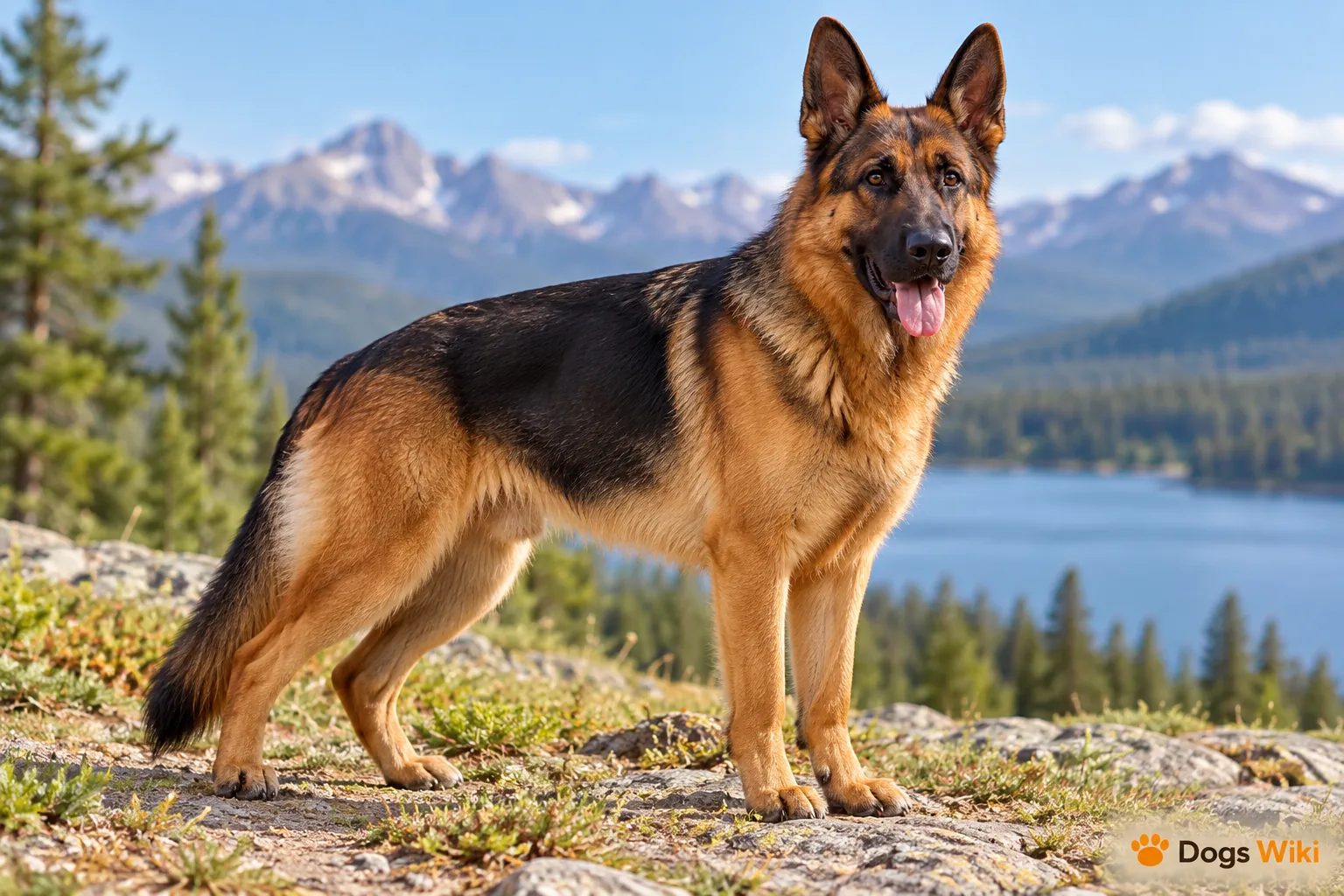
German Shepherds are a large, athletic breed with a body slightly longer than it is tall, built for endurance rather than pure speed. The breed carries a dense double coat and a confident, purposeful gait that’s part of its official standard. Most colors are allowed, with strong, rich colors preferred; washed-out colors, blues, and livers are serious faults, and a white dog is disqualified from AKC shows.
What Is the Average German Shepherd Height and Weight?
| Measure | American Kennel Club figure |
|---|---|
| Height | 24-26 inches (male), 22-24 inches (female) |
| Weight | 65-90 pounds (male), 50-70 pounds (female) |
| Life expectancy | 12-14 years |
Figures are from the American Kennel Club German Shepherd breed profile, retrieved September 2026.
How Long Do German Shepherds Live?
German Shepherds live 12 to 14 years, though some sources cite a shorter range of 7 to 10 years. That spread reflects real variation between individual dogs, driven by size, the specific health issues a dog develops, and how consistently a breeder screens for hereditary conditions. Regular veterinary care and attention to the breed’s known orthopedic and neurological risks give a German Shepherd the best shot at the longer end of that range.
What Health Problems Are German Shepherds Prone To?
German Shepherds are documented as being at higher risk for the following conditions.
What Is Hip and Elbow Dysplasia in German Shepherds?
Hip and elbow dysplasia are inherited malformations of the joints that lead to arthritis. In the hips, a loose ball-and-socket joint wears unevenly; in the elbows, the bones of the front leg fail to fit together cleanly. Signs include stiffness after rest, a swaying rear gait, and front-leg lameness. The German Shepherd Dog Club of America recommends OFA testing for any dog used for breeding, and weight control through life slows the arthritis that follows.
What Is Degenerative Myelopathy in German Shepherds?
Degenerative myelopathy is a progressive disease of the spinal cord. It starts with scuffed toenails and a wobbly rear end, then advances to hind-leg paralysis over months. There is no cure, though physical therapy keeps dogs mobile for longer. A DNA test for the SOD1 gene mutation shows whether a dog is clear, a carrier, or at risk.
What Is Bloat in German Shepherds?
Bloat, or gastric dilatation-volvulus, is a life-threatening emergency in which the stomach fills with gas and twists. Deep-chested breeds like the German Shepherd are at higher risk. A swollen belly, unproductive retching, drooling, and restlessness mean the dog needs a vet within minutes, not hours. Many owners choose a preventive gastropexy, a surgery that tacks the stomach to the body wall, at the time of spaying or neutering.
What Is Exocrine Pancreatic Insufficiency in German Shepherds?
Exocrine pancreatic insufficiency is a failure of the pancreas to produce enough digestive enzymes. Affected dogs eat hungrily yet lose weight and pass large, pale, greasy stools. A simple blood test diagnoses it. Lifelong enzyme powder mixed into every meal controls the condition in most dogs.
What Is Perianal Fistula in German Shepherds?
Perianal fistulas are painful, draining tracts in the skin around the anus, and German Shepherds are affected far more than any other breed. Straining, licking the area, and bleeding are the signs. The disease is immune-mediated, and medication that calms the immune system controls it in most dogs. Epilepsy is also recognized in the breed and is managed with daily anti-seizure medication.
Which Health Tests Should a German Shepherd Breeder Provide?
Ask for OFA or equivalent hip and elbow results on both parents, and a degenerative myelopathy DNA result. Many breeders also add a cardiac exam. Imported dogs from Germany carry SV hip and elbow ratings on their papers, which serve the same purpose.
How Do You Groom a German Shepherd?
German Shepherds have a dense double coat that sheds year-round, with two heavier seasonal blowouts each year, and it needs regular grooming to stay manageable. Brush several times a week during normal shedding, and expect that to increase to near-daily during the heavier seasonal sheds in spring and fall. The double coat is largely self-cleaning. Frequent bathing strips the natural oils that keep it healthy. Regular nail trims and ear checks round out the routine, and owners who dislike vacuuming should go in prepared for a genuinely heavy-shedding breed.
| Grooming task | How often |
|---|---|
| Brush with an undercoat rake and slicker brush | Three to four times a week, daily during a blowout |
| Check and wipe the ears | Weekly |
| Trim nails | Every 3 to 4 weeks |
| Brush teeth | Daily, or at least three times a week |
| Bath | Every 2 to 3 months |
How Much Exercise Does a German Shepherd Need?
A German Shepherd needs one to two hours of exercise a day, plus mental stimulation through training, tasks, or a job of some kind. This is a breed bred for sustained working stamina, and physical exercise alone won’t satisfy a German Shepherd’s needs. Dogs that don’t get enough mental engagement, in addition to physical activity, are prone to developing anxious or destructive behaviors out of boredom. Structured activities like obedience training, scent work, or dog sports suit this breed well, since they combine physical effort with the mental challenge German Shepherds were bred to want.
Which Dog Sports Suit a German Shepherd?
Herding, tracking, obedience, rally, agility, and nosework all fit the breed’s mix of drive and focus. Protection sports such as IGP, formerly called Schutzhund, test tracking, obedience, and controlled bite work together and were designed around the German Shepherd. Puppies should skip jumping and long runs until their growth plates close at around 12 to 18 months. Seniors still need mental work; short scent games tire an older shepherd without hurting its joints.
Are German Shepherds Easy to Train?
Yes, German Shepherds are highly trainable and are consistently ranked among the most intelligent dog breeds. That trainability is exactly why the breed became the standard choice for police, military, service, and protection work worldwide, roles that demand reliable responsiveness under real pressure. In a household setting, that same intelligence means German Shepherds pick up commands quickly but also need consistent mental engagement, since an under-stimulated German Shepherd will find its own, less desirable ways to stay occupied.
What Should You Feed a German Shepherd?
Because German Shepherds carry an elevated risk of bloat, a life-threatening emergency, feeding smaller, more frequent meals rather than one large meal is a commonly recommended precaution for this breed specifically. Beyond that, a large-breed formula suited to the dog’s age and activity level is a reasonable baseline, and any specific concerns, including bloat prevention strategies like slow-feed bowls or limiting exercise right after meals, are worth discussing directly with a veterinarian.
How Many Meals a Day Does a German Shepherd Need?
Puppies eat three to four meals a day on a large-breed puppy food until about six months, then two meals. Adults do well on two measured meals, with an hour of rest before and after vigorous exercise. Sensitive stomachs are common in the breed. Switching foods slowly over a week or more avoids most upsets, and dogs with chronic loose stools should be checked for exocrine pancreatic insufficiency.
What Are the Pros and Cons of Owning a German Shepherd?
Here are the main advantages and drawbacks of owning a German Shepherd, side by side.
| Pros | Cons |
|---|---|
| Highly intelligent and among the most trainable breeds | Needs one to two hours of exercise plus mental stimulation daily |
| Loyal and protective of family | Sheds heavily year-round with two seasonal blowouts |
| Adaptable enough for work, sport, or companionship | Documented risk of bloat, a life-threatening emergency |
| Confident temperament suited to experienced dog owners | Requires early, consistent socialization to prevent over-guarding behavior |
Anyone who admires the breed’s intelligence and work ethic but prefers not to search for a breeder can turn to German Shepherd rescue organizations, which place adult dogs regularly, with a known temperament and training history already established.
What Else Do People Ask About the German Shepherd?
The questions below cover the price of a German Shepherd, whether a family home is a good fit, what makes exercise so important for the breed, the difference between the German Shepherd and the Belgian Malinois, and what degenerative myelopathy in German Shepherds is.
What is the price of a German Shepherd?
A German Shepherd puppy from a breeder who health-tests for hip and elbow dysplasia and screens working-line temperament costs more than one from a breeder who skips that testing, and prices vary by region, bloodline, and breeder reputation. Adopting an adult German Shepherd through a rescue is far less expensive and comes with a known temperament and training background.
Is a family home a good fit for a German Shepherd?
Yes, German Shepherds can be excellent family dogs, thanks to their loyalty and protective instinct toward the people they consider their own. That said, the breed’s confidence and alertness mean consistent training and early socialization are important, more so than with naturally more easygoing breeds, so the dog’s protective instincts stay well managed around visitors and in public settings.
What makes exercise so important for a German Shepherd?
German Shepherds were bred for sustained working stamina, originally herding livestock across long distances and later performing demanding police, military, and service work, and that inherited drive doesn’t disappear in a household setting. A German Shepherd that only gets a short walk each day becomes restless and can develop destructive habits, since the breed needs both physical exercise and mental engagement to feel satisfied.
What Is the Difference Between the German Shepherd and the Belgian Malinois?
German Shepherds and Belgian Malinois are both highly trainable herding breeds used extensively in police and military work, but they differ in size, coat, and intensity. Belgian Malinois are leaner and lighter than German Shepherds, with a shorter coat and an even higher energy level, which is part of why Malinois are increasingly preferred for elite military and police units, while German Shepherds remain more common in general police work and family homes.
What Is Degenerative Myelopathy in German Shepherds?
Degenerative myelopathy is a progressive spinal cord disease that gradually weakens the hind legs and eventually leads to paralysis, and most cases appear after age eight. There’s no cure, but physical therapy and supportive care, including the use of mobility carts in advanced cases, maintain a dog’s quality of life for a period after diagnosis. A DNA test is available to check a dog’s genetic risk before symptoms appear.
Related Guides
More guides on The Dogs Wiki cover behavior, health, training, nutrition, and adoption.
| Guide |
|---|
| Behavior |
| Health |
| Training |
| Nutrition |
| Adoption |