
Home → Dog Breeds → Herding Group → Belgian Tervuren
Belgian Tervuren: Breed Profile, Temperament, Health, and Care Guide
A Belgian Tervuren is a medium-sized Herding Group breed from Belgium.
It’s one of four Belgian shepherd varieties, named for the village of Tervuren. The breed guarded and herded livestock before moving into guide, search-and-rescue, and military work. This guide covers where the breed originated, its temperament, how big Belgian Tervurens get, how long they live, the health problems they are prone to, grooming, how much exercise they need, how easy they are to train, what to feed them, the pros and cons of owning one, and what else people ask.
What Is a Belgian Tervuren and Where Did the Breed Originate?
A Belgian Tervuren belongs to the AKC’s Herding Group. Belgian breeders developed the breed in the late 19th century as a herding and guardian dog, one of four coat varieties that also includes the Groenendael, Malinois, and Laekenois. The AKC recognizes these as separate breeds, though the FCI treats them as one breed with different coats. Tervurens weren’t imported to America in real numbers until 1953, and the AKC gave the breed separate status in 1959.
The American Kennel Club defines the breed in its “Official Standard of the Belgian Tervuren”, approved January 9, 2007, which sets out the size, coat, and temperament a Belgian Tervuren should have. As of September 2026, the AKC ranks the Belgian Tervuren 107th of 210 breeds in popularity.
What Is a Belgian Tervuren’s Temperament Like?
A Belgian Tervuren’s temperament is confident, intelligent, and genuinely devoted to family. The breed can be hesitant around new people, making early, consistent socialization essential. Tervurens are alert and vigilant, quick to defend their family and property if needed, though they generally only get defensive when the situation calls for it.
How Big Do Belgian Tervurens Get?
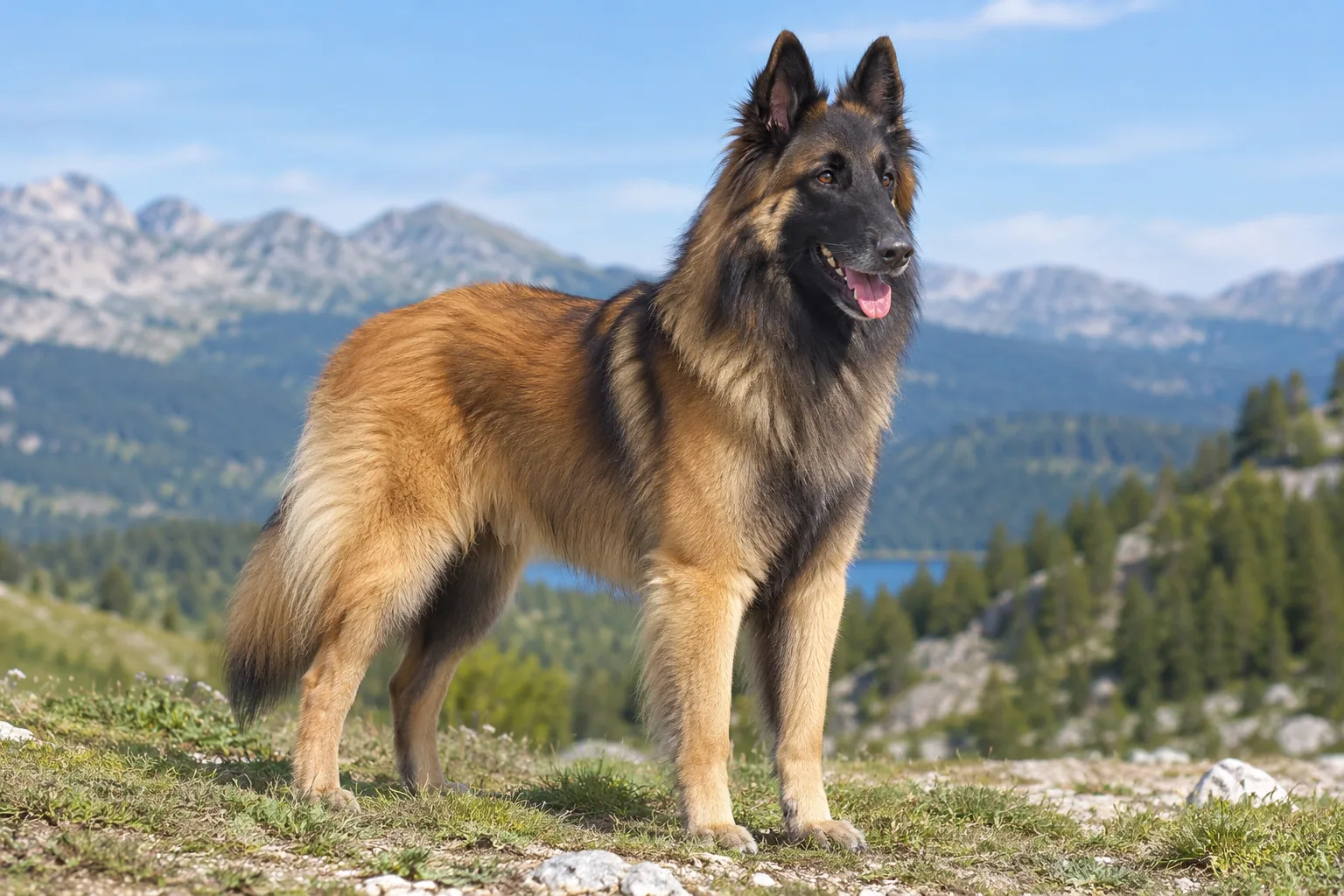
Belgian Tervurens are a strong, agile, muscular breed with a dense double coat, long and straight with a fawn base and black overlay. Males look masculine and strong, while females carry a daintier build.
What Is the Average Belgian Tervuren Height and Weight?
| Measure | American Kennel Club figure |
|---|---|
| Height | 24-26 inches (male), 22-24 inches (female) |
| Weight | 55-75 pounds (male), 45-60 pounds (female) |
| Life expectancy | 12-14 years |
Figures are from the American Kennel Club Belgian Tervuren breed profile, retrieved September 2026.
How Long Do Belgian Tervurens Live?
Belgian Tervurens live 12 to 14 years. Regular veterinary care supports a full life, given the breed’s documented risk of epilepsy and hip and elbow dysplasia.
What Health Problems Are Belgian Tervurens Prone To?
Belgian Tervurens are documented as being at higher risk for the following conditions.
- Hip and elbow dysplasia. Orthopedic conditions worth screening for in all breeding stock, managed with healthy weight and controlled exercise during growth.
- Idiopathic epilepsy. A seizure disorder that’s been reported in the breed, managed with anticonvulsant medication.
- Hypothyroidism. Underactive thyroid function causing lethargy, weight gain, and coat changes, diagnosed via bloodwork.
- Progressive retinal atrophy. An inherited eye disease that can lead to vision loss over time.
How Do You Groom a Belgian Tervuren?
Belgian Tervurens have a long, dense double coat that needs regular, dedicated brushing to stay tangle-free, with heavier shedding during seasonal blowouts. Omega-3 supplements can support skin, coat, and joint health for this breed.
How Much Exercise Does a Belgian Tervuren Need?
A Belgian Tervuren needs substantial daily physical activity and mental stimulation, reflecting the breed’s nearly inexhaustible working energy. Structured activities like herding, agility, and other dog sports suit this breed well.
Are Belgian Tervurens Easy to Train?
Yes. Belgian Tervurens are intelligent, high-energy, and genuinely eager to work and please. Consistent, positive reinforcement training starting early matters, given the breed’s watchful, sometimes possessive nature.
What Should You Feed a Belgian Tervuren?
A Belgian Tervuren does well on a high-quality formula appropriate for its life stage, ideally one formulated for active breeds. Monitoring food intake matters, since the breed can become overweight if not watched.
What Are the Pros and Cons of Owning a Belgian Tervuren?
Here are the main advantages of owning a Belgian Tervuren.
- Confident, intelligent, genuinely devoted temperament
- Does well at herding, agility, and structured dog sports
- Adaptable across guide, search-and-rescue, and military roles
- Deeply loyal watchdog
Here are the main drawbacks of owning a Belgian Tervuren.
- Hesitant around new people, needs consistent early socialization
- Needs substantial daily exercise and mental engagement
- High grooming commitment for the dense double coat
- Documented risk of epilepsy and hip and elbow dysplasia
Belgian Tervuren rescue organizations place adult dogs regularly, worth a look for anyone drawn to this breed’s elegant devotion but not set on a breeder search.
What Else Do People Ask About the Belgian Tervuren?
The questions below cover how much a Belgian Tervuren costs, whether Belgian Tervurens are good family dogs, the difference between the Belgian Tervuren and the Belgian Sheepdog, and why Belgian Tervurens are hesitant around strangers.
How much does a Belgian Tervuren cost?
First-year costs, including the puppy, veterinary care, food, grooming, training, and insurance, total $3,200 to $6,000. Adopting an adult dog through a breed-specific rescue is usually cheaper.
Are Belgian Tervurens good family dogs?
Belgian Tervurens can be good family dogs for engaged owners willing to devote time to training and socialization from an early age, since the breed genuinely isn’t a good fit for a casual, hands-off household.
What Is the Difference Between the Belgian Tervuren and the Belgian Sheepdog?
The two breeds are nearly identical except for coat: the Tervuren has a fawn coat with black overlay, while the Belgian Sheepdog, or Groenendael, has a solid black coat. Both share the same herding heritage and temperament.
Why are Belgian Tervurens hesitant around strangers?
The breed’s vigilant, protective nature developed from centuries of guarding livestock and property, and that instinct carries over as genuine wariness toward unfamiliar people without consistent socialization starting in puppyhood.
Related Guides
More guides on The Dogs Wiki cover behavior, health, grooming, training, and nutrition.
| Guide |
|---|
| Behavior |
| Health |
| Grooming |
| Training |
| Nutrition |
Leave a Reply