
Home → Dog Breeds → Hound Group → Afghan Hound
Afghan Hound: Breed Profile, Temperament, Health, and Care Guide
An Afghan Hound is a large Hound Group sighthound with roots tracing back thousands of years to the mountainous regions of Afghanistan, where nomadic tribes bred the dogs to hunt fast, agile prey like gazelles and hares across difficult terrain.
Today the breed is far better known for its flowing, regal coat and dignified bearing than for fieldwork, but that ancient hunting independence still shapes the Afghan Hound’s personality. This guide covers where the breed originated, its temperament, how big Afghan Hounds get, how long they live, the health problems they are prone to, grooming, how much exercise they need, how easy they are to train, what to feed them, the pros and cons of owning one, and what else people ask.
What Is an Afghan Hound and Where Did the Breed Originate?
An Afghan Hound belongs to the American Kennel Club’s Hound Group, specifically the sighthound category bred to chase prey by sight rather than scent. The breed is considered one of the oldest in existence, isolated for centuries in the mountains of Afghanistan, where its distinctive long, dense coat developed as protection against the cold. The first Afghan Hounds arrived in England in the early 1900s, and the AKC recognized the breed in 1926. The breed’s popularity peaked in the 1970s and has declined since, making it a genuinely uncommon breed today.
The American Kennel Club defines the breed in its “Official Standard of the Afghan Hound”, approved September 14, 1948, which sets out the size, coat, and temperament an Afghan Hound should have. As of September 2026, the AKC ranks the Afghan Hound 110th of 210 breeds in popularity.
What Is an Afghan Hound’s Temperament Like?
An Afghan Hound’s temperament is dignified, independent, and reserved, often described as aloof with strangers while remaining deeply loyal and affectionate with its own family. That independence traces directly back to the breed’s history as a solo hunter working at a distance from its handler across open terrain, a role that rewarded a dog capable of making its own decisions rather than waiting for direction. Afghan Hounds are also a genuinely sensitive breed, both emotionally and physically, which shapes how they should be trained and handled.
How Big Do Afghan Hounds Get?
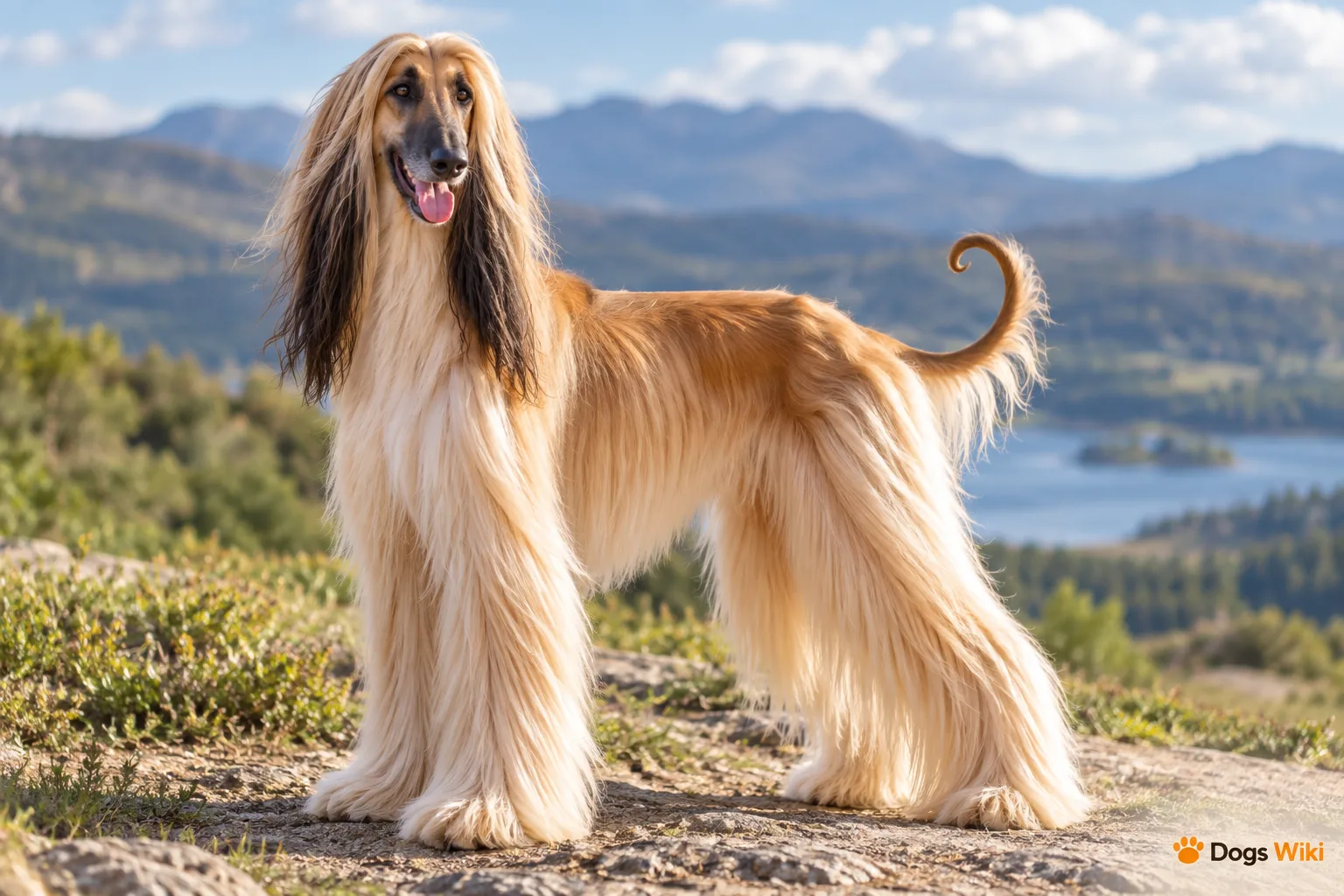
Afghan Hounds are a large, elegant breed sitting at the boundary between medium and large size classifications, with a long, silky, flowing coat and a distinctive arched neck and strong hips that give the breed its regal profile.
What Is the Average Afghan Hound Height and Weight?
| Measure | American Kennel Club figure |
|---|---|
| Height | 25-27 inches |
| Weight | 50-60 pounds |
| Life expectancy | 12-18 years |
Figures are from the American Kennel Club Afghan Hound breed profile, retrieved September 2026.
How Long Do Afghan Hounds Live?
Afghan Hounds live 12 to 18 years, a range reflecting the breed’s overall vitality despite its ancient lineage. Regular veterinary care, including caution around anesthesia given the breed’s known sensitivity, supports a full lifespan.
What Health Problems Are Afghan Hounds Prone To?
Afghan Hounds are documented as being at higher risk for the following conditions.
- Hip dysplasia. A condition where a shallow hip socket allows the joint to slip, causing pain or lameness in one or both rear legs.
- Cataracts. A clouding of the eye’s lens that can affect vision over time; regular eye exams help catch it early.
- Ear infections. A recognized, breed-associated issue managed with regular cleaning and monitoring.
- Cancer and bloat. Major health concerns for the breed; bloat, or gastric dilatation-volvulus, is a life-threatening emergency in deep-chested breeds requiring immediate veterinary care.
- Anesthesia and medication sensitivity. Not a disease, but a genuine physiological trait; Afghan Hounds process certain medications, including cortisone and anesthesia, differently than other breeds, which is worth discussing with a veterinarian before any procedure.
How Do You Groom an Afghan Hound?
Afghan Hounds have a long, silky, flowing coat that requires serious, ongoing commitment to grooming, including thorough weekly brushing with a pin brush to prevent tangles and matting, with particular attention behind the ears and under the arms. Bathing isn’t needed often, only when the dog is genuinely dirty, but the sheer volume of coat maintenance makes this one of the highest-grooming-commitment breeds in the Hound Group. Regular ear cleaning, nail trimming, and dental care round out the routine.
How Much Exercise Does an Afghan Hound Need?
An Afghan Hound needs daily exercise in a secure area, and the breed’s sighthound instincts make activities like lure coursing a genuinely good fit given its history as an independent hunter. Afghan Hounds can adapt to apartment living if their exercise needs are consistently met, and the breed’s long coat provides real protection in cold weather, though common sense about extreme temperatures still applies.
Are Afghan Hounds Easy to Train?
Afghan Hounds are considered one of the more difficult breeds to train, a direct result of the independent, self-directed temperament that made the breed so effective as a solo hunter. Patient, positive reinforcement training works better than repetition or correction-based methods, and despite the breed’s independent streak, many Afghan Hounds do go on to succeed in obedience with a consistent, patient owner.
What Should You Feed an Afghan Hound?
Afghan Hounds do well on a standard formula suited to their age and activity level, and because the breed carries a documented anesthesia and medication sensitivity, it’s worth discussing any dietary supplements or medications with a veterinarian familiar with sighthound-specific considerations.
What Are the Pros and Cons of Owning an Afghan Hound?
Here are the main advantages of owning an Afghan Hound.
- Dignified, loyal, deeply affectionate with family
- Striking, regal appearance
- Adapts to apartment living if exercise needs are met
- Generally quiet and reserved rather than reactive
Here are the main drawbacks of owning an Afghan Hound.
- Unusually high grooming commitment given the long, flowing coat
- Independent, reserved temperament that’s harder to train than average
- Aloof with strangers and may not warm up quickly to new people
- Genuinely rare breed, making puppies harder to find and often more expensive
Afghan Hound rescue organizations occasionally place adult dogs, though availability is limited, worth a look for anyone drawn to the breed’s striking appearance and independent spirit but a breeder search isn’t realistic given the breed’s rarity.
What Else Do People Ask About the Afghan Hound?
The questions below cover how much an Afghan Hound costs, whether Afghan Hounds are good family dogs, the difference between the Afghan Hound and the Greyhound, why Afghan Hounds are so hard to train, and how much grooming an Afghan Hound needs.
How much does an Afghan Hound cost?
Afghan Hound prices range from around $1,500 to $2,500 from a reputable breeder, reflecting the breed’s rarity, and prices vary further by region and bloodline. Adopting an adult Afghan Hound through a rescue is a lower-cost option, though availability is limited given how uncommon the breed is.
Are Afghan Hounds good family dogs?
Afghan Hounds can be good family companions for owners who understand and accommodate the breed’s independent, reserved temperament, though the breed’s aloofness with strangers and significant grooming commitment mean it suits a specific type of household better than a universally easygoing breed would.
What Is the Difference Between the Afghan Hound and the Greyhound?
Afghan Hounds and Greyhounds are both AKC sighthounds bred to chase prey by sight, but they differ dramatically in coat and temperament. Afghan Hounds have a long, flowing coat and a more independent, aloof personality, while Greyhounds have a short, low-maintenance coat and are generally more approachable with strangers once past their reserved first impression.
Why are Afghan Hounds so hard to train?
Afghan Hounds were bred to hunt independently across open terrain at a distance from their handler, a role that favored a dog capable of making its own decisions rather than constantly checking in for direction. That inherited independence is what makes the breed genuinely more challenging to train than a naturally eager-to-please breed, though patient, consistent, positive training can still produce a well-mannered adult.
How much grooming does an Afghan Hound need?
An Afghan Hound needs thorough brushing at least once a week, and many owners find more frequent brushing necessary to keep the long, silky coat free of tangles and mats. This is one of the highest grooming commitments of any AKC breed, and it’s worth factoring into the decision before bringing one home.
Related Guides
More guides on The Dogs Wiki cover health, grooming, behavior, training, nutrition, and adoption.
| Guide |
|---|
| Health |
| Grooming |
| Behavior |
| Training |
| Nutrition |
| Adoption |
Leave a Reply