
Home → Dog Breeds → Hound Group → Basset Hound
Basset Hound: Breed Profile, Temperament, Health, and Care Guide
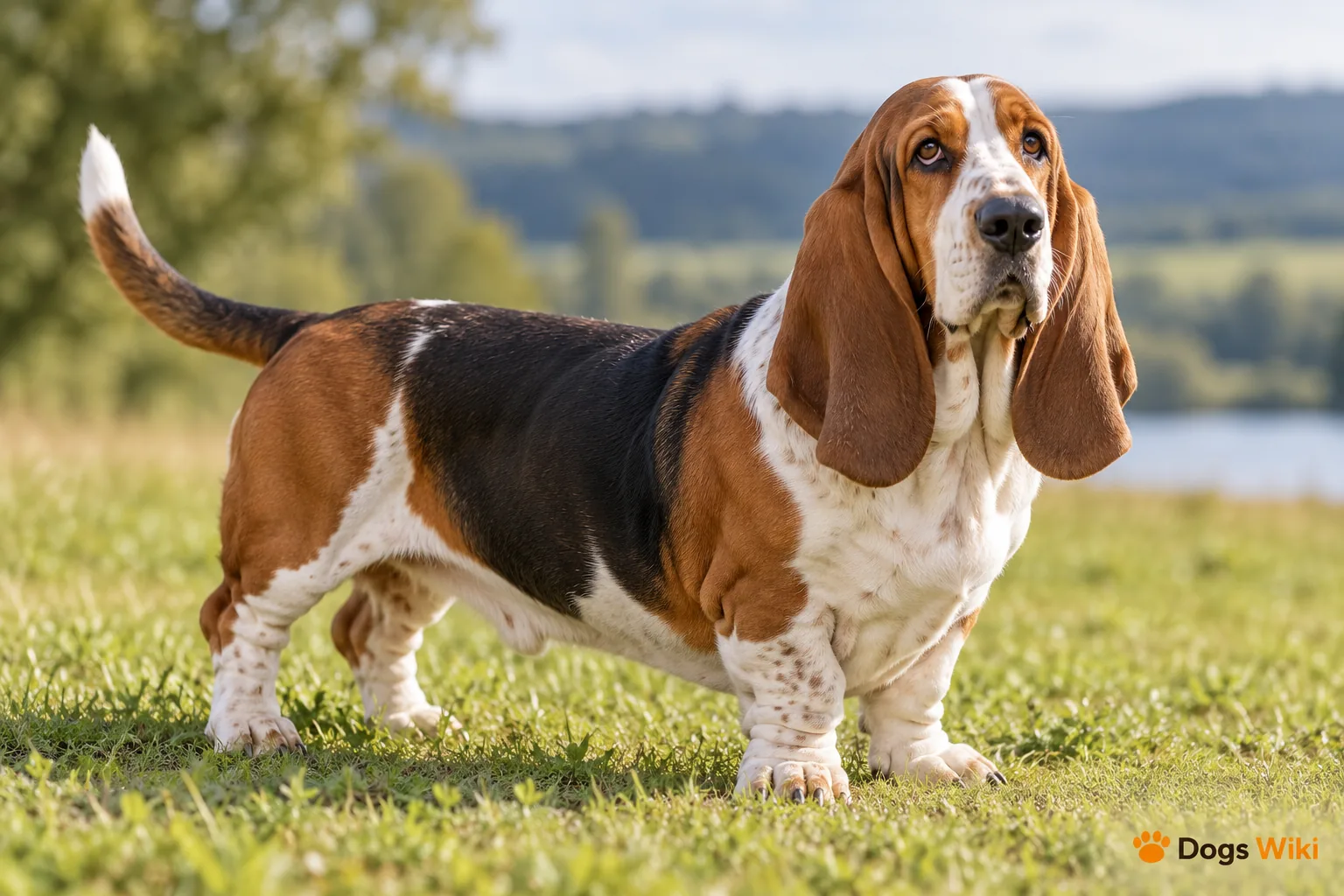
A Basset Hound is a medium to large, low-slung Hound Group breed developed in France to hunt rabbits and hare at a pace hunters could follow on foot.
A Basset Hound is a medium to large, low-slung Hound Group breed developed in France to hunt rabbits and hare at a pace hunters could follow on foot, since the breed’s short legs make it slower and easier to keep up with than taller hounds. That deliberately slow, thorough hunting style is baked into the breed’s whole personality today: patient, easygoing, and in no particular hurry. This guide covers where the breed originated, its temperament, how big Basset Hounds get, how long they live, the health problems they are prone to, grooming, how much exercise they need, how easy they are to train, what to feed them, the pros and cons of owning one, and what else people ask.
What Is a Basset Hound and Where Did the Breed Originate?
A Basset Hound belongs to the American Kennel Club’s Hound Group. The breed’s name comes from the French word “bas,” meaning low, a nod to its short-legged, low-to-the-ground build. Hunters on foot, rather than horseback, wanted dogs they could keep pace with, and the short-legged Basset suited them; its exceptional stamina let it track game over long distances despite its unhurried gait. American registration began in 1885, and the breed’s popularity took off after 1958, when a Basset became the face of the Hush Puppies shoe brand.
The American Kennel Club defines the breed in its “Official Standard for the Basset Hound”, approved January 14, 1964, which sets out the size, coat, and temperament a Basset Hound should have. As of September 2026, the AKC ranks the Basset Hound 34th of 210 breeds in popularity.
How Good Is a Basset Hound’s Nose?
Among scent hounds, only the Bloodhound is usually ranked ahead of the Basset. The low-slung body keeps the nose close to the trail, the long ears sweep scent upward, and the loose skin under the chin, called the dewlap, is said to trap it near the face. Once a Basset locks onto a trail, it will follow it for hours with its nose down and its ears deaf to calls, which is why a leash or a fence is not optional.
What Is a Basset Hound’s Temperament Like?
A Basset Hound’s temperament is easygoing, friendly, and loyal, and the breed rarely shows serious aggression toward people or other dogs. Bassets are wonderful with kids and get along well with other pets, though they can be stubborn and aren’t food-shy, meaning they’ll beg for or even attempt to steal food given the chance. Left to their own devices, a bored Basset Hound may bark, dig, or wander off following an interesting scent.
Do Basset Hounds Howl?
Yes. Bassets have a deep, loud, musical bay that hunters once used to follow the pack through cover. At home it comes out when the dog is bored, left alone, or excited by a scent or a siren. Neighbors in apartments notice it. Enough daily walks, a companion dog, and gradual practice with being left alone keep the baying to a reasonable level.
How Big Do Basset Hounds Get?
Basset Hounds are a low-slung, heavily boned breed, standing under 15 inches tall despite carrying substantial weight for their height. Males and females are similar in height, with weight varying more by individual size than by sex. The standard accepts any recognized hound color, most commonly tricolor or red and white, and disqualifies dogs over 15 inches, knuckled-over front legs, and a distinctly long coat.
What Is the Average Basset Hound Height and Weight?
| Measure | American Kennel Club figure |
|---|---|
| Height | up to 15 inches |
| Weight | 40-65 pounds |
| Life expectancy | 12-13 years |
Figures are from the American Kennel Club Basset Hound breed profile, retrieved September 2026.
How Long Do Basset Hounds Live?
Basset Hounds live 12 to 13 years, though the range cited across sources varies more than for many breeds, from as short as 8 years to as long as 17 with excellent care. Keeping a Basset Hound at a healthy weight is among the most important things an owner can do, since obesity directly worsens several of the breed’s most common health issues.
What Health Problems Are Basset Hounds Prone To?
Basset Hounds are documented as being at higher risk for the following conditions.
Why Do Basset Hounds Get Ear and Skin Infections?
The breed’s long ears and skin folds trap moisture and bacteria, making regular cleaning essential rather than optional. Yeast infections of the skin and ears, along with seborrhea, a greasy and flaky skin condition, are common and give some Bassets a noticeable odor. Weekly ear cleaning and wiping the folds under the neck and around the lips keep most problems in check.
Why Is Obesity Dangerous for Basset Hounds?
Obesity is a well-documented breed tendency that directly worsens joint and back problems given the Basset’s already heavy frame relative to its short legs. A few extra pounds on a 15-inch-tall dog put real strain on the spine and elbows. Measured meals, low-calorie treats, and daily walks are the simplest ways to protect a Basset’s back.
What Is Bloat in Basset Hounds?
Bloat, or gastric dilatation-volvulus, is a life-threatening emergency in which the stomach fills with gas and twists. Short as it is, the Basset is a deep-chested breed and faces a higher risk than its size suggests, which surprises many owners. A swollen belly, retching with nothing coming up, drooling, and restlessness need an emergency vet immediately. Feeding smaller, more frequent meals is a commonly recommended precaution.
What Back and Joint Problems Affect Basset Hounds?
Intervertebral disc disease is a concern because the breed’s long back and short legs put extra strain on the spine, in particular when the dog is allowed to jump from furniture. Elbow dysplasia and misshapen elbow joints also occur. Signs include a hunched back, reluctance to use stairs, lameness in the front legs, or sudden weakness in the back legs, which is an emergency.
What Eye and Blood Problems Affect Basset Hounds?
Ectropion, a drooping lower eyelid, and entropion, an eyelid that rolls inward, are linked to the breed’s loose facial skin. Glaucoma, a painful rise in pressure inside the eye, is a well-known Basset problem that can blind a dog within days, so a red, cloudy, or squinting eye needs a vet the same day. Basset hound thrombopathia, an inherited platelet disorder that causes abnormal bleeding, has a DNA test.
How Do You Groom a Basset Hound?
The breed has a short, tight coat that’s easy to maintain day to day, but the breed’s ears and skin folds need regular, careful cleaning to prevent infection. Bathing with a medicated shampoo when needed, along with an ear cleaning after each bath, is a commonly recommended routine for managing the breed’s tendency toward allergies and seborrhea.
| Grooming task | How often |
|---|---|
| Brush with a rubber curry mitt or hound glove | Weekly |
| Clean and dry the ears | Weekly, and after baths |
| Wipe skin folds, lips, and dewlap | A few times a week |
| Trim nails | Every 3 to 4 weeks |
| Bath | Every 1 to 2 months |
Ear tips drag through food bowls and puddles, so a quick wipe after meals and walks keeps them clean.
How Much Exercise Does a Basset Hound Need?
A Basset Hound needs moderate daily exercise, meaning regular walks rather than high-intensity activity, since the breed’s long back and short legs make jumping and jarring movement genuinely risky. Two moderate walks a day, along with some yard time, suit the breed well, and avoiding activities that involve repeated jumping protects the spine over the long run.
Can Basset Hounds Swim?
Poorly. The Basset’s heavy bone, dense body, and short legs mean it sinks more easily than most breeds, and its large head is hard to keep above water. Supervise any time near pools or lakes, and use a dog life jacket for boating. Scent walks, where the dog sets a slow pace and sniffs freely, suit the breed far better than swimming or running.
Are Basset Hounds Easy to Train?
Basset Hounds are intelligent but also quite stubborn, which makes them somewhat difficult to train compared to more naturally compliant breeds. Positive, patient, food-motivated training works best, since the breed responds better to consistent rewards than to repetition or firm correction. Keep sessions short and upbeat, practice recall with a long line rather than in open fields, and expect a Basset to comply on its own schedule; a slow response is not the same as a refusal.
What Should You Feed a Basset Hound?
Most Bassets do best on a nutritionally complete, weight-management-appropriate formula, since the breed is prone to obesity and extra weight directly worsens joint and back health. Two measured meals a day, rather than free-feeding or one large meal, also reduce bloat risk and keep portions consistent.
How Do You Stop a Basset Hound From Stealing Food?
Counters are within easy reach once a Basset stands on its hind legs, and its nose finds anything left out. Keep food off counters and tables, use a lidded trash can, and close the pantry. Puzzle feeders slow eating. Snuffle mats and scatter-feeding give the nose a legal job at mealtime. Every family member needs to resist the breed’s famous sad eyes at the dinner table.
What Are the Pros and Cons of Owning a Basset Hound?
Here are the main advantages and drawbacks of owning a Basset Hound, side by side.
| Pros | Cons |
|---|---|
| Easygoing, friendly temperament that’s excellent with kids and other pets | Prone to obesity, which worsens back and joint problems |
| Low-key exercise needs compared to more athletic hound breeds | Stubborn and moderately difficult to train |
| Distinctive, low-maintenance short coat | Prone to ear and skin infections requiring regular cleaning |
| Rarely shows serious aggression | Can be a persistent barker and scent-driven wanderer if not contained |
People who love the breed’s temperament but would rather not search for a breeder can contact Basset Hound rescue organizations, which place adult dogs regularly.
What Else Do People Ask About the Basset Hound?
The questions below cover how much a Basset Hound costs, whether a home with kids and other pets is a good fit, the difference between the Beagle and the Basset Hound, and why the ears are so long on the breed.
How much does a Basset Hound cost?
Basset Hound prices vary by region, bloodline, and breeder reputation, and a puppy from a breeder who screens for joint and eye conditions costs more than one that doesn’t. Adopting an adult Basset Hound through a rescue is a lower-cost alternative.
Is a home with kids and other pets a good fit for a Basset Hound?
Yes, Basset Hounds are widely regarded as excellent with kids and other pets, thanks to a patient, easygoing temperament and a general lack of aggression. The breed’s calm nature makes it a common recommendation for families with young children.
What Is the Difference Between the Beagle and the Basset Hound?
Basset Hounds and Beagles are both friendly AKC scent hounds, but they differ considerably in build. The Basset is low-slung and heavily boned with a slower, more deliberate gait, while Beagles are compact and more athletic, standing up to 15 inches with a lighter frame.
Why are the ears so long on a Basset Hound?
A Basset Hound’s long, low-hanging ears help sweep scent particles up off the ground toward the dog’s nose while tracking, a functional adaptation from the breed’s hunting history rather than just an appearance trait. The same ears that make the breed such an effective scent tracker also require regular cleaning, since they trap moisture and reduce airflow to the ear canal.
Related Guides
More guides on The Dogs Wiki cover grooming, behavior, training, nutrition, and adoption.
| Guide |
|---|
| Grooming |
| Behavior |
| Training |
| Nutrition |
| Adoption |
Leave a Reply