Home → Dog Breeds → Hound Group → Dachshund
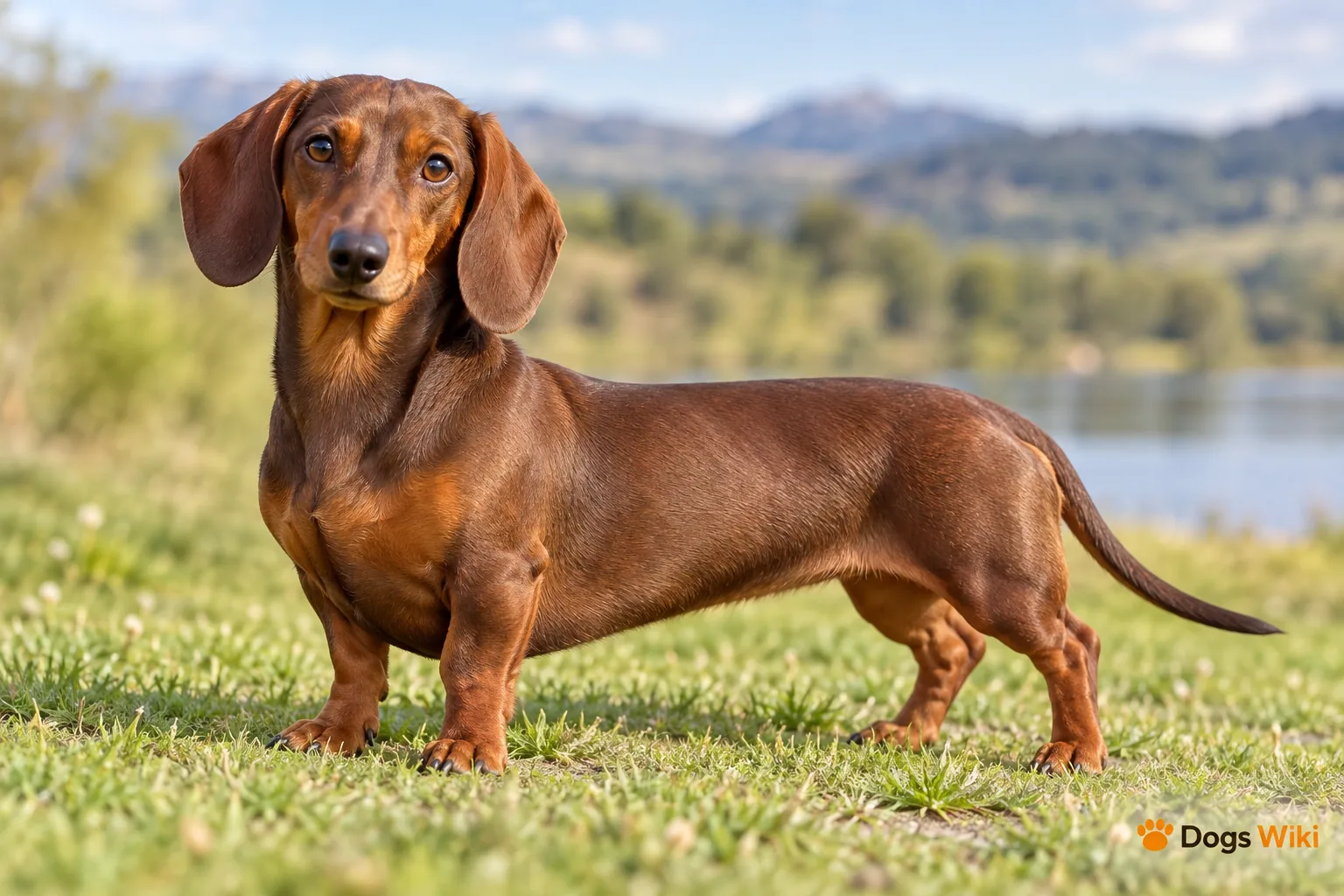
A Dachshund is a small Hound Group breed developed in Germany to hunt badgers, a job its long body and short, powerful legs were built for, letting the dog dig into burrows and pursue prey underground.
That badger-hunting heritage is even baked into the name: “Dachs” means badger and “hund” means dog. This guide covers where the breed originated, its temperament, how big Dachshunds get, how long they live, the health problems they are prone to, grooming, how much exercise they need, how easy they are to train, what to feed them, the pros and cons of owning one, and what else people ask.
What Is a Dachshund and Where Did the Breed Originate?
A Dachshund belongs to the American Kennel Club’s Hound Group. The breed was developed in Germany, with roots tracing back to the 15th century and real development beginning in the 17th, specifically to hunt badgers and other burrowing animals. Larger Dachshunds were also used to chase deer or fox, while smaller ones hunted hares and ferrets. Today the breed is primarily a companion dog in North America, though it’s still used for hunting in parts of Europe, and it remains one of the AKC’s most popular breeds.
As of September 2026, the AKC ranks the Dachshund 6th of 210 breeds in popularity. The AKC first registered the breed in 1885, and a striped Dachshund named Waldi became the first official Olympic mascot at the 1972 Munich Games.
What Are the Three Dachshund Coat Types?
Every Dachshund has one of three coats. Smooth Dachshunds have short, shiny hair that lies flat. Wirehaired Dachshunds carry a harsh outer coat with a beard and bushy eyebrows, a coat bred to protect the dog in thorny cover. Longhaired Dachshunds have soft, flowing hair with feathering on the ears, chest, and legs. All three coats come in both sizes. Coat type shapes grooming needs and, to some degree, temperament: owners and breeders describe longhairs as calmer and wirehairs as the most terrier-like.
What Is a Dachshund’s Temperament Like?
A Dachshund’s temperament is lively, curious, and clever, with a bold, tenacious streak that means the breed will confidently take on animals much larger than itself. Dachshunds can be stubborn and are sometimes wary of strangers or other animals without proper socialization, a trait that traces back to their history as an independent, single-minded hunter rather than a dog bred to defer constantly to a handler. With their family, most Dachshunds are playful, mischievous, and affectionate.
Do Dachshunds Bark a Lot?
Yes. A Dachshund has a deep, loud bark for its size, which once let hunters locate the dog underground. That voice makes the breed a keen watchdog and a trial for close neighbors. Teaching a “quiet” cue early, and not rewarding barking at the window with attention, keeps the habit manageable. Digging is the other hunting leftover; a sandbox or a dig spot in the yard saves the flower beds.
How Big Do Dachshunds Get?
Dachshunds have a distinctive long, low body with short, muscular legs, and the breed comes in two sizes and three coat types. Standard Dachshunds weigh 16 to 32 pounds, while Miniatures compete in a class for dogs 11 pounds and under; there’s no official AKC height standard, but most Dachshunds stand under 9 inches at the shoulder regardless of size variety. Dogs between the two sizes, sold as “tweenies,” are common in pet homes and are still purebred Dachshunds.
The American Kennel Club lists the standard Dachshund at 8-9 inches and 16-32 pounds, and the miniature at 5-6 inches and 11 pounds or under, with a life expectancy of 12-16 years, according to its Dachshund breed profile, retrieved September 2026.
How Long Do Dachshunds Live?
Dachshunds live 12 to 16 years, a long lifespan for a small breed. Keeping a Dachshund at a healthy weight and protecting its back from injury are the two biggest factors in supporting a full, comfortable life, given the health risk covered below tied directly to the breed’s unique body shape.
What Health Problems Are Dachshunds Prone To?
Dachshunds are documented as being at higher risk for the following conditions.
What Is Intervertebral Disc Disease in Dachshunds?
Intervertebral disc disease is the breed’s defining health issue. As many as 25 percent of Dachshunds develop it in their lifetime. The breed carries a gene for chondrodystrophy, which makes the cushioning discs between the vertebrae harden and calcify early in life. A hardened disc can burst and press on the spinal cord. Signs range from a hunched back, trembling, and yelping when picked up, to wobbling, knuckling of the back paws, and sudden paralysis.
How Is IVDD Treated in Dachshunds?
Mild cases are treated with several weeks of strict crate rest, pain relief, and anti-inflammatory medication. Dogs that lose the ability to walk, or lose feeling in their toes, need a neurological exam and an MRI or CT scan as quickly as possible, because surgery to remove the disc material works best when done within hours to a day of the loss of function. Physical rehabilitation after either treatment rebuilds strength. Any sudden weakness in a Dachshund’s back legs is an emergency, not something to watch overnight.
Can Lifestyle Lower a Dachshund’s Risk of IVDD?
Partly. A 2016 study of about 2,000 Dachshunds, “DachsLife 2015: an investigation of lifestyle associations with the risk of intervertebral disc disease in Dachshunds,” found that dogs getting more daily exercise had lower odds of the disease, and that neutered dogs had higher odds. Keeping the dog lean and fit matters more than keeping it still. Genetics still carry most of the risk, which is why some breeders in Europe now x-ray breeding dogs for calcified discs.
What Other Health Problems Affect Dachshunds?
Obesity comes next, because the breed’s small size and long back mean extra weight puts outsized strain on the spine. Epilepsy occurs across the breed and is managed with lifelong medication; Miniature Wirehaired Dachshunds also carry Lafora disease, a late-onset form of epilepsy with its own DNA test. Patellar luxation, a kneecap that slips out of place, causes an intermittent skip in the gait. Ear infections and skin conditions show up in longer-eared and longer-coated dogs, and a form of progressive retinal atrophy called cord1 affects Miniature Longhaired lines.
The Dachshund parent club sets out its recommended health screening in a breed health statement published by the American Kennel Club.
Why Should Buyers Avoid Double Dapple Dachshunds?
Dapple is the Dachshund name for the merle pattern. Breeding two dapples together produces “double dapple” puppies, and a share of them are born deaf, blind, or with small or missing eyes. Responsible breeders pair a dapple only with a solid-colored dog. A puppy with large white areas from a dapple-to-dapple litter is a warning sign rather than a rare color worth paying extra for.
How Do You Groom a Dachshund?
Grooming needs depend heavily on which of the three coat types a Dachshund has. Smooth-coated Dachshunds need only minimal grooming, while long-haired and wire-haired varieties need more frequent brushing to prevent matting. All varieties benefit from regular nail trims, ear checks, and dental care.
| Coat type | Brushing | Extra care |
|---|---|---|
| Smooth | Weekly rub with a rubber mitt or soft brush | Sweaters for cold weather |
| Wirehaired | Two to three times a week | Hand-stripping about twice a year |
| Longhaired | Two to three times a week, with a comb behind the ears | Trim the hair between the paw pads |
Small mouths crowd the teeth, so daily brushing matters for Dachshunds. Dental disease is common in the breed and costly to treat.
How Much Exercise Does a Dachshund Need?
A Dachshund needs moderate exercise, two walks a day on varied but gentle terrain, along with some interactive playtime. Because of the breed’s elongated spine, activities involving repeated hard landings, like jumping off furniture or down stairs, should be avoided or minimized, and a dog ramp for beds, sofas, and cars is a useful investment for protecting back health over the dog’s lifetime.
Which Activities Suit a Dachshund?
Walks of 20 to 30 minutes twice a day keep most adults fit and lean. Scent work, tracking, and earthdog tests, where dogs follow a scent through man-made tunnels to a caged quarry, put the hunting instinct to good use. Use a harness rather than a collar to take strain off the neck. Lift a Dachshund with one hand under the chest and the other under the hindquarters, so the back stays level.
Are Dachshunds Easy to Train?
Dachshunds are moderately difficult to train. The breed’s independent mindset means it doesn’t have the natural desire to please that drives faster training progress in some other breeds, so finding what motivates an individual dog, most of the time food, and using it consistently works better than repetition alone. Early socialization also matters given the breed’s tendency toward wariness with strangers and other animals.
Why Is House-Training a Dachshund Hard?
House-training is the most common complaint from Dachshund owners. Small dogs have small bladders, and many Dachshunds dislike rain and cold. A fixed schedule, a covered potty area, and a crate for short periods speed the process. Praise and a treat the moment the puppy finishes outdoors teach faster than any correction, and accidents indoors should be cleaned with an enzyme cleaner so the smell doesn’t draw the dog back.
What Should You Feed a Dachshund?
Dachshunds are predisposed to obesity given their small size and restricted exercise options, which makes portion control one of the single most important things an owner can manage for this breed’s long-term spine health. A formula suited to the dog’s age and activity level, fed in measured amounts, is the right starting point.
How Do You Tell if a Dachshund Is Overweight?
Look from above: a fit Dachshund has a visible waist behind the ribs. Run your hands along the sides, and the ribs should be easy to feel without pressing. A belly that sags toward the ground or a back that looks flat and wide means the dog needs a smaller portion. Two measured meals a day suit adults, while puppies eat three or four small meals until about six months. Treats and table scraps count toward the daily total.
What Are the Pros and Cons of Owning a Dachshund?
Here are the main advantages and drawbacks of owning a Dachshund, side by side.
| Pros | Cons |
|---|---|
| Lively, affectionate, and entertaining personality | Documented risk of intervertebral disc disease, a serious spinal condition |
| Small size suited to a range of living situations, including apartments | Can be stubborn and moderately difficult to train |
| Long average lifespan for a small breed | Prone to obesity, which directly worsens back health risk |
| Available in multiple coat types to match grooming preferences | Can be wary of strangers or other animals without early socialization |
Anyone who loves the breed’s personality but would rather not search for a breeder can contact Dachshund rescue organizations, which place adult dogs regularly.
What Else Do People Ask About the Dachshund?
The questions below cover how much a Dachshund costs, whether a home with kids is a good fit, the difference between the Dachshund and the Basset Hound, and why back problems are so common in the breed.
How much does a Dachshund cost?
Dachshund prices vary by region, coat type, size variety, and breeder reputation, and a puppy from a breeder who screens for spine and joint health costs more than one that doesn’t. Adopting an adult Dachshund through a rescue is a lower-cost alternative.
Is a home with kids a good fit for a Dachshund?
Dachshunds can be good with kids, in particular when raised alongside them, but their small size and vulnerable spine mean rough handling is a real risk, so supervision and teaching children to handle the dog gently matter more with this breed than with sturdier ones.
What Is the Difference Between the Dachshund and the Basset Hound?
Dachshunds and Basset Hounds are both short-legged, long-bodied AKC hounds with a stubborn streak, but they differ considerably in size. The Dachshund is considerably smaller and lighter, under 32 pounds, while Basset Hounds run 40 to 65 pounds despite a similarly low-slung build.
Why are back problems so common in the Dachshund?
Dachshunds are prone to back problems, specifically intervertebral disc disease, because their long spine and short rib cage put more strain on the discs between vertebrae than a proportionally built dog experiences. As many as a quarter of Dachshunds develop this condition, which is why avoiding hard jumps and keeping the dog at a healthy weight are such central parts of the breed’s care.
Related Guides
More guides on The Dogs Wiki cover behavior, training, nutrition, and adoption.
| Guide |
|---|
| Behavior |
| Training |
| Nutrition |
| Adoption |