
Home → Dog Breeds → Working Group → Doberman Pinscher
A Doberman Pinscher is a medium to large Working Group breed developed in 1890s Germany by a tax collector named Karl Friedrich Louis Dobermann, who wanted a formidable, loyal dog to protect him on his rounds.
That personal-protection origin shaped a breed that combines real athleticism with sharp intelligence, and the Doberman went on to become a standard choice for military and police work worldwide. This guide covers where the breed originated, its temperament, how big Doberman Pinschers get, how long they live, the health problems they are prone to, grooming, how much exercise they need, how easy they are to train, what to feed them, the pros and cons of owning one, and what else people ask.
What Is a Doberman Pinscher and Where Did the Breed Originate?
A Doberman Pinscher belongs to the American Kennel Club’s Working Group. The breed was developed in Germany around 1890 by Karl Friedrich Louis Dobermann, who wanted a loyal, protective companion for his work collecting taxes, a job that put him at real personal risk. Intelligence, agility, and protectiveness made the Doberman a natural choice for military and police work as it spread internationally, and the AKC officially recognized it in 1908. Today’s Dobermans are considerably friendlier than the more aggressive early lines, though the breed’s watchful, protective instincts remain intact.
The American Kennel Club defines the breed in its “Official Standard of the Doberman Pinscher”, approved February 6, 1982, which sets out the size, coat, and temperament a Doberman Pinscher should have. As of September 2026, the AKC ranks the Doberman Pinscher 16th of 210 breeds in popularity.
Which Doberman Pinscher Colors Does the Standard Allow?
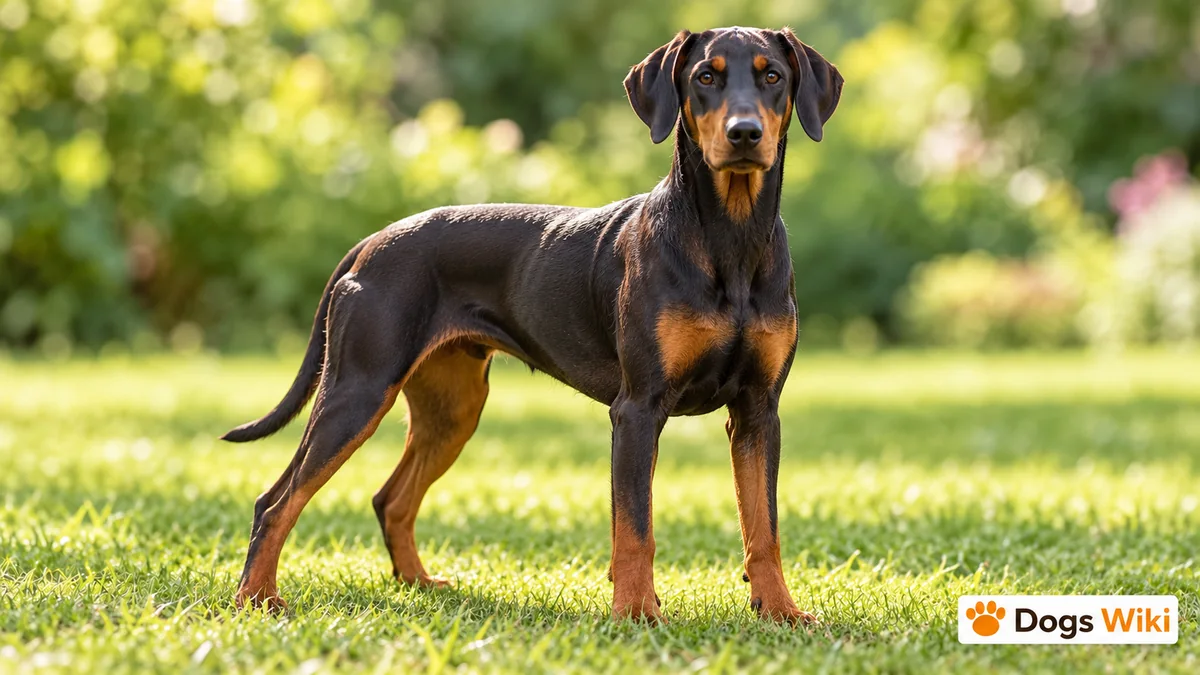
Four colors are allowed: black, red, blue, and fawn, which breeders call Isabella. Each must carry sharply defined rust markings above the eyes and on the muzzle, throat, forechest, legs, feet, and below the tail. Small white chest patches are permitted. Any other color is disqualified. The so-called white Doberman is an albino-type dog outside the standard, with a higher risk of sun damage and light sensitivity.
What Is a Doberman Pinscher’s Temperament Like?
A Doberman Pinscher’s temperament is energetic, alert, and deeply loyal, and the breed does well in an active home where its intelligence gets genuine use. The standard lists the ideal as “energetic, watchful, determined, alert, fearless, loyal and obedient,” and tells judges to dismiss any shy or vicious dog. Dobermans are patient with children, though their excitable nature means small kids could be accidentally knocked over during play, and all interactions should be supervised regardless of breed. The breed’s loyalty can translate into wariness around unfamiliar people, which is why early, consistent socialization matters so much for raising a well-rounded adult.
Is a Doberman Pinscher a Velcro Dog?
Yes. Dobermans are known for following their people from room to room and leaning against them on the couch, a habit owners call the Doberman lean. Guests who expect a stern guard dog are sometimes surprised by how much physical contact the breed wants from its family. It bonds closely and does poorly left alone outdoors. A Doberman that shares the family’s living space is calmer and easier to live with than one kept at a distance.
How Big Do Doberman Pinschers Get?
Doberman Pinschers are a sleek, muscular, medium to large breed that moves on its toes rather than flat-footed, giving the dog a graceful, quick gait. Cropped ears and a docked tail were once standard in the United States; many owners now leave ears natural, and the dog is the same breed either way.
What Is the Average Doberman Pinscher Height and Weight?
| Measure | American Kennel Club figure |
|---|---|
| Height | 26-28 inches (male), 24-26 inches (female) |
| Weight | 75-100 pounds (male), 60-90 pounds (female) |
| Life expectancy | 10-12 years |
Figures are from the American Kennel Club Doberman Pinscher breed profile, retrieved September 2026.
How Long Do Doberman Pinschers Live?
Doberman Pinschers live 10 to 12 years. Given the breed’s documented cardiac risk, regular veterinary screening, including cardiac exams, meaningfully supports a full lifespan for this breed specifically.
What Health Problems Are Doberman Pinschers Prone To?
Doberman Pinschers are documented as being at higher risk for the following conditions.
What Is Dilated Cardiomyopathy in Doberman Pinschers?
Dilated cardiomyopathy is a disease of the heart muscle that leaves it thin, stretched, and weak. It is one of the breed’s most serious health risks, and a large European study found that more than half of Dobermans develop it at some point in their lives. The disease stays hidden for years before signs appear, and the first sign can be fainting, heart failure, or sudden death from an irregular heartbeat. Medication started in the hidden stage delays heart failure, which is why screening matters so much.
How Are Doberman Pinschers Screened for Heart Disease?
The recommended approach combines a yearly 24-hour Holter monitor, which records every heartbeat to catch abnormal rhythms, with an echocardiogram, an ultrasound of the heart that measures its size and pumping strength. Screening usually starts around two to three years of age. DNA tests for two gene variants linked to DCM in the breed exist, but a clear result does not rule the disease out, so they supplement rather than replace yearly screening.
What Is Wobbler Syndrome in Doberman Pinschers?
Wobbler syndrome, or cervical spondylomyelopathy, is a narrowing of the spinal canal in the neck that squeezes the spinal cord. It causes a wobbly, uncoordinated back-end gait, scuffed toenails, and neck pain, and Dobermans are one of the two breeds most affected, along with the Great Dane. MRI confirms it. Mild cases are managed with rest and medication, and severe cases need surgery.
What Other Health Problems Affect Doberman Pinschers?
Von Willebrand disease is an inherited bleeding disorder with a DNA test that should be checked before any surgery. Bloat, or gastric dilatation-volvulus, is a life-threatening emergency in deep-chested breeds. Hypothyroidism, a shortage of thyroid hormone, is managed with daily medication. Chronic hepatitis, often linked to copper buildup in the liver, also occurs in the breed. Blue and fawn Dobermans can develop color dilution alopecia, a thinning of the coat with flaky skin.
How Do You Groom a Doberman Pinscher?
Doberman Pinschers have a short, shiny coat with little loose hair, making coat care genuinely low-maintenance, just occasional brushing to remove any loose hair. Routine nail trims, ear checks, and dental care round out the grooming routine, and the breed’s short coat offers little protection in cold weather, so a coat for winter walks is a practical addition.
| Grooming task | How often |
|---|---|
| Brush with a rubber curry mitt or soft bristle brush | Weekly |
| Trim or grind nails | Every 1 to 2 weeks |
| Check and clean ears | Weekly |
| Brush teeth | Daily, or at least three times a week |
| Bath | Every 2 to 3 months |
The short coat sheds lightly all year, and a quick wipe with a damp cloth after walks keeps it glossy between baths.
How Much Exercise Does a Doberman Pinscher Need?
A Doberman Pinscher needs substantial daily exercise, meaning brisk walking every day plus a good run as often as possible, reflecting the breed’s athletic build and working heritage. Mental exercise matters just as much as physical activity for this intelligent breed, and a Doberman that gets too little of either is prone to restlessness and destructive behavior when left alone for long periods.
Which Activities Suit a Doberman Pinscher?
Running, hiking, fetch, and swimming burn physical energy, while obedience, tracking, agility, nosework, and protection sports use the breed’s mind. Most adults need one to two hours of activity a day. Puppies should skip forced running and repeated jumping until their growth plates close at around 18 months. Dogs under cardiac treatment should exercise at the level their vet sets, and any fainting or sudden weakness during play needs a heart check before the next run.
Are Doberman Pinschers Easy to Train?
Yes, Doberman Pinschers are unusually intelligent and do well in obedience and structured training, a natural extension of the traits that made the breed so effective in military and police work. Consistent, early socialization paired with training is essential, both to channel the breed’s protective instincts appropriately and to prevent the wariness around strangers from tipping into genuine aggression.
What Should Doberman Pinscher Training Focus On?
Calm greetings, loose-leash walking, and a reliable “leave it” come first, because a fast, strong adolescent learns bad habits quickly. Dobermans are sensitive, and harsh corrections damage their trust. Short, varied sessions with food and play rewards keep them engaged, and ending each session on an easy success leaves the dog eager for the next one. Regular meetings with friendly strangers throughout the first two years build a dog that is confident rather than suspicious.
What Should You Feed a Doberman Pinscher?
Doberman Pinschers do well on a formula suited to their age and athletic activity level, and because the breed carries a bloat risk, feeding practices that slow down fast eating and avoid exercise right after meals are worth discussing with a veterinarian. A large-breed puppy formula supports healthy joint development during growth.
How Many Meals a Day Does a Doberman Pinscher Need?
Puppies eat three meals a day until about six months, then two. Adults stay on two measured meals to lower bloat risk. Ask a vet before choosing a grain-free diet heavy in peas, lentils, or potatoes, since the U.S. Food and Drug Administration has investigated a possible link between such diets and dilated cardiomyopathy in dogs, a disease this breed is already prone to.
What Are the Pros and Cons of Owning a Doberman Pinscher?
Here are the main advantages and drawbacks of owning a Doberman Pinscher, side by side.
| Pros | Cons |
|---|---|
| Loyal, alert, deeply protective of family | Documented, serious risk of dilated cardiomyopathy |
| Highly intelligent and does well at obedience training | Wary of strangers, requiring consistent early socialization |
| Athletic and well suited to active owners | Needs substantial daily physical and mental exercise |
| Low-maintenance short coat | Strong prey drive that can complicate life with cats or small pets |
Anyone who admires the breed’s loyalty and intelligence but would rather not search for a breeder can contact Doberman rescue organizations, which place adult dogs regularly.
What Else Do People Ask About the Doberman Pinscher?
The questions below cover what it costs to buy a Doberman Pinscher, whether a family home is a good fit, the difference between the Rottweiler and the Doberman Pinscher, and what dilated cardiomyopathy in Doberman Pinschers is.
What does it cost to buy a Doberman Pinscher?
A Doberman puppy from a breeder with full health testing, including yearly cardiac screening of the parents, costs more than one from a breeder who skips it, and prices vary widely by region and breeder reputation. Adopting an adult Doberman through a rescue is a considerably lower-cost alternative.
Is a family home a good fit for a Doberman Pinscher?
Yes, Doberman Pinschers can be excellent family dogs, in particular for households with older, respectful children, thanks to a loyal, protective, affectionate temperament. Early socialization matters more with this breed than with more naturally easygoing ones, given the Doberman’s watchfulness around unfamiliar people.
What Is the Difference Between the Rottweiler and the Doberman Pinscher?
Doberman Pinschers and Rottweilers are both German Working Group breeds with a protective, intelligent temperament, but they differ considerably in build. Dobermans are leaner and more athletic, while Rottweilers are heavier and more powerfully built, and Dobermans live a couple of years longer on average.
What is dilated cardiomyopathy in Doberman Pinschers?
Dilated cardiomyopathy is a disease of the heart muscle that causes it to become thin and weak, reducing the heart’s ability to pump blood effectively, and it’s among the most serious, well-documented health risks in this breed. Regular cardiac screening, including tests recommended by the Doberman Pinscher Club of America, gives owners and veterinarians the best chance of catching the disease early and managing it.
Related Guides
More guides on The Dogs Wiki cover behavior, health, grooming, training, nutrition, and adoption.
| Guide |
|---|
| Behavior |
| Health |
| Grooming |
| Training |
| Nutrition |
| Adoption |

Comments
3 responses to “Doberman Pinscher: Breed Profile, Temperament, Health, and Care Guide”
[…] Doberman Pinscher […]
[…] Doberman Pinscher […]
[…] Doberman Pinscher […]