
Home → Dog Breeds → Non-Sporting Group → Bulldog
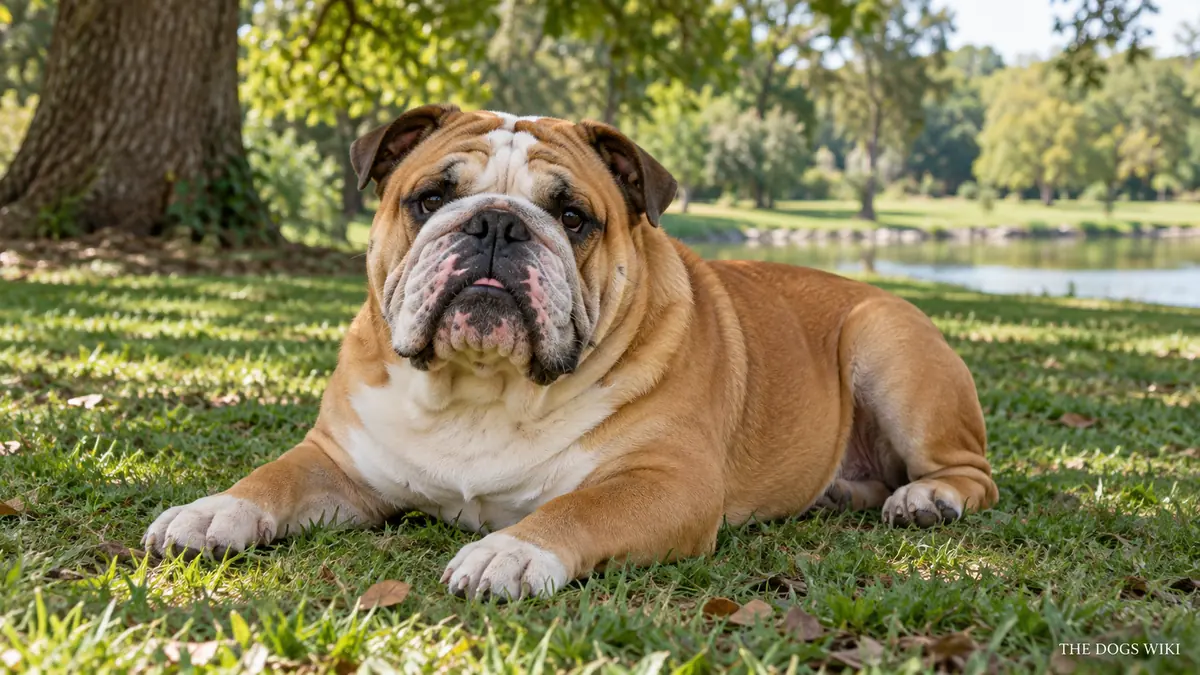
A Bulldog, called the English Bulldog to distinguish it from the French Bulldog, is a medium-sized Non-Sporting Group breed descended from dogs originally used in the blood sport of bull-baiting in England before that practice was outlawed in the 1800s.
Breeders afterward reshaped the dog’s temperament almost entirely, turning what had been a fighting dog into among the most docile, low-key companion breeds around today. This guide covers where the breed originated, its temperament, how big Bulldogs get, how long they live, the health problems they are prone to, grooming, how much exercise they need, how easy they are to train, what to feed them, the pros and cons of owning one, and what else people ask.
What Is a Bulldog and Where Did the Breed Originate?
A Bulldog belongs to the American Kennel Club’s Non-Sporting Group, a catch-all category for breeds that don’t fit neatly into the other six groups. The breed’s history traces back to bull-baiting, a blood sport in which dogs were bred to grip and hold onto a bull’s nose, which is where the low-slung build and pushed-in face originated. Once the sport was banned in England in 1835, breeders shifted their focus entirely away from fighting ability and toward temperament, producing the calm, affectionate companion breed known today. The AKC recognized the breed in 1886, and it has remained one of the AKC’s most popular breeds for generations, historically placing in the top five to ten most registered breeds.
The American Kennel Club defines the breed in its “Official Standard of the Bulldog”, approved July 12, 2016, which sets out the size, coat, and temperament a Bulldog should have. As of September 2026, the AKC ranks the Bulldog 9th of 210 breeds in popularity.
Which Bulldog Colors Does the Standard Allow?
The standard accepts a range of colors, including brindle, solid white, red, fawn, and piebald combinations of these, provided each color is clear and bright. Merle is out. So are a brown or liver-colored nose, blue or green eyes, and any color or marking the standard does not define, which means breeders who charge extra for “lilac,” “blue,” or “chocolate tri” Bulldogs are selling colors outside the standard, which say nothing about health or temperament.
What Is a Bulldog’s Temperament Like?
A Bulldog’s temperament is docile, friendly, and affectionate, and owners describe a calm, even lazy, companion despite the breed’s fighting-dog ancestry. The standard asks for a disposition that is “equable and kind, resolute and courageous (not vicious or aggressive).” That shift is a direct result of over a century of deliberate breeding away from aggression and toward a dog suited to family life. Bulldogs do have a stubborn streak, one that shows up more in training sessions than in daily temperament, but genuine aggression is not typical of a well-bred, well-socialized Bulldog. They do well with children and form strong, low-drama attachments to their households.
Do Bulldogs Get Along With Other Pets?
Most Bulldogs live peacefully with cats and other dogs they are raised with. Some males can be pushy with dogs of the same sex, and a few guard food or toys, so feeding pets apart is a simple precaution. Rough play with a much larger, faster dog can leave a Bulldog overheated and short of breath. Calm companions suit the breed best.
How Big Do Bulldogs Get?
Bulldogs are a medium-sized, low-slung breed with a broad chest, a pushed-in face, and loose, wrinkled skin, in particular around the head and shoulders. The breed’s distinctive build is also directly responsible for several of the health considerations covered below, since the same flat face and compact structure that define the look also affect breathing and joint health.
What Is the Average Bulldog Height and Weight?
| Measure | American Kennel Club figure |
|---|---|
| Height | 14-15 inches |
| Weight | 50 pounds (male), 40 pounds (female) |
| Life expectancy | 8-10 years |
Figures are from the American Kennel Club Bulldog breed profile, retrieved September 2026.
How Long Do Bulldogs Live?
Bulldogs live 8 to 10 years, which is shorter than average for a dog of this size. The main reason is the breed’s brachycephalic, or flat-faced, structure, which contributes to breathing difficulties and heat intolerance that can affect overall health over a dog’s lifetime. Choosing a breeder who screens for airway and joint issues, and staying attentive to the breed’s specific health risks covered below, gives a Bulldog the best chance at a full, comfortable life.
What Health Problems Are Bulldogs Prone To?
Bulldogs are documented as being at higher risk for the following conditions, most of which trace back to the breed’s distinctive flat-faced, low-slung build. A 2022 Royal Veterinary College study of UK veterinary records found that English Bulldogs had higher odds than other breeds for 24 of the 43 specific disorders it examined.
What Is Brachycephalic Obstructive Airway Syndrome (BOAS) in Bulldogs?
Brachycephalic obstructive airway syndrome is a group of airway defects caused by the shortened skull: pinched nostrils, an overlong soft palate, a narrow windpipe, and swollen tissue at the entrance to the larynx. Loud snoring, snorting, gagging on food, and poor exercise tolerance are the everyday signs. Severe cases cause collapse in heat. Surgery to open the nostrils and trim the soft palate helps many dogs breathe more freely.
What Is Hip Dysplasia in Bulldogs?
Hip dysplasia is a malformation of the hip joint that lets the bones rub instead of gliding smoothly. Bulldogs show some of the highest rates of hip dysplasia in the Orthopedic Foundation for Animals database, partly because of their wide, heavy build. Many affected dogs manage with weight control, joint supplements, and pain relief. Elbow dysplasia and slipping kneecaps also occur.
What Is Skin Fold Dermatitis in Bulldogs?
Skin fold dermatitis is an infection inside the folds of skin, where moisture and warmth let bacteria and yeast grow. The nose rope over the muzzle, the lip folds, and the tail pocket around a screw tail are the usual trouble spots. Redness, odor, and a greasy discharge are the signs. Daily wiping and thorough drying keep most folds healthy.
Which Eye Problems Affect Bulldogs?
Cherry eye, a prolapse of the tear gland in the third eyelid, shows up as a red lump in the corner of the eye and is fixed with surgery that tucks the gland back in place. Entropion, an eyelid that rolls inward so the lashes rub the eye, causes squinting and tearing and is also corrected surgically. Dry eye and corneal ulcers are more common in flat-faced breeds, whose eyes are less protected.
Why Do Most Bulldogs Need a Caesarean Birth?
Bulldog puppies have large heads and the mothers have narrow hips, so most litters are delivered by caesarean section. A 2010 study of UK breed clubs put the Bulldog’s caesarean rate at 86 percent. Breeding also relies heavily on artificial insemination, because the breed’s build makes natural mating difficult. Both factors add to the price of a puppy.
How Do You Groom a Bulldog?
Bulldogs have a short, glossy coat that sheds lightly, so brushing needs are minimal compared to many breeds, but the deep facial and body wrinkles need regular, careful attention. Wipe and thoroughly dry the folds around the face and body several times a week. Trapped moisture and bacteria cause skin fold dermatitis. Regular nail trims and routine ear checks round out the grooming routine, and because Bulldogs are prone to overheating, bath water should be kept comfortably cool rather than hot.
| Grooming task | How often |
|---|---|
| Brush with a soft bristle brush or rubber mitt | Once or twice a week |
| Wipe and dry face folds and tail pocket | Daily, or at least every other day |
| Check and clean the ears | Weekly |
| Trim nails | Every 3 to 4 weeks |
| Brush teeth | Daily, or at least three times a week |
How Much Exercise Does a Bulldog Need?
A Bulldog needs low to moderate exercise, meaning short walks in cool weather rather than long or strenuous activity. This is a direct result of the breed’s flat-faced structure, which makes over-exertion or heat exposure genuinely risky rather than just uncomfortable. Walks are best kept short and scheduled during the cooler parts of the day, and any sign of excessive panting, wheezing, or blue-tinged gums during activity is a signal to stop immediately and let the dog rest.
How Do You Keep a Bulldog Cool in Hot Weather?
Heat kills Bulldogs every summer, and prevention is simple. Walk before sunrise or after dark, and skip walks altogether on hot, humid days. Air conditioning, shade, fresh water, and a cooling mat keep the dog comfortable at home through the hottest part of the day, when even resting can be hard work for a flat-faced dog. Never leave a Bulldog in a parked car, even for a few minutes. Heavy, noisy breathing, bright red gums, and stumbling mean the dog needs to be cooled with lukewarm water and taken to a vet at once.
Are Bulldogs Easy to Train?
Bulldogs are moderately trainable. Food motivation helps offset a naturally stubborn streak, but training sessions work best when kept short, since the breed’s low stamina and heat sensitivity make long sessions counterproductive. Consistency and patience matter more with Bulldog training than with more naturally eager-to-please breeds, and positive reinforcement, paired with realistic expectations about the breed’s independent streak, gets the best results.
What Should Bulldog Training Focus On?
House-training and handling come first. A Bulldog needs to accept daily face-fold cleaning, nail trims, and being lifted into a car, and a puppy that learns to enjoy handling makes all three easier for life. Leash manners matter too; a harness is safer than a collar for a dog with a narrow windpipe. Five-minute sessions with small treats, repeated through the day, beat one long lesson.
What Should You Feed a Bulldog?
Because Bulldogs are not active, portion control is important to prevent weight gain, which worsens both the breed’s joint issues and its breathing difficulties. A formula appropriate to the dog’s age and activity level, fed in measured amounts rather than free-fed, is the right starting point, and keeping a Bulldog lean rather than merely “not overweight” makes a meaningful difference given how much extra weight compounds this breed’s existing health risks.
How Many Meals a Day Does a Bulldog Need?
Puppies eat three or four small meals a day until about six months, then two. Adults stay on two measured meals. A shallow, wide bowl or a food shaped for flat-faced breeds is easier for a Bulldog to pick up, and a slow feeder cuts down on gulped air and gas. Food allergies show up in the breed as itchy skin and ear infections, which a vet-guided elimination diet can identify.
What Are the Pros and Cons of Owning a Bulldog?
Here are the main advantages and drawbacks of owning a Bulldog, side by side.
| Pros | Cons |
|---|---|
| Calm, affectionate, low-drama temperament | Prone to breathing difficulties and heat intolerance |
| Minimal exercise requirements compared to most breeds | Requires regular wrinkle cleaning to prevent skin infections |
| Short coat that’s easy to maintain day to day | Shorter average lifespan than many breeds of similar size |
| Good with children and suited to smaller living spaces | Higher lifetime veterinary costs tied to breed-specific health issues |
People who like the breed’s temperament but would rather avoid the higher costs of buying from a breeder can contact Bulldog rescue organizations, which place adult dogs regularly, frequently at a lower cost and with health issues, if any, already identified.
What Else Do People Ask About the Bulldog?
The questions below cover how much a Bulldog costs, whether a family home is a good fit, why breathing is so loud in the breed, the difference between the Bulldog and the French Bulldog, and whether swimming is safe for one.
How much does a Bulldog cost?
A Bulldog puppy from a breeder who screens for airway and joint issues costs more upfront than one from a breeder who doesn’t, and prices vary by region and breeder reputation, but the bigger long-term cost consideration is veterinary care, since Bulldogs carry higher lifetime vet costs than breeds without brachycephalic health risks. Adopting an adult Bulldog through a rescue is less expensive upfront.
Is a family home a good fit for a Bulldog?
Yes, Bulldogs are excellent family dogs, thanks to a calm, affectionate temperament that developed specifically through breeding away from the aggression of their bull-baiting ancestry. Owners do need to stay attentive to the breed’s health management needs, including heat sensitivity and wrinkle care, as part of everyday care.
Why is breathing so loud in the Bulldog?
Bulldogs breathe loudly because of brachycephalic obstructive airway syndrome, a set of structural airway issues caused by the breed’s flattened face and shortened skull, which narrow the nostrils and airway. Snoring and snorting sounds are typical for the breed, but labored breathing, in particular after mild activity or in warm weather, is a sign to see a veterinarian rather than something to dismiss as normal.
What Is the Difference Between the Bulldog and the French Bulldog?
Bulldogs and French Bulldogs are both brachycephalic Non-Sporting Group breeds with calm temperaments, but they differ considerably in size and cost. The Bulldog is considerably larger, weighing 40 to 50 pounds compared to the French Bulldog’s under-28-pound frame, and French Bulldogs have distinctive upright “bat ears” versus the Bulldog’s smaller, rose-shaped ears. French Bulldogs also command higher purchase prices currently, given their position as the AKC’s most popular breed.
Is swimming safe for a Bulldog?
No, Bulldogs are poor swimmers and shouldn’t be left unsupervised near water. Their heavy, front-loaded build and short airway make swimming both physically difficult and genuinely risky, since the breed can tire or struggle to keep its head above water quickly compared to breeds built for swimming. A dog life jacket is essential around pools and boats.
Related Guides
More guides on The Dogs Wiki cover behavior, grooming, nutrition, and adoption.
| Guide |
|---|
| Behavior |
| Grooming |
| Nutrition |
| Adoption |
Comments
3 responses to “Bulldog: Breed Profile, Temperament, Health, and Care Guide”
[…] Bulldog […]
[…] Bulldog […]
[…] Bulldog […]